

How to Use a Flat Sheet: The Expert Guide to Hotel-Style Bedding
Your duvet cover shouldn't be the only thing standing between you and a restless, overheated night. While some modern trends suggest skipping the top layer, learning how to use a flat sheet is the ultimate secret to recreating a crisp, five-star hotel experience in your own bedroom. You've likely noticed that the world's finest hotels never rely on a duvet alone. Instead, they use premium linens to create a breathable, hygienic barrier that regulates your temperature and keeps your heavy bedding pristine for longer.
We know how frustrating it is to deal with messy-looking beds or duvets that require constant laundering. This guide promises to help you master the art of bed-making, from the classic hospital corner to the sophisticated triple sheeting method used by professional housekeepers. You'll discover how to select the best materials, such as Egyptian cotton with a thread count between 400 and 800 for the perfect balance of softness and durability. We'll preview the styling secrets King of Cotton has honed over 25 years as a trusted supplier to global luxury estates, ensuring you wake up feeling rejuvenated every morning.
Key Takeaways
- Learn how a premium flat sheet acts as a vital hygienic barrier, protecting your duvet while naturally regulating your body temperature for a deeper sleep.
- Master the professional "Right Side Down" technique and learn exactly how to use a flat sheet to create that iconic, decorative hotel fold.
- Compare the crisp breathability of Percale against the silky warmth of Sateen to find the ultimate material for your seasonal bedding needs.
- Discover the "Triple Sheeting Method" used by five-star establishments to provide a clean, elegant, and effortlessly maintained sleep environment.
What is a Flat Sheet? Understanding the Versatility of the Top Sheet
A flat sheet is a simple yet sophisticated rectangular piece of high-quality fabric, tailored without the elasticated corners found on fitted sheets. While its design is minimalist, its purpose is foundational to a refined sleep environment. In the UK, we typically call it a flat sheet, whereas our American counterparts refer to it as a "top sheet." Regardless of the name, the primary role remains the same: it acts as a smooth, breathable layer between you and your duvet or blanket. Masterfully learning how to use a flat sheet is the first step toward achieving that crisp, tucked-in feeling synonymous with global luxury hospitality.
The world's finest hotels never skip this layer for a reason. It provides a level of comfort and aesthetic precision that a duvet alone cannot match. By layering a flat sheet beneath your duvet, you create a versatile sleep system that adapts to your body's needs throughout the night. It also allows for sophisticated decorative styling, such as folding the top edge over the duvet to showcase a beautiful sateen or percale border, adding a tailored finish to your bedroom.
To better understand the precision required for a professional, hotel-standard finish, watch this helpful video:
The Hygiene Factor: Protecting Your Investment
Maintaining a pristine bedroom starts with smart layering. A flat sheet serves as a critical barrier, absorbing natural oils and perspiration that would otherwise settle directly into your duvet or blanket. Because a flat sheet is lightweight and easy to launder, you can wash it frequently without the struggle of removing a heavy duvet cover every week. This simple addition extends the life of your more expensive bedding significantly, keeping the inner duvet fresh for months. Investing in a luxury bed linen collection ensures that this layer feels exceptional against your skin while acting as a professional-grade shield for your mattress and duvet.
Temperature Regulation for Year-Round Comfort
Climate control is where the flat sheet truly shines. During intense British summer heatwaves, sleeping under even a light duvet can feel stifling. A high-quality cotton flat sheet provides enough weight to feel secure while allowing maximum airflow to keep you cool. Conversely, in the winter, that extra layer of fine fabric traps a thin pocket of air, providing added insulation without the bulk of another heavy blanket. High-quality cotton fibres are naturally moisture-wicking, drawing dampness away from the body to prevent that "clammy" feeling. This ensures your body temperature stays regulated whether the room is 15°C or 25°C, offering a rejuvenating sleep experience regardless of the season.
Step-by-Step: How to Put a Flat Sheet on a Bed Professionally
Achieving a crisp, hotel-standard finish isn't just about the materials you choose; it's about the precision of your technique. Before you even reach for your top layer, ensure your fitted sheet is pulled taut and smooth. Any ripples in the base layer will telegraph through to the surface, undermining the sleek aesthetic you're aiming for. Once your foundation is set, you can focus on the specific mechanics of how to use a flat sheet to create a bed that looks as though it was styled by a professional housekeeper.
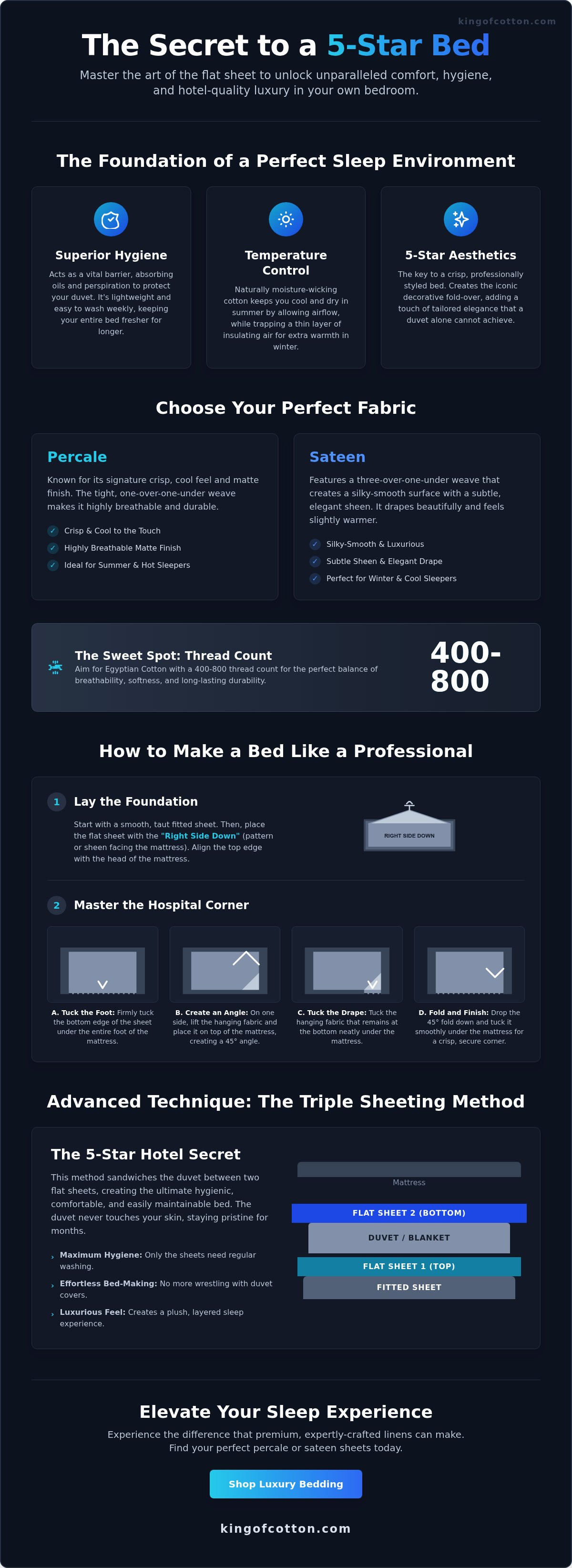
The "Right Side Down" rule is perhaps the most overlooked secret in high-end bedroom styling. If your sheet has a decorative hem, a specific sheen, or a patterned side, you must lay it face-down against the mattress. While this might feel counterintuitive, it's essential for the final look. When you eventually fold the top section back over your duvet, the "right" side of the fabric will be displayed prominently. Alignment is equally critical. Pull the sheet up so the top edge is flush with the head of the mattress, then walk to the foot of the bed to ensure you have an equal amount of fabric overhanging both the left and right sides. This symmetry is the hallmark of a five-star suite.
Mastering the Hospital Corner
The hospital corner is the gold standard for a secure, tidy bed. Start at the foot of the bed by tucking the bottom edge of the sheet firmly under the mattress. Next, go to one corner and lift the hanging side of the sheet, pulling it upward to create a precise 45-degree angle. While holding the top of this fold against the side of the mattress, tuck the bottom portion of the sheet that is still hanging down underneath the mattress. Finally, let the top fold drop and tuck it in tightly. This creates a sharp, diagonal crease that keeps the sheet from shifting, even if you're an active sleeper.
The Finishing Cuff: Adding the Hotel Fold
To create a layered, inviting look, place your duvet or blanket approximately 6 to 10 inches away from the headboard. Take the top edge of your flat sheet and fold it back over the edge of the duvet. This "cuff" should be smooth and perfectly horizontal. If you followed the "Right Side Down" rule, the most luxurious part of the fabric will now be visible. For an extra touch of elegance, you can explore the full bedroom collection to find coordinating pillows that complement this tailored fold. Ensure the fold is pulled tight across the width of the bed to prevent it from bunching up during the night, maintaining that immaculate, just-made appearance until morning.
Flat Sheets vs. Fitted Sheets: Can You Swap Them?
While fitted sheets have become a modern household staple, the traditional "flat-on-flat" method remains the preferred choice of elite housekeepers and five-star establishments. This technique involves using two flat sheets instead of the standard fitted and flat combination. Professional laundries and high-end hotels favour this approach because flat sheets are significantly easier to press, fold, and store. Unlike fitted sheets, which feature bulky elasticated corners that often bunch during ironing, a flat sheet can be pressed to a crisp, mirror-like finish. This precision is essential for creating the immaculate, architectural aesthetic found in luxury suites.
There are distinct practical benefits to using a flat sheet as your base layer. They are often more durable, as there is no elastic to lose its tension or perish over time. However, it's important to recognise that this method requires a slightly different approach to bed-making to prevent the fabric from shifting. To ensure you have enough material for a secure hold, consult our UK bed size guide. Having the correct dimensions is the difference between a sheet that stays taut and one that bunches up by midnight. Mastering how to use a flat sheet as a bottom layer gives you total control over the tension and smoothness of your sleep surface.
Securing a Flat Bottom Sheet
The secret to a successful flat bottom sheet lies in the depth of the tuck. You typically need at least 25 to 30 centimetres of overhang to anchor the fabric firmly beneath the mattress weight. This technique is particularly useful for antique bed frames or bespoke mattresses that don't conform to standard modern depths. To keep the base sheet taut, apply the hospital corner technique to all four corners of the mattress. When executed correctly, the tension creates a smooth, drum-tight surface that feels remarkably supportive and stays in place throughout the night.
The Aesthetic of the Flat Sheet
Flat sheets offer a seamless look that fitted sheets simply can't replicate. Without the elasticated seams at the corners, the bed appears more tailored and refined. This versatility also extends to design. Since flat sheets aren't constrained by elastic, they often feature elaborate decorative borders, intricate embroidery, or delicate hemstitching. You can also experiment with texture to enhance your comfort. Many of our clients choose to mix weaves, perhaps using a crisp percale flat sheet as the base and a silky sateen as the top layer. Understanding how to use a flat sheet in these creative ways allows you to customise the "hand-feel" of your bedding, ensuring every night feels like a stay in a bespoke luxury hotel.
Choosing the Right Material: Egyptian Cotton, Percale, and Sateen
The success of your bed-making efforts depends heavily on the fabric beneath your fingertips. While the mechanical steps of how to use a flat sheet are universal, the material you choose dictates how well those folds hold and how the fabric feels against your skin. A crisp percale, for instance, allows for razor-sharp hospital corners that stay in place. Conversely, a supple sateen offers a fluid drape that pools elegantly over the sides of the mattress. Selecting the right textile is about balancing aesthetic precision with your personal sleep climate.
Thread count is often misunderstood, but it's a vital indicator of durability and feel. For percale sheets, a count between 200 and 400 provides the ideal balance of breathability and that signature "snap." Sateen weaves perform best between 300 and 600, offering a silkier weight without becoming stifling. For those seeking the ultimate standard, Egyptian cotton delivers its finest performance between 400 and 800 thread count. Exceeding these ranges often requires multi-ply yarns, which can make the fabric heavier and less breathable, detracting from the rejuvenating sleep experience you deserve.
Egyptian Cotton: The Hospitality Secret
Egyptian cotton remains the definitive choice for the world's most prestigious hotels. Its extra-long staple fibres create a yarn that's both finer and stronger than standard cotton. This unique structure allows for a higher thread count while maintaining exceptional airflow. If you're wondering is Egyptian cotton bedding worth the investment, consider its longevity. These sheets don't just last; they evolve. The natural softening process that occurs with each wash means your flat sheet will feel even more luxurious after a year of use. This resilience is why it's been the foundation of King of Cotton's collection for over 25 years.
Weave and Breathability
Your choice of weave significantly impacts how to use a flat sheet during different seasons. Percale is a "one-over, one-under" weave that results in a matte finish and a cool, crisp feel. It's the ideal choice for hot sleepers or for use during the summer months. Sateen, however, uses a "four-over, one-under" structure, creating a lustrous surface with a silky touch. It's naturally heavier and warmer, making it perfect for winter layering. To maintain these premium textures, always wash your linens at a moderate temperature and avoid harsh chemicals. If you're ready to transform your sleep environment, you can browse our professional-grade flat sheets to find your perfect match.
Advanced Styling: The Triple Sheeting Method and Beyond
Triple sheeting represents the pinnacle of professional bed-making, used by elite housekeeping teams to achieve a look that is both architectural and inviting. This method is a three-layer bed-making system that replaces the traditional duvet cover for easier maintenance and a crisper finish. If you've ever struggled with the physical exertion of changing a heavy duvet cover, mastering how to use a flat sheet in this specific configuration will transform your routine. It allows every layer that touches your skin to be laundered with ease, ensuring your sleep environment remains as hygienic as a five-star suite.
The efficiency of this technique is why the world's most prestigious hotels rely on it. Instead of a single bulky cover, you use multiple thin layers that are easier to wash, dry, and press. This approach also offers superior climate control. You can adjust your warmth by choosing different weights for the middle insulating layer while the outer sheets provide that signature cool, clean feel. To achieve a professional, wrinkle-free finish without hours of ironing, try the "housekeeper's mist" trick. Once your bed is fully made and pulled taut, lightly spray the top sheet with a fine mist of water. As the fabric dries, the tension causes wrinkles to vanish, leaving a mirror-smooth surface.
The Triple Sheeting Process
Executing this method requires three distinct layers of linen to create the necessary structure and comfort. Follow this professional sequence for the best results:
- Layer 1: The foundation. Apply your fitted sheet or a flat sheet as a base, ensuring it's pulled tight.
- Layer 2: The comfort layer. Place your primary flat sheet pattern-side down. This ensures the decorative hem is visible when you eventually fold it back.
- Layer 3: The insulating layer. Lay a lightweight duvet or a thin blanket on top, then cover it with a final decorative flat sheet.
Tuck all three layers together at the foot of the bed using a single, deep hospital corner. This anchors the entire system, preventing the layers from separating during the night and maintaining a tailored silhouette.
Creating a Haven of Elegance
Beyond the practical benefits, triple sheeting allows for sophisticated aesthetic layering. You can use contrasting colours or textures for the final flat sheet to add visual depth to your bedroom. A sateen sheet with a subtle lustre paired against a matte percale base creates a rich, sensory experience. This level of detail turns a standard bedroom into a sanctuary of relaxation. Complete the transformation by surrounding yourself with accessories that evoke the same sense of luxury. Pairing your expertly made bed with luxury bath robes helps establish a "spa-at-home" vibe that extends beyond the mattress. By understanding how to use a flat sheet as a multifunctional styling tool, you elevate your home to the standards of the world's finest properties.
Elevate Your Sleep to Five-Star Standards
Mastering these professional techniques transforms your bedroom into a sanctuary of elegance and comfort. From the precision of the hospital corner to the sophisticated hygiene of the triple sheeting method, you now possess the expert knowledge of how to use a flat sheet to create a five-star sleep experience. You've seen that selecting the right foundation is the final piece of the puzzle. Whether you prefer the cool, crisp feel of a 400-thread-count percale or the indulgent warmth of a sateen weave, the quality of the fibre dictates the ultimate success of your styling.
King of Cotton has served as a specialist supplier to the world's finest hotels for more than 25 years. We remain dedicated to providing the same professional-grade linens used in global luxury estates. Our collection is rated Excellent on Trustpilot, confirming our commitment to authentic, high-thread-count Egyptian cotton. It's time to invest in your rejuvenation and experience the difference that heritage craftsmanship makes.
Discover the Finest Egyptian Cotton Flat Sheets at King of Cotton and begin your journey toward a perfectly tailored, hotel-standard bed tonight.
Frequently Asked Questions
Is it better to have a flat or fitted sheet as a base?
Fitted sheets offer more security due to their elasticated corners, but flat sheets provide a more professional, seamless finish. Many luxury hotels prefer a flat sheet as a base because it allows for a drum-tight surface that doesn't bunch over time. If you use a flat sheet as a base, ensure you have at least 25 centimetres of overhang on all sides to anchor the fabric firmly beneath the mattress weight.
Do you put the flat sheet on top of the duvet or under it?
The flat sheet always goes directly under the duvet or blanket. Its primary purpose is to act as a soft, breathable barrier between your skin and your heavier bedding. By placing it underneath, you protect the duvet from natural oils and perspiration. This setup significantly reduces the frequency with which you need to launder heavy duvet covers, preserving the life of your premium linens.
Why do hotels use flat sheets instead of duvets?
Hotels actually use both, but they often employ the triple sheeting method which replaces the traditional duvet cover. This system uses two flat sheets to sandwich a middle duvet or blanket layer. It's a much more efficient process for professional laundries because flat sheets are easier to press and dry than complex covers. This method has been a standard in five-star hospitality for over 25 years due to its superior hygiene.
How do you make hospital corners with a flat sheet?
Creating hospital corners involves a specific lifting and tucking sequence to lock the fabric in place. First, tuck the bottom edge of the sheet under the mattress. Lift the side edge to create a precise 45-degree angle at the corner, then tuck the hanging portion underneath. Finally, drop the top fold and tuck it in tightly. This technique ensures your bedding remains crisp and immobile throughout the night.
What size flat sheet do I need for a King size bed?
A standard UK King flat sheet typically measures 275cm x 275cm. This generous sizing is designed for a mattress that is 150cm wide and 200cm long. These specific dimensions provide approximately 60 centimetres of extra fabric on the sides and foot of the bed. This extra material is essential for mastering how to use a flat sheet with secure, deep tucks that won't pull loose while you sleep.
Can you use a flat sheet as a duvet cover?
You can't use a single flat sheet as a traditional cover, but you can use two sheets to replicate the triple sheeting system. This involves laying one sheet under the duvet and a second decorative flat sheet over the top. It provides the same hygienic benefits as a cover but is much easier to remove and wash. This is a popular choice for guest rooms where frequent bedding changes are required.
Do you sleep under or on top of a flat sheet?
You sleep directly under the flat sheet, which serves as the primary layer against your skin. Learning how to use a flat sheet correctly ensures that this breathable cotton layer regulates your body temperature throughout the night. It keeps you cool in the summer and adds a vital layer of insulation during the winter. This creates a comfortable microclimate that promotes a deeper, more rejuvenating sleep experience.
Which side of the flat sheet goes down?
The decorative side of the fabric should always face down toward the mattress. When you are learning how to use a flat sheet, this "pattern-down" rule is essential for a professional look. By laying the finished side face-down, the beautiful hem or sateen sheen becomes visible when you fold the top edge back over your duvet. This creates the iconic, layered cuff seen in the world's finest luxury hotels.