

How to Style a Bed Like a Hotel: The 5-Star UK Guide for 2026
Why is it that, despite your best efforts, a domestic bed often looks tired and flat whilst a luxury suite remains effortlessly crisp and inviting? You've likely experienced the frustration of linen that loses its lustre after one wash or pillows that lack the structural loft required for a truly indulgent aesthetic. We understand that a bed should be more than just a place to sleep; it's a refined sanctuary that offers total rejuvenation. In this guide, we'll show you exactly how to style a bed like a hotel by mastering the professional layering techniques and material secrets used by the world's most prestigious establishments.
We'll explore the 2026 shift towards tonal layering and tactile textures, alongside the foundational importance of high-thread-count Egyptian cotton. From the 'secret weapon' of the mattress topper to achieving the perfect hospital corner, you'll gain the expertise needed to recreate a five-star experience in your own home. You'll learn why structural layering matters more than any single decorative element and how to select hospitality-grade materials that maintain their superior feel. It's time to transform your bedroom into a space of serene confidence and uncompromising quality.
Key Takeaways
- Identify the structural role of the mattress topper in providing the signature 'loft' that distinguishes professional suites from domestic bedrooms.
- Master the specific techniques of how to style a bed like a hotel, including the triple sheeting method used by elite housekeeping teams for both hygiene and aesthetics.
- Learn why the 'White Bedding' standard remains the ultimate benchmark for luxury and how to select the correct Egyptian cotton weave for lasting crispness.
- Create a visually stunning arrangement using the art of tonal layering and the strategic placement of quilts and bed runners for a sophisticated, modern look.
- Implement expert laundering secrets, such as the professional water spray trick, to achieve a pristine finish without the need for industrial pressing equipment.
The Secret Foundation: Starting with the Hotel Mattress Topper
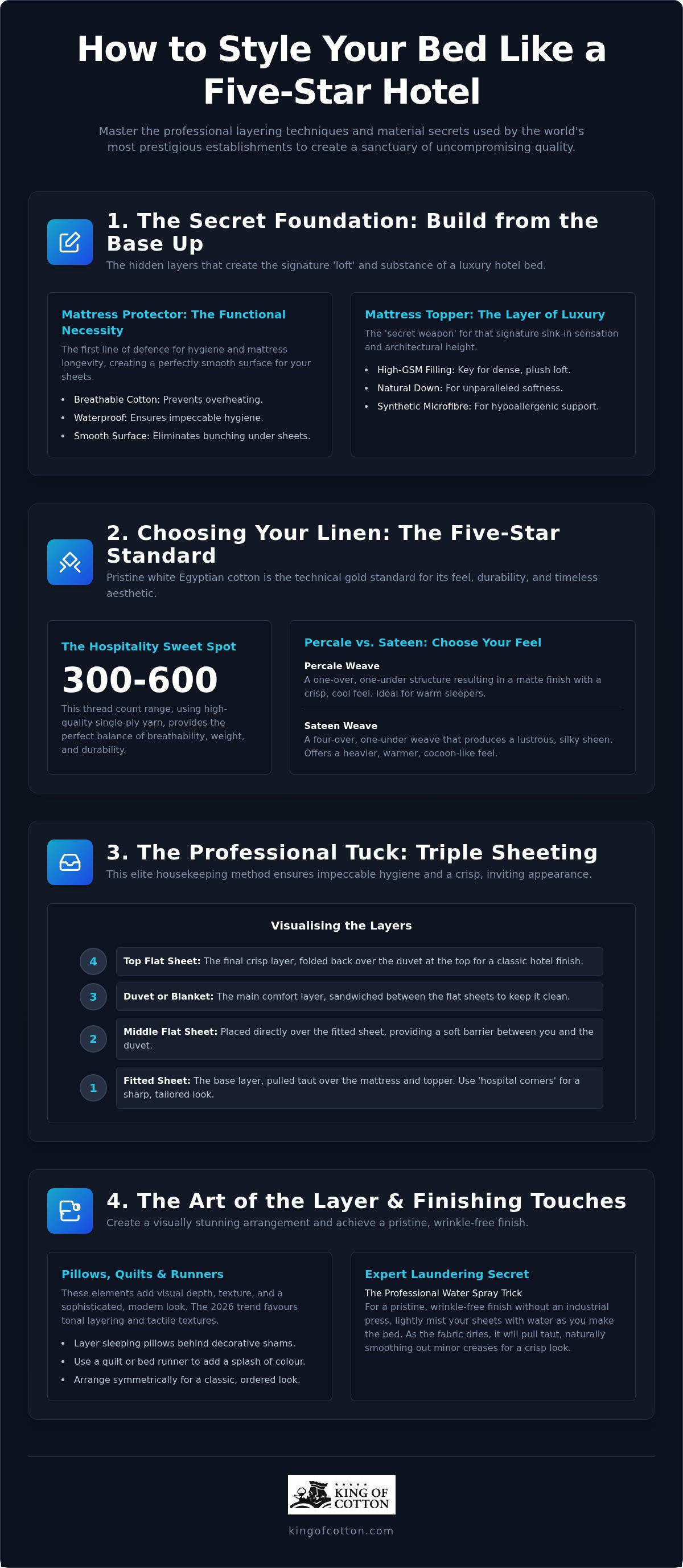
Achieving a truly indulgent sleep environment requires looking beyond the surface. To master how to style a bed like a hotel, you must first address the structural foundation that guests never see but always feel. The mattress topper is the hidden hero of the hospitality industry. It is the primary reason why a hotel bed feels significantly more substantial and inviting than a standard domestic setup. Whilst the sheets provide the crispness, the topper provides the soul of the bed.
It is important to distinguish between a mattress protector and a mattress topper. A protector is a functional necessity designed for hygiene and longevity. In contrast, a topper is an elective layer of pure luxury. For that signature sink-in sensation, professionals look for high-GSM (Grams per Square Metre) fillings. A higher GSM indicates a denser, more plush filling that maintains its loft over time. This density prevents the material from flattening under body weight, ensuring the bed remains as comfortable at dawn as it was at dusk. You can discover our professional mattress toppers to establish this essential foundation of comfort in your own home.
Choosing the Right Protector
A protector acts as the first line of defence for your investment. In professional settings, waterproof protectors are standard to ensure mattress longevity and maintain impeccable hygiene standards. However, the secret to comfort lies in the material. Choose breathable cotton fabrics to prevent the overheating often associated with synthetic barriers. A well-fitted protector also serves a secondary aesthetic purpose. It creates a perfectly smooth, uniform surface for your fitted sheets, eliminating the friction and bunching that can make a bed look untidy.
The Loft Factor: Deep-Fill Toppers
The choice between natural and synthetic fillings often dictates the specific character of the sleep surface. Natural down and feather toppers provide unparalleled softness and traditional luxury. High-grade synthetic microfibre alternatives offer excellent support and are often preferred for their hypoallergenic properties. Both options are effective at reviving an older mattress or adding a final layer of decadence to a brand new one. A mattress topper serves as the structural cushion of a luxury bed. By adding this deep-fill layer, you create the architectural height required for a bed that looks and feels professionally styled.
Choosing Your Linen: Why Thread Count and Egyptian Cotton Matter
When researching how to style a bed like a hotel, the most striking visual element is almost always the pristine white palette. This 'White Bedding' standard is not merely an aesthetic choice; it serves as a powerful symbol of hygiene and timeless luxury. White linens radiate a sense of calm and allow the material quality to speak for itself. For the discerning homeowner, selecting the correct fabric is the most critical decision in recreating this five-star atmosphere.
Egyptian cotton remains the technical gold standard for hospitality due to its long-staple fibres. These fibres are finer and stronger than standard cotton, allowing for a weave that is both incredibly soft and exceptionally durable. Whilst many retailers market four-figure thread counts as the pinnacle of quality, the hospitality sweet spot actually lies between 300 and 600. This range, when achieved with high-quality single-ply yarn, provides the perfect balance of breathability and weight. To begin your transformation, explore our luxury bed linen collections crafted to these exacting standards.
Percale vs Sateen: Which 'Feel' is for You?
The weave of the fabric determines its physical sensation against the skin. Percale features a simple one-over, one-under structure, resulting in a matte finish and a crisp, cool feel. It is the preferred choice for boutique hotels and those who tend to sleep warm. Conversely, sateen uses a four-over, one-under weave that produces a lustrous, silky sheen. Sateen drapes more closely to the body and offers a heavier, warmer feel, making it ideal for those who prefer an indulgent, cocoon-like experience.
The Durability of Hospitality-Grade Cotton
Professional linens must withstand frequent, high-temperature laundering without losing their integrity. Genuine Egyptian cotton is prized for its ability to resist pilling and thinning, even after hundreds of wash cycles. This resilience is a direct result of the long-staple fibres mentioned previously. Understanding how to style a bed like a hotel also involves considering the long-term performance of your investment. High-quality cotton ensures your bed remains a sanctuary of comfort for years to come. You may find that investing in hospitality-grade materials is the most sustainable way to upgrade your bedroom environment.
The Professional Tuck: Master the Triple Sheeting Method
Learning how to style a bed like a hotel is as much about technical precision as it is about material choice. Whilst most domestic bedrooms rely on a standard duvet cover, elite establishments often employ the 'triple sheeting' method. This technique involves layering a thin duvet or blanket between two flat sheets, with a third sheet acting as the base. It is a hygienic and aesthetic secret that creates an incredibly sleek, architectural finish. By using this method, hotels ensure a fresh sleep surface for every guest whilst maintaining a crispness that a traditional duvet cover can't always provide.
Triple sheeting also offers a practical advantage for the home. It allows you to adjust your sleep temperature more easily and streamlines the laundering process, as flat sheets are simpler to press than bulky covers. Before beginning the tuck, consult our guide on how to choose the perfect duvet to ensure your chosen filling provides the correct weight for this layering style. Once you master this sequence, you'll understand why how to style a bed like a hotel is a skill refined through years of professional hospitality service.
A Step-by-Step Guide to Triple Sheeting
- Step 1: Lay the bottom sheet (either fitted or flat) over the mattress protector. If using a flat sheet, ensure it is pulled perfectly tight using hospital corners at all four points.
- Step 2: Place the middle flat sheet face-down on the bed. The top edge should be aligned with the head of the mattress. This ensures that when you fold it back, the decorative hem or superior finish is visible.
- Step 3: Layer your duvet or blanket approximately six inches below the top of the mattress. Place the final top sheet over it, then fold both the middle and top sheets back over the duvet to create a clean, folded cuff.
Mastering the Hospital Corner
The hospital corner is the essential technique for a taut, tidy look. To achieve this, tuck the end of the top sheet firmly under the mattress at the foot of the bed. Lift the side of the sheet to create a 45-degree angle, then fold the resulting triangle over the top of the mattress. Hold the fold in place whilst tucking the hanging fabric underneath. Finally, let the fold drop and tuck it in to create a sharp, vertical crease.
A flat sheet is almost always preferred over a fitted sheet for this process. Flat sheets allow for greater tension and a more customised fit, which is vital for ensuring the linens remain taut throughout the night. This tension is what creates the pristine, uncreased silhouette that defines a five-star suite. With a little practice, this ritual becomes a meditative part of your morning routine, resulting in a bed that looks professionally styled every single day.
The Art of the Layer: Pillows, Quilts, and Bed Runners
The final stage in mastering how to style a bed like a hotel involves the strategic layering of decorative elements. In a five-star environment, the bed is treated as a multi-dimensional sculpture rather than a flat surface. This begins with the concept of a 'pillow menu'. By combining different densities, such as firm feather-and-down cores for support and softer microfibre for comfort, you create a sleep system that is both functional and visually opulent. This attention to detail is a hallmark of professional hospitality, as discussed in The Professional's Guide to Hotel Linen Supply.
Beyond the pillows, a quilt or bedspread adds the necessary 'visual weight' to ground the bed within the room. A folded quilt at the foot of the bed provides a sense of abundance and luxury. To introduce subtle personality without detracting from the pristine white linens, professionals use a bed runner. This single strip of fabric allows you to incorporate texture and colour, such as a rich bouclé or a muted tufted wool, whilst keeping the primary sleep surface clean and inviting. Baffle-box construction is essential for duvets and quilts to ensure the filling remains evenly distributed for consistent volume across the entire bed.
Pillow Positioning for Maximum Impact
Your arrangement should distinguish between 'sleeping' pillows and 'standing' pillows. Sleeping pillows are typically placed flat or slightly propped at the back, whilst the decorative pillows stand proudly in front. Use Oxford pillowcases, which feature a wide fabric border, for the front-facing layers to add architectural structure. Housewife pillowcases, which are plain and borderless, are best reserved for the base layer. Regarding the 'karate chop' method, 2026 trends suggest a move towards a more natural, relaxed loft. A gentle pat to restore the pillow's volume is now preferred over the rigid, deep indentations of previous years.
Adding Texture with Quilts and Runners
A bed runner acts as the bridge between your bedding and the wider bedroom decor. When choosing a runner, select a shade that complements your headboard or curtains to create a cohesive aesthetic. This layer is particularly effective in the UK climate, providing an extra level of warmth during colder months whilst remaining easy to remove. To achieve this professional look in your own sanctuary, you can browse our selection of premium bedroom accessories designed for the most discerning residential settings.
Maintaining the Look: Laundering and Daily Bed-Making Rituals
Consistency is the final pillar of a luxury sleep sanctuary. Once you've mastered how to style a bed like a hotel, the challenge shifts to preserving that impeccable finish through professional maintenance. The most critical instruction for high-quality Egyptian cotton is the absolute avoidance of fabric softeners. Whilst they promise softness, these chemical additives coat the natural long-staple fibres in a waxy residue. Over time, this reduces the fabric's breathability and distinctive crispness, eventually dulling the lustre of your investment.
Professional Laundering Tips for Home
Professional hospitality teams follow strict protocols to ensure linens remain pristine. For white cotton, a wash temperature of 60°C is the industry standard for hygiene; it effectively eliminates allergens and bacteria whilst maintaining the integrity of the weave. If your linens aren't heavily soiled, a 40°C cycle is often sufficient for regular maintenance. Drying is equally vital. Avoid high-heat settings that can lead to a 'crunchy' or brittle feeling. Instead, tumble dry at a lower temperature and remove the sheets whilst they are still slightly damp to minimise deep-set creasing.
- Store seasonal duvets and extra linens in breathable cotton bags rather than plastic to prevent yellowing.
- Avoid overfilling the washing machine drum to allow the water and detergent to circulate freely.
- Use a high-quality, non-biological detergent to protect the delicate natural fibres from chemical degradation.
The 2-Minute Morning Refresh
A hospitality secret that many overlook is the daily 'airing out' ritual. Before making the bed, pull the covers back for at least twenty minutes. This allows the mattress and linens to breathe, dissipating the moisture accumulated during sleep. When you're ready to style, use the professional water spray trick. Lightly mist the top sheet with a fine spray of water and smooth it with your hands. This tension releases minor wrinkles instantly, providing that taut, ironed appearance without the effort of a professional press.
Daily plumping is non-negotiable for maintaining the 'loft' of your pillows. Give each pillow a firm shake from the corners to redistribute the filling before stacking them in your chosen arrangement. To ensure your bedroom continues to meet these five-star standards, you should consider replacing your core linens every two to three years as the fibres naturally begin to thin. For further insight into selecting hospitality-grade materials, consult The Ultimate Guide to Buying Luxury Bed Linen. This commitment to daily rituals ensures that your bed remains a refined destination for rejuvenation, night after night.
Elevate Your Sanctuary with Professional Mastery
Transforming your bedroom into a five-star retreat is a journey of refined details and material excellence. By prioritising the structural foundation of a mattress topper and mastering the technical precision of the triple sheeting method, you move beyond simple aesthetics to create a high-performance sleep system. Mastering how to style a bed like a hotel requires a commitment to quality; specifically the use of long-staple Egyptian cotton that maintains its crisp, cool lustre through every wash.
At King of Cotton, we bring over 30 years of expertise and a heritage of supplying the world’s most prestigious hotels directly to your home. Our collections are designed to meet the rigorous standards of international hospitality whilst offering the enduring comfort and durability reflected in our 5-star customer ratings. It's time to invest in the rejuvenation you deserve. Discover the full range of hotel-quality duvets and bed linen at King of Cotton and begin your evening in a sanctuary of serene confidence. Your perfect night's sleep is no longer a luxury reserved for travel; it's a daily reality you can create today.
Frequently Asked Questions
How many pillows do hotels typically put on a bed?
Hotels typically provide four standard pillows for a double or king-size bed, consisting of two per guest. This arrangement allows for a 'pillow menu' experience, often pairing firm support pillows at the back with softer, more indulgent ones in front. Additional decorative cushions or bolsters are then layered to add architectural height. This combination ensures that the bed looks opulent whilst providing tailored support for different sleeping preferences.
What is the best thread count for that 'crisp' hotel sheet feeling?
The hospitality sweet spot for that signature crisp feeling is a thread count between 300 and 600. Higher counts often result in a heavier, denser fabric that lacks breathability. When using high-quality single-ply Egyptian cotton, this range provides the perfect balance of durability and a cool, smooth touch. It is the specific weave and yarn quality, rather than just the number, that defines the luxurious sensation of a professional suite.
Why do hotels use only white bed linen?
White bed linen is the universal hospitality standard because it serves as a visual guarantee of cleanliness and hygiene. It creates a 'halo effect' that makes the entire room feel fresh and rejuvenated. Practically, white fabrics can be laundered at higher temperatures to maintain impeccable standards without the risk of colour fading. This choice remains timeless, allowing the quality of the material to remain the primary focus of the bedroom aesthetic.
How do I get my bed sheets to look as tight and smooth as a hotel's?
Achieving a perfectly taut finish requires the use of flat sheets and the hospital corner technique. By pulling the linen tight and folding it at a 45-degree angle at the base, you eliminate bunching. A professional secret for how to style a bed like a hotel is the water spray trick. Lightly misting the sheets with water once they are on the bed helps release wrinkles, resulting in a smooth, pressed appearance without industrial equipment.
What is the difference between a quilt and a bedspread for styling?
A quilt is typically a smaller, padded layer used at the foot of the bed to add visual weight and warmth. In contrast, a bedspread is a larger decorative cover designed to drape over the entire bed, often reaching the floor. For a modern hotel look, a folded quilt or coverlet is often preferred as it allows the crisp white sheets to remain visible, creating a more sophisticated, multi-layered aesthetic.
Can I achieve the hotel look without a professional iron?
You can certainly achieve a pristine look without professional pressing by removing your linens from the tumble dryer whilst they are still slightly damp. Hanging them immediately allows the weight of the fabric to pull out most creases. For any remaining wrinkles, the misting technique mentioned previously is highly effective. Using high-quality Egyptian cotton also helps, as the long-staple fibres naturally resist the deep, stubborn creasing found in inferior materials.
How often should I wash my hotel-quality sheets?
To maintain the hygiene and performance of your linens, you should wash them once a week. Professional establishments change sheets daily, but weekly laundering is the standard for residential luxury. Regular washing at 40°C to 60°C prevents the build-up of oils and skin cells that can eventually dull the fabric. Always avoid fabric softeners, as they coat the fibres and reduce the breathability that makes hotel-quality cotton so comfortable.
What is a bed runner and do I really need one?
A bed runner is a narrow, decorative strip of fabric placed across the foot of the bed. Whilst not essential for sleep, it is a vital tool for how to style a bed like a hotel. It introduces texture and colour into a predominantly white scheme, providing a finished, cohesive look. Runners also protect the duvet from luggage or shoes, mirroring the practical yet elegant standards found in the world's finest hotels.