

How to Prevent Towels from Smelling Musty: The Expert Guide to Lasting Freshness
Why does a freshly laundered towel, crafted from the finest long-staple cotton, often emerge from the dryer with a damp, sour scent that refuses to fade? This lingering odour isn't a cleaning failure; it's a symptom of "suffocated" fibres caused by trapped residue and restricted airflow. It is a deeply frustrating experience for those who value a refined home, especially when you're trying to learn how to prevent towels from smelling musty after investing in premium linens. You shouldn't have to feel embarrassed when guests use your towels or waste energy on repeated washes that only serve to degrade the integrity of your fabric.
We understand that maintaining the pristine, indulgent feel of luxury linens requires more than just standard care. In this expert guide, you'll discover the professional secrets to eliminating stubborn odours and maintaining the fresh scent of a five-star hotel spa. We'll explore the science of linen care and the specific maintenance rituals used by elite hospitality professionals to ensure every towel remains a sanctuary of comfort. By the end of this article, you'll have a sophisticated laundry routine that preserves the exquisite softness of your investments while guaranteeing lasting, serene freshness.
Key Takeaways
- Understand the science of "biofilm" and how detergent residue creates a hidden feeding ground for persistent, sour odours.
- Master the professional restoration ritual to learn exactly how to prevent towels from smelling musty by stripping away accumulated mineral and soap buildup.
- Adopt the "Bone-Dry" rule and expert drying techniques to ensure moisture is completely eliminated, preserving the delicate integrity of your linens.
- Maintain your washing machine with specialized care to prevent the transfer of mould and bacteria from the door gasket to your laundry.
- Discover why investing in 100% pure, long-staple cotton is the ultimate foundation for enduring freshness and superior fibre breathability.
The Science of the Scent: Why Luxury Towels Develop Musty Odours
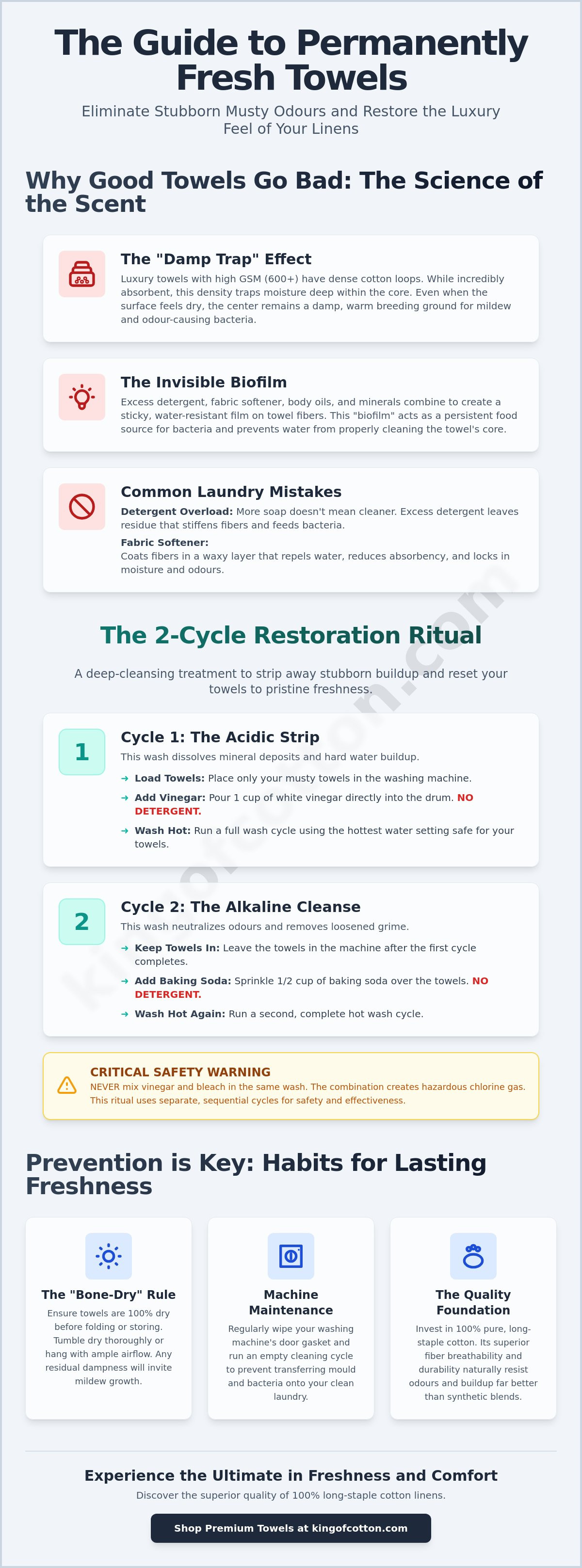
Luxury towels are engineered for maximum absorption, yet this very quality can lead to a frustrating sensory decline. When moisture lingers within the deep loops of a towel, it creates a perfect environment for microbial activity. Understanding what causes musty smells is essential for anyone researching how to prevent towels from smelling musty. Mustiness is the byproduct of anaerobic bacterial respiration in trapped moisture. As these microorganisms consume organic matter like skin cells and oils, they release volatile organic compounds that we perceive as a sour, unpleasant odour.
A significant factor in this process is the formation of a biological film, or "biofilm." This occurs when excess detergent residue and body oils bond with the cotton fibres. Instead of being washed away, this mixture creates a sticky, invisible coating that serves as a feeding ground for odour-causing bacteria. Over time, this film becomes water-resistant, making it nearly impossible for a standard wash cycle to penetrate the fibre core. This is why even high-quality towels can begin to smell shortly after being laundered.
To better understand this concept and see these principles in action, watch this helpful guide on towel maintenance:
The Paradox of High-GSM Fibres
Luxury linens often feature high Grams per Square Metre (GSM) ratings, typically 600 or higher, signifying a dense and plush weave. While these towels provide an exquisite, spa-like experience, they are also prone to the "Damp Trap." The sheer density of the fibres means moisture can be trapped in the core of the towel even when the surface feels dry to the touch. These high-GSM linens require significantly more breathing room and airflow than standard, thinner towels. Without proper ventilation, the core remains damp, allowing bacteria to flourish in the dark, warm spaces between the threads.
The Hidden Culprit: Detergent and Softener Overload
It's a common misconception that more soap results in cleaner laundry. In reality, an overload of detergent is one of the primary reasons people struggle with how to prevent towels from smelling musty. Excess soap doesn't rinse away; it coats the cotton loops and stiffens them. Fabric softeners are even more problematic. They leave a waxy residue that reduces the towel's natural absorbency and locks in moisture. This waxy layer acts as a sealant, trapping bacteria deep within the fabric and ensuring that even after a full drying cycle, the towel retains a hidden reservoir of dampness and odour.
The Professional Restoration Ritual: Stripping Towels of Residue
Professional hospitality standards demand a level of freshness that often eludes the domestic laundry room. When standard washing fails to revive your linens, you must adopt the "restoration ritual" used by elite estates and boutique hotels. This process, often called laundry stripping, isn't a routine wash; it's a deep-cleansing treatment designed to dissolve the stubborn biofilm and mineral deposits that have colonised your cotton fibres. Mastering this technique is the most effective way to learn how to prevent towels from smelling musty over the long term.
The secret lies in a strategic two-cycle approach that addresses the chemistry of cleanliness. While most homeowners reach for more detergent, professional launderers know that excess soap is actually the enemy. In fact, prestigious hotels rarely use traditional fabric softeners. They understand these products are essentially liquid waxes that coat the cotton, trapping bacteria inside and suffocating the material. Before beginning this ritual, remember a critical safety rule: never mix white vinegar and bleach in the same cycle. This combination creates hazardous chlorine gas. Instead, rely on the gentle but powerful interaction of acidic and alkaline washes.
The White Vinegar Cycle: Breaking Down Mineral Build-up
The first stage of the restoration focuses on decalcification. For a standard UK load, add 250ml of white distilled vinegar directly into the drum or the softener compartment. The acetic acid acts as a natural solvent, cutting through the waxy build-up left by commercial softeners and hard water minerals. This step is essential for restoring the natural absorbency of your linens. When organic matter and soil remain trapped in the weave, they provide the nutrient source required for the science of mildew growth to take hold. The vinegar cycle ensures these foundations for odour are thoroughly dismantled.
The Baking Soda Cycle: Neutralising Deep-Seated Acids
Once the vinegar cycle is complete, do not dry the towels. Immediately run a second hot wash using half a cup of sodium bicarbonate (baking soda). While the first wash was acidic, this second cycle is alkaline. This chemical shift lifts any remaining deep-seated odours from the fibre core and neutralises the pH of the cotton. This "neutral" state is exactly what gives five-star linens their clean, crisp scent. Once you've restored your current linens, maintaining this standard is far easier when you invest in high-quality towels crafted from superior, breathable fibres. This two-step ritual effectively resets the fabric, providing a definitive solution for how to prevent towels from smelling musty and ensuring your investment in luxury remains pristine.
The Drying Discipline: Airflow, Heat, and Moisture Management
The journey to lasting freshness doesn't end when the wash cycle stops. In fact, the drying stage is often where the most critical errors occur. Many homeowners follow a "dry enough" philosophy, removing linens when they feel slightly damp but warm. This is a mistake. Adhering to the "Bone-Dry" Rule is essential; leaving just 5% moisture in the core of a dense weave is a direct recipe for mildew growth. If you are serious about how to prevent towels from smelling musty, you must ensure every fibre is completely devoid of dampness before folding.
Optimising your tumble dryer is a sophisticated way to preserve fibre integrity. Rather than relying on high heat alone, incorporate wool dryer balls into your cycle. These natural spheres physically separate the heavy fabric, creating pockets for air to circulate. This mechanical action reduces drying time and prevents the towels from clumping together. Remember, air circulation is as important as heat for moisture removal. While it might be tempting to drape damp linens over a radiator, this practice should be avoided. Direct, intense heat from a radiator scorches the delicate cotton loops, leading to a brittle, stiff texture that compromises the luxurious feel of your investment.
Effective Hanging Techniques Between Uses
The architecture of your bathroom plays a vital role in linen health. Towel rings are a common design choice, but they are the enemy of freshness. They force the fabric to bunch together, trapping moisture in the folds. Instead, opt for double-bar hanging systems or wide hooks that allow you to spread the towel completely flat. This maximises the surface area exposed to the air. In bathrooms without natural ventilation, it's often necessary to move damp towels to a more airy environment immediately after use to ensure they dry within a short window.
Indoor Drying in the UK Climate
The British climate presents unique challenges, particularly during the humid winter months. High indoor humidity significantly extends drying times, providing a window for odours to develop. To combat this, strategic placement of your drying airers is key. Position them near natural convection currents, such as a hallway with good airflow, rather than in a closed, stagnant room. For many, a dehumidifier is a worthwhile investment. It actively pulls moisture from the air, accelerating the drying process and ensuring your towels maintain that crisp, professional finish regardless of the weather outside.
Maintaining Your Equipment: The Washing Machine Factor
The most sophisticated laundry rituals are futile if the vessel itself is compromised. A washing machine isn't a self-cleaning appliance; it's a humid environment where detergent scum and organic debris accumulate over time. When these residues linger, they create a bacterial breeding ground that transfers directly back onto your linens during the rinse cycle. If you've been struggling with how to prevent towels from smelling musty, the culprit is often found within the machine's internal components. One of the most common issues is the "seal smell," which originates from mould growth hidden in the deep folds of the rubber door gasket.
In the United Kingdom, the prevalence of hard water adds another layer of complexity to linen care. High concentrations of calcium and magnesium minerals don't just affect the mechanical efficiency of your appliance; they physically bind to cotton fibres, creating a rough texture that traps dirt and bacteria. Understanding this relationship is a key component of How Do Hotels Keep Towels So Soft? as professional facilities meticulously manage water quality to ensure a pristine, indulgent finish. By maintaining your machine, you ensure that every wash cycle actually cleanses rather than contaminates.
The Monthly Maintenance Wash
Maintaining a professional standard requires a dedicated equipment care schedule. Once a month, run a 90-degree service wash with an empty drum to sanitise the pipes and eliminate biofilm. This high-temperature cycle kills the bacteria that thrive in the lower temperatures often used for daily laundry. You should also manually remove the detergent drawer and clean the filter to prevent stagnant water from recirculating. In hard water areas, using professional descalers is non-negotiable to prevent limescale from clogging the heating elements and reducing the machine's ability to reach effective sanitisation temperatures.
Managing the Hard Water Challenge
Hard water minerals act like a magnet for soil, locking it deep inside the weave of your towels. This mineral buildup makes the fabric feel abrasive and significantly reduces its breathability. To combat this, adjust your detergent dosage based on your local water hardness. Hard water requires slightly more detergent to be effective, but too much leads back to the residue issues that cause odours. Many homeowners find that installing a water softener is the ultimate solution for preserving the life of their luxury linens. Ensure your laundry room is equipped with the right foundation by browsing our collection of professional-grade luxury towels.
Preventing Odours Through Quality: The King of Cotton Standard
The most meticulous laundry routine can only achieve so much if the foundational material is lacking. While we've explored the chemical and mechanical aspects of how to prevent towels from smelling musty, the most enduring solution lies in the calibre of the cotton itself. Cheap, synthetic blends often incorporate polyester or other man-made fibres that are naturally hydrophobic. These materials don't just repel water; they attract and trap body oils and sebum, creating a persistent, fatty residue that standard detergents struggle to remove. In contrast, 100% pure cotton possesses a natural breathability that allows moisture to escape the fibre core far more efficiently.
Transitioning to a professional-grade bathroom setup means prioritising material integrity over fleeting aesthetic trends. For a deeper dive into selecting the right specifications for your home, consult our guide on How to Choose The Perfect Luxury Bath Towels. By selecting linens engineered for the rigours of the world's finest hotels, you're investing in products designed to withstand frequent sanitisation while maintaining their pristine scent and texture. High-GSM towels require this superior fibre quality to ensure that their density doesn't become a liability for freshness.
The Superiority of Egyptian and Turkish Cotton
The secret to the longevity of premium linens is the staple length of the cotton. Egyptian and Turkish varieties are prized for their extra-long fibres. Longer fibres result in a smoother, stronger yarn with significantly fewer "ends" exposed in the weave. These ends are where pilling occurs and where bacteria find purchase to congregate. Premium cotton's natural moisture-wicking properties ensure that dampness is drawn away from the skin and released into the air quickly. This inherent breathability is your first line of defence against the anaerobic conditions that lead to sour smells. These high-quality materials also endure the high-temperature washes necessary for true sanitisation without losing their structural integrity.
Investing in Professional Hospitality Quality
King of Cotton has established a legacy as a trusted provider to prestigious residential and commercial sectors globally. This heritage is built on an uncompromising commitment to material excellence. Our products carry the OEKO-TEX certification, ensuring they're free from harmful chemicals that can sometimes irritate the skin or trap unwanted odours. While proper care can extend the life of your linens, there comes a point where the cotton fibres eventually break down. If your towels remain stiff or develop a greyish hue despite following our restoration rituals, it's a sign they've reached their limit. Replacing aged linens with 100% pure towels is the final, definitive step in ensuring your bathroom remains a sanctuary of freshness and indulgence.
Elevating Your Linen Care to Professional Standards
Mastering the art of linen maintenance transforms a daily necessity into a refined ritual of indulgence. By adopting professional restoration techniques and a strict drying discipline, you ensure that your investment in quality remains pristine. Remember that the journey begins with the fabric itself; high-GSM linens require the breathability of premium long-staple fibres to resist the buildup of odour-causing biofilms. Understanding how to prevent towels from smelling musty is not just about laundry; it's about preserving the serene, sophisticated atmosphere of your home.
This commitment to quality often extends to our personal hobbies as well; for those who value premium performance on the golf course, you can explore Titleist Pro V1 (Mint 5A) to find high-end equipment that mirrors the excellence you maintain in your home.
As seasoned experts and trusted suppliers to the finest hotels in the world, we understand the science behind enduring freshness. Our expertise in high-GSM textile durability ensures that your linens provide a sanctuary of comfort wash after wash. If your current towels have lost their lustre, it's time to experience the difference of premium Egyptian cotton quality. Upgrade your bathroom with our professional-grade luxury towels and enjoy the lasting elegance of a five-star spa experience in your own home. You deserve the comfort of linens that feel as exceptional as they smell.
Frequently Asked Questions
Why do my towels smell musty even after a hot wash?
Musty odours persist because heat alone cannot penetrate the "biofilm" created by detergent and fabric softener residue. These substances act as a waterproof sealant, protecting bacteria deep within the cotton loops. To fix this, you must strip the towels using the vinegar and baking soda method discussed earlier to dissolve the waxy coating and reach the fibre core.
Can I use bleach to get rid of the musty smell in towels?
You should avoid using bleach on premium luxury towels as it aggressively weakens the cotton fibres and can cause yellowing. While it kills bacteria, the chemical damage reduces the towel's lifespan and softness. A strategic restoration ritual using acidic and alkaline washes is a far more sophisticated and effective approach for those learning how to prevent towels from smelling musty.
How often should I wash my towels to prevent them from smelling?
Washing your towels after every three uses is the recommended standard for maintaining professional hygiene. However, this frequency assumes you are hanging the towel completely flat to dry between uses. If the fabric remains bunched or damp in a humid bathroom, bacteria will begin to colonise the fibres much sooner, necessitating more frequent laundering to maintain freshness.
Will white vinegar make my towels smell like a chippy?
The scent of white vinegar will not linger on your linens once the wash cycle is complete. Acetic acid is highly volatile and evaporates during the rinse and drying process, leaving behind only a neutral, clean scent. It's a professional secret for breaking down mineral deposits without the harsh, artificial fragrances found in commercial laundry products.
Is it better to air dry or tumble dry towels to keep them fresh?
Tumble drying is generally superior for maintaining the "bone-dry" status required to prevent mildew growth in dense, high-GSM towels. The mechanical action of the dryer combined with wool balls ensures fibres remain separated and aerated. If you choose to air dry, you must ensure high airflow and low humidity to prevent moisture from lingering in the towel's core for too long.
Why do my towels only smell when they get wet?
Towels often only smell when wet because moisture reactivates dormant bacteria trapped within the fabric's residue. When dry, the odour-causing compounds are less volatile, but as soon as you step out of the shower, the heat and dampness trigger the release of those sour scents. This is a clear indicator that your towels require a deep restoration strip to remove the underlying biofilm.
Can I use essential oils in the wash to fix the smell?
Adding essential oils to the wash is not a professional solution for fixing musty odours. Oils can actually contribute to the waxy buildup that traps bacteria, eventually worsening the problem. Instead of masking the scent with fragrance, focus on the scientific cleaning protocols that restore the cotton's natural breathability and eliminate the biological source of the smell.
What is the best temperature to wash towels to kill bacteria?
A temperature of 60°C is the professional hospitality standard for sanitising towels and killing the majority of household bacteria. While 40°C is suitable for regular refreshes, the higher temperature is necessary when you're dealing with persistent odours. Always ensure your towels are 100% pure cotton before using high heat to avoid damaging any synthetic blends.