

How to Air Dry Bedding Without Stiffness: The Expert Guide to Hotel-Soft Linens
What if the secret to that coveted five-star hotel softness isn't found in a tumble dryer, but in the way you master the air-drying process? You've likely invested in exquisite Egyptian cotton only to find it feels like sandpaper once it leaves the line. It's a common frustration to experience a scratchy texture against your skin when you're expecting a serene, cloud-like embrace. Learning how to air dry bedding without stiffness is about more than just avoiding the crunch; it's about preserving the delicate integrity of luxury fibers while embracing a more sustainable, refined lifestyle.
We'll share the professional secrets used to achieve a supple, crisp finish that rivals the world's most prestigious residences. You'll discover how to navigate the UK's unpredictable climate, manage the May to July grass pollen season to protect your health, and utilize the latest 2026 textile standards for tactile softness. From the science of bonded fibers to the precise timing of indoor drying, this guide ensures your linens remain an investment in pure indulgence. Prepare to transform your laundry routine into a ritual of effortless elegance.
Key Takeaways
- Neutralise the effects of hard water minerals with a professional pre-wash ritual that prevents cellulose fibers from bonding during evaporation.
- Master the "Snap and Shake" technique to realign cotton fibers and discover how to air dry bedding without stiffness by breaking structural bonds at the critical mid-point of drying.
- Identify the "Golden Hour" to avoid the common mistake of over-drying, ensuring your linens retain a supple, indulgent hand-feel.
- Discern which premium weaves, from crisp percale to lustrous sateen, offer the most graceful response to air-drying for a truly refined sleep experience.
Why Does Air-Dried Bedding Feel Stiff? Understanding the 'Crunch'
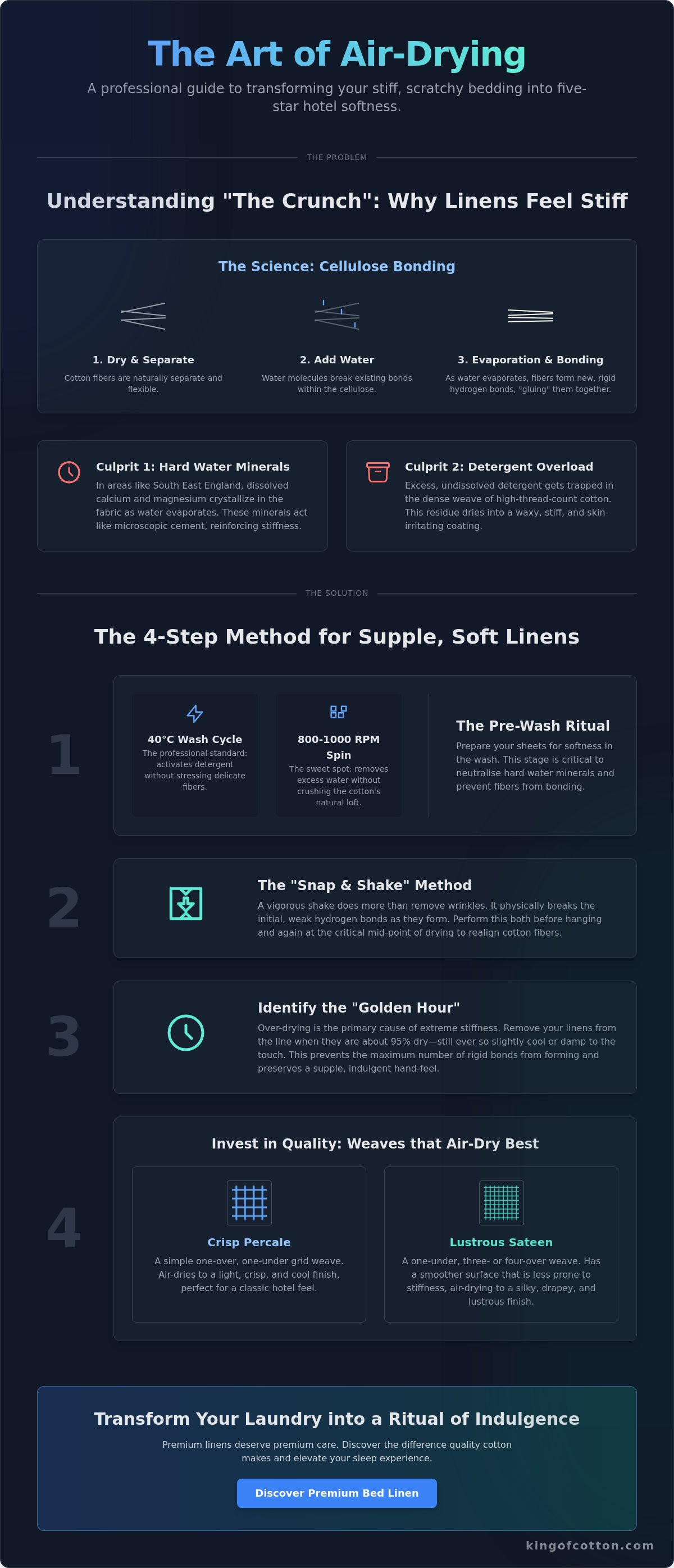
The "crunch" isn't a failure of your laundry skills; it's a matter of molecular science. When cotton fibers get wet, the water molecules break existing bonds within the cellulose. As that water evaporates during air-drying, the cellulose chains seek new partners, forming hydrogen bonds with one another. This process, known as cellulose bonding, essentially glues the fibers in place, creating that rigid, cardboard-like texture. Unlike synthetic materials that lack this complex molecular structure, premium bed linen made from long-staple cotton is particularly susceptible because it has more surface area for these bonds to form.
Understanding this science is the first step in learning how to air dry bedding without stiffness. While many people use chemical additives to solve this, looking at how fabric softeners work reveals they often just coat the fibers in a waxy layer to prevent bonding. This can actually damage the breathability and absorbency of luxury cotton over time, leading to a less comfortable sleep environment.
To better understand this concept, watch this helpful video:
The Role of Hard Water and Minerals
In the UK, your geographical location plays a significant role in the texture of your laundry. Areas like South East England and London are notorious for hard water, which is rich in dissolved calcium and magnesium. As water evaporates from your sheets on the line, these minerals don't vanish. Instead, they crystallize and settle deep within the weave. They act as a microscopic cement, reinforcing the stiffness already caused by cellulose bonding. Without a softening agent or a mechanical way to break these deposits, your sheets will inevitably feel scratchy against the skin.
Detergent Overload: The Hidden Culprit
It's tempting to believe that more detergent equals a cleaner, fresher scent. In reality, excess soap is a primary enemy of softness. High-thread-count cotton possesses a dense, intricate weave that easily traps undissolved detergent during the rinse cycle. When this residue dries, it creates a waxy, stiff coating that irritates the skin and dulls the fabric's natural luster. You can perform a simple "towel test" to check for build-up: soak a clean, dry hand towel in a basin of clear, warm water and squeeze. If the water turns cloudy or sudsy, you're using too much product. For those investing in high-quality bedroom essentials, adjusting your dosage is vital for maintaining that hotel-soft feel.
The Pre-Dry Ritual: Preparing Your Sheets for Softness
Achieving hotel-quality results starts long before you reach for the clothesline. The way you treat your linens in the drum dictates their final texture. A common misconception is that stiffness is inevitable with air-drying, but it's actually the result of how capillary adhesion causes stiffness by pulling fibers together as they dry. To counteract this, we must optimize the wash cycle to ensure every thread is primed for flexibility. This preparation is the foundation of learning how to air dry bedding without stiffness.
Temperature is a critical lever for cotton longevity. While higher heat might seem more hygienic, a consistent 40°C cycle is the professional standard for high-quality bed linen. This temperature is warm enough to activate detergents and dissolve body oils without stressing the delicate Egyptian cotton fibers. Similarly, your final spin speed requires a balanced approach. A speed that's too slow leaves excess moisture that encourages fiber bonding, while an excessively fast spin can bake wrinkles into the fabric. Aim for a moderate 800 to 1000 RPM to remove enough water without crushing the cotton's natural loft.
Natural Softening Agents vs. Chemical Softeners
Professional hospitality standards often eschew traditional fabric softeners. These products are frequently silicone-based, creating a hydrophobic coating that "waterproofs" the cotton and traps heat. Instead, the "Vinegar Trick" is a masterstroke for those refining their laundry routine. White vinegar is a natural acetic acid that gently breaks down mineral deposits and strips away soap residue that causes the dreaded "crunch." Simply add 100ml of white vinegar to the fabric softener drawer to replace chemical alternatives entirely. This simple swap ensures your sheets remain breathable and exceptionally soft to the touch.
Load Size and Water Volume
Your sheets need "space to dance" within the drum. Overloading the machine is a primary cause of poor rinsing, leaving behind the waxy detergent build-up discussed previously. When the drum is too full, the water cannot circulate through the dense weave of luxury textiles. By reducing your load size to no more than half the drum's capacity, you ensure a thorough rinse and a more efficient spin. For those seeking the highest standards, consulting The Ultimate Guide to Buying Luxury Bed Linen can help you select fabrics that naturally resist the effects of hard water and maintain their suppleness over time.
Outdoor vs. Indoor Air-Drying: Strategies for the UK Climate
Mastering the art of laundry in the British Isles requires more than just a weather app; it demands a strategic understanding of airflow and humidity. While the traditional image of linens billowing in a garden breeze is idyllic, the reality of the UK climate often necessitates a hybrid approach. Whether you're drying under a summer sun or within the confines of a sophisticated interior, the goal remains the same. You want to interrupt the formation of cellulose and hydrogen bonds before they lock your fabric into a rigid state. This is the professional secret to how to air dry bedding without stiffness, regardless of the view from your window.
Mastering the Outdoor Line
Wind is your most effective natural agitator. A consistent breeze provides the mechanical movement necessary to keep long-staple cotton fibers supple as moisture evaporates. To maximize this, position your sheets so the wind travels through the fabric rather than just over it. However, be wary of the "baking" effect. Direct, intense midday sun can evaporate moisture too quickly, leading to a brittle finish. Aim for the "Golden Hour" of drying. Take your linens down when they feel cool to the touch but no longer damp. This slight residual moisture prevents the fibers from becoming over-dried and scratchy. For those with hay fever, remember that the UK grass pollen season runs from mid-May until July. During these months, health experts often recommend indoor drying to prevent allergens from clinging to your pristine sheets.
Indoor Drying Without the Damp
When the British weather turns, indoor drying becomes an exercise in moisture management. The common mistake is placing wet linens directly onto radiators. This localized, intense heat causes rapid evaporation in specific spots, leading to permanent fiber damage and localized stiffness. Instead, prioritize airflow over heat. A high-quality dehumidifier is an essential investment for the modern home. It mimics a dry, breezy day by stripping moisture from the air, allowing your luxury bedding to dry evenly and gently. Position a simple oscillating fan nearby to keep the air moving. This constant circulation provides the subtle agitation required to maintain a soft hand-feel. If you use a heated airer, ensure the sheets are draped loosely. Never layer them, as trapped moisture between folds is a guaranteed recipe for the dreaded "crunch."
By controlling the environment, you ensure your linens retain the exquisite quality associated with professional hospitality standards. Whether utilizing the natural UV bleaching benefits of the sun or the controlled atmosphere of a dehumidifier, the focus should always be on a slow, steady evaporation process. This measured approach preserves the integrity of the cotton, ensuring your bed remains a sanctuary of comfort.
The 'Snap and Shake' Method: Professional Agitation Secrets
Static air is the enemy of soft cotton. In a professional laundry environment, the constant tumbling of a dryer provides the mechanical agitation necessary to keep fibers separated. When you choose to air dry, you must find a manual substitute for this movement. The secret to how to air dry bedding without stiffness lies in interrupting the drying process with deliberate, rhythmic physical intervention. This practice ensures that the cellulose fibers do not have the opportunity to fuse into a rigid structure as the moisture evaporates.
Step-by-Step: The Professional Snap
Before your linens ever touch the line or airer, they require an "initial snap." This isn't a gentle wave; it's a vigorous, whip-like motion designed to realign the fibers and shake out the heavy hems where water tends to collect. Hold the short end of the sheet firmly between your thumbs and index fingers. Give it a sharp, decisive snap that produces a distinct "crack" sound. For heavy Egyptian cotton sheets, repeat this process three or four times. This action forces air through the weave, separating individual threads that may have matted together during the spin cycle. It is the most effective way to ensure a supple foundation for the drying process.
A second intervention, the "mid-point fluff," is what separates amateur laundry from professional mastery. Most people hang their bedding and forget it until it's dry. Instead, return to your linens when they are approximately 50% damp. Remove them from the line, give them another vigorous shake, and re-hang them in the opposite direction. This breaks the initial hydrogen bonds as they form, preventing the fabric from setting in a stiff, flat position. This extra five minutes of effort is the definitive answer to how to air dry bedding without stiffness.
The 90% Rule: When to Bring Them In
Timing is everything in the pursuit of hotel-soft linens. The "90% Rule" dictates that you should bring your sheets indoors while they are still slightly cool to the touch and retain a hint of moisture. If you allow cotton to become "bone-dry" on the line, you have essentially baked the stiffness into the fabric. Bringing them in at the "iron-damp" stage allows the remaining moisture to evaporate slowly in the ambient temperature of your home. This final, gentle evaporation phase results in a much smoother, more flexible finish.
Once indoors, fold your linens immediately while they still possess that slight residual dampness. Stack the folded sheets on a flat surface. The weight of the stack acts as a natural press, smoothing out wrinkles and further softening the fibers through gentle compression. This ritual transforms your bedding into a sanctuary of comfort that rivals the most prestigious global hotels. To elevate your sleep experience further, browse our exquisite bed linen collections designed to maintain their luxurious hand-feel wash after wash.
Investing in Quality: Which Linens Air-Dry Best?
The foundation of a cloud-soft bed begins long before the wash cycle. Not all luxury fabrics respond to the line in the same way, and the raw material is the ultimate factor in your results. Long-staple Egyptian cotton remains the gold standard for those who prefer air-drying. Its longer, smoother fibers have fewer ends to fray or "catch" during evaporation, which naturally reduces the likelihood of the fiber bonding discussed earlier. When you invest in superior materials, mastering how to air dry bedding without stiffness becomes an intuitive part of a refined lifestyle.
Thread count also plays a significant role in flexibility. While a high thread count is often synonymous with luxury, a denser weave like an 800 or 1000-count traps more moisture and minerals. This density requires a more patient approach and more frequent agitation to prevent the "crunch." To manage this, we recommend building a rotation of at least three sets of premium bed linen. A proper rotation ensures you never have to rush the drying process, allowing each set the time it needs to dry slowly and gently in a controlled environment.
The Percale Advantage for Crispness
Percale utilizes a classic "one-over, one-under" weave that is prized for its exceptional breathability and cool, matte finish. Because this weave is more open, air flows through the fabric with ease. This airflow is a vital component in how to air dry bedding without stiffness, as it speeds up evaporation without the need for intense heat. When handled with the "Snap and Shake" method, Percale doesn't feel rigid; it feels crisp and light. It is the perfect choice for those who appreciate the structured feel of a traditional hotel suite. Explore our Percale Bed Linen collection to discover the beauty of this enduring weave.
Sateen: The Choice for Suppleness
If you desire a fabric with a lustrous sheen and a heavier drape, Sateen is the superior option. Its "four-over, one-under" weave exposes more of the cotton's surface, creating a silky texture that naturally resists the rigid bonds of air-drying. Sateen requires less mechanical agitation than Percale to remain soft because the long thread floats provide inherent flexibility and drape. To maintain the signature sheen without a tumble dryer, bring your sateen sheets in at the "iron-damp" stage. This allows the fibers to settle into their natural, lustrous state as they finish drying in the ambient air of your home. By selecting the right weave for your preferences, you ensure your sanctuary remains a place of pure, indulgent comfort.
Elevate Your Sleep Ritual with Hotel-Soft Linens
Mastering the art of the laundry ritual transforms a mundane chore into an investment in your daily well-being. By understanding the molecular science of cellulose bonding and utilizing natural agents like white vinegar to neutralize mineral deposits, you can permanently solve the frustration of scratchy sheets. Implementing the "Snap and Shake" method and respecting the "90% Rule" ensures your linens maintain the supple, indulgent texture they possessed on the day of purchase. These professional secrets are the key to how to air dry bedding without stiffness in any climate.
A serene sleep environment starts with the highest quality materials. With over 30 years of textile heritage, King of Cotton remains a trusted supplier to 5-star hotels globally, providing expertly crafted Egyptian cotton designed for both longevity and exquisite comfort. When you choose superior linens, the path to a refined lifestyle becomes effortless.
Discover the world's finest hotel-quality bed linen at King of Cotton and experience the difference that authentic craftsmanship makes. Your journey toward a more restful, luxurious night's sleep begins with the very first touch of a cloud-soft sheet.
Frequently Asked Questions
Is it better to air dry or tumble dry bedding for softness?
While tumble drying offers immediate softness through mechanical agitation, air-drying is superior for preserving the delicate integrity of premium fibers. To achieve the best results, air dry your linens until they are 90% dry, then finish with a brief five-minute tumble on a low-heat setting. This hybrid approach maintains the crispness of the weave while ensuring the final result is supple and inviting.
How do I get the 'stiffness' out of already dried sheets?
You can restore suppleness to rigid sheets by using a steam iron or a garment steamer. The combination of heat and moisture effectively breaks the hydrogen bonds that caused the initial "crunch." Alternatively, giving the dry sheets a vigorous manual snap before folding helps realign the fibers. Learning how to air dry bedding without stiffness from the start is ideal, but steam is the ultimate corrective tool.
Can I use tennis balls or dryer balls when air-drying?
Tennis balls and dryer balls are ineffective for air-drying because they rely on the centrifugal force of a tumbling drum to agitate the fabric. When sheets are hanging stationary on a line or airer, these tools have no way to impact the fibers. Instead, rely on the manual "Snap and Shake" method to provide the necessary mechanical movement required to keep the cotton threads separated and flexible.
Does white vinegar make my bedding smell like pickles?
White vinegar leaves no lingering scent once the fabric is dry. The acetic acid works to dissolve mineral deposits and detergent residue during the rinse cycle, then evaporates completely during the drying process. You'll be left with nothing but the clean, neutral scent of high-quality cotton. It's a sophisticated, natural alternative to synthetic softeners that often leave a waxy, artificial fragrance on your luxury linens.
How often should I wash luxury bedding to prevent build-up?
Washing your luxury linens once every seven days is the professional standard for maintaining fabric health. This frequency prevents the heavy build-up of body oils and perspiration which can become deeply embedded in high-thread-count weaves. Consistent, gentle cleaning ensures that detergents work effectively at lower dosages, which is a vital component in maintaining the long-term softness and breathability of the fabric.
What is the fastest way to dry sheets indoors without a dryer?
The most efficient indoor method involves a high-capacity dehumidifier paired with an oscillating fan. The dehumidifier removes moisture from the environment, while the fan provides the constant airflow needed to mimic a natural breeze. This combination prevents the air from becoming stagnant, which is the primary cause of slow drying times and the resulting rigidity often found in indoor-dried laundry.
Why do my sheets feel soft in the shop but stiff after the first wash?
Retailers often apply industrial finishing agents, known as sizing, to make linens look pristine and feel silky on the shelf. The first wash removes these temporary coatings, exposing the raw texture of the cotton and any mineral interference from your local water supply. Investing in long-staple Egyptian cotton ensures that once these agents are gone, the natural quality of the fiber provides a superior softness.
Can I air dry bedding in the winter in the UK?
Air-drying during a UK winter is entirely possible but should be conducted indoors to avoid high external humidity and low temperatures. Utilize a dedicated drying space with a dehumidifier to manage moisture levels effectively. Avoid placing sheets directly on radiators, as this localized heat is too intense for luxury textiles. Proper indoor management ensures your linens remain fresh and soft even when the weather is inclement.