

Troubleshooting Common Bedding Problems: The Expert Guide to Restoring Luxury
What if the rough texture and persistent dullness of your favorite linens aren't signs of age, but merely symptoms of a care routine that hasn't yet met professional standards? You likely invested in premium bedding with the expectation of lasting comfort, only to find yourself battling fitted sheets that won't stay put or fabrics that trap heat. It's a common disappointment to see an elegant bedroom suite lose its serene, tactile appeal. We understand that true luxury isn't just about the initial purchase; it's about maintaining that "five-star" sensation every single night.
This expert guide to troubleshooting common bedding problems reveals the trade secrets used by elite hospitality professionals to keep linens in pristine condition. We'll show you how to strip away stubborn buildup that causes yellowing, restore the buttery softness to scratchy cotton, and identify which high-performance materials are truly worth your investment. By the end of this article, you'll have the knowledge to transform your current bedding back into a sanctuary of rejuvenation and style. You don't need to replace your collection to enjoy an upgraded lifestyle; you simply need the right restoration techniques.
Key Takeaways
- Master the art of troubleshooting common bedding problems by distinguishing between irreversible fabric damage and reversible issues like detergent buildup or pilling.
- Discover why excessive soap and high-heat drying are the primary enemies of long-staple cotton, often compromising the very softness you invested in.
- Learn the professional "Linen Stripping" technique and natural whitening methods to restore the original luminosity and tactile elegance of your bedroom suite.
- Understand how material choice, specifically staple length and weave type, serves as the foundation for enduring luxury and resistance to common wear.
- Implement the "Rotation Rule" and professional temperature standards used by elite hotel suppliers to significantly extend the lifespan of your finest linens.
Identifying Common Bedding Problems: From Pilling to Discolouration
Troubleshooting common bedding problems begins with a keen eye for detail and an appreciation for tactile elegance. You expect your bed linen to remain as luminous and inviting as the day it arrived, yet daily use often introduces subtle changes in texture and appearance. When the serene atmosphere of your bedroom is interrupted by scratchy fabrics or dull colours, it's usually a sign that the material is reacting to environmental stressors or improper care routines. Identifying these issues early is the first step toward restoring the five star quality of your sanctuary.
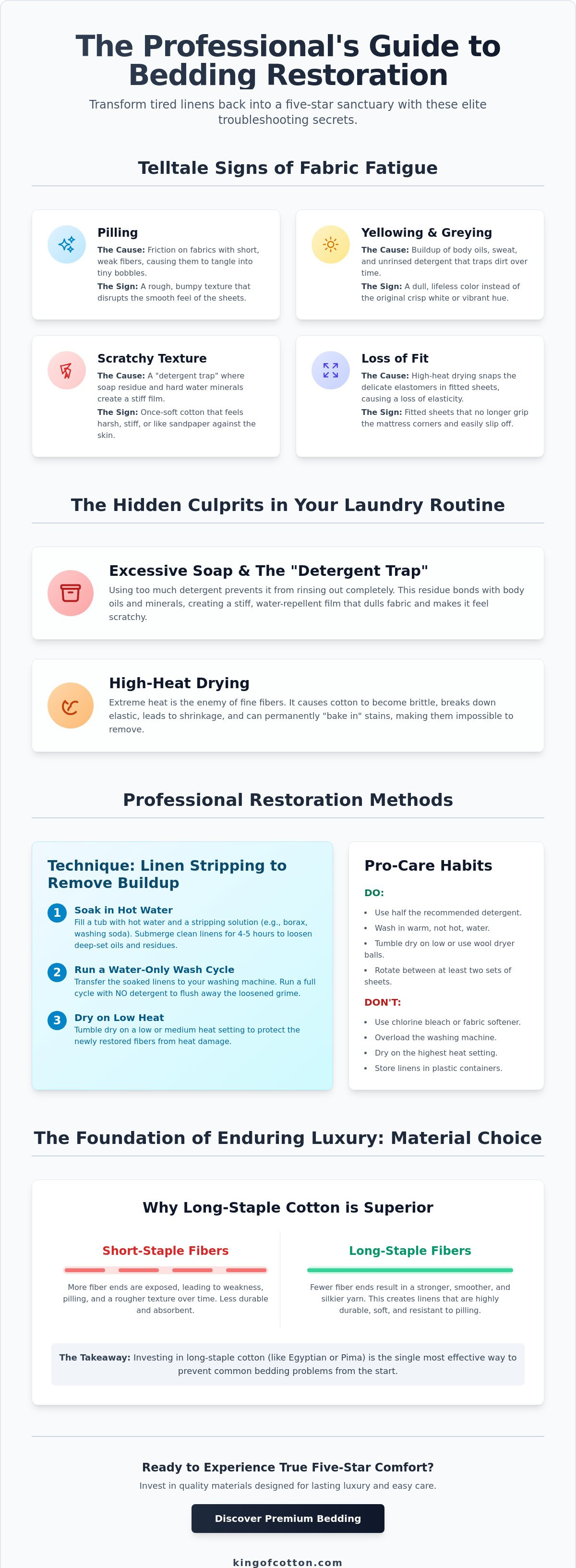
Pilling is the friction-induced migration of fibres to the fabric surface. These tiny, frustrating bobbles often appear on lower quality linens or fabrics subjected to excessive agitation during the wash. To truly understand the science behind fabric pilling, one must look at how shorter, weaker fibres work their way out of the yarn, tangling together into small spheres that disrupt the smooth hand feel of your sheets. While pilling is a physical change, discolouration is often a chemical one. Distinguishing between yellowing from body oils, the dull greying caused by detergent buildup, and the natural fading of age is essential for applying the correct restoration technique.
To better understand how these issues impact your overall bedroom aesthetic and how to avoid them, watch this helpful video:
Texture changes can be equally disheartening. A once silky sateen that now feels like sandpaper has likely suffered from microscopic fibre breakage or a "detergent trap," where soap residue bonds with minerals in your water. This creates a stiff, abrasive film over the fabric. Similarly, fit and form issues like shrinking or "creeping" fitted sheets often stem from elasticity loss. When high heat is used in the drying process, the delicate elastomers in the corners of your sheets can snap, causing the fabric to lose its crisp, tailored fit over your mattress.
The Telltale Signs of Fabric Fatigue
Regularly inspecting your linens for thinning and micro tears is a hallmark of professional care. Hold your sheets up to a natural light source; if you see uneven patches or increased transparency, the fabric is nearing the end of its functional life. Greying is another indicator of fatigue, often caused by poor rinsing or hard water minerals. Even high quality percale can turn from pleasantly crisp to uncomfortably crunchy if alkaline deposits are allowed to accumulate within the weave over time.
Temperature and Comfort Failures
If you find yourself overheating at night, troubleshooting common bedding problems often reveals a material mismatch. Synthetic blends are notorious for trapping heat and creating static electricity, whereas 100% natural cotton allows for superior breathability. Before you blame your duvet tog for night sweats, consider whether your sheets are facilitating airflow or acting as a thermal barrier. Natural fibres respond to your body's temperature, ensuring your sleep remains restorative and undisturbed.
Why Luxury Linens Fail: The Science Behind Common Issues
Understanding the molecular level of fabric degradation is essential when troubleshooting common bedding problems. Many owners of premium linens are surprised to learn that their cleaning efforts often accelerate the damage they're trying to fix. True luxury requires a delicate balance of chemistry and care, yet standard household habits frequently disrupt the structural integrity of even the finest textiles.
The "Detergent Trap" occurs when excessive soap fails to rinse away, instead bonding with body oils to create a microscopic, waterproof film. This coating makes the fabric feel stiff and prevents water from penetrating the fibres in future washes, leading to a dull, grey appearance. Similarly, using chlorine bleach on sweat-stained sheets is a common error. The chemicals in bleach react with the proteins in perspiration, causing a permanent yellow stain rather than the intended whitening. It's a chemical reaction that effectively "cooks" the stain into the material.
Heat is perhaps the most aggressive enemy of high-end textiles. While long-staple cotton is celebrated for its strength, high-temperature drying causes these fibres to become brittle and snap. This breakage manifests as lint in your dryer filter and a loss of tactile softness on your bed. Friction also plays a role. Rough sleepwear or even dry skin can snag delicate threads, accelerating the pilling process. When individual fibres break, they entangle with one another, creating the bobbles that ruin a smooth finish.
The Role of Thread Count in Durability
A common misconception in the industry is that a higher thread count always equals superior quality. In reality, excessively high counts often require thinner, weaker yarns to fit into the weave, which can lead to premature thinning. The true predictor of longevity is the Egyptian cotton staple length. Longer staples create a smoother, more resilient surface that resists breaking and pilling, regardless of the density. If you find your sheets lack breathability, it may be due to an overly dense weave that restricts airflow. You might consider exploring a more breathable bed linen collection to ensure a cooler night's sleep.
Environmental Impact on Bedding
Your local geography significantly influences the lifespan of your linens. In hard water areas of the UK, mineral deposits like calcium and magnesium can accumulate within the fabric, making it feel abrasive. Beyond the wash, your skincare routine might be the culprit behind mysterious orange or white spots. Ingredients like benzoyl peroxide act as potent bleaching agents that permanently strip colour from the yarn. Finally, avoid storing your seasonal sets in plastic containers. These bins trap gases that cause the fabric to yellow over time; breathable cotton bags are the preferred choice for long-term preservation.
Effective Solutions for Restoring Your Bedding’s Vitality
Troubleshooting common bedding problems doesn't always require a new purchase. Often, the perceived failures in your linens are simply a buildup of minerals and residues that mask the material's true quality. By employing professional restoration techniques, you can strip away layers of neglect and reveal the pristine, supple fabric underneath. This process isn't about harsh cleaning; it's about returning the textile to its natural, intended state of elegance.
Linen stripping is the most effective method for reviving tired sheets. This process involve a prolonged soak to break down the "Detergent Trap" discussed previously. Instead of aggressive chemicals, use a combination of bicarbonate of soda to lift oils and an oxygen based whitener to brighten the threads. White vinegar acts as a natural fabric softener by neutralising residual soap salts. This simple addition to your rinse cycle ensures that the fibres remain flexible and smooth against your skin without the waxy buildup found in commercial softeners.
For physical texture issues like pilling, a delicate touch is necessary. You can safely remove these bobbles using a high quality fabric shaver or a manual razor, provided you keep the fabric taut and work in small sections. Once the surface is smooth, use the "tennis ball trick" during a low heat drying cycle. The gentle mechanical agitation of the balls helps to fluff the cotton fibres, restoring loft and softness. This mechanical softening is a staple in the hospitality industry, where maintaining a crisp yet inviting texture is a daily requirement.
The 4-Step Restoration Protocol
- Step 1: The Deep Soak. Submerge your linens in a tub of warm water mixed with oxygen based whiteners for at least four hours to lift deep seated organic matter.
- Step 2: The Vinegar Rinse. Run a standard wash cycle using a cup of white vinegar instead of detergent to dissolve alkaline deposits.
- Step 3: Low-Heat Agitation. Tumble dry on a low setting with clean tennis balls to reset the cotton fibres and prevent stiffness.
- Step 4: Air-Curing. If possible, finish by hanging the linens in a well ventilated space to allow the fabric to breathe and settle.
Fixing Fit and Elasticity Problems
If your favourite set has shrunk, you don't have to discard it. You can often relax the fibres by soaking the item in lukewarm water mixed with a capful of hair conditioner for thirty minutes, then gently stretching it back to its original dimensions while damp. For those struggling with a "creeping" fitted sheet that won't stay in place, sheet suspenders offer a temporary fix. However, if your mattress is modern and thick, the most elegant and permanent solution is often an upgrade to extra deep fitted sheets designed to accommodate generous depths with ease. Troubleshooting common bedding problems often reveals that the issue isn't the quality of the fabric, but a mismatch between the sheet's pocket depth and the mattress height.
Selecting the Right Materials to Avoid Future Problems
Selecting the foundation of your sleep environment is the most effective strategy for troubleshooting common bedding problems before they arise. While restoration techniques can revive tired linens, investing in materials with superior structural integrity ensures that your bedroom remains a sanctuary of enduring comfort. The secret to a lasting, five star experience lies in understanding the technical specifications of the textiles you choose. Quality is never accidental; it is the result of deliberate material selection and masterful weaving techniques.
The choice between percale and sateen weaves significantly impacts how your bedding ages. Percale features a classic one-over, one-under weave that produces a matte, crisp finish. This structure is naturally more resistant to pilling and snagging because the threads are tightly interlocked. Sateen, conversely, uses a four-over, one-under pattern that creates a lustrous sheen and a silky drape. While sateen offers an indulgent feel, the longer "floats" of exposed thread are more susceptible to catching and surface abrasion. Regardless of the weave, the staple length of the cotton remains the primary predictor of longevity. Long-staple Egyptian cotton creates smoother yarns with fewer ends, which prevents the friction-induced breakage that leads to pilling.
Many consumers are tempted by synthetic blends marketed as "easy-care" polyester. However, these materials often carry a hidden cost. Synthetics trap body heat and moisture, which can lead to rapid discolouration and a breakdown of the fabric's tactile appeal. Weight also plays a vital role in performance. Understanding Grams per Square Metre (GSM) is essential for selecting duvets and protectors that offer the right balance of loft and breathability. A higher GSM indicates a denser, warmer product, while a lower GSM is preferred for lightweight, summer comfort. To ensure your next investment meets these rigorous standards, explore our collection of premium bed linen designed for discerning homes.
Choosing for Your Sleep Style
Hot sleepers should prioritise breathable, natural fibres to avoid the moisture-related discolouration often found in troubleshooting common bedding problems. Investing in hotel-quality bedding ensures your linens are built for high-frequency washing and long-term resilience. Look for OEKO-TEX certification to guarantee that your bedding is free from harmful chemicals, which can compromise both your health and the durability of the cotton fibres over time.
The Foundation: Duvets and Pillows
A clumpy duvet is often the result of poor internal construction. Choose duvets with box-stitch or baffle-box designs, which keep the filling evenly distributed and prevent cold spots. Similarly, pillow flattening is a sign that the internal support has collapsed. While regular washing can restore some loft, pillows should be replaced when they no longer provide adequate neck support. For more detail on creating the perfect sleep setup, consult our comprehensive guide to choosing the perfect duvet to match your personal requirements.
The Professional Care Routine: Advice from Hotel Linen Suppliers
Troubleshooting common bedding problems often leads back to a single realization: domestic care routines rarely mirror the meticulous standards of the professional hospitality sector. Elite hotels maintain the pristine quality of their linens through a disciplined approach to maintenance that prioritizes fibre health over aggressive cleaning. By adopting these industry secrets, you can extend the life of your bedroom suite and maintain that sought after crispness for years. True luxury is sustained through consistency and an understanding of textile requirements.
The "Rotation Rule" is perhaps the most vital secret of hotel linen suppliers. Professional establishments always utilize a three-set system: one set on the bed, one in the wash, and one resting in the linen cupboard. This rest period allows the natural cotton fibres to recover their shape and elasticity, preventing the premature thinning caused by constant use. Additionally, hotels have long debunked the myth of the 90-degree boil. While high heat was once necessary for sanitization, modern professional detergents are effective at 40 to 60 degrees. Lower temperatures protect the structural integrity of the yarn, ensuring your investment remains supple rather than brittle.
Achievement of a flawless, wrinkle-free finish relies on the "Ironing Damp" technique. Rather than allowing sheets to dry completely, hotels press them while they still retain a hint of moisture. This allows the iron to smooth out the weave with minimal effort, setting the threads in a perfectly flat alignment. Once pressed, storage is equally important. Cotton is a living fibre that requires airflow. Avoid airtight plastic bins; instead, store your sets in a cool, well-ventilated cupboard to prevent the "yellowing" caused by trapped gases. Proper airflow is the silent guardian of textile longevity.
Maintenance Schedules for the Home
Establish a consistent rhythm for your household textiles to prevent the buildup of oils and minerals. While sheets require weekly attention, mattress protectors and decorative runners can follow a monthly schedule. Sunlight serves as a natural disinfectant and whitener, though you should avoid overexposure to prevent the fabric from becoming too stiff. Most importantly, avoid chemical fabric softeners on high-quality cotton products. These agents coat the fibres in a waxy residue that reduces breathability and eventually leads to the very pilling you wish to avoid when troubleshooting common bedding problems.
When to Retire Your Linens
Even with masterful care, all textiles eventually reach the end of their lifecycle. Use the "Transparency Test" to evaluate your linens: hold the fabric up to a window or a strong light source. If the weave appears thin or the light passes through unevenly, the structural foundation has vanished and the fabric is prone to tearing. At this stage, repurpose your old luxury cotton into professional cleaning cloths, which are far superior to synthetic alternatives for polishing surfaces. If your current set fails this final check, it is time for a King of Cotton upgrade to restore the serene, indulgent atmosphere of your home.
Experience the Enduring Elegance of Professional Linens
Restoring the tactile indulgence of your bedroom suite is a journey that begins with understanding the delicate chemistry of care. By moving beyond reactive troubleshooting common bedding problems and adopting the "Rotation Rule" and "Linen Stripping" techniques used by elite hoteliers, you ensure your sanctuary remains as inviting as a five star suite. You've learned that the true longevity of your linens depends on selecting superior staple lengths and avoiding the "Detergent Trap" that masks the natural brilliance of fine cotton.
As authentic Egyptian cotton specialists with an established heritage in luxury textile craftsmanship, we provide the same high performance materials found in the world’s most prestigious residences. Don't settle for linens that lose their lustre after a few washes; choose quality built for the rigours of professional hospitality. Discover the luxury of hotel-grade linens at King of Cotton and invest in a sleep experience that only improves with time. Your path to a more refined lifestyle begins with the very first touch of a perfectly maintained sheet. Sleep well, knowing your comfort is anchored in mastery.
Frequently Asked Questions
Why do my sheets feel scratchy after washing?
Scratchy sheets are usually the result of detergent buildup or mineral deposits from hard water areas. This "detergent trap" creates a microscopic, stiff film over the cotton fibres that masks their natural softness. To restore the original feel, skip the fabric softener and add a cup of white vinegar to your rinse cycle. The vinegar effectively dissolves these residual salts, leaving your linens feeling supple and refined once again.
How do I remove yellow sweat stains from white pillowcases?
Yellowing is best addressed using a prolonged oxygen based soak rather than aggressive chlorine bleach. Bleach often reacts with the proteins in perspiration, causing the stain to darken and become permanent. Instead, submerge your pillowcases in a mixture of warm water and bicarbonate of soda for at least four hours. This gentle chemical reaction lifts the organic matter from the weave without compromising the structural integrity of the long staple cotton.
Can I fix pilling on my cotton sheets?
You can safely remove pilling by using a high quality fabric shaver or a manual razor while keeping the fabric taut. While this mechanical removal restores the smooth surface, it is a temporary fix for lower quality materials. To prevent these bobbles from returning, ensure you avoid high heat drying and consider upgrading to linens with a higher staple length, as these are naturally more resistant to the friction that causes pilling.
Why do my fitted sheets keep popping off the corners?
Fitted sheets typically pop off because the pocket depth is insufficient for your mattress or the elastic has suffered heat damage. When troubleshooting common bedding problems related to fit, check if your mattress has an added topper that requires extra deep pockets. High drying temperatures can also cause the elastic to become brittle and snap, leading to a loss of tension that prevents a secure, tailored fit over your bed.
Is it better to air dry or tumble dry luxury bedding?
A combination of both methods is the professional secret to maintaining tactile elegance. Tumble dry your linens on a low setting for ten minutes with clean tennis balls to fluff the fibres and prevent stiffness. Finish the process by air drying in a well ventilated space. This prevents the heat induced brittleness associated with full tumble drying while ensuring your sheets retain that desirable, fresh scent and crisp hotel finish.
How often should I really be washing my duvet and pillows?
You should wash your duvet and pillows every three to six months to maintain hygiene and internal loft. Use a large capacity machine to allow for proper agitation and ensure they are completely dry before returning them to the bed. Regular washing prevents the accumulation of allergens and body oils that can cause the filling to clump, ensuring your bedding remains a sanctuary of comfort and support throughout the year.
What is the best temperature to wash Egyptian cotton to prevent shrinking?
A temperature of 40 degrees Celsius is the professional standard for cleaning premium cotton without risking significant shrinkage. While a 60 degree wash is suitable for occasional deep sanitization, consistent use of moderate temperatures preserves the natural oils within the cotton fibres. This measured approach ensures your linens maintain their original dimensions and luxurious drape over hundreds of wash cycles, mirroring the standards of high end hospitality.
Why has my white bedding turned grey over time?
Greying is frequently caused by poor rinsing or washing white linens with darker items that shed minute amounts of dye. When troubleshooting common bedding problems like dullness, the "Linen Stripping" method is your most effective solution. By soaking the fabric in an alkaline solution followed by a vinegar rinse, you can lift the accumulated grey film. This process restores the luminous, pristine white finish that defines a sophisticated and well appointed bedroom.