

The Ultimate Guide to Bed Linen Care: Preserve 5-Star Luxury at Home
Why does the crisp, buttery softness of five-star hotel sheets seem to vanish the moment they enter your home laundry room? It is a common frustration for those who appreciate the finer things in life. You invest in premium Egyptian cotton, yet after a few cycles, that signature smoothness often feels replaced by a disappointing scratchiness. This ultimate guide to bed linen care bridges the gap between domestic chores and professional hospitality standards. It ensures your investment remains a source of rejuvenation rather than a source of stress.
We believe your home should reflect the same elegance and comfort found in the world's most prestigious residences. You don't have to settle for yellowing whites or the confusion of conflicting wash symbols. This guide provides the expert knowledge you need to master washing, drying, and stain removal with serene confidence. We'll walk through specific techniques for textile preservation, decode international care standards, and share the secrets to keeping your linens as soft as the day they arrived.
Key Takeaways
- Learn how material specificity and staple length determine the lifespan and tactile quality of your luxury bedding.
- Discover the professional sorting techniques and load management secrets used by world-class hotels to prevent fabric abrasion.
- Master the "slightly damp" rule and low-heat drying methods to maintain the crisp, refined finish of five-star linens.
- Implement the "Rule of Three" for rotation and expert stain removal within this ultimate guide to bed linen care to ensure long-term fabric integrity.
- Understand why investing in long-staple cotton simplifies your maintenance routine and outperforms standard textiles over time.
Understanding Your Fabric: The First Step in Luxury Bed Linen Care
Excellence in sleep begins with an intimate understanding of the materials you choose. This ultimate guide to bed linen care starts here because every fiber reacts differently to water, heat, and tension. When you invest in premium textiles, you aren't just buying fabric; you're acquiring a legacy of craftsmanship that dates back through the history of linens. To maintain that 5-star feel, you must first recognize the "staple length" of your cotton. Long-staple and extra-long-staple fibers, like those found in authentic Egyptian cotton, create smoother, stronger yarns. These fibers resist fraying and pilling, meaning your sheets will actually improve with every wash cycle rather than deteriorating. This inherent resilience is what allows luxury linens to survive hundreds of washes while maintaining their structural integrity.
It's a common misconception that luxury sheets should be at their peak softness on night one. High-thread-count linens often require a few "break-in" washes to relax the fibers and achieve their intended drape. This process is natural and essential for the fabric to reach its full sensory potential. Always consult the care label before that first immersion. Manufacturers provide these instructions based on specific textile testing, and ignoring them is the fastest way to compromise the structural integrity of your bedding. Proper care begins before the machine even starts.
To better understand this concept, watch this helpful video:
Egyptian Cotton vs. Percale and Sateen Weaves
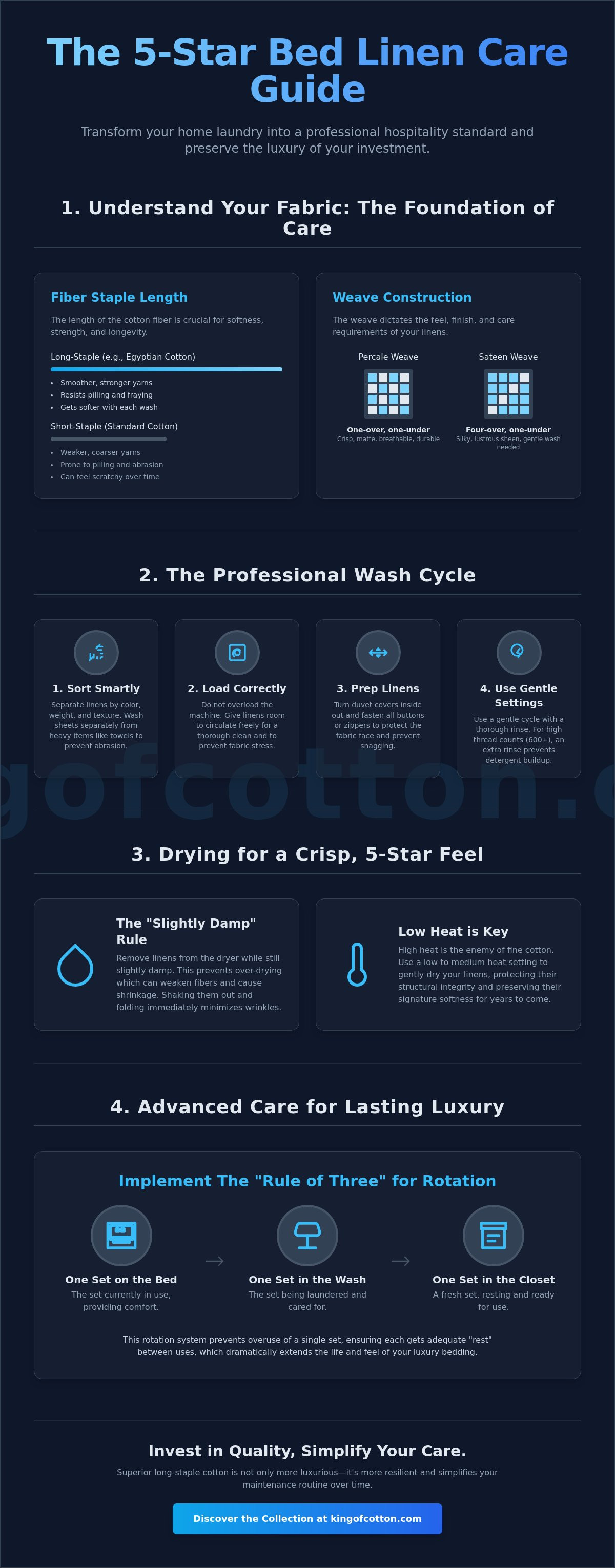
The weave of your fabric dictates its personality and its care requirements. Percale is a one-over, one-under plain weave. It's prized for its crisp, matte finish and exceptional breathability. Because it's a tight, simple structure, it's incredibly durable and handles standard laundering well. Sateen, however, uses a four-over, one-under pattern that exposes more thread surface. This creates that lustrous, silky sheen we associate with high-end hotels. Because more yarn is exposed, Sateen is more prone to pilling if subjected to high-friction wash cycles. Use a gentler setting for Sateen to keep those long-staple Egyptian cotton fibers smooth and reflective.
The Truth About Thread Count and Washability
A higher thread count doesn't necessarily mean a more fragile product. In fact, linens with counts of 600 or higher are often more substantial and resilient. However, they are denser. This density means they can trap detergent more easily than lower-count fabrics. You'll need to ensure a thorough rinse cycle to prevent soap buildup, which can make luxury cotton feel stiff or "tacky" over time. If you're still deciding which material suits your lifestyle best, consult The Ultimate Guide to Buying Luxury Bed Linen for a deeper dive into selection. Understanding these nuances is the essential first step in the ultimate guide to bed linen care.
The Professional Wash: How Hotels Keep Linens Pristine
Achieving the luminous, crisp finish of a 5-star suite requires a departure from standard domestic habits. In a professional setting, precision is paramount. The first rule of the ultimate guide to bed linen care is to never underestimate the importance of sorting. You must separate your laundry not just by color, but by weight and texture. Washing delicate Egyptian cotton alongside heavy luxury towels creates unnecessary friction. This abrasion leads to pilling and premature wear on the finer threads. Professional laundries treat sheets as a standalone category to ensure their structural integrity remains uncompromised.
Space is luxury. Overloading the drum is the most common mistake made in home laundry rooms. When the machine is too full, water and detergent cannot circulate freely, leaving behind sweat and oils that dull the fabric over time. Give your linens room to breathe and move. Before placing them in the machine, turn duvet covers inside out and fasten all buttons or zippers. This simple step protects the face of the fabric and prevents hardware from snagging on the delicate weave. It's a small investment in time that pays dividends in fabric longevity.
The true "hotel secret" for that signature freshness is the extra rinse cycle. Professional laundries prioritize the complete removal of soap residue. Any detergent left in the fibers will eventually oxidize, causing whites to yellow and fibers to feel stiff. By adding a second rinse, you ensure the cotton is completely purged of chemicals, leaving it soft and receptive to the finishing process.
Temperature Control and Detergent Selection
Temperature is a balancing act between hygiene and fiber longevity. A 60°C wash is effective for killing allergens, but a consistent 40°C cycle is often better for preserving the tensile strength of high-quality cotton. When choosing a cleaning agent, liquid detergents are vastly superior to powders. Powders can be abrasive and often fail to dissolve completely in cooler cycles. Avoid optical brighteners and harsh bleaches. These chemicals strip the natural protective oils from the cotton, leading to a brittle texture that no longer feels indulgent.
The Fabric Softener Controversy
It sounds counterintuitive, but fabric softeners are often the enemy of luxury linens. These products work by coating fibers in a thin layer of wax or silicone. While they feel soft initially, this coating traps heat and reduces the natural breathability of the cotton. For a professional result, use half a cup of white vinegar in the softener compartment instead. It naturally breaks down mineral deposits and soap residue, leaving your premium bed linen feeling soft, fresh, and completely unburdened by chemicals. Consult expert advice on how to wash your sheets to see how these professional adjustments can transform your sleep environment. Mastering these techniques is a core pillar of the ultimate guide to bed linen care.
Drying and Finishing for that Crisp, 5-Star Feel
The transition from the washing machine to the drying rack is where the final texture of your bedding is determined. To maintain the integrity of high-quality fibers, you must prioritize gentleness over speed. As part of this ultimate guide to bed linen care, we emphasize the physical "snap" or shake-out. Before hanging or tumble drying, give each piece of luxury bed linen a vigorous shake. This simple action aligns the fibers and releases deep-set wrinkles, significantly reducing the effort required during the ironing phase.
Air-drying remains the gold standard for textile longevity. It allows the cotton to retain its natural moisture balance and elasticity, preventing the structural breakdown that occurs in high-heat environments. If you must use a tumble dryer, adhere strictly to the "slightly damp" rule. Remove your linens when they are approximately 90% dry. Over-drying is the primary cause of brittle, yellowed fibers and permanent creasing. By catching the fabric while it still holds a hint of moisture, you preserve the supple hand-feel that defines a premium sleep experience.
Tumble Drying vs. Line Drying
While line drying is ideal, it requires a mindful approach. Avoid direct, harsh sunlight for colored linens, as UV rays can cause significant bleaching over time. For those using a dryer, incorporate wool dryer balls. These natural tools separate the fabric layers, improving airflow and reducing drying time without the need for chemical-laden dryer sheets. Remember that high heat is the enemy of Egyptian cotton. It scorches the delicate fibers and leads to the scratchy texture many associate with aged bedding. Always select the lowest possible heat setting to ensure your investment remains soft for years.
The Art of Ironing Bed Linen
The secret to a flawless, hotel-quality finish is the damp ironing technique. It's far easier to remove wrinkles when the fabric is still slightly moist. If your linens have dried completely, use a spray bottle to lightly mist them before pressing. Set your iron to the appropriate temperature for your weave; Percale can handle slightly higher heat, while Sateen requires a cooler touch to protect its lustrous sheen. Once pressed, use professional folding techniques. Fold your sheets into neat, uniform rectangles and store them in a cool, dry place. This prevents new creases from forming and ensures that every time you dress your bed, it looks and feels like a professional installation. Mastering this finishing process is the final step in achieving a truly refined home environment.
Advanced Care: Tackling Stains, Storage, and Rotation
Preserving the pristine condition of your bedding requires a strategy that extends beyond the laundry cycle. A cornerstone of the ultimate guide to bed linen care is the "Rule of Three." This professional hospitality standard dictates that you should own three sets of linens for every bed: one on the mattress, one in the wash, and one resting in the cupboard. This rotation is indispensable. It allows the natural fibers to recover their shape and elasticity between uses, significantly extending the life of the fabric. Without this period of "rest," even the finest Egyptian cotton will succumb to premature thinning and wear.
Over time, you may notice a slight yellowing on your white sheets. This isn't a sign of poor washing but a result of body oils and sweat reacting with the cotton fibers. To manage this, revisit the extra rinse cycle mentioned previously and avoid using heavy, oil-based body creams immediately before sleep. If your linens begin to show signs of permanent thinning, persistent grayness, or a loss of their original tactile "snap," it's time to consider a replacement. Even with meticulous care, the structural integrity of cotton eventually reaches its natural limit after several years of frequent use.
Natural Stain Removal Remedies
When accidents happen, speed is your greatest ally, but aggression is your enemy. For organic stains, a paste of baking soda and a few drops of lemon juice acts as a gentle, natural lifting agent. Apply it softly and let it sit. Never rub a stain, especially on high-quality Sateen weaves. Rubbing forces the pigment deeper into the yarn and can permanently damage the lustrous surface of the fabric. For linens featuring delicate embroidery, use a soft-bristled brush to dapple the cleaning solution onto the area rather than saturating the entire piece. This localized care protects the intricate threadwork from unnecessary tension.
Optimal Storage Conditions
Your storage environment is just as vital as your wash routine. Luxury linens need to breathe. Avoid plastic bins or vacuum-sealed bags, which trap moisture and can lead to a stale "cupboard scent" or even mildew. Instead, store your pressed bedding in a cool, dark linen closet or inside breathable cotton bags. To maintain a serene atmosphere, place lavender sachets or cedar blocks on your shelves. When it comes to organization, the hospitality method for folding fitted sheets is a master skill. Tucking the elasticated corners into one another creates a flat, uniform rectangle that stacks perfectly, preventing the unsightly bunching that leads to deep-set wrinkles.
Proper climate control and plumbing maintenance are essential for preventing humidity-related damage in storage areas. To ensure your home environment remains ideal for preserving fine textiles, you can discover First Choice Plus Plumbing & Air for expert assistance.
To ensure your bedroom remains a sanctuary of elegance, refresh your collection with our premium bed linen. Mastering these advanced techniques ensures that every night feels like an escape into a world-class hotel suite.
Investing in Quality: How Superior Materials Simplify Care
True luxury is defined by endurance. While mass-market "cheap" cotton often loses its luster and structural integrity after fewer than 20 washes, premium textiles are engineered to thrive under frequent laundering. The secret lies in the staple length discussed earlier in this ultimate guide to bed linen care. Long-staple fibers create a smoother yarn with fewer exposed ends. This significantly reduces pilling and thinning, ensuring your sheets maintain their substantial, opulent feel for years. When you choose high-quality materials, you aren't just buying bedding; you're making a long-term investment in your well-being and home aesthetic.
Superior materials simplify your life by responding predictably to professional care techniques. Authentic Egyptian cotton possesses a natural resilience that allows it to release stains more easily and retain its shape after drying. This durability means you spend less time replacing worn-out sets and more time enjoying the serene comfort of a perfectly dressed bed. Viewing your linens as a foundational element of your home's luxury ensures that every night remains an indulgent experience.
The King of Cotton Hospitality Standard
Our expertise is rooted in a prestigious heritage as hotel linen suppliers. We provide textiles to the world's most discerning commercial sectors, where products must withstand the rigors of industrial laundering without sacrificing softness. This commercial-grade durability is built into every item we offer for the home. It gives you the confidence that your bedding can handle the "Professional Wash" and "Damp Ironing" techniques with grace. If you require tailored guidance or wish to feel the quality of our weaves firsthand, we invite you to visit our stores for expert in-person advice from our seasoned team.
Final Checklist for a Perfect Night’s Sleep
Maintaining a 5-star sleep environment is a rhythmic process. Use this summary as your quick-reference ultimate guide to bed linen care:
- Daily: Smooth your sheets and plump your pillows each morning to maintain airflow.
- Weekly: Launder your linens at 40°C to 60°C using liquid detergent and an extra rinse cycle.
- Monthly: Inspect for any minor stains and treat them with natural remedies before they set.
- Seasonally: Rotate your sets using the "Rule of Three" to prevent localized wear.
The journey to a more refined lifestyle begins with the right materials. We invite you to browse our luxury bed linen collections and discover the difference that professional-grade quality makes. If you have specific care queries or need assistance selecting the perfect weave for your home, please contact us. We're here to ensure your investment in comfort lasts for many years to come.
Transform Your Bedroom into a Permanent Five-Star Retreat
Mastering your home environment is a journey that begins with the right knowledge and the finest materials. By implementing the "Rule of Three" and adopting the professional rinse techniques outlined in this ultimate guide to bed linen care, you preserve the tactile indulgence of your investment. You now possess the secrets to maintaining the crisp, inviting finish that defines world-class hospitality. These small adjustments in your laundry ritual ensure that your sanctuary remains as elegant as the day you first dressed the bed.
Our authority in this craft is built on over 30 years of textile mastery and a prestigious heritage as suppliers to the world’s finest hotels. We remain dedicated to providing the highest standards of luxury, using expertly crafted 100% Egyptian Cotton to ensure every night is a restorative experience. It's time to bring that signature hotel feeling home for good. There's no substitute for the serene confidence that comes from resting on materials designed to last.
Upgrade your sleep with our world-renowned Bed Linen collections
Embrace these professional standards and enjoy the enduring comfort of a truly refined home every single evening.
Frequently Asked Questions
How often should I wash my bed linen for optimal hygiene?
You should wash your bed linen once every seven days to maintain a pristine sleep environment. This frequency prevents the accumulation of skin cells and dust mites that can compromise both hygiene and fabric integrity. If you share your bed with pets or suffer from seasonal allergies, increasing this to twice weekly ensures your sanctuary remains fresh and restorative. Regular laundering is a foundational habit for anyone following an ultimate guide to bed linen care.
Can I wash Egyptian cotton at 60 degrees?
You can wash Egyptian cotton at 60 degrees when a deep, hygienic clean is required to eliminate allergens or bacteria. However, a consistent 40-degree cycle is superior for preserving the long-term tensile strength of the fibers. High temperatures can eventually make natural yarns brittle. It's best to reserve the 60-degree setting for occasional use, relying on cooler temperatures for your standard weekly maintenance to ensure lasting softness.
Why are my white sheets turning yellow and how do I fix it?
Yellowing is typically caused by the oxidation of body oils and sweat or a buildup of detergent residue within the weave. To fix this, ensure you're using an extra rinse cycle to purge all soap from the fibers. You can also add half a cup of white vinegar or baking soda to the wash. These natural agents break down mineral deposits and brighten the fabric without the damaging effects of harsh chemical bleaches.
Should I use fabric softener on high-thread-count sheets?
You should avoid fabric softeners on high-thread-count linens because they coat the premium fibers in a waxy silicone film. This coating clogs the natural pores of the cotton, significantly reducing its breathability and moisture-wicking properties. Over time, this buildup makes luxury sheets feel heavy and dull. Rely instead on the inherent quality of long-staple cotton, which naturally softens with every correct wash cycle without needing chemical additives.
What is the best way to dry bed linen without a tumble dryer?
The best method is to hang your linens on a sturdy line or drying rack immediately after a vigorous shake-out. Shaking the fabric while damp aligns the fibers and releases deep-set creases. Position your drying rack in a well-ventilated room or a shaded outdoor spot to avoid the bleaching effects of direct sunlight. This gentle approach preserves the fabric's elasticity and results in a naturally fresh, clean scent that machines cannot replicate.
How do I get the "crisp" hotel feel at home?
Achieving that signature crispness requires pressing your linens while they are still slightly damp. This "damp ironing" technique allows the heat to flatten the cotton fibers more effectively, creating a smooth and structured surface. When combined with high-quality Percale or Sateen weaves, this professional finishing step provides the tactile elegance found in five-star suites. It's the most effective secret shared in this ultimate guide to bed linen care.
Is it necessary to wash new bed linen before the first use?
It's vital to wash new linens before they touch your skin to remove any residue from the weaving and packaging process. This first wash also serves as the beginning of the "breaking in" phase, helping the fibers to relax and settle into their true texture. You'll find that luxury cotton becomes more supple and inviting after this initial laundering, providing a much more comfortable experience on your first night.
How can I remove blood or oil stains from luxury cotton?
Treat blood stains immediately with cold water to prevent the proteins from setting into the fibers. For oil-based stains from cosmetics or body creams, apply a paste of baking soda and water or a drop of clear dish soap to the spot before washing. Always dab the area gently rather than rubbing. Rubbing can fray the delicate yarns and permanently damage the lustrous finish of your premium Egyptian cotton bedding.