

The Best Hypoallergenic Pillows UK: A Complete Guide to Allergy-Free Sleep
The promise of a rejuvenating night’s sleep can feel impossibly distant when allergies disrupt your rest, leaving you to face the morning with sniffles and itchy eyes. Often, the culprit is the very pillow you lay your head on. The search for the best hypoallergenic pillows UK residents can trust is about more than just avoiding allergens; it's about reclaiming your right to a truly restorative, hotel-quality experience in your own home.
This comprehensive guide is designed to transform your nights from a struggle into a sanctuary. We will navigate the world of premium anti-allergy materials, from luxurious microfibre to supportive memory foam, ensuring you find a pillow that not only resists dust mites but also maintains its elegant shape and comfort, wash after wash. Prepare to discover the perfect blend of firmness and support tailored to your unique sleeping style. It’s time to elevate your sleep and awaken to mornings filled with clarity, not congestion.
Key Takeaways
- Identify the true source of your night-time allergies, which often lurks unseen within traditional pillows.
- Discover the crucial differences between natural and synthetic fillings to find a material that delivers both premium comfort and allergy relief.
- Learn how your sleeping position dictates the ideal loft and firmness to choose the best hypoallergenic pillows UK for perfect spinal alignment.
- Transform your bed into an allergy-free sanctuary with a hotel-quality pillow, the essential first step towards a truly rejuvenating sleep.
Understanding Pillow Allergies: What Really Disrupts Your Sleep?
Your bedroom should be a sanctuary, a place of ultimate comfort and rejuvenation. Yet for many, the very pillow they rest their head on can become a source of nightly disruption. While it may appear pristine, a traditional pillow can harbour a host of microscopic allergens that trigger sneezing, itching, and restless nights. Understanding these culprits is the first step toward selecting the perfect pillow and reclaiming your sleep.
To better visualise the impact of allergens in your bedding, this expert overview provides valuable insights:
Beyond the common triggers, other natural fillings like feathers and down can occasionally cause reactions in sensitive individuals due to the proteins they contain. Furthermore, any pillow can become a breeding ground for mould and mildew if it retains moisture, releasing spores that can irritate the respiratory system. This is why choosing the right materials is essential in the search for the best hypoallergenic pillows UK sleepers deserve.
Dust Mites: The Unseen Enemy
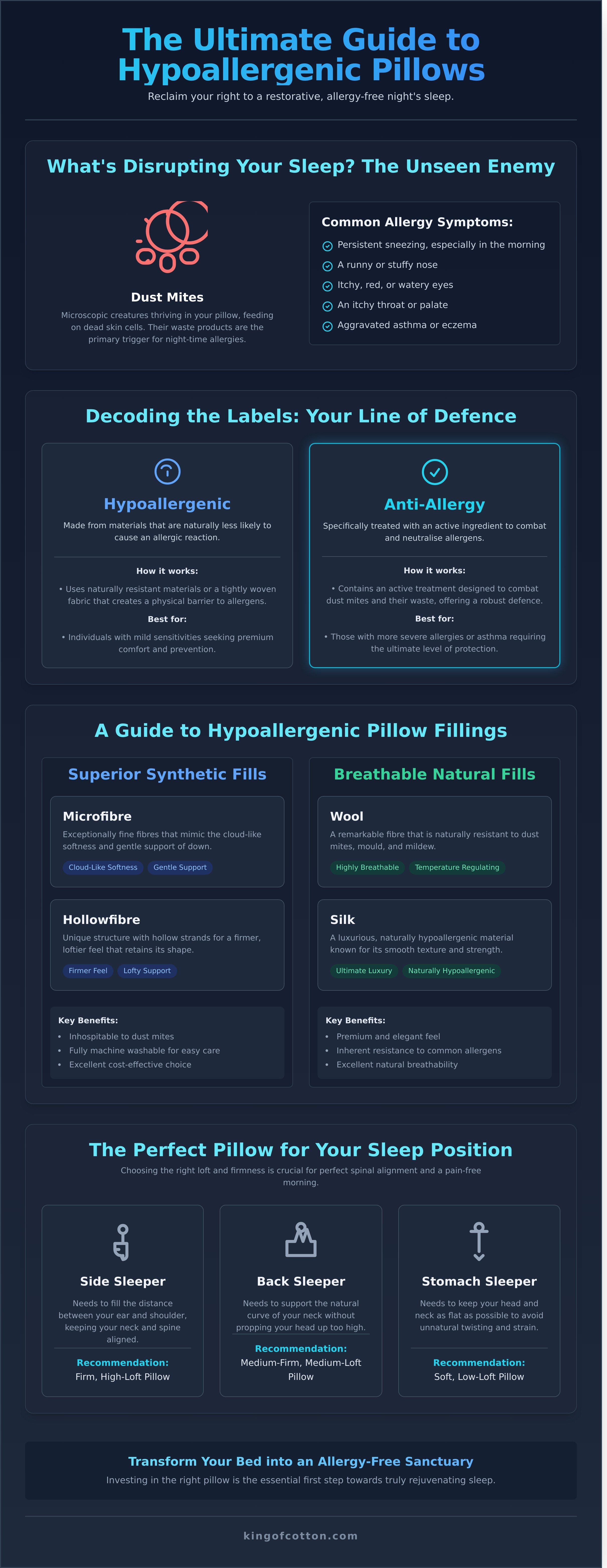
The primary offender for most allergy sufferers is the dust mite. These microscopic creatures are invisible to the naked eye and thrive in the warm, humid environment of your bedding, feeding on dead skin cells. It isn’t the mites themselves that cause the problem, but rather the proteins found in their waste products. When inhaled, these allergens can trigger a range of uncomfortable symptoms, including:
- Persistent sneezing, especially in the morning
- A runny or stuffy nose
- Itchy, red, or watery eyes
- An itchy throat or palate
- Aggravated asthma or eczema
Hypoallergenic vs. Anti-Allergy: What's the Difference?
When shopping for pillows, you will encounter two key terms: 'hypoallergenic' and 'anti-allergy'. While often used interchangeably, they signify a crucial difference in function. Understanding this distinction is key to making an informed choice for your health.
Hypoallergenic refers to materials that are less likely to cause an allergic reaction. This is typically due to a naturally resistant quality or a tightly woven structure that prevents allergens from penetrating. For a deeper look into what hypoallergenic means, it's useful to know the term itself simply indicates a lower potential for allergy. In contrast, Anti-Allergy pillows are specifically treated with an active ingredient designed to combat and neutralise dust mites and their allergens, offering a more robust defence. For those with mild sensitivities, a premium hypoallergenic pillow is an excellent choice. However, for individuals with more severe allergies or asthma, an anti-allergy treated pillow provides the ultimate protection for an undisturbed night.
A Guide to Hypoallergenic Pillow Fillings: Natural vs. Synthetic
Selecting the right filling is paramount when creating your serene, allergy-free sleep sanctuary. The material inside your pillow determines its comfort, support, and, most importantly, its ability to resist common allergens like dust mites and mould. The choice generally falls into two categories: advanced synthetics and premium natural fibres, both offering unique benefits to help you achieve a rejuvenating, uninterrupted night's sleep.
Superior Synthetic Fills: Microfibre & Hollowfibre
Modern synthetic fillings have been engineered to provide a truly luxurious experience, rivalling the feel of premium natural materials. Microfibre is crafted from exceptionally fine fibres, creating a pillow that mimics the cloud-like softness and gentle support of the finest down. In contrast, Hollowfibre features a unique structure with a hollow space in the middle of each strand, which provides a firmer, loftier support that retains its shape beautifully. Crucially for allergy sufferers, these materials are inherently inhospitable to allergens. Their structure makes it difficult for mites to thrive, a key factor in managing a house dust mite allergy. Being fully machine washable, they represent an excellent, cost-effective choice for those seeking the best hypoallergenic pillows UK retailers have to offer.
Breathable Natural Fills: Wool and Silk
For those who prefer the timeless elegance of natural materials, certain fibres offer superb hypoallergenic properties. Wool is a remarkable natural fibre, inherently resistant to dust mites, mould, and mildew. Its exceptional breathability helps regulate your temperature throughout the night for deep, restorative sleep. Silk, the pinnacle of luxury, is another naturally hypoallergenic option that is both incredibly smooth and resistant to mites. While these premium materials offer unparalleled natural comfort, they typically command a higher price point (£60 - £120+) and may require more specialised care to maintain their integrity.
Other Materials: Latex and Memory Foam
While often chosen for their unique supportive qualities, materials like latex and memory foam have specific considerations for allergy sufferers. Natural latex is resistant to dust mites and mould, offering firm, responsive support. However, it is vital to ensure you do not have a latex allergy before choosing this option. Memory foam's dense structure is an effective barrier against dust mites, but its lower breathability means it can sometimes trap heat. These are excellent choices for targeted neck and spine support, but their specific properties should be weighed carefully.
How to Choose the Perfect Pillow for Your Sleep Position
Selecting the perfect pillow is an investment in your well-being, directly impacting the quality of your sleep and your comfort throughout the day. While a hypoallergenic filling is essential for fending off allergens, the pillow's ultimate success rests on its ability to provide correct anatomical support. Even the finest materials can lead to neck pain if they fail to align your spine. Finding the best hypoallergenic pillows UK has to offer means matching the pillow’s loft and firmness to your unique sleep position, ensuring your head and neck are perfectly supported night after night.
For Side Sleepers: Firm Support is Key
Side sleepers create the largest gap between their head and the mattress, a space that must be filled to prevent the neck from craning downwards. The ideal choice is a firmer, higher-loft pillow that provides substantial support to the neck and shoulders. This maintains a straight, neutral spinal alignment. Premium, densely packed hollowfibre or a high-quality microfibre pillow are excellent options, offering the structure and resilience needed for a deeply restorative sleep.
For Back Sleepers: Medium Loft for Gentle Cradling
When sleeping on your back, the goal is to support the natural curvature of your neck without pushing your head too far forward. A medium-loft, medium-firm pillow is the perfect solution, cradling the head and preventing any uncomfortable tilting. This ensures your airway remains open and your spine stays aligned. Sumptuous microfibre fills provide a beautiful balance of softness and support, while natural wool pillows offer exceptional breathability and comfort for an undisturbed night.
For Front Sleepers: Soft and Low is the Way to Go
Sleeping on your front places the most strain on the neck, as the head must be turned to the side. A thick, firm pillow will force your neck into an unnatural angle, leading to stiffness and pain. For this reason, a very soft, low-profile pillow is essential. In some cases, no pillow at all is the best option. For those who prefer a touch of comfort, a thin, silk-filled pillow or one with a light, soft microfibre fill provides a whisper of cushioning without compromising your posture.
Creating Your Allergy-Free Sleep Sanctuary
Selecting the perfect hypoallergenic pillow is the cornerstone of reclaiming your sleep from allergens. However, to truly transform your bedroom into a serene and restorative haven, a more comprehensive approach is essential. While your search for the best hypoallergenic pillows UK is the most critical first step, complementing this choice with a few strategic habits will ensure every night is a breath of fresh air.
By elevating your entire sleep environment, you create a robust defence against dust mites, pet dander, and pollen, ensuring a deeper, more rejuvenating rest.
The Importance of Pillow and Mattress Protectors
Think of protectors as the ultimate guardians for your bedding. A high-quality, anti-allergy protector creates an impermeable barrier, effectively sealing your pillow and mattress off from dust mites, skin cells, and moisture. This not only provides an exceptionally hygienic sleep surface but also significantly extends the lifespan of your luxury bedding investment. For maximum effect, these protectors should be washed weekly in water heated to at least 60°C to eliminate any accumulated allergens.
Choosing the Right Bed Linen and Washing Routine
The fabric you sleep in matters. We recommend choosing premium bed linen crafted from tightly woven, natural fibres like long-staple cotton percale. The fine, tight weave of these luxurious fabrics creates a surface that is naturally more resistant to allergen penetration. To maintain this pristine environment, a strict washing routine is key: launder all bedding weekly at 60°C. For a complete solution, consider pairing your pillows with a hypoallergenic duvet to fully envelop yourself in clean, breathable comfort.
Bedroom Environment Tips
Beyond the bed itself, simple adjustments to your bedroom can dramatically reduce allergen levels. These small changes cultivate an atmosphere of pure tranquillity and cleanliness.
- Vacuum with Precision: Use a vacuum cleaner equipped with a HEPA (High-Efficiency Particulate Air) filter at least twice a week. This ensures that microscopic allergens are captured and removed from your carpets and floors, rather than being recirculated into the air.
- Control Humidity: Dust mites and mould thrive in damp conditions. Aim to keep the humidity level in your bedroom below 50% using a dehumidifier or by ensuring good ventilation.
- Minimise Dust Traps: Heavy curtains, upholstered furniture, and thick rugs can harbour vast amounts of dust. Opt for lighter, washable window coverings and maintain a minimalist, clutter-free decor to give allergens fewer places to hide.
By thoughtfully combining the best hypoallergenic pillows UK has to offer with these expert practices, you can curate a true sleep sanctuary, night after night.
The King of Cotton Recommendation: Hotel-Quality Luxury, Allergy-Free
For over 25 years, King of Cotton has been the secret behind the sublime comfort found in the world's finest five-star hotels. We understand that a truly restorative night’s sleep is a cornerstone of luxury. That is why we have applied our extensive expertise to create a collection of hypoallergenic pillows that deliver this hotel-quality experience directly to your home, ensuring that allergies never stand in the way of your comfort.
Throughout this guide, we've identified the key features of an effective allergy-friendly pillow: premium synthetic fills, breathable materials, and certified safety standards. Our curated selection meets these needs precisely, proving you never have to compromise on indulgence for the sake of well-being. We believe our collection represents the very best hypoallergenic pillows UK customers can invest in for a serene, symptom-free sleep.
Our Premium Microfibre Pillows
For those seeking the plush, cloud-like embrace of traditional down without the associated allergens, our Microfibre pillows are the ultimate solution. Engineered to mimic the finest down, they offer an unparalleled sleep experience:
- Supreme 'Feels Like Down' Comfort: Sink into the exceptional softness of our advanced microfibre fill, designed for deep, luxurious comfort.
- Lasting Support & Easy Care: These pillows provide excellent support for your head and neck while retaining their shape and loft, even after machine washing.
- Certified Safe & Pure: All our microfibre pillows are OEKO-TEX certified, guaranteeing they are completely free from harmful chemicals and safe for you and your family.
Elevate your sleep from a necessity to a nightly indulgence. Discover our hotel-quality pillow collection.
Why Choose King of Cotton?
Our reputation is built on an unwavering commitment to excellence. When you choose King of Cotton, you are investing in decades of expertise and a passion for the finest materials. The same pillows that grace the suites of prestigious hotels are available to you, backed by a legacy of trust and superior craftsmanship. We handle every detail with care, from sourcing the best materials to ensuring your order arrives with our simple and reliable UK delivery options. Experience the difference that true quality makes, and transform your bedroom into a sanctuary of comfort and elegance.
Experience the Ultimate in Allergy-Free Comfort
Choosing the right pillow is a transformative step towards conquering allergies and achieving restorative sleep. As we've explored, understanding the nuances of different fillings and selecting a pillow that supports your unique sleep position are paramount. Your search for the best hypoallergenic pillows uk ends not just with a product, but with an investment in your health and tranquillity. At King of Cotton, we combine over 25 years of linen expertise with the standards of the world's finest 5-star hotels to bring you unparalleled comfort.
Every pillow in our collection is OEKO-TEX certified, ensuring it is free from harmful substances and perfectly suited for a sensitive respiratory system. We invite you to elevate your sleep sanctuary from the ordinary to the extraordinary. Ready to breathe easier and sleep deeper? Shop our full range of luxurious hypoallergenic pillows and discover the difference that true quality makes.
Invest in your wellbeing tonight and awaken to a brighter, clearer tomorrow.
Frequently Asked Questions
What is the difference between a hypoallergenic and an anti-allergy pillow?
While often used interchangeably, there is a subtle yet important distinction. A hypoallergenic pillow is crafted from materials, such as tightly woven cotton or specific synthetic fibres, that are naturally resistant to allergens and unlikely to cause a reaction. An anti-allergy pillow, conversely, has been actively treated with chemicals to combat the build-up of dust mites and other allergens. Both offer excellent protection, but the approach to achieving a serene, allergy-free sleep environment differs.
How often should I wash my hypoallergenic pillows and protectors?
To maintain the pristine condition and effectiveness of your investment, we recommend washing your hypoallergenic pillows every three to six months. Your pillow protectors, which act as the first line of defence against allergens and oils, should be laundered more frequently-ideally, every month alongside your fine bed linen. Always consult the care label for specific instructions to preserve the integrity of the materials and ensure lasting comfort and hygiene.
Can synthetic pillows feel as luxurious as down or feather pillows?
Absolutely. Modern advancements in textile technology have created synthetic fills, such as premium microfibre clusters, that beautifully replicate the sumptuous softness and loft of natural down. These advanced materials offer a cloud-like comfort and gentle support, providing the indulgent feel of a five-star hotel pillow while also delivering exceptional hypoallergenic benefits. You no longer need to compromise on luxury to achieve a peaceful, allergy-friendly night’s sleep.
Are memory foam pillows a good choice for people with allergies?
Memory foam pillows are an excellent choice for allergy sufferers. The dense, viscoelastic structure of the foam creates an inhospitable environment for dust mites, mould, and other common allergens, preventing them from penetrating and settling within the pillow. This inherent resistance makes memory foam one of the top contenders when searching for the best hypoallergenic pillows UK residents can find, offering both personalised support and a cleaner, healthier sleep sanctuary.
How long does a good hypoallergenic pillow last before it needs replacing?
A premium hypoallergenic pillow is an investment in your well-being, and its lifespan depends on the quality of its materials and care. High-quality synthetic or memory foam pillows should be replaced every 18 to 36 months. Over time, all pillows lose their supportive structure and accumulate allergens, even with regular washing. To check if it’s time for a replacement, fold the pillow in half-if it doesn’t spring back into shape, its supportive qualities have diminished.
Will a hypoallergenic pillow help with snoring or sleep apnoea?
While a hypoallergenic pillow’s primary function is to prevent allergic reactions, it can indirectly assist with snoring. By providing the correct support for your head and neck, a well-chosen pillow-such as a firm memory foam or latex option-can help maintain proper spinal alignment. This alignment can keep your airways open, potentially reducing snoring. However, for serious conditions like sleep apnoea, it is essential to consult a medical professional for a proper diagnosis and treatment plan.