

Cotton Damask Bed Linen: A Guide to Woven Elegance
What if the pattern on your bed linen came from the weave itself, rather than a print? That’s the defining detail of cotton damask bed linen: its design is woven into the fabric, creating a subtle play of light and texture. If you’re wondering how to recognise damask or whether its more formal look would suit your bedroom, understanding the fabric can help you choose with confidence.
An elegant pattern doesn’t necessarily mean delicate fabric or complicated care. To compare options, look beyond appearance: check the fibre content, weave description, finish, measurements and care label. These details help you judge how a set may feel and whether it fits your bed and routine.
This guide explains how cotton damask is made, what to compare when shopping and how to care for its distinctive woven pattern. It also compares damask with sateen and percale, so you can choose bed linen that suits the look and surface feel you prefer.
Key Takeaways
- Look for a pattern woven into the fabric, and check the product description to confirm how it’s constructed.
- Assess fibre content, weave and finish separately. Thread count alone won’t tell you everything about cotton quality.
- Compare cotton damask bed linen with percale and sateen by their appearance, surface character and stated fabric details.
- Before buying, check dimensions, closure, set contents and care instructions. Match the measurements to your mattress and bedding.
- Explore King of Cotton’s current bed linen selection and review individual product details to see what suits your bedroom.
What is cotton damask bed linen, and what makes its pattern distinctive?
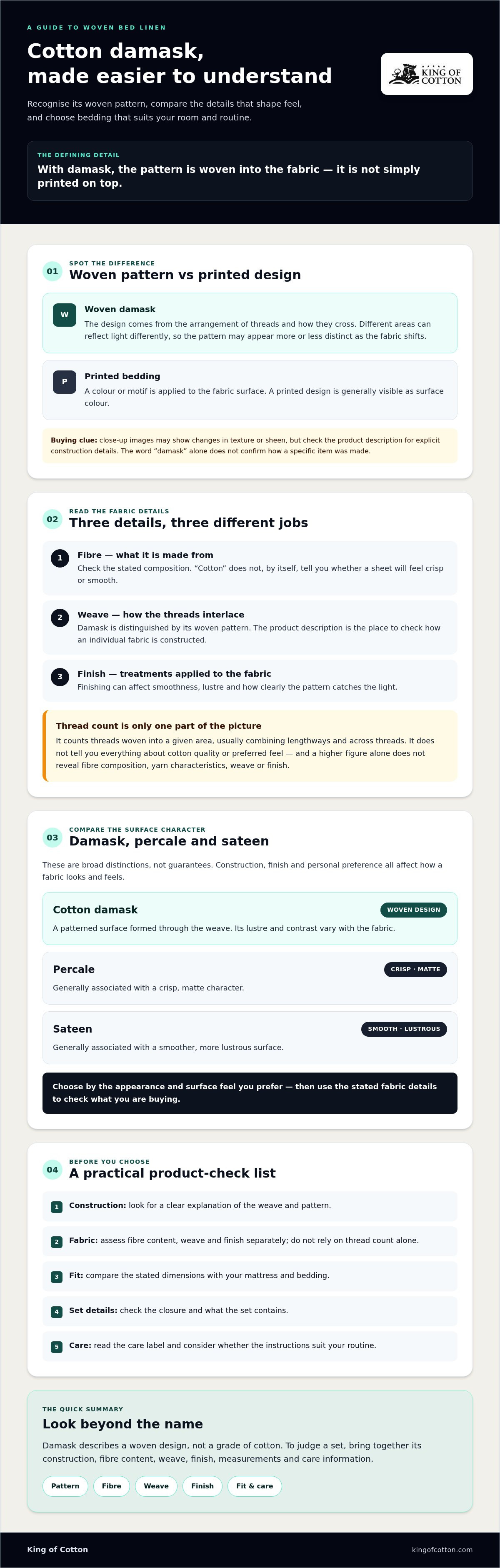
In brief: Cotton damask bed linen is cotton bedding with a pattern formed through the weave rather than printed onto the fabric. Product descriptions can vary, so check the construction details before buying. Damask describes the woven design, not a grade of cotton, which means the name alone doesn’t tell you about fibre quality.
The pattern can be subtle. As light moves across the surface, areas with different weave structures or finishes may reflect it differently, bringing the design into view. This can make damask more understated than a print, although the amount of lustre and contrast depends on the particular fabric.
For a closer look at how damask can be styled with bedding, watch this video from George Street Linen:
How is a damask pattern created in fabric?
In woven damask, the design comes from the arrangement of threads and the way they cross, rather than from a motif laid on top as ink or pigment. Picture a finely woven pattern that appears and recedes as the cloth shifts in the light. That’s a useful visual guide, not a guarantee of a particular construction: fabrics vary, and not every damask uses the same weave or finish. The Damask overview from Wikipedia explains the fabric’s history and woven construction.
Is cotton damask different from printed cotton bedding?
Yes. In woven patterning, the design is part of the fabric’s structure. With printed bedding, colour or a motif is applied to the fabric surface. A woven damask pattern may look more or less distinct as you view it from different angles, while a printed design is generally visible as surface colour. This can offer a clue, but it doesn’t confirm how a specific item was made.
Before choosing, read the product description for an explicit explanation of the weave and inspect close-up images for changes in texture or sheen. If the details aren’t clear, don’t rely on the word “damask” alone. King of Cotton supplies bed linen to homes and hospitality businesses. Explore its bed linen selection and check individual product details for current fabric information.
How cotton, weave and finish shape the feel of damask bed linen
Three details describe different aspects of a bedding fabric: fibre tells you what it’s made from, weave explains how its threads interlace, and finish refers to treatments applied to the fabric. In short, fibre is the material, while weave is how that material is constructed.
“Cotton” alone doesn’t tell you whether a sheet will feel crisp or smooth, and “damask” doesn’t confirm a particular cotton grade. The cotton damask fabric guide from Cotton Incorporated describes damask patterning produced on a jacquard loom. For bedding, check the individual product description rather than assuming every fabric labelled damask has identical construction.
What should shoppers know about cotton and thread count?
Thread count is the number of threads woven into a given area of fabric, usually reported as a combined count of threads running lengthways and across. It can help describe a fabric, but it isn’t a complete measure of cotton quality or a reliable shortcut to the feel you’ll prefer. A higher figure on its own doesn’t tell you the fibre composition, yarn characteristics, weave or finish.
Read the details together. Check whether the composition is stated clearly, look for an explanation of the weave and finish, and consider how the product is described and shown. If key information is missing, don’t treat thread count as a substitute for it.
How do weave and finish affect the look and feel?
Weave influences both surface and appearance. Damask is distinguished by its woven pattern, while percale is generally associated with a crisp, matte character and sateen with a smoother, more lustrous surface. These are broad distinctions, not guarantees: the feel of cotton damask bed linen varies with its construction and finish, as well as personal preference.
Finishing can affect how smooth or lustrous a fabric feels and how clearly its pattern catches the light. Two fabrics with the same fibre content may therefore look or feel different. If you prefer a cooler, crisper feel, a description of percale may appeal. If you’re drawn to a soft sheen, compare sateen. Damask offers a distinctive patterned surface, but don’t assume every version is glossy, crisp or heavyweight.
Compare these details rather than choosing on a single label or number. King of Cotton supplies bed linen to homes and hospitality businesses. Explore its bed linen selection and review each item’s stated fabric details.
Cotton damask versus percale and sateen: which suits your bedroom?
Choose according to the look and surface character you want, rather than assuming one weave is universally better. Damask brings a woven pattern into focus; percale and sateen are generally recognised by the way their surfaces look and feel. Fibre content, construction and finishing vary between products, so use these descriptions as a starting point and check the specifications before deciding.
| Fabric | Pattern and visual character | What to check |
|---|---|---|
| Damask | Woven pattern, often revealed by differences in light and surface texture. | Confirm the pattern is woven, and check the pattern scale, contrast and stated fibre content. |
| Percale | Typically a crisp-looking, matte surface; the emphasis is usually less on a decorative woven pattern. | Check the fibre composition, weave description and any details about finishing. |
| Sateen | Typically a smooth-looking surface with a gentle lustre; the emphasis is on surface appearance rather than a damask motif. | Look for clear fibre and construction details, and assess the finish shown in product images. |
When might damask be the right choice?
Consider damask if you want patterned bed linen with detail woven into the fabric rather than a bold printed motif. A small-scale design with low contrast can add quiet texture to a room, while a larger or more pronounced pattern may make the bed a stronger visual feature. Where images allow, compare close-ups or views in different lighting: the design’s definition and sheen can change with the angle.
How does damask compare with percale and sateen?
Percale and sateen refer to different weave structures, each associated with a distinct surface character. Percale is generally described as crisp and matte, while sateen is known for a smoother, more lustrous appearance. Damask is the patterned option in this comparison, although its surface can also vary with its construction and finish. These are broad descriptions, not promises of a particular feel.
To narrow the choice, decide whether you’d like a visible woven design, a more understated surface or a subtle sheen. Then compare the product’s stated fibre, weave and finish rather than relying on the fabric name alone. A photograph can help you judge pattern and appearance, but it can’t confirm every detail of construction. Let the specifications and your own preference guide your decision.
How to choose and care for cotton damask bed linen
A considered choice starts with practical details as well as the pattern. Before ordering, use this checklist to compare the product description with your bed and your usual care routine.
Which details should I check before buying?
- Fibre composition: Check that the stated fibres match what you want. The word “damask” describes the design, not the fibre content.
- Weave description: Look for a clear explanation of whether the pattern is woven into the fabric. If the listing is unclear, don’t assume the name alone confirms its construction.
- Dimensions: Compare the listed measurements with your mattress, duvet and pillows. UK bedding sizes can vary by item, so check each measurement rather than relying only on labels such as “double” or “king”. Make sure sheets suit the mattress and the duvet cover matches the duvet.
- Closure and set contents: Check how the duvet cover fastens and exactly which pieces are included. Confirm the colour and pattern scale against the room, using product images as a guide.
- Care and returns: Read the care instructions before buying, and review the retailer’s returns information so you understand the terms if the item isn’t right for you.
These checks help you assess cotton damask bed linen as both a fabric choice and a practical fit for your bedroom. Product descriptions and measurements are especially useful when ordering online, where you can’t handle the fabric or compare its scale in your room beforehand.
How should cotton damask bedding be washed?
Care needs can differ according to the fabric’s construction, finish and the specific product. Check the label before washing, and follow its instructions for temperature, cycle, drying and ironing. Don’t assume that guidance for another cotton set applies, even if the fabrics look similar.
The product care label takes precedence over general washing advice. If the label specifies a temperature or drying method, follow that guidance rather than relying on a general rule. This gives you a care routine tailored to the item, without assuming a particular method will prevent shrinkage, fading or creasing.
Once you’ve checked the specifications and care details, explore King of Cotton’s bed linen selection to review the current range and product information.
Where to find cotton damask bed linen and what to do next
Before choosing cotton damask bed linen, bring the key details together: confirm that the pattern is woven, check the stated cotton composition, compare measurements with your mattress and duvet, and read the care instructions. These checks help you decide based on the fabric and its suitability for your bedroom, not just its name or appearance.
How can I check whether a damask option is currently available?
Product ranges can change, so check current listings rather than assuming a particular retailer has damask in stock. If a damask option is listed, look for a clear description of its fibre content and woven construction, along with dimensions and care details. If any of these are unclear, seek confirmation rather than relying on assumptions based on the product title or photographs.
What should I compare across bed linen options?
Compare the stated material, construction and finish, then consider how the colour and pattern will sit within your room. Check the measurements for each item, including sheets and duvet covers, and review the care instructions to make sure they fit your routine. Product descriptions and images can help you assess appearance, but prioritise clear specifications when comparing fabrics.
King of Cotton supplies bed linen to individual customers and hospitality businesses. Its current selection may include different materials and styles, so review the live product details rather than expecting a specific damask range. For broader guidance on assessing bedding, read the luxury bed linen buying guide.
Ready to compare the available options? Explore the current bed linen range and check each product’s specifications to find a considered fit for your bedroom.
Choose bed linen with confidence
The defining detail of cotton damask bed linen is its woven pattern, but the name alone doesn’t confirm the cotton quality, exact construction or feel. Compare fibre details and finish, then check that the measurements suit your mattress and bedding. Follow the individual care label when washing.
King of Cotton supplies bed linen to individual customers and hospitality businesses, with products for homes and hotels. To explore the current selection, browse the bed linen collection and review each product’s specifications. Check current descriptions for damask options rather than assuming a particular style is available.
With the right details in hand, you can choose bed linen that reflects your taste and brings considered elegance to your bedroom.
Frequently Asked Questions
What is cotton damask bed linen?
Cotton damask bed linen is bedding made from cotton fabric with a pattern created through the weave. The design can appear through contrasting textures or lustre as light falls across the surface. Damask describes the fabric’s patterned construction, not a grade of cotton, so it doesn’t tell you the fibre quality or exact feel. Check each product description for its stated composition and construction.
Is cotton damask woven or printed?
Damask traditionally refers to a woven pattern rather than a design printed onto the fabric surface. However, product names and descriptions can vary, so check the individual listing before buying. Look for wording that confirms the pattern is woven into the fabric, and examine close-up images for changes in texture or sheen. A photograph can offer clues, but the product details are the more useful confirmation.
Is cotton damask bed linen better than percale?
Neither is automatically better; they suit different preferences. Damask is distinguished by its woven pattern, while percale is generally associated with a crisp, matte appearance. The feel of either depends on the particular fibre, construction and finish. Compare product descriptions, then consider whether you’d prefer visible woven patterning or a more understated surface. Your preferred look and feel are key to the decision.
Does cotton damask bedding feel soft?
It can feel smooth, but softness isn’t guaranteed by the word “damask”. The sensation depends on the cotton, weave, finishing and individual fabric. Some damask may have a more noticeable texture, while other versions can feel smoother. If you’re shopping online, read the product description carefully and use close-up images to assess the surface. Consider whether the stated finish aligns with the feel you prefer.
How do I wash cotton damask bed linen?
Follow the care instructions supplied with the specific item. Washing temperature, cycle and drying guidance can differ according to the fabric’s construction and finish, so don’t assume one routine suits every cotton damask set. Check the product label before washing and follow its directions. General advice for cotton bedding may not apply to a particular damask fabric, especially if the item includes other fibres or special finishing.
Does cotton damask bed linen need ironing?
Whether ironing is recommended depends on the individual product’s care instructions and the finish you prefer. Check the care label for ironing guidance, including any temperature directions, and don’t assume all damask should be treated alike. If a smooth appearance matters to you, consider the stated care requirements before purchasing. The label for the specific bedding takes precedence over general advice about cotton or damask.
How can I tell whether cotton damask bedding is good quality?
Assess more than thread count. Check that the fibre composition is clearly stated, the description explains the woven pattern, and the product provides useful details about finish, measurements and care. Consider whether the construction information is clear and the dimensions suit your bedding. Thread count can contribute context, but by itself it doesn’t establish cotton quality or tell you how the fabric will feel in use.