

How to Choose Commercial Bed Linen: UK Buyer’s Guide 2026
The highest thread count doesn’t automatically make the best hotel sheet. To understand how to choose commercial bed linen, start with the demands of your property: guests want a welcoming, comfortable bed, whilst your team needs linen suited to frequent laundering and consistent presentation across rooms.
That balance is easier to judge when you compare the details that affect everyday use. Fibre, weave, thread count and fabric construction all influence how a sheet feels and looks. Precise sizing, room presentation and straightforward replenishment matter too, so a clear specification can prevent avoidable problems later.
This guide will help you build a practical linen specification around guest expectations, room use and laundering demands. We’ll compare materials, weaves and thread-count claims, explain why commercial fire-safety requirements matter, and show how to create a coherent range that’s easier to replenish. The aim is a considered choice that feels inviting to guests and works reliably behind the scenes.
Key Takeaways
- Choose linen around your property’s room use, guest expectations and laundry process, rather than relying on one specification alone.
- Compare cotton and polycotton by their practical trade-offs, and assess thread count alongside fibre, yarn, weave and finishing.
- Use your actual washing and drying requirements to guide fabric choices, following the care instructions for each product.
- To understand how to choose commercial bed linen, map each bed, record precise dimensions, set room tiers and trial linen before ordering in bulk.
- Turn trial results into a clear, repeatable specification to support consistent room presentation and easier replenishment.
What makes bed linen suitable for commercial use?
Commercial bed linen is bedding selected to deliver a considered guest experience while meeting the practical demands of a hospitality operation. It needs to suit the room, the expected pattern of use and the way linen is cared for and replaced. That means how to choose commercial bed linen depends on more than choosing a fabric that feels pleasant in the hand.
A premium suite may call for a particularly refined look and feel, with linen selected to support the room’s elevated presentation. A high-turnover room may place greater emphasis on a consistent finish and compatibility with frequent laundering. Neither setting has one universally correct specification. The right choice reflects the property’s guest expectations and operating conditions.
Hotels, resorts and other accommodation businesses can explore King of Cotton’s bed linen options to shape a coherent room experience. For a useful foundation when comparing sheets, covers and materials, the overview of types of bedding and materials explains common terminology.
How do property type and guest expectations shape the choice?
Start by defining what guests should experience in each room. A city hotel with frequent arrivals and departures may need a dependable everyday specification that supports efficient room resets. A resort may prioritise a relaxed, tactile feel that suits longer stays, whilst a premium spa may want the bed to contribute to a calm, restorative atmosphere. Holiday homes can have different occupancy patterns, including concentrated changeovers between bookings.
Separate standard rooms from suites or other premium spaces before selecting linen. This lets the everyday range remain consistent, whilst higher-tier rooms can have a distinct presentation where it improves the guest experience. Consider how often each room is occupied, how quickly it must be prepared and whether the same linen needs to work across different room types.
Which operational details should buyers assess first?
Map the laundry process before comparing fibre or thread count. Identify who handles laundering, whether it is done in-house or outsourced, and what the process requires for washing, drying, folding and returning linen to rooms. A specification that feels luxurious but does not suit the established care routine can create avoidable friction. Follow each product’s stated care guidance rather than assuming all bed linen can be treated alike.
Then look at how stock moves through the property. Where is clean linen stored, how is it distributed, and how often do rooms need replacement sets? A small property with limited storage may benefit from a tightly controlled range. A larger operation may need clear sizing and consistent specifications across rooms to make replenishment easier.
- Guest experience: Define the feel and presentation expected in each room tier.
- Room use: Note occupancy patterns, turnover and where each linen type will be used.
- Laundry routine: Record the actual process and product care requirements.
- Stock management: Assess storage, replacement needs and the value of consistency.
With these priorities in place, fabric comparisons become more purposeful. You’re choosing for the way the property runs as well as the comfort guests notice.
How should you compare fabric, weave and thread count?
Compare the whole fabric specification, not a single headline figure. Fibre affects the character of the cloth, yarn and weave influence its surface and structure, and finishing can shape the feel. The Textile Institute offers background on textile industry standards and best practices, useful context when assessing technical claims. For a hospitality buyer, how to choose commercial bed linen means matching those details to guest expectations and the care routine.
Pure cotton is often chosen for its natural-fibre feel. Cotton-rich and polycotton options combine cotton with other fibres, which buyers may prefer for practical handling or a different balance of feel and care. Neither is automatically superior. Compare the stated composition and product guidance, then judge the fabric against your room and laundering requirements. King of Cotton’s bed linen range includes Egyptian cotton options, so check each product’s stated fabric details when comparing.
Quick comparison
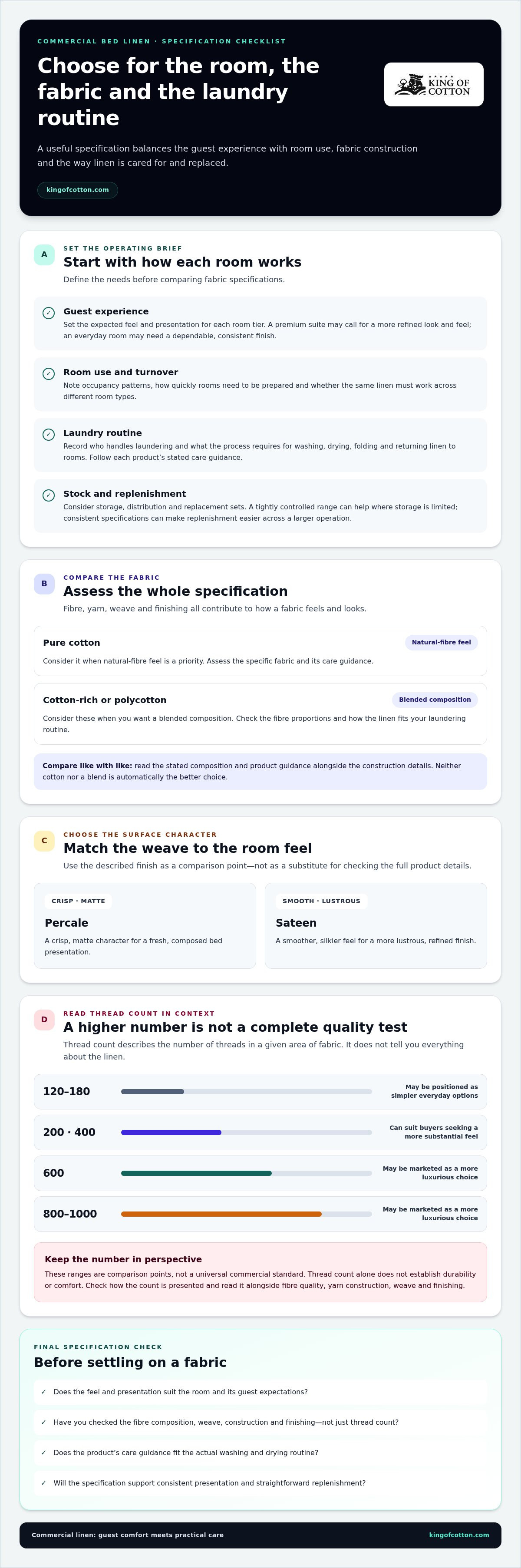
- Pure cotton: Consider when natural-fibre feel is a priority; assess the specific fabric and care guidance.
- Cotton-rich or polycotton: Consider when you want a blended composition; check the fibre proportions and how the linen suits your laundering routine.
- Percale: A crisp, matte character for a fresh, composed bed presentation.
- Sateen: A smoother, silkier feel for a more lustrous, refined finish.
Is a higher thread count always better for commercial bed linen?
No. Thread count describes the number of threads in a given area of fabric, but it doesn’t tell you the fibre quality, yarn construction, weave or finishing. Counts of 120-180 may be positioned as simpler everyday options, while 200 and 400 can suit buyers seeking a more substantial feel. A 600 count or 800-1000 count may be marketed as a more luxurious choice, but those figures alone don’t establish durability or comfort. Treat the ranges as comparison points, not a universal commercial standard.
Compare like with like: check how the count is presented and read it alongside the full composition and construction details. A high number isn’t a substitute for fabric that feels right and fits the property’s care process.
Should you choose percale or sateen for hospitality rooms?
Percale has a crisp, matte character; sateen is associated with a smoother, silkier surface. Think about the sensation and appearance you want guests to notice, then check whether the product’s care instructions fit your routine. A crisp finish may suit a clean, tailored presentation, whilst sateen can bring a softer visual sheen. Neither weave guarantees a particular lifespan or laundry result, so assess the specific linen rather than relying on the weave name alone.
Use samples to compare the hand-feel and appearance in your own rooms, and include the care guidance in that decision. Explore bed linen options as you narrow down the fabric and weave that best express your property’s style.
How do you balance guest comfort with commercial laundering?
The best bed-linen specification depends on both the laundry process and the guest experience you want to provide. A beautifully soft or satisfyingly crisp finish matters only if it fits the way the linen is washed, dried and returned to service. Start with your actual routine, then compare products against the experience you want guests to enjoy.
Care instructions and performance vary by product. Don’t assume that domestic washing advice applies to every commercial item, or that all cotton and polycotton fabrics respond identically to the same routine. Read the stated guidance for each product and assess it alongside your laundering requirements before settling on a specification.
What should you check about your laundry process?
Document the routine in practical terms: wash temperature, detergent practices, drying method and any finishing steps. If laundry is outsourced, establish the process used for your property’s linen, including how its care requirements fit the service routine. For example, if your property uses 60°C washes, compare product guidance with that actual setting rather than assuming every fabric is suitable.
Check how the linen feels after laundering, not just when new. Note the appearance and the softness or crispness you want to retain, and whether the routine can reproduce it consistently. This turns a broad preference such as “hotel quality” into a useful evaluation: the finish should feel inviting to guests and suit the way your operation cares for its linen.
- Wash: Record the temperature and detergent practices used.
- Dry: Note the drying method and any finishing steps.
- Outsourced laundry: Understand the routine applied to your property’s linen.
- Product guidance: Compare each item’s stated care instructions with the process.
When does a premium guest feel justify a different specification?
Separate the everyday room standard from the experience you want to create in a suite or signature room. A high-turnover room may call for a practical, consistent finish that fits frequent changeovers. A premium space may warrant a different hand-feel or presentation, provided the desired result works with the product’s care instructions and the available laundry routine. In luxury hospitality, this appreciation for material texture and durable craftsmanship mirrors the standards of premium accessory design, where brands like O2 Leather focus on authentic leather feel and understated refinement.
That is a property-specific trade-off, not a reason to rank cotton above polycotton, or the reverse. Consider whether your laundry process can maintain the softness or crispness that supports the room’s promise. If not, revise the room expectation or select a different fabric specification. A distinction between room tiers can help, but only if it remains clear to staff and straightforward to replenish.
As you decide how to choose commercial bed linen, record the guest feel you’re aiming for alongside the care requirements. Comparing bed linen options against both criteria helps you make a considered selection, rather than choosing on first touch alone.
What should you specify and test before a bulk linen order?
A small trial can reveal issues that a product description cannot: a sheet may not fit the mattress as expected, or the finish may look different after laundering. Before committing across the property, use a staged process to turn room requirements into a specification that staff can follow and repeat.
- Map the beds. List each bed by room and type, noting where configurations differ. Don’t rely on room labels alone: the same room category may contain beds with different dimensions.
- Record measurements. Measure mattress length, width and depth, including any topper that affects the finished fit. Record duvet and pillow requirements separately. Labels can be inconsistent or may not describe the actual mattress, so use measured dimensions rather than assumptions.
- Define room tiers. Decide whether standard rooms, suites or other spaces need distinct linen specifications. Keep differences purposeful, based on guest expectations or room use, so staff can identify the right linen without confusion.
- Trial the choice. Fit the linen to representative beds, then assess its appearance, feel and handling. Follow the product’s care guidance and review it after the property’s normal laundering process before expanding the selection.
- Document the accepted specification. Record the chosen product description, dimensions, room allocation and trial observations in purchasing and stock records. Use that record as the reference for future replenishment.
How can a property create a consistent linen specification?
Build the record around each bed and room type. State sheet, duvet-cover and pillowcase requirements clearly, with the relevant dimensions and room allocation. Use consistent product descriptions in purchasing documents and stock records, rather than shorthand that different team members may interpret differently. Separate room tiers only where the guest experience or use case genuinely calls for a distinction.
What should a linen trial reveal before scaling up?
Check fit on the actual bed, including whether the sheet sits neatly and stays in place during normal room use. Consider the hand-feel and overall appearance, then assess how easy the linen is to handle during bed-making. Review it after the usual wash and drying routine, following its stated care guidance. Note any changes in feel, finish or fit.
Capture the trial outcome in a short, practical record: what was tested, which rooms it suits, how it looked before and after laundering, and whether the team found it straightforward to use. This gives future buyers a clear basis for repeating the choice rather than relying on memory or a vague description.
Once your dimensions and trial criteria are clear, compare the UK bed linen range against the specification you’ve documented. A measured, room-by-room approach helps protect presentation and makes replenishment more consistent.
How can a hospitality supplier support your commercial bed linen choice?
A hospitality supplier can help turn a considered specification into a practical purchasing decision. Before discussing a bulk order, bring together your property’s needs, chosen fabric and weave, laundry requirements, measured bed sizes and trial findings. The clearer this framework, the easier it is to compare options and maintain a consistent look across rooms.
For how to choose commercial bed linen, focus on product information and how your documented requirements relate to the available range. Clear descriptions and sizes matter beyond the first order: they help purchasing teams identify the intended items again, support consistent room presentation and reduce ambiguity during replenishment.
What should a hospitality buyer expect from a linen supplier?
Look for product information that helps you compare relevant specifications, alongside a clear route to discuss commercial quantities. Your trial notes and room-by-room records give the conversation focus: you can explain the sizes required, the intended room tiers and the laundry routine the linen needs to suit. For broader procurement context, King of Cotton has also prepared a hotel linen suppliers guide.
How does King of Cotton fit a considered buying decision?
King of Cotton supplies bed linen, towels, bathrobes and hotel amenities to hospitality businesses, with commercial bulk orders available. The brand is trusted for 25+ years and supplies fine homes and hotels. Its bed linen range gives hospitality buyers options to consider alongside their room requirements, care routines and trial findings.
Before placing an order, have your key information ready:
- Property and rooms: Identify where each specification will be used.
- Fabric and weave: Record the guest feel and presentation you want.
- Laundry process: Note the routine and product care guidance you’ve considered.
- Sizes and trial: Keep measured dimensions and observations from your test together.
- Replenishment: Use clear product descriptions in purchasing and stock records.
This concise brief gives your bulk-order discussion a practical starting point. It also helps keep future purchasing aligned with the specification you tested, rather than relying on memory or broad descriptions.
Free Mainland Delivery on Orders Over £100* applies to orders, and UK mainland deliveries cost £3.95 at minimum. For more detail on the options available, browse King of Cotton’s bed linen range. To discuss your commercial bulk-order requirements, contact King of Cotton on 020 8332 7999.
Make your next linen decision with confidence
A well-considered linen choice can support the atmosphere you want guests to remember, while giving your team a clear standard to work with. Let your trial and written specification guide future decisions, so replenishment stays aligned with the rooms, care routine and guest experience you’ve designed.
King of Cotton welcomes commercial bulk-order enquiries and is rated Excellent on Trustpilot. For guidance on how to choose commercial bed linen for your property, get in touch about commercial bed linen.
Move forward with a specification that feels right for your guests and makes sense for your operation. A thoughtful choice is a lasting foundation for a beautifully presented room.
Frequently Asked Questions
What is the difference between commercial and domestic bed linen?
Commercial bed linen is chosen for hospitality use, where guest presentation and repeated operational demands both matter. Domestic linen may be intended for less frequent laundering and a different pattern of use. Hotels must also consider applicable fire-safety requirements for bedding, including BS 7175; mattresses are covered separately by BS 7177. Knowing these distinctions helps clarify how to choose commercial bed linen for your property.
Is a higher thread count always better for hotel sheets?
No. Thread count is only one part of a sheet’s specification, and a higher figure alone doesn’t confirm that it will feel more comfortable or suit your operation. Check how the fibre and weave contribute to the fabric, then assess the sheet itself. If you’re comparing two options, test both on a bed in a guest room and consider how each looks and feels after your normal care routine.
Can pure cotton bed linen be used in a hotel?
Yes, pure cotton bed linen can be used in a hotel if the particular product suits the property’s needs and its care guidance fits the laundry routine. Cotton alone doesn’t define whether linen is suitable for commercial use. Consider the desired guest experience, product construction and handling requirements together. A trial in a representative room can help staff assess the feel and finish before the hotel adopts it more widely.
How many sets of bed linen should a hotel keep per bed?
There isn’t one set number that suits every hotel. Work out stock from the linen needed on the bed, the time taken for used linen to return from laundering, and a reserve for peak occupancy or unexpected changes. For example, a longer laundry turnaround may require more circulating stock than a short one. Track actual use and return times, then adjust the reserve to match your operation.
Should hotels use white bed linen?
White linen offers a calm, classic look and can create a consistent presentation across different room styles. Its clean appearance also makes visible marks easier to notice during inspection, though colour alone doesn’t indicate hygiene. Hotels can choose other colours if they suit the interior and are practical for the property’s laundry and replacement processes. Whichever palette you select, keep the specification consistent within each room tier.
Can you mix percale and sateen bed linen in one hotel?
Yes, a hotel can use both, provided the distinction is deliberate and easy for staff to manage. For instance, a property might allocate one weave to suites and another to standard rooms, creating a subtle difference in presentation. Keep room allocations and product descriptions clear in purchasing and stock records. Before introducing both, check that each option fits the care routine and can be replenished consistently.
What should I check on a commercial bed linen sample?
Fit the sample on the intended bed and check that its dimensions work with the mattress and bedding arrangement. Note its feel, appearance and ease of handling during bed-making. Then wash and dry it according to the product’s care instructions and review the result, including fit and finish. Record staff feedback and the exact product details, so the trial gives you a useful reference for future purchasing.