

The Strategic Hotel Linen Procurement Guide UK (2026 Edition)
Procuring hotel linen in 2026 is no longer a simple commodity purchase; it's a technical investment in guest sleep science and operational longevity. You understand the mounting pressure of rising laundry costs and the urgent need to meet 2026 ESG sustainability targets while maintaining a refined guest experience. It's a complex task to balance luxury with a budget stretched by new business rates and global supply chain shifts. This hotel linen procurement guide uk addresses those exact tensions, moving beyond price per unit to focus on the true value of your textile assets.
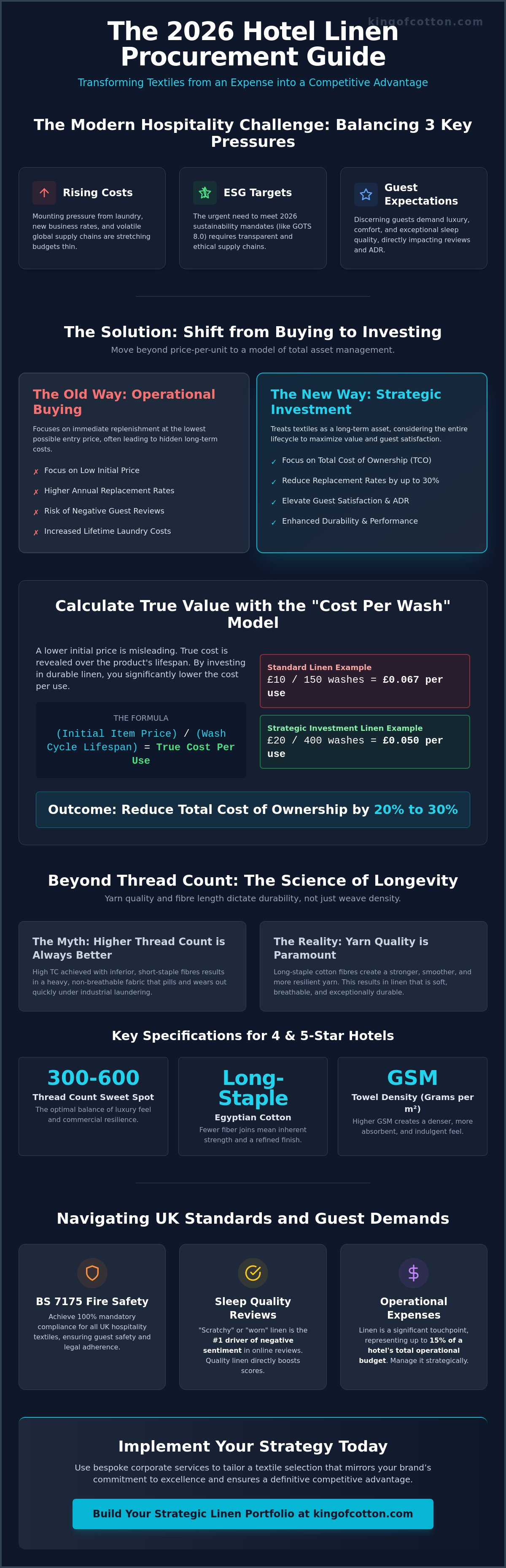
We'll show you how a strategic approach to material science and UK compliance can reduce your total cost of ownership by 20% to 30%. You'll learn how to ensure 100% compliance with BS 7175 fire safety standards while simultaneously elevating guest satisfaction scores for sleep quality. This guide previews the impact of the 2026 India-UK Free Trade Agreement and the transition toward GOTS 8.0 standards. From high-performance bed linen to indulgent towels and bathrobes, we provide the seasoned expertise required to transform your procurement into a definitive competitive advantage.
Key Takeaways
- Shift from operational buying to a sophisticated investment strategy using this definitive hotel linen procurement guide uk for the 2026 landscape.
- Understand the nuances of material science, where yarn quality and industrial resilience take precedence over simple thread count metrics for long-term durability.
- Implement the "cost per wash" model to accurately calculate Total Cost of Ownership and reduce your annual replacement rates by up to 30%.
- Balance technical compliance for BS 7175 fire safety with the growing guest demand for ethical, sustainable, and transparent supply chains.
- Tailor your textile selection through bespoke corporate services to ensure your bed linen and towels perfectly mirror your brand’s commitment to excellence.
The Fundamentals of Strategic Hotel Linen Procurement in 2026
In the high-stakes environment of 2026 hospitality, procurement has evolved from a back-office administrative task into a core driver of brand equity. Operational purchasing focuses on the immediate replenishment of stock at the lowest entry price. Strategic procurement, however, treats textiles as a long-term investment in the guest experience. Adopting a comprehensive hotel linen procurement guide uk strategy allows operators to move beyond transactional buying toward a model of total asset management. This The Fundamentals of Strategic Hotel Linen approach considers the entire lifecycle of a product, from its initial tactile appeal to its resilience under industrial laundering.
The 2026 UK market presents a unique set of challenges. With inbound tourism spending reaching new heights, guests are more discerning than ever. They expect the same level of luxury in a boutique hotel as they would find in a prestigious residential setting. Linen is not a minor detail; industry benchmarks indicate it represents up to 15% of hospitality operational expenses. It is often the most significant touchpoint a guest has with your brand. The psychological impact of high-quality bed linen cannot be overstated. It signals care, cleanliness, and an uncompromising commitment to comfort.
The Procurement Lifecycle for Modern Hospitality
Strategic sourcing requires a structured three-phase approach. First, specification must align with your hotel tier. A five-star establishment demands different yarn quality and craftsmanship than a mid-range property. Second, sourcing now requires rigorous supplier auditing for ESG compliance to meet 2026 sustainability mandates. Finally, inventory management must account for the replacement cycle. Premium textiles reduce the frequency of these cycles, directly protecting your bottom line from rising material costs.
Connecting Linen Quality to Guest Reviews
Sleep quality is a primary metric on modern booking platforms. It directly influences your Average Daily Rate (ADR). When guests encounter "scratchy" or "worn" sheets, it's the number one driver of negative sentiment in online reviews. In the bathroom, the GSM (grams per square metre) of your towels creates that coveted spa-like atmosphere. A higher GSM indicates a denser, more absorbent pile that feels indulgent against the skin. By prioritising these tactile details, you turn a functional necessity into a powerful tool for repeat bookings and elevated brand prestige.
Material Science: Specifying Bedding and Towels for Longevity
Luxury in hospitality is often misunderstood as a simple pursuit of the highest possible thread count. In reality, the material science behind a durable guest experience is far more nuanced. Professionals using this hotel linen procurement guide uk understand that yarn quality and fibre length dictate the longevity of a textile more than the density of the weave. High thread counts achieved with inferior, multi-ply yarns often result in heavy, non-breathable fabrics that pill after only a few industrial washes. True excellence lies in specifying long-staple fibres that provide inherent strength and a refined finish.
The choice between Percale and Sateen weaves is a primary aesthetic and operational decision. Percale offers a crisp, matte finish that feels cool against the skin, making it ideal for properties with a classic, structured look. Sateen, with its four-over-one weave, provides a lustrous sheen and a silky drape that evokes modern indulgence. While Sateen is often perceived as more luxurious, it requires careful laundering to maintain its surface integrity. Balancing these choices is essential to mastering The Financials of Comfort within your procurement strategy.
Bed Linen Specifications for 4 and 5-Star Hotels
For high-end properties, 300TC to 600TC Egyptian cotton represents the industry’s "sweet spot." This range ensures a fabric that is both exceptionally soft and resilient enough for daily commercial laundering. We prioritise long-staple cotton because the fewer the joins in the yarn, the stronger the fabric. Mercerisation is another critical specification; this process swells the cotton fibres to increase their lustre and affinity for dyes, while also improving the overall tensile strength of the sheets.
Towel and Bathrobe Procurement Metrics
When specifying bathroom textiles, GSM (grams per square metre) is your primary benchmark for quality. We recommend targeting 600-800 GSM for guest towels to provide that weighty, premium feel synonymous with luxury spas. While higher GSM towels are more absorbent, they also take longer to dry. Double-loop construction is often preferred for hotel environments as it resists snagging better than zero-twist alternatives. For bathrobes and gowns, look for materials that maintain their plushness and structural integrity even after 100 or more industrial wash cycles.
Selecting the right materials shouldn't be a trade-off between indulgence and durability. You can explore our full range of hotel-grade bed linen to find the perfect match for your property's specific laundry requirements.
The Financials of Comfort: Calculating Total Cost of Ownership (TCO)
True fiscal responsibility in hospitality requires a departure from the initial invoice price. While a lower unit cost might seem attractive during budget season, it often masks a cycle of frequent, expensive replacements. This hotel linen procurement guide uk advocates for the "cost per wash" model as the only accurate metric for textile investment. By evaluating how many industrial laundry cycles a product can withstand before losing its structural integrity or aesthetic appeal, you gain a clear view of its true value. High-quality textiles are designed to endure the rigours of 2026 industrial laundering without the pilling, shrinking, or "grey-ing" that plagues cheaper alternatives.
Research indicates that investing in higher quality linens can reduce replacement rates by up to 30%. This longevity directly protects your bottom line against rising material costs. Beyond durability, material choice significantly impacts energy efficiency. Premium 100% cotton fibres often require less drying time than dense, low-grade blends; this reduces laundry energy consumption and labour costs. When you calculate the total lifecycle cost, the "expensive" choice frequently emerges as the most economical path for your property.
Optimising the Replacement Cycle
Maintaining a disciplined inventory rotation is vital for protecting your assets. We recommend a 4-par level system. This ensures one set is in the room, one in the laundry, one in the linen room, and one resting. This "rest" period allows cotton fibres to recover their shape and moisture balance, extending their lifespan. Identifying the "tipping point" is equally important. Once a sheet shows signs of thinning or loss of sheen, it must be retired. Many prestigious properties repurpose retired linens as cleaning cloths or donate them to local charities to extend their utility beyond the guest room.
The ROI of Premium Guest Amenities
The return on investment for high-end amenities often manifests in reduced guest compensation and improved loyalty. Switching from standard poly-cotton to 100% luxury bedding creates a tangible difference in sleep quality that guests notice immediately. This shift reduces the likelihood of complaints regarding "scratchy" sheets, which are a primary cause of discounted stays. Similarly, justifying the cost of high-GSM bathmats and plush bathrobes and gowns becomes easy when you factor in the "spa-feel" ratings that drive higher Average Daily Rates. Every touchpoint is an opportunity to reinforce your brand’s prestige and secure that vital repeat booking.
Navigating UK Standards: Compliance, Sustainability, and Logistics
Compliance in the UK hospitality sector is a matter of both legal necessity and brand integrity. A robust hotel linen procurement guide uk must look beyond the aesthetic to ensure every textile meets rigorous safety and ethical benchmarks. The 2026 regulatory environment demands higher transparency, particularly regarding chemical use and fire resistance. As guest expectations evolve, your procurement strategy should function as a shield against liability while reinforcing your property's reputation for excellence.
Fire Safety Compliance (BS 7175)
British Standard BS 7175 is the definitive regulation for the ignitability of bedding. While Source 0 and 1 cover cigarette and match resistance, Source 5, often termed Crib 5, is the mandatory standard for UK hotels. It's vital that your duvets and pillows are certified to these levels to ensure maximum safety. Non-compliance isn't just a safety risk; it carries significant legal liability for the property owner. Procuring from a specialist who understands these nuances protects your guests and your professional reputation.
Sustainability as a Procurement Requirement
Ethical sourcing is no longer a niche preference. With 82% of travellers seeking ethical stays in 2026, your ESG report must be backed by verifiable certifications. OEKO-TEX Standard 100 ensures your linens are free from harmful substances, including the latest PFAS screenings implemented in 2024. For organic requirements, GOTS 8.0, which became operational in March 2026, provides a comprehensive framework for social and environmental responsibility. Implementing a circular economy approach, where textiles are traced from the cotton field to their eventual repurposing, demonstrates a sophisticated commitment to the planet.
UK logistics have faced significant shifts recently. Relying on Just-In-Time delivery from international sources often leads to unpredictable lead times and customs volatility, even with the implementation of the India-UK Free Trade Agreement in April 2026. Partnering with a supplier that maintains substantial domestic stock-holding is the most effective way to mitigate these risks. This ensures you have immediate access to replacements without the delays associated with cross-border shipping. This resilience is a cornerstone of strategic procurement, allowing you to maintain par levels without the stress of international transit delays.
Review our comprehensive range of hotel amenities and textiles to ensure your property meets the highest UK standards for safety and style.
Implementing Your Strategy with King of Cotton’s Corporate Services
Reliability is the foundation of any successful procurement cycle. By leveraging our UK-based logistics, you insulate your property from the volatility of international shipping and customs delays. We maintain substantial stock levels within the UK to ensure your par levels remain consistent throughout the year. Every item in our collection, from bed linen to towels, carries our professional quality guarantee. This commitment to excellence has made us a trusted purveyor to prestigious residential and commercial sectors globally for decades.
Bespoke Embroidery and Branding
Personalisation is a powerful tool for reinforcing your brand identity and elevating the guest's tactile experience. Our bespoke embroidery services allow you to add subtle, elegant branding to your linens, bathrobes and gowns, and towels. This creates a cohesive aesthetic that resonates across multiple property locations. We offer flexible minimum order quantities for custom hospitality orders, ensuring that even boutique properties can access personalised luxury. This attention to detail transforms standard amenities into signature brand markers that guests remember long after they check out.
Expert Consultation and Support
We encourage hospitality professionals to engage with our team for a tailored quote that reflects their specific 2026 procurement requirements. Before committing to a full order, you can request samples to conduct your own laundry "torture tests," verifying the resilience and hand-feel of our fabrics under your specific industrial processes. For those who prefer a tactile product evaluation, we invite you to visit our London stores. Here, you can experience the superior weight and softness of our materials firsthand, guided by experts who understand the unique pressures of the UK hospitality market. Whether you're upgrading your bedroom textiles or refining your spa offerings, our seasoned team is ready to support your vision.
Mastering the Future of Hospitality Sourcing
Strategic procurement in 2026 demands a sophisticated blend of material mastery and fiscal precision. By moving beyond initial costs to a total cost of ownership model, you protect your property's bottom line while elevating the guest experience. This hotel linen procurement guide uk has outlined the essential path toward balancing industrial resilience with the indulgent comfort that modern travellers expect. Precision in your textile selection ensures your brand remains a symbol of refinement and reliability.
As trusted suppliers to the finest hotels worldwide, we provide the expertise needed to navigate complex BS 7175 fire safety standards and evolving sustainability mandates. Our UK-based stock and delivery infrastructure offer the resilience your supply chain requires in an unpredictable global market. Whether you're refining your bedding specifications or seeking bespoke branding, the right investment today secures your reputation for years to come.
Take the next step in professionalising your textile assets. Download our 2026 Wholesale Price List or Request a Corporate Quote to see how our uncompromising quality can transform your property. We're here to help you create a sanctuary of comfort that guests will return to time and again.
Frequently Asked Questions
What is the most durable thread count for hotel bed sheets?
The industry sweet spot for durability and luxury is between 300TC and 600TC when utilizing long-staple Egyptian cotton. Higher thread counts often use multi-ply yarns that pill or become overly heavy in industrial laundries. By choosing a refined 300TC or 400TC weave, you ensure the fabric remains breathable and resilient through hundreds of wash cycles. This balance is a core principle of any professional hotel linen procurement guide uk.
How does BS 7175 fire safety compliance affect my linen choice?
Compliance with BS 7175 is a legal requirement for UK hospitality providers, specifically requiring Source 5 certification for bedding. This standard tests the ignitability of duvets and pillows to ensure they don't contribute to the spread of fire. Choosing non-compliant textiles exposes your property to significant legal liability and safety risks. Always verify that your supplier provides full certification for their hospitality collections to protect your guests and business.
Is Egyptian cotton better than poly-cotton for high-turnover hotels?
Egyptian cotton is the superior choice for properties prioritizing brand prestige and long-term value. While poly-cotton has a lower entry price, it lacks the breathability and enduring softness of natural long-staple fibres. Egyptian cotton maintains its lustrous finish much longer, reducing the frequency of replacement. For high-turnover environments, the durability of premium cotton often results in a lower total cost over the product's entire lifecycle.
What is the recommended par level for hotel linen inventory?
A 4-par level is the recommended standard for efficient rotation and textile longevity. This system allocates one set for the guest room, one for the laundry process, one ready in the linen room, and one set resting. Allowing cotton fibres to rest for 24 hours between uses helps them recover their shape and moisture balance. This practice significantly extends the life of your bed linen and towels, preventing premature wear.
How do I calculate the total cost of ownership (TCO) for my linens?
Calculate TCO by using the "cost per wash" model rather than the initial purchase price. Divide the unit cost by the expected number of industrial laundry cycles before the item requires replacement. You must also factor in laundry energy costs, which are influenced by drying times and material weight. Higher quality linens often provide a 20% to 30% reduction in TCO due to their extended lifespan and superior construction.
What certifications should I look for to ensure sustainable procurement?
Look for GOTS 8.0 and OEKO-TEX Standard 100 to ensure your procurement aligns with 2026 sustainability targets. GOTS 8.0 is the leading standard for organic fibres, covering both environmental and social criteria. OEKO-TEX Standard 100 verifies that the finished textile is free from harmful substances, including strengthened 2024 screenings for PFAS. These certifications provide the transparency required for modern ESG reporting and building guest trust in your brand.
Can I get bespoke branded linens for a boutique hotel in the UK?
Bespoke embroidery and branding are readily available through specialist UK suppliers like King of Cotton. Personalizing your bathrobes, towels, and bed linen enhances the guest experience and reinforces your brand's identity. Minimum order quantities for these custom services are often tailored to accommodate boutique properties. This allows smaller hotels to achieve the same level of sophisticated branding as global luxury chains, ensuring a consistent and professional aesthetic.
How does GSM affect the drying time and cost of hotel towels?
Higher GSM ratings, typically between 600 and 800 for luxury towels, result in a denser and more absorbent pile. While this provides a premium "spa-feel" for the guest, it also increases the weight of the laundry load and the required drying time. This leads to higher energy consumption and labour costs in the laundry room. Strategic procurement involves balancing this guest indulgence with the operational costs of laundering heavier, high-quality textiles.