

How to Measure Your Bed for the Perfect Fitted Sheet
A sagging, bunched-up fitted sheet is the quickest way to ruin the elegance of a master suite. It's incredibly frustrating to invest in high-quality linens only to find they ping off the corners or shift whilst you sleep. You deserve a sanctuary that remains as smooth and serene at dawn as it was when you first climbed in, yet achieving this requires more than just choosing a premium fabric.
Learning exactly how to measure bed for fitted sheet perfection is the essential first step to achieving that crisp, five-star hotel look in your own home. Most people feel a sense of confusion when distinguishing between mattress depth and sheet pocket depth, which often leads to expensive mistakes once the linens are laundered. This guide provides the authoritative steps needed to master these measurements with confidence. We will explore how to account for plush mattress toppers and the natural behaviour of luxury materials. By the end, you'll know how to select the ideal pocket size to ensure your Egyptian cotton remains taut, comfortable, and impeccably styled for a truly restorative night's rest.
Key Takeaways
- Understand why a precise fit is essential for maintaining the sleek, taut surface found in the world's finest hotels.
- Master how to measure bed for fitted sheet requirements by accurately recording the length, width, and total depth of your mattress.
- Learn to calculate the "Total Depth" by accounting for the added height of mattress protectors and luxury toppers.
- Distinguish between UK standard and extra-deep pocket sizes to ensure your linens remain secure throughout the night.
- Discover how the correct sheet depth protects the fibres of premium Egyptian cotton from unnecessary stretching and premature wear.
Why Precise Measurements are Essential for Five-Star Comfort
The sensation of sliding into a perfectly taut, crisp bed is one of life's simplest yet most profound luxuries. It's the hallmark of a world-class hotel suite, where every corner is sharp and every surface is flawlessly smooth. Achieving this at home isn't merely a matter of buying high-quality fabric; it's a matter of precision. If your sheets are even slightly too large, they will bunch and ripple, creating uncomfortable ridges that disturb your rest. If they are too small, you'll face the dreaded "ping-off" effect, where the elastic gives way and the corner retreats mid-sleep.
Many homeowners assume that standard sizes like "King" or "Double" are universal across all brands. However, mattress depths vary wildly in the modern market. Without knowing exactly how to measure bed for fitted sheet requirements, you risk purchasing standard bedding components that simply don't align with your specific mattress. This mismatch doesn't just look untidy; it actively degrades the sleep experience whilst removing the serene, stable foundation required for deep rejuvenation.
The Impact on Fabric Longevity
Precision fit is a prerequisite for protecting your investment. When a fitted sheet is too small, the cotton fibres are kept under constant, excessive tension. This stress pulls at the weave, eventually thinning the material and causing premature tears. Conversely, excess fabric is equally damaging. Loose material creates friction as you move, which leads to pilling, those small, uncomfortable bobbles that ruin the silky hand-feel of premium linens. High-thread-count Egyptian cotton relies on a snug fit to maintain its structural integrity and showcase its natural, sophisticated lustre over years of use.
Recreating the Boutique Hotel Aesthetic
Visual harmony in a bedroom begins with the bed. A crisp, flat surface creates an immediate sense of order and calm, reflecting the professional standards of the world's finest hospitality venues. When you understand how to measure bed for fitted sheet depth correctly, bed-making becomes an effortless ritual rather than a struggle with stubborn corners. This perfect alignment allows our bed linen collection to drape exactly as intended, providing that understated, confident elegance that defines a luxury home. It's the difference between a bedroom that feels cluttered and one that feels like a curated sanctuary.
Step-by-Step: Measuring Your Mattress Length, Width, and Depth
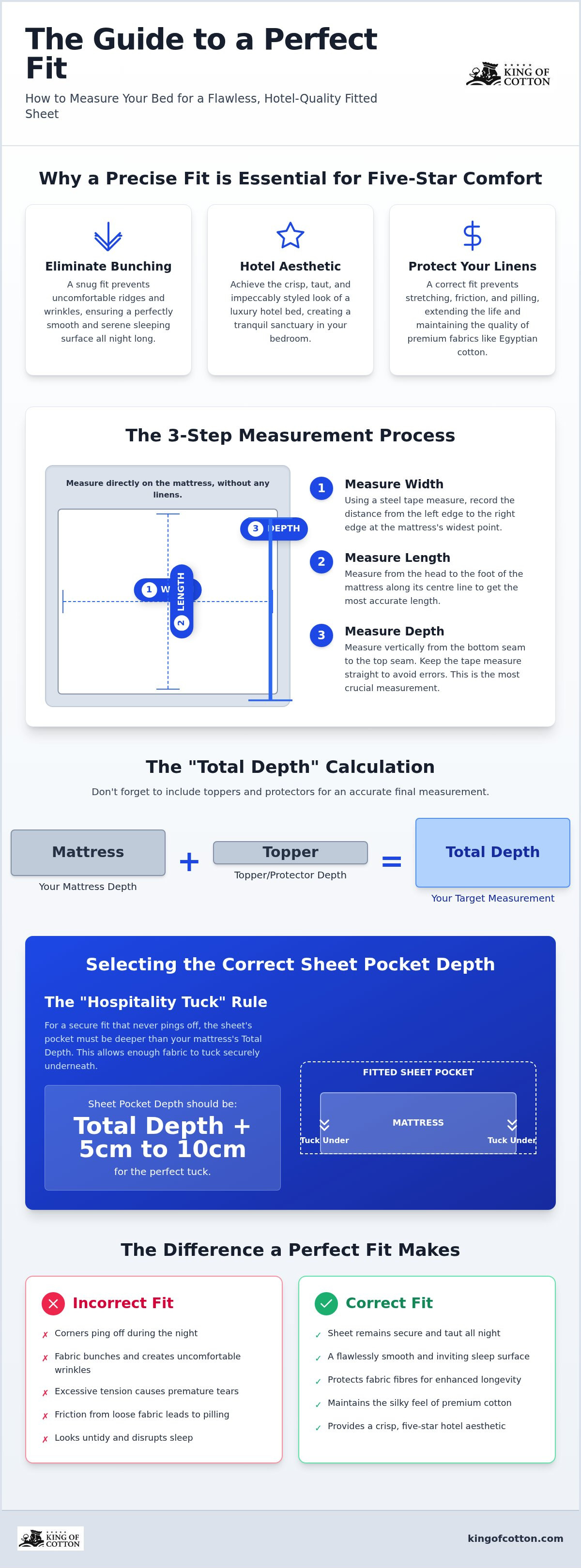
To begin, strip your bed entirely. Measuring over existing linens or protectors will inevitably skew your results, leading to a fit that is either too loose or frustratingly tight. You'll need a steel tape measure and a notepad. Steel measures are superior because they remain rigid; fabric tapes often stretch over time, leading to slight, yet significant, errors in your final figures. Accuracy here is the foundation of a serene, well-ordered bedroom.
Measure the width from edge to edge at the widest point, then measure the length from the head to the foot. Measuring at the centre of the mattress prevents inaccuracies caused by the slight rounding or compression often found at the corners. Once you have these figures, compare them against The Definitive UK Bed Size Guide to confirm if your mattress follows standard UK dimensions or perhaps European or bespoke sizing. If your measurements don't align with standard categories, you'll need to pay closer attention to the specific pocket depth of your chosen bed linen.
Mastering the Vertical Depth Measurement
The vertical depth is where most errors occur. Use the "seam-to-seam" technique by measuring the distance between the bottom and top piping. It's helpful to understand how to measure mattress height if your bed includes an integrated pillow top or decorative cushioning, as these layers add significant bulk that standard sheets cannot accommodate. Ensure your tape measure is kept perfectly vertical when checking this distance. Any slight angle will result in an overestimation, leading to a baggy, unrefined fit.
Professional housekeepers rely on a secret: the "hospitality tuck". To achieve a secure, hotel-standard fit, your sheet pocket must be deeper than the mattress itself. This allows for roughly 5cm to 10cm of fabric to wrap underneath the mattress base. Without this extra allowance, the sheet will merely sit on the edges rather than gripping the underside. Measure the depth at all four corners and the midpoint of the sides. Mattresses can settle unevenly over time, so always use the largest measurement as your baseline when learning how to measure bed for fitted sheet perfection. This ensures your luxury linens remain taut and beautiful, regardless of how much you move during the night.
The "Total Depth" Calculation: Accounting for Toppers and Protectors
Measuring the mattress core alone is the most frequent error made when learning how to measure bed for fitted sheet requirements. It leads to sheets that look correct on paper but fail in practice. Modern sleep systems are layered for maximum comfort. A standard mattress might only be 25cm deep, but once you add a plush topper and a quilted protector, that figure can easily climb to 40cm. If your sheet pocket doesn't account for this cumulative height, it will simply sit on the edges, vulnerable to shifting the moment you lie down.
The "Hospitality Tuck" is the secret to that immovable, taut surface found in luxury hotels. You must add 5cm to 8cm to your total height measurement to allow the fabric to wrap securely under the base of the mattress. This isn't wasted material; it's the anchor that keeps your linens in place whilst you sleep. Without this extra allowance, even the finest Egyptian cotton will feel restrictive and prone to popping off the corners.
Incorporating Mattress Toppers
Luxury toppers are designed to provide a cloud-like sleep surface, often adding up to 10cm of additional height. To ensure a professional fit, you must measure the topper whilst it's positioned on the mattress. This ensures you capture the true vertical profile. The fitted sheet must encapsulate both the topper and the mattress together as a single unit. This unified fit creates stability and prevents the topper from sliding or bunching during the night, maintaining the serene aesthetic of your bedroom.
The Role of Mattress Protectors
Even a slim protector adds height that you cannot ignore. A quilted layer or a waterproof mattress protector might only add a few millimetres, but those millimetres are vital for breathability. A sheet that is stretched too tightly over a protector can trap heat and tension, undermining the natural cooling properties of your cotton. When the fit is correct, the air can circulate freely amongst the layers, enhancing your comfort.
To find your ideal figure, use this simple formula: Mattress Depth + Topper Depth + Protector Depth + 5cm (for the tuck) = Ideal Sheet Pocket. This final number is your "Minimum Pocket Depth". If your total calculation is 33cm, you should look for a sheet with a 35cm or 40cm pocket. This small margin of error ensures the elastic can grip the underside of the mattress securely, providing that sleek, hotel-standard finish every time you make the bed.
Selecting the Correct Sheet Depth: Standard vs Extra Deep
Once you've mastered how to measure bed for fitted sheet precision, the next step is matching those figures to the correct product category. In the UK market, "Standard" typically refers to a pocket depth of 25cm to 30cm. This is suitable for traditional spring mattresses without additional padding. However, as the trend for sleep wellness has evolved, mattresses have become increasingly substantial. If your total depth calculation exceeds 25cm, a standard sheet will likely struggle to stay in place, leading to the "ping-off" effect mentioned previously.
Choosing a sheet that is too deep also carries risks. Excess fabric that isn't tucked securely under the mattress will ripple and bunch, creating an untidy appearance that contradicts the serene aesthetic of a luxury bedroom. The goal is a taut, smooth surface. Material choice plays a role here too; a crisp Percale weave has less natural "give" than a silky Sateen, meaning your measurements for Percale must be particularly exact to ensure a flawless finish.
Standard vs Deep Fitted Sheets
To simplify your selection, consider the following guide for matching mattress height to sheet pocket depth:
- Mattress Height up to 23cm: Standard (30cm pocket) provides a generous tuck of roughly 7cm.
- Mattress Height 24cm to 30cm: Deep (35cm pocket) is the preferred choice for modern mattresses.
- Mattress Height 31cm and above: High-end mattresses with integrated toppers require extra deep fitted sheets with a 40cm+ pocket.
Modern luxury sleep systems almost always demand "Deep" or "Extra Deep" options to accommodate their sophisticated layering. Selecting the correct category ensures the elasticated edges sit well beneath the mattress corners, providing the structural stability needed for a restorative night's rest. If you're using a thick topper, don't settle for a standard fit that will inevitably shift during the night.
Shrinkage and Fabric Behaviour
High-quality natural cotton is a living material that settles slightly after its initial encounters with water and heat. At King of Cotton, we organise our sizing to account for professional laundering standards, ensuring your linens maintain their superior fit even after repeated cycles. We recommend the "favourite sheet" test: evaluate the fit after the third wash, as this is when the cotton fibres have fully stabilised and reached their final dimensions.
Investing in the correct depth is the final step in translating your measurements into a tangible upgrade for your home. To find the perfect match for your bespoke calculations, Explore our range of Egyptian cotton fitted sheets and experience the difference of a truly professional fit that stays secure until morning.
Enhancing Your Sleep with King of Cotton Luxury Linens
Mastering how to measure bed for fitted sheet perfection is the technical foundation of a beautiful bedroom. Once you have calculated your ideal pocket depth, the focus shifts from precision to pleasure. Choosing the right material is the final step in translating those measurements into a tangible upgrade for your sleep quality. In our bed linen collection, we prioritise the highest standards of textile craftsmanship, offering fabrics that honour the exact fit you've worked to achieve.
Your choice between Percale and Sateen will influence how that measured fit feels against your skin. Percale is the classic choice for those who adore a crisp, matte finish. It's breathable and firm, meaning your measurements must be particularly accurate to ensure it sits perfectly taut. Sateen, by contrast, offers a silky lustre and a heavier drape. It feels more indulgent and possesses a subtle flexibility that complements a well-calculated pocket depth. Both materials represent our commitment to excellence, ensuring that your bed remains a sanctuary of serene confidence.
The Luxury of Egyptian Cotton
Egyptian cotton is widely regarded as the pinnacle of bedding materials, and for good reason. It's the preferred choice for the world's most prestigious hotels because of its extraordinary long-staple fibres. These fibres create a smoother, stronger yarn, resulting in a fabric that is both incredibly soft and remarkably durable. When you combine a high-thread-count Egyptian cotton sheet with a professional fit, the sensory experience is transformative. You won't just see the difference in the lack of wrinkles; you'll feel the consistent, cooling comfort that only genuine luxury materials can provide. This durability ensures your linens maintain their sophisticated colour and precise fit through years of professional laundering.
Expert Support for Your Home or Hotel
We understand that modern beds come in an array of bespoke dimensions that don't always fit standard categories. If your measurements have revealed a non-standard size or if you're unsure which pocket depth best suits your specific combination of toppers and protectors, our specialists are available to provide tailored advice. We've spent decades as trusted suppliers to international hospitality leaders, and we bring that same level of authoritative expertise to every residential enquiry.
A perfectly measured fitted sheet is only the beginning of a truly restorative sleep environment. To complete the transformation, consider matching your new linens with our ethically sourced duvets and pillows, designed to provide a cohesive, hotel-standard aesthetic. Every element of your bedding should work in harmony to support your rejuvenation. Take the final step in creating your personal sanctuary and shop the full King of Cotton bedroom range today to experience the enduring quality of world-class linens.
Elevate Your Bedroom to Hotel Standards
Achieving a flawless, five-star finish begins with the technical precision of your measurements. By accounting for every layer, from the mattress core to the plushness of a luxury topper, you ensure your linens remain taut and secure throughout the night. Understanding how to measure bed for fitted sheet requirements allows you to invest in premium materials with absolute confidence, knowing they'll maintain their lustre and structural integrity through years of use.
As suppliers to the world’s most prestigious hotels, King of Cotton has expertly crafted Egyptian cotton since 1995. We specialise in providing the same level of refined comfort to your home, offering a versatile range of standard and extra deep options to suit even the most substantial modern mattresses. Don't settle for ill-fitting linens that detract from your rest; choose the authority in material excellence and hospitality standards.
Explore our range of Luxury Bed Linens and find your perfect fit
Transform your sleep into a nightly indulgence by starting with the perfect foundation.
Frequently Asked Questions
How much larger should a fitted sheet be than the mattress?
A fitted sheet should ideally have a pocket depth that is at least 5cm to 8cm deeper than your mattress height. This extra material allows for the "hospitality tuck", where the fabric wraps securely under the base of the mattress. Without this allowance, the sheet will merely sit on the corners and is likely to ping off during the night. Ensuring this margin is the key to a professional, hotel-standard finish.
Do I need to measure my mattress topper separately?
You don't necessarily need to measure it separately, but you must measure the total vertical height whilst the topper is positioned on the mattress. Luxury toppers can add up to 10cm of additional depth. If you only measure the mattress core, the fitted sheet won't encapsulate both layers. This leads to bunching and instability, which ruins the serene aesthetic and comfort of your luxury sleep environment.
What is the difference between a deep and extra deep fitted sheet?
The primary difference lies in the pocket depth provided for the mattress corners. In the UK market, a deep fitted sheet typically accommodates depths between 30cm and 35cm. An extra deep fitted sheet is designed for more substantial sleep systems, often reaching 40cm or more. Knowing how to measure bed for fitted sheet requirements ensures you select the category that provides enough fabric to grip the underside of your specific mattress.
Will my 100% cotton fitted sheet shrink after washing?
High-quality natural cotton will naturally settle slightly after the first few washes. This behaviour is normal for premium textiles like Egyptian cotton and Percale. At King of Cotton, we organise our sizing to account for this minor stabilisation, ensuring the linens maintain their superior fit over time. We recommend evaluating the final fit after the third wash cycle, once the fibres have fully settled into their permanent dimensions.
How do I measure a bed for a fitted sheet if I have a mattress protector?
You should measure the cumulative height of all layers currently on your bed. Place your tape measure at the top seam of the mattress protector and measure down to the bottom seam of the mattress. Even a slim protector adds millimetres that affect the tension of the fabric. By including every layer in your total depth calculation, you ensure the fitted sheet remains breathable and doesn't pull too tightly across the surface.
What happens if I buy a fitted sheet that is too deep for my mattress?
Buying a sheet that is significantly deeper than necessary results in excess fabric that cannot be tucked away cleanly. This extra material will ripple and bunch across the surface of the bed, creating uncomfortable ridges whilst you sleep. It also compromises the crisp, tailored look of a professional bed-making. Whilst a small margin is helpful for the tuck, too much depth makes it difficult to maintain a smooth, taut surface.
Are UK bed sizes standard across all brands?
Whilst width and length dimensions like "King" or "Double" are generally consistent, mattress depths vary significantly between manufacturers. Some brands also utilise European sizing, which differs slightly from UK standards. It's always best to ignore the label and rely on your own measurements. Learning how to measure bed for fitted sheet perfection is the only way to guarantee a fit that matches the international standards of excellence found in top-tier hotels.
How do I know if I need a bespoke size fitted sheet?
You likely need a bespoke size if your mattress width or length doesn't align with standard UK size charts. This often occurs with antique bed frames or imported European mattresses. Additionally, if your total depth calculation exceeds 40cm, standard retail options may not provide a secure tuck. In these instances, contacting a specialist for bespoke sizing advice ensures your luxury linens are tailored to your bed's unique requirements.