

Eco-friendly hotel toiletries with recyclable and reusable options
A greener guest bathroom isn’t defined by a leaf printed on a bottle. Sourcing eco-friendly hotel toiletries means considering the whole amenity: its packaging, ingredients and potential to reduce single-use plastic. Recyclable packaging helps only if the property’s waste collection can process it, while refillable formats and solid bars can reduce reliance on miniature bottles.
It’s understandable to want amenities that feel considered and comfortable without creating unnecessary waste. The most useful choices balance guest experience with clear, supportable environmental claims. Look for transparent information about ingredients, packaging materials and recycled content rather than relying on broad labels alone.
This guide explains the differences between recyclable and reusable options, what to look for in ingredient sourcing, and practical ways to reduce single-use plastic in hotel bathrooms. It also covers how to assess environmental claims and choose amenities suited to UK accommodation, from individual guest rooms to larger properties.
Key Takeaways
- Assess the full amenity, including its ingredients, packaging and end-of-life route, rather than relying on broad eco-friendly labels.
- Choose recyclable packaging that your property’s waste collection route can process, and consider reusable or refillable formats where they suit operations.
- Look for clear evidence behind environmental claims, including details about recycled content and how biodegradability was tested.
- Consider bulk sourcing and ingredient origins when reviewing how toiletries are produced and transported.
- Reduce bathroom plastic by reviewing miniature bottles and identifying where refillable dispensers or solid bars could work for guests.
1. What are eco-friendly hotel guest amenities?
Eco-friendly hotel amenities involve more than a product’s label. For toiletries, assess ingredients, packaging, transport and disposal together. A bottle described as recyclable offers limited benefit if the property’s waste collection cannot process its material. Similarly, a biodegradability claim should relate to a specific ingredient or finished product, not just the brand’s general image. This whole-product view gives hotels a clearer basis for sourcing eco-friendly hotel toiletries.
Bulk sourcing can reduce the number of separate deliveries and packaging units needed to supply guest rooms. It may also support more efficient production and distribution, but the impact depends on order size, transport distance and packaging format. Bulk purchasing alone doesn’t prove a lower environmental impact. Compare the packaging supplied with the volume of usable product, then consider how goods reach the property. A large shipment from far away may have a different transport profile from a locally made alternative.
Minimum order quantities and production lead times affect what a hotel can buy and when it can introduce it. A standard stocked product may follow a different schedule from a custom-labelled toiletry made for one property. Before setting a switch date, align the expected order with occupancy forecasts, existing stock and the supplier’s production schedule. This helps avoid leftover packaging or shortages during a busy period. For a smaller guest house, a lower minimum order may matter more than bulk efficiency.
Locally made toiletries can shorten transport routes compared with imported alternatives, and independent producers may offer a closer connection to ingredient origins and manufacturing. Ask for clear details about where products are made and how ingredients are sourced. Treat “local” as a specific description, not a complete environmental assessment: formulation, packaging and delivery still affect the footprint. A nearby producer using excessive packaging may not meet every sustainability priority.
Bamboo and bagasse offer alternatives for selected amenity items and packaging. Bamboo can be used for bathroom accessories, while bagasse, made from sugarcane fibre, can form moulded containers or trays. Their environmental value depends on construction, durability and disposal. Don’t assume a plant-based material is automatically recyclable or biodegradable through the property’s waste system. Match the material to a real use, such as replacing a disposable accessory with a reusable one.
Guest response is part of the guest experience, not a reason to rely on assumptions. Introduce a specific change, such as refillable dispensers replacing miniature bottles, then review guest comments and housekeeping feedback. Note whether guests mention ease of use, cleanliness, fragrance or product quality. These details help distinguish a well-received environmental change from one that creates inconvenience. Growing interest in environmental practices makes clear communication useful: explain what changed and how guests can use the amenity.
2. Recyclable paper packaging and reusable amenities
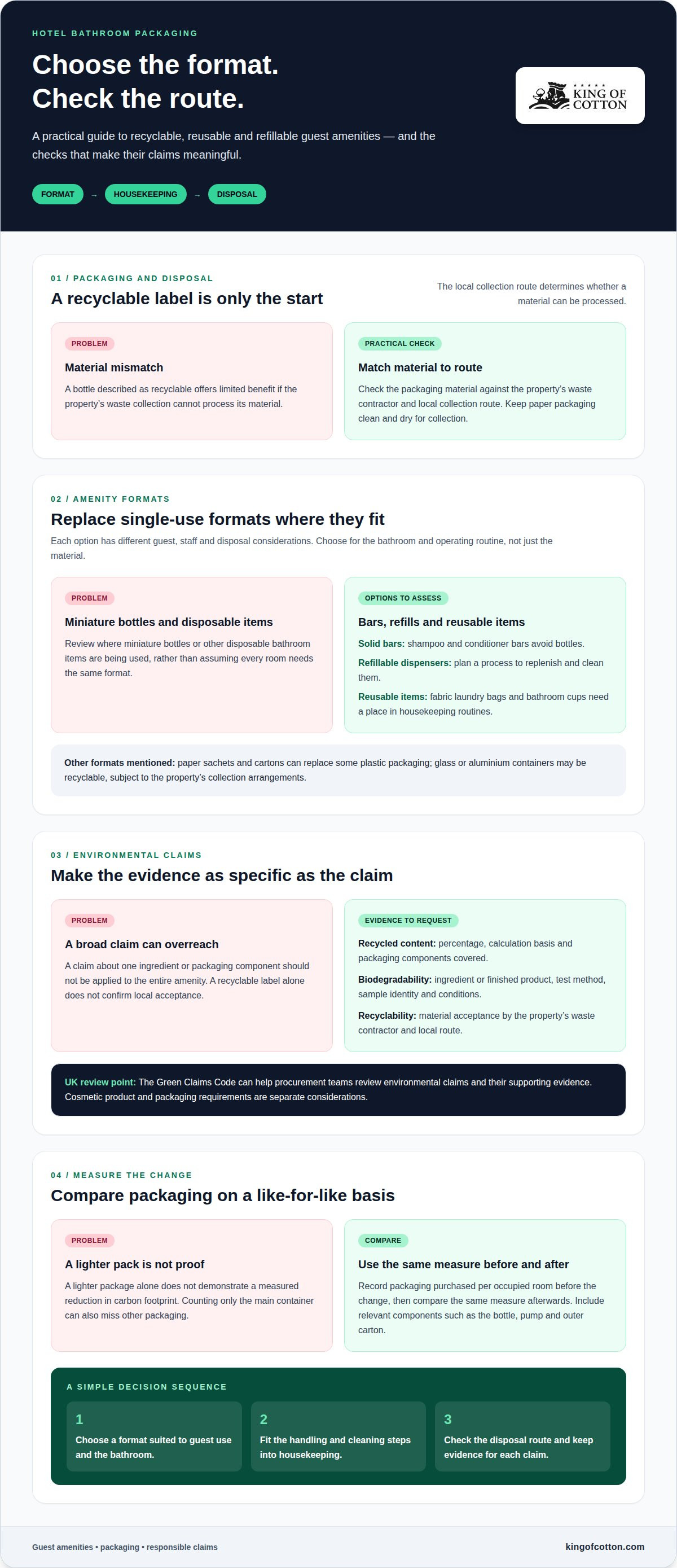
For UK environmental marketing, the Green Claims Code can help procurement teams review claims and supporting evidence. Cosmetic product and packaging requirements are separate considerations, so environmental wording shouldn’t be treated as proof of product compliance. Keep each claim clear, specific and tied to the product or packaging it describes. A recyclable label alone doesn’t show whether the hotel’s local collection route accepts that material.
Paper sachets and cartons can replace some plastic packaging, while reusable fabric laundry bags and bathroom cups offer alternatives to disposable items. Their practical value depends on use and disposal: keep paper packaging clean and dry for collection, and incorporate reusable items into housekeeping routines. For example, a bathroom cup intended for repeated use needs a clear place in room cleaning and replacement procedures. A packaging choice works best when guests can use it easily and staff can manage it consistently.
Plastic-free options include solid shampoo and conditioner bars, glass or aluminium containers, and refillable dispensers. Each requires different handling. Bars avoid bottles, while refillable formats need a process for replenishing and cleaning dispensers. Glass and aluminium may be recyclable, but collection depends on the property’s waste arrangements. Choose a format that suits the bathroom, guest use and disposal route rather than assuming one material solves every packaging problem.
Environmental claims need evidence that matches their wording. A recycled-content claim should state the percentage, calculation basis and packaging components it covers. For biodegradability claims, identify whether testing concerns an ingredient or finished product, and specify the test method, sample identity and conditions. For recyclability, compare the material with the property’s waste contractor and local collection route. These checks help prevent a claim about one component being applied to an entire amenity.
Set a baseline before changing packaging. Record packaging purchased per occupied room, then compare the same measure after the change. Include all relevant components, such as a bottle, pump and outer carton, rather than counting only the main container. A lighter package doesn’t by itself demonstrate a measured carbon-footprint reduction. Like-for-like purchasing records give hotel teams a practical view of material use and help identify which changes reduce packaging demand.
Stone-paper packaging and soy-based ink may be considered as alternatives, but the material name alone doesn’t establish recyclability or environmental benefit. Ask what each component contains and how it should be disposed of. Check whether stone paper belongs in the local paper stream and whether inks affect the intended recycling route for printed packaging. Clear disposal instructions help housekeeping teams separate materials correctly and make guest-facing claims more precise.
Make the decision operational as well as environmental. Trial one packaging format in a defined group of rooms, record stock use and guest feedback, then review waste separation with housekeeping. This gives the hotel a practical comparison before adopting the format across the property.
Use the Green Claims Code to review environmental claims and supporting evidence, keeping each claim clear, specific and tied to the product or packaging it describes. Cosmetic product and packaging requirements are separate from environmental claims, so sustainability wording shouldn’t be treated as proof of product compliance.
3. Sustainable guest amenities for UK accommodation
UK hotels, holiday lets and guest houses can choose sustainable amenities with guest needs and property operations in mind. Typical toiletries include shampoo, conditioner, body wash, hand wash and body lotion. A consistent set helps guests understand each product’s purpose, while a refined fragrance and pleasant texture can support a premium guest experience. Consider environmental impact alongside quality, comfort and ease of use.
Wholesale options include specialist hospitality amenity distributors and toiletries manufacturers supplying accommodation businesses. Bulk products can suit properties with regular room turnover. Before selecting a range, match products to the rooms and service level: a guest house may need a simpler selection than a full-service hotel. Assess ingredient information, packaging format, wholesale availability and product quality together rather than choosing by a sustainability label alone.
Procurement can also consider how a product is made. Efficient manufacturing may reduce material waste and energy use, while ingredient sourcing and packaging affect the wider footprint. Ask suppliers for product-specific details supporting these claims. For instance, a statement about recycled packaging should identify the components it covers. This helps purchasing teams compare like with like and avoid treating one improved component as proof that every part is sustainable.
Accommodation providers can make environmental improvements beyond the bathroom. Water bottle filling stations can support reusable hydration, while clear guest information can explain the property’s sustainability practices. Refillable toiletries may suit rooms where housekeeping procedures support them. In smaller holiday lets, a simple, consistent amenity set can make restocking and guest instructions easier. Match each change to the building, service routine and guest expectations.
Monitor progress using practical measures for energy efficiency, water use, waste minimisation, recycling and employee engagement. Record a baseline before changing a process, then review the same measures regularly. For toiletries, track purchasing and packaging per occupied room; for water, review usage over comparable operating periods. These indicators help teams see where a change is working and where procedures need adjustment. Guest comments and housekeeping observations add useful context.
Reviewing metrics as part of routine management makes sustainability an ongoing programme rather than a one-off procurement decision. If a new shampoo range reduces packaging but complicates replenishment, staff feedback can reveal the operational trade-off. Adjust stock procedures or guest guidance accordingly. A balanced review considers environmental effects, product performance and the ease of delivering a polished stay.
4. Ethical sourcing of ingredients
Ethical ingredient sourcing starts with knowing what a toiletry contains and where key ingredients come from. For hotel shampoo, procurement teams can request ingredient-origin information and the supplier’s explanation of its sourcing standards. This gives purchasing decisions a clearer basis than broad phrases such as “natural” or “responsibly made”. Consider the full formulation: an ethically sourced botanical ingredient doesn’t establish the origin of every other ingredient.
Ask for information that connects a claim to a specific ingredient and supply chain. Useful details include its country or region of origin, the producer or processing stage, and how the supplier maintains traceability. A local-sourcing statement might describe ingredients from farms within 50 miles. Treat that as an example of a precise claim, not an automatic measure of ethical practice. Production methods, transport and the ingredient’s role in the finished product also matter.
Transport is one part of a toiletries product’s carbon footprint. Sourcing local and seasonal products can reduce shipping and associated emissions, but distance alone doesn’t show how an ingredient was grown or processed. In hospitality procurement, compare origin information with formulation and packaging details. For example, a locally sourced ingredient may fit a conscious purchasing plan, while another ingredient’s production method may raise different environmental considerations. Clear records help teams explain decisions accurately.
Certifications apply to particular materials and claims, so match each one to the product component it covers. FSC certification verifies responsible forestry for wood and bamboo products. It may therefore be relevant to a bamboo bathroom accessory, but it doesn’t certify a toiletry’s liquid ingredients. RSPO membership alone also doesn’t prove that every product or ingredient order carries a certified supply-chain claim. Procurement records should connect each certification or claim to the relevant material and order.
Build a practical review into supplier selection. First, identify the ingredients behind prominent ethical or environmental claims. Then request origin and sourcing information for those ingredients, followed by relevant certification details where applicable. Finally, record what each claim covers, such as a specific botanical ingredient or bamboo component. This helps teams distinguish a product-level statement from a narrower claim about one material.
Keep the guest experience in view. A consciously sourced formula still needs to perform comfortably in a hotel bathroom, with a pleasing texture and suitable fragrance. Compare product samples with the property’s quality expectations, then assess supporting sourcing information before procurement approval. Documenting both guest-facing qualities and ingredient origins helps teams make a considered choice without overstating ethical or carbon benefits.
5. Reducing single-use plastic in hotel operations
Start by mapping where disposable plastic enters the guest journey. In bathrooms, the clearest targets are miniature shampoo and conditioner bottles, wrapped soap and disposable cups. In breakfast areas, review bottled water and individually wrapped items. A room-by-room and service-by-service review shows which products are routinely discarded, helping teams prioritise practical replacements rather than make broad changes without an operational plan.
Refillable, wall-mounted dispensers can replace individual toiletry bottles in guest bathrooms. Choose locations guests can reach easily, then build replenishment and cleaning into housekeeping procedures. Staff need a consistent way to identify products, refill dispensers and keep the area tidy. Clear labels for shampoo, conditioner and body wash make them easy to use. A familiar layout also helps preserve a polished guest experience during the transition.
Solid shampoo and conditioner bars offer another way to remove plastic bottles from bathroom amenities. They suit properties that can present and store bars hygienically, with clear guidance for guests. A bar may not suit every room or guest preference, so consider the property’s service style and feedback. Hotels can introduce bars in selected rooms first, then review guest comments and housekeeping routines before extending the change.
Responsible plastic reduction extends beyond toiletries. Replace disposable water bottles with refillable glass or metal alternatives, and provide convenient access to drinking water. Reusable bathroom cups can replace single-use versions. Biodegradable rubbish bags may also be considered where appropriate, with attention to whether they break down naturally without harming the environment. Each replacement should fit the property’s cleaning, storage and waste processes.
Measure the change through purchasing and room operations. Record how many disposable toiletry units the property orders, alongside occupied-room figures and replenishment needs. Compare those records after introducing dispensers or bars, using the same measure and period. This creates a useful operational baseline, but fewer packages alone don’t establish a measured carbon-footprint reduction. Track guest feedback and staff observations too, so procurement decisions account for product performance and service quality.
Make implementation manageable by changing one product type or room group at a time. For example, introduce dispensers on one floor, brief housekeeping teams on the refill routine, and record stock use and guest comments. Use the findings to refine placement, labelling and replenishment before a wider rollout. A gradual approach helps the hotel maintain consistent standards while reducing unnecessary plastic in daily operations.
King of Cotton: Hotel Amenities
King of Cotton supplies hotel amenities to accommodation businesses seeking a considered guest-room experience. Its hospitality offering can complement toiletries with essentials such as towels and bathrobes, or support a refresh with bed linen. These tactile details help create a consistent sense of comfort, from the bathroom to the bedroom.
When planning responsible amenity changes, consider toiletries as part of the wider guest experience. Pairing carefully selected hotel amenities with quality towels, bed linen and bathrobes supports a polished, welcoming stay without making unsupported environmental claims about individual products.
Contact King of Cotton to discuss hotel amenities for your accommodation.
Make your next amenity decision count
Use your next procurement review to connect environmental priorities with the comfort guests notice every day. Sourcing eco-friendly hotel toiletries can sit alongside thoughtful choices across the room, creating a more coherent stay without relying on broad sustainability promises. Focus on changes your team can maintain, communicate clearly and refine as guest needs evolve.
King of Cotton offers hospitality essentials including bed linen, towels and bathrobes, helping accommodation providers shape a polished experience beyond the bathroom. Including these tactile details in room planning can support a consistent feeling of comfort, from the first touch of a towel to the welcome of a well-prepared bed.
Choose the next step that suits your property, whether you’re reviewing guest amenities or refreshing room essentials. Contact King of Cotton to discuss your hospitality requirements and move forward with confidence.
Frequently Asked Questions
What are eco-friendly hotel guest amenities?
Choose guest-room products with environmental impact in mind, alongside comfort and usefulness. Toiletries are one example; a property might also offer reusable drinking cups or replace disposable accessories with durable alternatives. The choice should suit the room, housekeeping routine and guest expectations. Consider how each item is used and disposed of rather than treating a green colour or nature-inspired label as evidence of environmental benefit.
Are these toiletries suitable for sensitive skin?
Suitability depends on the individual formula and the guest’s sensitivities, so an “eco-friendly” label alone can’t establish whether a product will suit sensitive skin. Review the ingredient information and any specific product claims. For instance, a guest may prefer an unscented option or react to a particular ingredient. Clear product information in the bathroom helps guests make informed choices and gives staff a straightforward response to questions.
Are these toiletries vegan?
No. An environmentally positioned toiletry isn’t automatically vegan. Vegan status depends on the formulation and relevant production details, so a botanical-sounding name doesn’t prove every ingredient is plant-derived. Look for a clear vegan statement or certification that applies to the specific product. Vegan and cruelty-free are distinct claims: one concerns animal-derived ingredients, while the other concerns animal testing. Neither claim proves the other.
Is a refill programme automatically more sustainable?
No. A refill programme’s impact depends on how it operates, not simply on replacing small bottles. Consider dispenser durability, refill packaging, transport, cleaning routines and any product discarded during replenishment. For example, frequent replacement of damaged dispensers may affect overall material use. Review these factors alongside purchasing records and housekeeping feedback. A programme is more useful when refilling is reliable and fits the property’s day-to-day service.
What do eco certifications mean for hotel products?
A certification applies to the material or claim covered by its standard, not necessarily to every part of a product. FSC certification verifies responsible forestry for wood and bamboo products, so it can relate to a specified accessory material. RSPO membership alone doesn’t show that every ingredient order has a certified supply-chain claim. Read certification wording in context and distinguish a certified component from a claim about the complete toiletry.
What MOQ and lead time should a hotel allow for?
There isn’t one minimum order quantity or lead time for every hotel toiletry. These depend on whether the product is standard stock or made to order, any bespoke labelling, production scheduling and the quantity required. A property introducing a new range should coordinate the order with existing stock and planned room occupancy. This gives the team time to manage the transition without ordering more than storage and usage patterns justify.
What makes hotel toiletries eco-friendly and sustainable?
A credible assessment considers ingredients, packaging, transport, product use and disposal together. For instance, a recyclable container has limited value if the property’s collection route doesn’t accept its material. Ingredient claims should also specify what they cover, rather than imply that one responsibly sourced component describes the whole formula. A practical approach to sourcing eco-friendly hotel toiletries uses product-specific evidence and considers how the amenity will work in the property.
How do refillable dispensers compare with single-use mini toiletries for cost and sustainability?
Refillable dispensers reduce reliance on individual mini bottles, but their overall value depends on local operations. Compare the ongoing cost of refills and replenishment labour with buying and disposing of minis; include dispenser installation, cleaning and replacement. For sustainability, assess packaging bought and discarded, refill transport and product wastage. The best fit depends on room occupancy, staff routines, guest preferences and the property’s waste arrangements.