

Down vs Synthetic Duvet Pros and Cons: The Expert Guide to Hotel-Quality Sleep
What if the secret to that elusive £500-a-night hotel sleep isn't actually the mattress, but the specific ratio of air to insulation inside your duvet? Most sleepers across the UK struggle with the common "goldilocks" problem; they're either waking up in a sweat or shivering because their bedding fails to regulate temperature effectively. Understanding the down vs synthetic duvet pros and cons shouldn't be a chore, yet technical jargon like tog ratings often stands between you and a truly restful night.
We agree that you shouldn't have to choose between luxury and practicality, or worry that a natural filling might trigger a morning sneezing fit. This guide provides the definitive comparison you need to transform your bedroom into a five-star sanctuary with a duvet designed to last over 10 years. We will demystify the industry secrets behind fill power and show you exactly how to recreate a premium hospitality experience in your own home, ensuring every night feels like a luxury getaway.
Key Takeaways
- Master the down vs synthetic duvet pros and cons to expertly curate your personal sleep micro-climate for a restorative, five-star experience.
- Discover why natural down clusters remain the gold standard for weightless warmth and unparalleled thermal efficiency in luxury hospitality.
- Explore how modern microfibre innovations provide a sophisticated, hypoallergenic alternative without compromising on that coveted cloud-like loft.
- Gain the expertise to decode professional metrics like Fill Power and Tog ratings, ensuring your duvet is perfectly tailored to the British seasons.
- Learn how to harmonise your choice of duvet with premium bed linen to transform your bedroom into a refined sanctuary of elegance and comfort.
Understanding the Foundation of Five-Star Sleep: Down vs Synthetic
The secret to a restorative night's sleep often lies in the delicate balance of your sleep micro-climate. While many focus solely on mattress tension, the duvet serves as the primary engine for temperature regulation. Choosing the right filling is a decision that impacts your comfort for approximately 3,000 hours every year. To make an informed investment, you must weigh the down vs synthetic duvet pros and cons to determine which material aligns with your physiological needs and lifestyle preferences.
Professional hospitality experts, including those who have supplied the world’s most prestigious hotels for over 25 years, understand that guest satisfaction depends on this choice. High-end establishments often curate their bedding collections based on specific guest profiles, balancing the cloud-like loft of natural fillings with the practical, hypoallergenic benefits of modern synthetics. This guide serves as the first chapter in a 3,000-word exploration of premium bedding, designed to help you recreate that elusive five-star feeling in your own bedroom.
To better understand this concept, watch this helpful video:
The Role of the Duvet in Sleep Thermoregulation
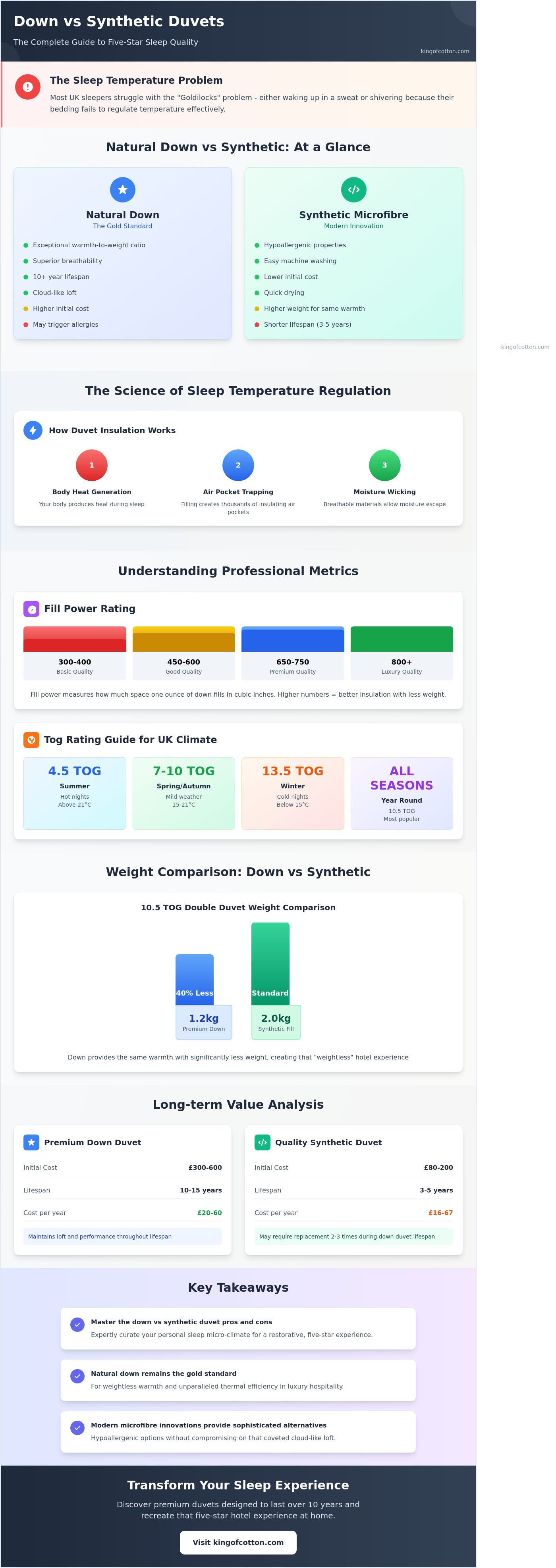
Effective insulation isn't about generating heat; it's about managing the heat your body already produces. A quality Duvet works by trapping still air within thousands of tiny pockets created by the filling material. This layer of air acts as a thermal barrier between you and the ambient room temperature. Breathability is the second half of the equation. Without it, moisture from perspiration becomes trapped, leading to the "clammy" feeling that causes mid-night wakefulness. It's a common misconception that a heavier duvet is a warmer one. In reality, premium natural down provides significantly higher insulation with 40% less weight than lower-grade synthetic alternatives.
Defining Natural Down and Synthetic Microfibre
Natural down consists of the fluffy, three-dimensional clusters found beneath the exterior feathers of geese and ducks. Unlike feathers, down has no quill, making it incredibly soft and resilient. These clusters can expand to fill a large volume, providing exceptional warmth-to-weight ratios. In contrast, synthetic microfibres are engineered polyester filaments designed to mimic the structure of down. While high-performance microfibres offer a similar feel, they generally require more mass to achieve the same tog rating. When evaluating the down vs synthetic duvet pros and cons, consider that while synthetic options often have a lower initial purchase price, a high-quality down duvet can last 3 to 4 times longer if maintained correctly, often providing better value over a ten-year period. You can explore our range of professionally-vetted options in our bedroom collection to see these materials in practice.
Natural Down Duvets: The Gold Standard for Thermal Efficiency
Natural down remains the pinnacle of luxury bedding, favoured by five-star hotels for its exceptional warmth and weightless feel. Unlike feathers, which have a hard, flat quill, down clusters are three-dimensional filaments that trap air with incredible efficiency. This creates a high loft that gives your bed that iconic "cloud-like" appearance. When weighing up down vs synthetic duvet pros and cons, the natural bounce-back of down is a clear winner. You can compress it daily, yet it regains its volume almost instantly, maintaining its shape for years.
Ethical sourcing is a non-negotiable standard for premium bedding today. Responsible retailers ensure that 100% of their natural fillings meet the Responsible Down Standard (RDS). This certification guarantees that the down and feathers come from animals that haven't been subjected to any unnecessary harm, providing peace of mind alongside superior comfort. It's a sophisticated choice for those who value both luxury and animal welfare.
Why Down Clusters Excel at Insulation
Down clusters aren't just warm; they're smart. Their unique structure allows them to expand and fill the duvet casing, creating a superior drape that eliminates cold spots around your body. According to this expert guide to insulation, down provides more warmth per gram than almost any other material on the planet. These natural protein fibres also possess inherent moisture-wicking properties. They pull perspiration away from your skin, ensuring you stay dry and comfortable rather than clammy, which is a common issue with lower-quality materials.
The Longevity and Sustainability of Natural Fillings
Investing in high-quality down is a savvy financial decision for the long term. While a synthetic alternative might lose its shape or develop clumps after 3 or 4 years, a premium down duvet can last up to 15 years with proper care. When you calculate the "cost per sleep" over a decade, the value becomes clear. Down is also a biodegradable resource, unlike petroleum-based synthetics that can take up to 200 years to break down in a landfill. This makes it a far more sustainable option for the environmentally conscious sleeper. If you're looking to elevate your nightly rest, exploring our luxury bedroom collections is an excellent way to find your perfect match.
- Warmth-to-weight: Down provides maximum heat retention with minimal bulk.
- Breathability: Natural fibres allow for better temperature regulation than many man-made alternatives.
- Durability: High-quality down retains its loft for over a decade.
Synthetic Duvets: Modern Innovation Meets Practical Performance
Synthetic bedding has undergone a radical transformation. It's no longer the basic, budget alternative to natural fills. Modern engineering has created fibres that rival the loft and warmth of high-end down. For those weighing up the down vs synthetic duvet pros and cons, the choice often hinges on lifestyle and health requirements. High-end hotels frequently choose premium synthetics because they withstand the rigours of industrial laundering while maintaining a plush, inviting feel for every new guest.
The Evolution of Microfibre and Hollowfibre
Hollowfibre features strands with a hollow centre. These gaps trap air to provide impressive warmth without excessive weight. It's a durable, springy material that recovers its shape quickly after a night's sleep, making it a reliable choice for busy family homes. Microfibre represents the pinnacle of synthetic innovation. These ultra-fine strands are often less than 1 denier thick. This allows them to mimic the silky touch and drape of down for a fraction of the cost. Recent market data shows a 20% rise in the adoption of recycled polyester fills. This shift allows eco-conscious sleepers to enjoy luxury while supporting sustainable manufacturing processes that repurpose plastic waste into high-performance bedding.
Hypoallergenic Benefits and Allergy Management
Allergy sufferers often find synthetic fills indispensable. Unlike natural feathers, which can occasionally harbour organic particles or dander, synthetic materials are inherently hypoallergenic. They don't provide the same environment that dust mites prefer for nesting. When evaluating down vs synthetic duvet pros and cons, the ability to wash at high temperatures is a decisive factor. Most quality synthetic duvets from our bedroom collection can be laundered at 60°C. This temperature is the clinical standard required to neutralise dust mites and remove allergens effectively. It's a level of hygiene that's difficult to achieve with natural fills without professional cleaning services.
The role of these materials in the hospitality sector is vital. In high-turnover environments, durability is the primary concern. A synthetic duvet can be washed and dried in a single morning. This ensures rooms are ready for new arrivals without delay. This efficiency, combined with the "Down Alternative" feel, provides a five-star experience that stays sterile and fresh. Modern synthetics offer a practical path to hotel-quality sleep without the maintenance demands or price tag of traditional down. They provide a consistent, reliable performance that satisfies both the guest's need for comfort and the operator's need for longevity.
The Expert Comparison: Evaluating Fill Power, Tog, and Weight
Don't fall into the trap of thinking a heavy duvet is a warm duvet. High-quality bedding relies on loft rather than mass to provide insulation. This distinction is vital when weighing up down vs synthetic duvet pros and cons. Natural down creates warmth by trapping air in tiny pockets within the clusters; synthetic fibres use engineered hollow channels to mimic this effect. In the UK, the Tog rating system is the standard for insulation. A 4.5 Tog duvet suits the warmer months, whereas a 13.5 Tog provides the necessary thermal barrier for a British winter. Regardless of the fill, the casing must be 100% cotton. A high thread count cotton shell prevents down from leaking and allows synthetic fibres to breathe. Without this natural barrier, moisture remains trapped against the skin, leading to a clammy and uncomfortable sleeping environment.Decoding Fill Power and Loft
Fill power measures the volume one ounce of down occupies in cubic inches. For a true luxury experience, 600+ fill power is the industry benchmark for home use. Higher fill power means larger down clusters, which trap more air and provide better insulation with less physical weight. For synthetic options, manufacturers use GSM (grams per square metre) to indicate density. A 200 GSM synthetic duvet is lightweight for summer, while 500 GSM offers a substantial, winter-weight feel that mimics the drape of natural feathers.
Maintenance and Care Requirements
Maintaining your investment ensures it lasts for decades. Down duvets typically require professional cleaning every 3 to 5 years to preserve the natural oils in the feathers. Most synthetic duvets are home-washable at 40 degrees Celsius, making them practical for households with pets or children. Shake your duvet daily to redistribute the fill and restore air pockets. When storing, use a breathable cotton bag. Plastic vacuum bags compress the fibres and can permanently damage the loft of natural down, reducing its lifespan by up to 50%.
Explore our full range of luxury bedroom essentials to find your perfect match.
Selecting Your Perfect Duvet: The King of Cotton Hospitality Approach
Selecting the right bedding is a craft we've refined over 25 years as suppliers to the world’s most prestigious hotels. Your choice isn't just about warmth; it's about creating a bespoke sleep system tailored to your specific needs. When weighing up the down vs synthetic duvet pros and cons, consider your home's architecture first. A drafty Victorian terrace demands the high thermal efficiency of a 13.5 tog goose down duvet. Conversely, a modern, well-insulated apartment might only require a 4.5 tog synthetic microfibre option to prevent overheating during the night.
Matching Your Duvet to Your Sleeping Environment
The UK climate is notoriously unpredictable, which is why the "All-Seasons" duvet is our most versatile recommendation. This system typically combines a 4.5 tog and a 9 tog duvet that can be clipped together or used independently. It ensures you’re prepared for a sudden April frost or a humid July evening. For a truly cohesive setup, integrate your choice with premium bedroom accessories like quilted protectors or weighted throws to fine-tune your personal microclimate.
World-class hotels often stock both natural and synthetic options in their linen rooms. They understand that guest comfort is highly subjective. While many prefer the breathability of natural fills, others require the hypoallergenic assurance of advanced synthetics. By offering both, they guarantee a five-star experience for every sleeper, regardless of their sensitivities.
The Aesthetic Impact: Loft and Drape
A high-loft down duvet creates that iconic, voluminous "Pinterest-perfect" bed. It provides a cloud-like appearance that drapes elegantly over the mattress edges, especially when encased in luxury bed linen. Understanding the down vs synthetic duvet pros and cons also helps you manage the visual appeal of your suite. Natural down offers a superior "spring-back" quality, while synthetic fills provide a more uniform, smooth appearance that stays consistent across the bed surface.
To maintain a crisp finish, ensure your duvet covers fit your duvet dimensions exactly. A cover that is too large leads to uncomfortable bunching, while one that is too small flattens the fill and reduces its insulating properties. At King of Cotton, we apply our quarter-century of expertise to every stitch, ensuring our products meet the rigorous standards of professional housekeepers.
- Does my bedroom temperature regularly drop below 15°C?
- Do I, or does my partner, suffer from specific respiratory allergies?
- Do I prefer a "cloud-like" loft or a flatter, more consistent drape?
- Am I looking for a duvet that I can easily wash and dry at home?
- Does the duvet size provide enough overhang for my specific mattress depth?
Elevating Your Bedroom to Five-Star Standards
Choosing the right bedding transforms your nightly rest into a truly restorative experience. Natural down remains the gold standard for weightless warmth, while high-grade synthetic alternatives offer easy maintenance and essential allergy protection. Both options provide that crisp, hotel-style comfort when selected with the correct tog and fill power for your environment. Weighing up the down vs synthetic duvet pros and cons ensures you invest in a product that matches your specific temperature needs and lifestyle perfectly.
King of Cotton has been a specialist in premium natural and synthetic fills for over 25 years. Our reputation as a supplier to the world's finest hotels is backed by an Excellent rating on Trustpilot, reflecting our commitment to elite craftsmanship. We focus on the technical details of fill power and material durability so you can focus entirely on relaxation. Explore our collection of hotel-quality duvets and pillows and discover the difference that professional-grade linens make to your well-being. You're just one choice away from the deep, rejuvenating sleep you deserve.
Frequently Asked Questions
Is a down duvet better for hot sleepers than a synthetic one?
Down is generally better for hot sleepers because it offers superior breathability and natural moisture-wicking properties. While synthetic fibres often trap heat against the body, high-quality down allows air to circulate, preventing the clammy feeling that disrupts sleep. A 4.5 tog down duvet is an ideal choice for maintaining a cool, consistent temperature during British summer nights.
Can you wash a natural down duvet in a standard home washing machine?
You can wash most natural down duvets at home if your washing machine has a drum capacity of at least 7kg for a double duvet. Use a delicate cycle at 30°C or 40°C with a specialist down detergent rather than standard biological powders. It's essential to dry the duvet thoroughly in a tumble dryer with dryer balls to prevent the feathers from clumping; damp down can develop a musty scent within 24 hours.
Which duvet filling is better for people with asthma or allergies?
Synthetic fillings labelled as "anti-allergy" are typically better for asthma sufferers as they can be washed at 60°C to kill dust mites. However, many premium down duvets now feature a Nomite® certification. This indicates the fabric weave is so dense that house dust mites cannot penetrate the casing, making them safe for 95% of allergy sufferers according to industry clinical trials.
What is the average lifespan of a synthetic duvet compared to down?
A high-quality down duvet typically lasts between 10 and 15 years, whereas a synthetic duvet usually requires replacement every 2 to 5 years. Synthetic fibres lose their loft and spring as the polyester strands flatten and stick together over time. Investing in down offers better long-term value, as it maintains its insulating properties for 3 times longer than most hollowfibre alternatives.
What does "Fill Power" actually mean when buying a duvet?
Fill power measures the volume that one ounce of down occupies, representing the quality and loft of the filling. A higher fill power, such as 700 or 800, means the down clusters are larger and trap more air. This allows the duvet to be incredibly light while providing exceptional warmth, a key factor when weighing up the down vs synthetic duvet pros and cons for a luxury bedroom.
Are down duvets ethical and how can I check the sourcing?
Ethical down is widely available if you look for the Responsible Down Standard (RDS) or Global Traceability Standard (GTS) certification. These standards ensure that 100% of the down is a byproduct of the food industry and that no live-plucking occurred. Over 900 companies worldwide currently adhere to these strict certifications to guarantee animal welfare throughout the entire supply chain.
Why do some synthetic duvets feel "lumpy" after washing?
Synthetic duvets feel lumpy because the polyester fibres fuse together or shift into corners when exposed to high heat or excessive agitation. This often happens in machines with smaller drums where the duvet cannot move freely during the cycle. To prevent this, use a cool setting and add tennis balls to the dryer to break up fibre clumps, ensuring the hotel-quality loft remains intact.
Which tog rating is best for a UK winter?
A tog rating of 13.5 or 15.0 is recommended for a standard UK winter where indoor temperatures often drop below 15°C overnight. If your home has modern double glazing and effective central heating, a 10.5 tog duvet often provides sufficient warmth without the risk of overheating. Choosing the right weight is a vital part of understanding down vs synthetic duvet pros and cons to ensure year-round comfort.