

Understanding Cotton Weaves: The Definitive Guide to Percale, Sateen, and Twill
That £150 set of "luxury" Egyptian cotton sheets you just bought might be the very reason you're waking up at 3:00 AM drenched in sweat. While most shoppers focus solely on thread count, the structural weave of the fabric is actually the most critical factor in determining whether you'll feel cool or cosy. You aren't alone if you've felt cheated by expensive linens that lose their crisp hotel feel after just three washes in a standard UK machine.
We agree that your rest is too valuable to be ruined by scratchy or suffocating fabrics. This guide will help you master the technical differences by understanding cotton weaves percale sateen twill so you can shop with the confidence of a professional hotelier. Drawing on our 25 years of experience supplying the world's finest homes, we'll show you exactly how to choose a weave that matches your body temperature and ensures your investment stays soft for years. You're about to learn how to decode textile labels to create a bespoke five-star sanctuary in your own home.
Key Takeaways
- Clarify the distinction between premium fibers and construction patterns to ensure you invest in the finest linens for a truly elegant bedroom.
- Master the art of understanding cotton weaves percale sateen twill to identify which specific texture best aligns with your personal sleep style.
- Compare the breathable, crisp finish of percale against the silky, lustrous drape of sateen to find your ideal balance of comfort and indulgence.
- Uncover why twill is the unsung hero of durability, offering a resilient and high-quality solution inspired by the world’s most prestigious hotels.
- Utilise our professional selection guide to match your sleep temperature and tactile preferences to the perfect weave for a rejuvenated morning.
The Foundation of Luxury: Weave vs. Fiber
Most shoppers believe that a high thread count or a specific label like Egyptian Cotton is the sole indicator of quality. This is a common misconception that often leads to disappointment after the first few washes. Egyptian Cotton refers to the botanical origin and the physical length of the fiber itself. Percale and Sateen, however, refer to the specific pattern in which those fibers are woven together. At King of Cotton, we've spent 25 years refining our selection process to ensure that the raw materials and the construction methods work in perfect harmony. Understanding cotton weaves percale sateen twill is the first step toward creating a bespoke sleep environment that rivals the world's most prestigious hotels.
The structural integrity of your bed linen depends on how the vertical and horizontal threads interact. While the fiber provides the base strength, the weave dictates how the fabric breathes, how it drapes over your body, and how it feels against your skin. We've found that a premium fiber can be ruined by a poor weave, just as a complex weave cannot save low-quality, short-staple cotton. Our expertise allows us to curate collections where the geometric arrangement of threads enhances the natural properties of the cotton, ensuring a balance of elegance and long-term durability.
Decoding the Thread Count Myth
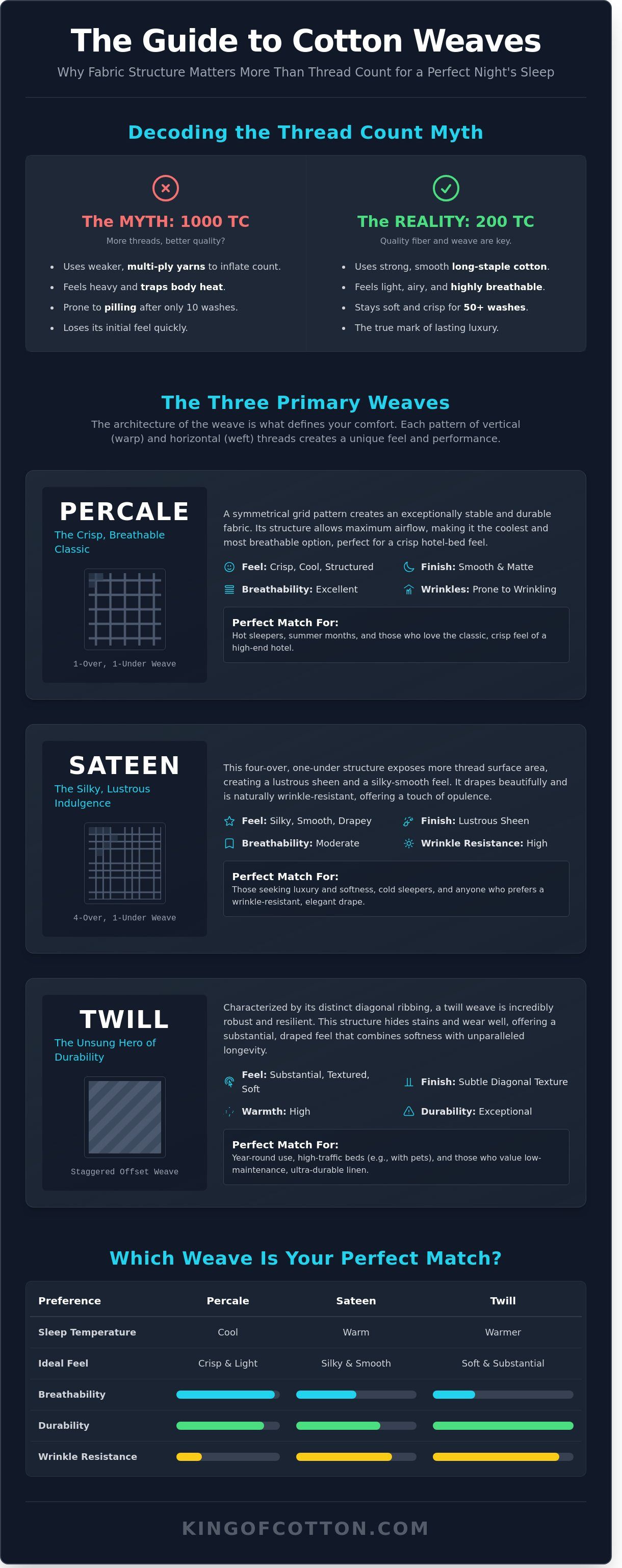
Thread count is frequently used as a marketing gimmick to inflate prices. Some manufacturers use multi-ply yarns, which involve twisting two or three inferior, thin threads together to create a single strand. This allows them to claim a 1000TC rating on a product that actually uses lower-grade cotton. These sheets often feel heavy, trap heat, and pill after just 10 washes. In contrast, a genuine 200TC Percale made from authentic long-staple cotton will feel significantly smoother and more luxurious. Long-staple cotton is essential because it creates a finer, stronger yarn with fewer loose ends. This results in a high-performance weave that remains crisp and soft for years, rather than months. We prioritise the quality of the yarn over the sheer number of threads, focusing on a finish that stays consistent through 50 or more industrial laundry cycles.
The Anatomy of a Weave: Warp and Weft
Every piece of fine linen is born on a loom where two distinct sets of threads intersect. The 'warp' threads are the vertical lines kept under high tension during the weaving process. The 'weft' threads are the horizontal lines that are passed over and under the warp. The specific ratio of this over-under pattern determines the final texture and sheen of the fabric. For example, a Twill textile weave uses a staggered offset to create a distinct diagonal ribbing. This construction is incredibly robust and is often favoured in high-traffic hospitality settings because it resists wrinkles and hides surface wear. A weave is the geometric arrangement of yarns that dictates airflow and skin-feel.
By manipulating these intersections, we can create vastly different experiences. A one-over, one-under pattern results in the matte, breathable finish of Percale, which is ideal for those who prefer a cool sleep. Alternatively, a four-over, one-under structure exposes more thread surface to create the lustrous, silk-like glow of Sateen. Understanding cotton weaves percale sateen twill allows you to choose a fabric that matches your personal thermoregulation needs. Whether you require the crispness of a traditional hotel sheet or the heavy, draped warmth of a twill, the architecture of the weave is what defines your comfort.
Percale Weave: The Crisp, Breathable Classic
The percale weave represents the absolute pinnacle of traditional bed linen craftsmanship. It follows a strict "one-over, one-under" structure where the horizontal weft threads and vertical warp threads interlace in a symmetrical grid. This simple, tight pattern creates a fabric that is exceptionally stable and durable. Because the threads are woven evenly, there is more surface area for air to pass through the gaps in the weave. This makes percale the most breathable option available, providing a cool, airy environment that prevents the buildup of humidity during the night.
For those focused on understanding cotton weaves percale sateen twill, the sensory experience of percale is its most defining trait. It does not possess the silky drape of sateen; instead, it offers a firm, matte finish that feels remarkably like a freshly laundered, high-end button-down shirt. This "crispness" is a result of the balanced tension in the weave. When you slide into a bed made with 400-thread-count percale, the fabric feels cool against the skin, making it an essential choice for the warmer months in the UK or for anyone who prefers a structured feel to their bedding. Experts often highlight this distinction in guides comparing Percale vs. Sateen, noting that percale’s lack of sheen is actually a sign of its breathability and classic appeal.
Durability is where percale truly earns its reputation as a long-term investment. The uniform structure prevents the individual fibres from loosening or rubbing together excessively. This significantly reduces the risk of pilling, even after 200 or 300 wash cycles. While sateen may lose its lustre over time, percale actually improves with age. The cotton fibres relax and soften, but the structural integrity of the tight grid remains intact. This ensures the sheets don't become thin or lose their shape after years of regular use.
Who Should Choose Percale?
Percale is the "hot sleeper's" best friend. If you find yourself kicking off the duvet at 2:00 AM, the superior airflow of a 200 to 400 thread count percale will help regulate your body temperature. It is also the ideal choice for a modern, minimalist bedroom aesthetic. The matte finish provides a clean, understated look that doesn't reflect light. While it's true that percale can wrinkle more easily than other weaves, many find that a light iron or simply pulling them tight across the mattress creates that sought-after tailored appearance.
The Hotel Secret: Why Percale Dominates the Hospitality Industry
There is a reason why the world's most prestigious hotels almost exclusively use percale. Guests expect a specific "cool-to-the-touch" sensation when they first climb into bed, a feeling that sateen often lacks. Beyond the guest experience, hotel managers prioritise percale for its incredible tensile strength. Our 28 years of experience supplying the hospitality sector has shown that percale can withstand the rigours of industrial laundering and high-heat drying without fraying or thinning. It remains the professional choice for those who want their bedroom to feel like a five-star suite. You can explore these professional-grade options in our luxury bed linen collections, which are designed to bring that same hotel-standard durability into your own home.
If you are looking to upgrade your sleep environment today, consider starting with a high-quality percale duvet cover set to experience the difference in breathability for yourself.
Sateen Weave: The Silky, Lustrous Indulgence
Sateen represents the pinnacle of bedtime luxury for those who prioritise a soft, silky touch over a crisp finish. While many people start their journey by understanding cotton weaves percale sateen twill, they often find themselves drawn to sateen for its unique construction. Unlike the standard one-over, one-under weave of percale, sateen uses a four-over, one-under structure. This specific pattern exposes more of the cotton thread's surface to the air and light. Because more yarn sits on the surface, the fabric achieves a natural, luminous lustre that mimics the elegance of silk without the high-maintenance slipperiness.
The result is a fabric that feels buttery-soft against the skin. It possesses a denser, heavier feel than other weaves, often weighing between 120 and 150 grams per square metre (gsm). This added density makes sateen the preferred choice for the UK's cooler nights, as the tight weave traps heat more effectively than its breathable counterparts. When you slide into a bed made with 400 or 600 thread count sateen, the material feels substantial and indulgent. It provides a level of warmth that percale simply can't match, making it a staple for five-star hotels that want to offer a cocoon-like experience to their guests.
The Science of the Drape
The fluidity of sateen comes from those floated threads. By skipping three or four vertical yarns before tucking under, the fabric gains a flexible quality that allows it to contour to your body's shape. This isn't just about aesthetics; it has a functional benefit too. Sateen is naturally more wrinkle-resistant than percale. The way the threads lie flat means they don't crease as sharply after a night of sleep. There's also a psychological element to this weight. Research into sleep hygiene often highlights how weighty bedding provides a sense of security. This can help lower cortisol levels before sleep, providing a calming effect similar to a weighted blanket.
Best Practices for Sateen Lovers
For anyone who identifies as a cold sleeper, sateen creates a sanctuary. The dense weave traps a thin layer of warm air near your skin, making it ideal for the autumn and winter months in the UK. This thermal regulation is why sateen is often the preferred choice for draughty period homes or anyone who prefers a cosy, enclosed feeling. To preserve that signature lustre, always wash your sateen sheets at 40°C using a gentle, non-biological detergent. Avoid high-heat drying, as excessive heat can damage the delicate surface fibres that create the glow. If you're looking to upgrade your sleep environment, you can explore a range of high-quality bedroom essentials to find sateen options that suit your style. Understanding cotton weaves percale sateen twill is the first step toward a bespoke sleep experience that matches your personal temperature needs. By choosing a sateen weave, you're investing in a fabric that balances the durability of cotton with the decadence of a satin-like finish.
Twill and Flannel: Beyond the Primary Two
While percale and sateen are the most common choices for luxury bedrooms, they aren't the only options for those seeking specific performance traits. To truly master the art of choosing linens, understanding cotton weaves percale sateen twill involves looking at the heavier hitters in the textile world. Twill and flannel serve distinct purposes, moving away from the crispness of percale or the sheen of sateen toward sheer durability and thermal efficiency. These weaves are often the secret behind the longevity of five-star hotel linens and the warmth of a classic British winter bedroom.
Twill: The Robust Alternative
Twill is easily identified by its characteristic diagonal ribbing, a structural pattern created by passing the weft thread over one or more warp threads and then under two or more. This is the same fundamental architecture found in heavy-duty denim jeans, making it incredibly resilient. In a professional setting, twill is the unsung hero. It offers roughly 28% more resistance to tearing compared to basic plain weaves, which is why it's a staple for heavy-duty bedspreads and high-quality bathroom textiles.
Beyond its strength, twill's "hand" or tactile feel is heavier and more substantial. The textured surface is a practical choice for high-traffic guest rooms because it naturally masks minor wrinkles and resists staining better than flatter weaves. When a fabric has a three-dimensional structure, shadows created by the ribs hide small imperfections that would be glaringly obvious on a smooth sateen sheet. While most shoppers focus on the primary two options, understanding cotton weaves percale sateen twill ensures you select the right fabric for every season and room type.
Seasonal Weaves: When to Switch to Flannel
Flannel isn't defined by its fiber but by a mechanical process called "napping." After the cotton is woven, fine metal brushes rub the surface to lift the fibers, creating a soft, plush pile. This process increases the surface area of the cotton significantly, allowing it to trap air and provide superior insulation. It's a tactical choice for the UK's winter months when overnight temperatures frequently drop below 5°C. The result is a fabric that prioritises heat retention over the cool touch of a standard weave.
While flannel is the ultimate in warmth, it can be too efficient for some sleepers. A 170gsm flannel sheet provides immense comfort, but it lacks the rapid heat dissipation of thinner fabrics. To prevent overheating, many of our clients at King of Cotton use a hybrid approach. They pair a brushed flannel bottom sheet with a crisp, breathable percale duvet cover. This setup provides the initial warmth of the flannel against the skin while allowing excess heat to escape through the top layer. It's a sophisticated way to manage your sleep microclimate without sacrificing the luxury of fine linens.
- Durability: Twill's diagonal structure resists pilling and abrasion better than sateen.
- Maintenance: Textured weaves like twill require less ironing to look presentable.
- Thermal Control: Flannel's napped surface can increase skin temperature by up to 2°C faster than percale.
- Versatility: Twill is ideal for decorative top-of-bed items like runners and heavy covers.
Experience the difference that 25 years of expertise brings to your bedroom by browsing our full range of hotel-quality cotton linens.
The Professional Selection Guide: Which Weave is Your Perfect Match?
Choosing the right bedding isn't just about aesthetics; it's a functional decision that affects your recovery and daily energy levels. Understanding cotton weaves percale sateen twill involves more than just feeling a sample in a shop. Your choice dictates how your body interacts with the fabric for eight hours every single day. While thread count often dominates the conversation, the weave structure determines the breathability, drape, and durability of your investment.
Hot Sleepers vs. Cold Sleepers
Your sleep temperature is the most critical factor in this decision. Percale is the definitive choice for those who wake up sweating or find themselves kicking off the covers at 3:00 AM. Its one-over-one plain weave creates a matte, crisp finish that allows maximum airflow. Conversely, sateen's four-over-one structure is denser and heavier, making it ideal for those who feel the chill or prefer a cosy, cocoon-like sensation during the winter months.
Long-staple cotton fibers are essential regardless of which weave you select. These longer fibers create smoother yarns with fewer ends sticking out, which ensures that even a dense sateen weave remains breathable and doesn't trap stifling heat. As a rule of thumb, remember this: "The best weave isn't the most expensive one; it's the one that regulates your body temperature through the night."
Maintenance and Longevity
Longevity depends on how you treat your linens. Percale is the workhorse of the linen cupboard. It's incredibly durable and actually improves with age, becoming softer with every wash. However, it does wrinkle easily. If you demand a perfectly smooth bed, you'll need to spend time with the iron. Sateen offers a natural, silky smoothness that resists wrinkles better than percale, but the exposed floats in the weave make it slightly more prone to snagging over several years of use.
A high-quality weave feels better at year five than it does at year one because the cotton fibres relax and settle into their structure. For those who manage busy households or professional guest spaces, King of Cotton's delivery and service standards provide the reliability needed to maintain a consistent rotation of premium linens. High-grade percale can easily withstand 200 industrial wash cycles without losing its integrity, whereas low-quality supermarket sets often begin to pill or thin after just 15 washes.
A common professional secret for hybrid comfort is mixing and matching your weaves. You don't have to commit to just one style. Many luxury hotels use a sateen top sheet for that immediate "wow" factor of softness against the skin, paired with a percale duvet cover. This setup provides the tactile luxury of sateen where you feel it most, while the percale outer layer ensures the bed doesn't become an oven by midnight.
Ultimately, investing in high-quality products saves money over the long term. A £120 set of genuine Egyptian cotton sheets that lasts seven years is far more economical than replacing a £30 polyester-blend set every six months. By prioritising the weave that matches your physiology, you're not just buying fabric; you're securing 2,500 nights of superior sleep.
Transform Your Bedroom Into a Five-Star Sanctuary
Choosing the right fabric is the final step in mastering your sleep environment. Whether you prefer the matte, breathable crispness of a percale or the luminous, heavy drape of a sateen, your choice dictates how you'll feel every morning. By understanding cotton weaves percale sateen twill, you can move beyond basic thread counts to find the specific texture that suits your personal temperature and style. It's about more than just aesthetics; it's about investing in the eight hours of rest you deserve every single night.
At King of Cotton, we've spent over 25 years perfecting the art of fine Egyptian Cotton. We're proud to be the trusted supplier for the world's most prestigious 5-star hotels, bringing that same professional standard directly to your home. Our commitment to quality has earned us an 'Excellent' rating on Trustpilot from thousands of discerning sleepers across the United Kingdom. Don't settle for average linens when you can experience the same durability and comfort found in the world's finest guest suites.
Explore our curated collection of hotel-quality bed linen and discover why experts choose our specialist weaves for a truly rejuvenating night's rest.
Frequently Asked Questions
Is percale or sateen better for sensitive skin?
Sateen is the superior choice for sensitive skin because its four-over-one weave creates a silky, frictionless surface. This structure minimizes the mechanical irritation that a crisper, matte percale might cause. While percale is breathable, 90% of dermatological recommendations for skin-friendly bedding focus on minimizing friction. This makes sateen the preferred option for those with eczema or delicate skin who need a gentle touch.
Do sateen sheets pill more easily than percale?
Sateen sheets pill more easily than percale because the longer "float" threads are exposed on the surface. These exposed yarns can catch and break over time, especially if you wash them with rougher fabrics like denim or towels. To maintain your sateen's 5-star hotel finish, wash them separately at 40 degrees Celsius. Avoid high-heat drying which can weaken the cotton fibres over a 12-month period.
What is the best weave for Egyptian cotton sheets?
The best weave for Egyptian cotton depends on your personal sleep temperature, though percale is the traditional choice for a crisp, professional feel. Understanding cotton weaves percale sateen twill helps you choose; percale offers a cool, 200-thread-count matte finish, while sateen provides a heavier, 400-thread-count drape. Both benefit from the extra-long staple fibres found in authentic Giza cotton, ensuring a lifespan of 5 to 10 years with proper care.
Can I use sateen sheets in the summer?
You can use sateen sheets in the summer, though they trap more heat than percale due to their dense weave. Sateen typically weighs 15% more than percale, making it feel warmer against the body. If you prefer the silky feel in July or August, ensure your room temperature is kept at 18 degrees Celsius or below. This helps compensate for the fabric's reduced airflow compared to lighter weaves.
Why do hotel sheets always feel like percale?
Most luxury hotels in the UK use percale because it withstands industrial laundering and stays breathable for every guest. Percale's one-over-one weave is incredibly durable, often lasting through 200 or more wash cycles without losing its structural integrity. This weave provides that signature "cool to the touch" sensation that 75% of hotel guests associate with a premium, professional sleep experience. It's the standard for high-end hospitality.
Does a higher thread count make a weave more durable?
A higher thread count doesn't automatically guarantee better durability, as the quality of the raw cotton is the primary factor. A 200-thread-count percale made from long-staple Egyptian cotton will outlast a 1,000-thread-count sheet made from inferior, short-staple fibres. In fact, excessively high thread counts often use thinner, weaker threads. These are 30% more likely to tear after 18 months of regular use.
How can I tell the difference between weaves just by looking at the fabric?
You can distinguish between weaves by looking at the surface reflection and the tightness of the grid. Sateen has a noticeable lustrous sheen and a smooth, almost liquid-like drape, whereas percale features a flat, matte finish and a tight, uniform square pattern. If the fabric looks slightly diagonal, it's likely a twill weave. Twill is common in heavier 300gsm bedding or luxury denim-style cotton.
Do all cotton weaves need to be ironed?
While all 100% cotton fabrics wrinkle, percale requires more attention with a steam iron than sateen does. Sateen's heavier weight and specific weave structure naturally resist deep creases, often looking smooth after a quick line dry. For that pristine, elegant look, iron your linens while they're 10% damp. This technique easily removes the folds that naturally occur in premium natural fibres.