

Ultimate Duvet Tog Guide: Hotel Comfort for Your Home
Why is it that you can sleep perfectly in a five-star hotel suite, yet struggle with temperature at home despite buying the thickest duvet available? It's a common frustration to find yourself overheating on a mild spring night or shivering through January beneath a heavy, cumbersome quilt. Whilst a duvet should provide effortless comfort, the technicalities of thermal resistance often remain a mystery. This definitive duvet tog guide draws upon decades of expertise in the professional hospitality sector to help you master your sleep environment and achieve hotel-standard rest.
We promise to demystify the science of tog ratings, which are governed by rigorous British Standards, covering everything from breathable 4.5 summer options to the indulgent warmth of a 15.0 winter choice. You'll discover how the world's finest hotels use specific materials to balance weight with insulation, ensuring a serene experience regardless of the season. We'll also explore the practical elegance of all-seasons duvets and how to pair your choice with luxury linens for a truly refined finish. By the end of this guide, you'll have the knowledge to select a duvet that offers lasting quality and the restorative sleep you deserve.
Key Takeaways
- Master the science of thermal resistance to ensure your bedding provides warmth through air-trapping "loft" rather than heavy, cumbersome weight.
- Utilise this comprehensive duvet tog guide to navigate the British seasons, identifying the precise ratings needed for summer cooling and winter indulgence.
- Explore the distinct advantages of natural versus synthetic fillings and how each material impacts your body's ability to regulate temperature.
- Discover the secrets of professional hoteliers for creating a restorative sleep environment using the synergy of premium duvets and luxury linens.
- Learn how to resolve the "battle of the tog" for couples and why specific safety standards must be met when choosing bedding for children.
Understanding the Tog Rating: The Science of Sleep Temperature
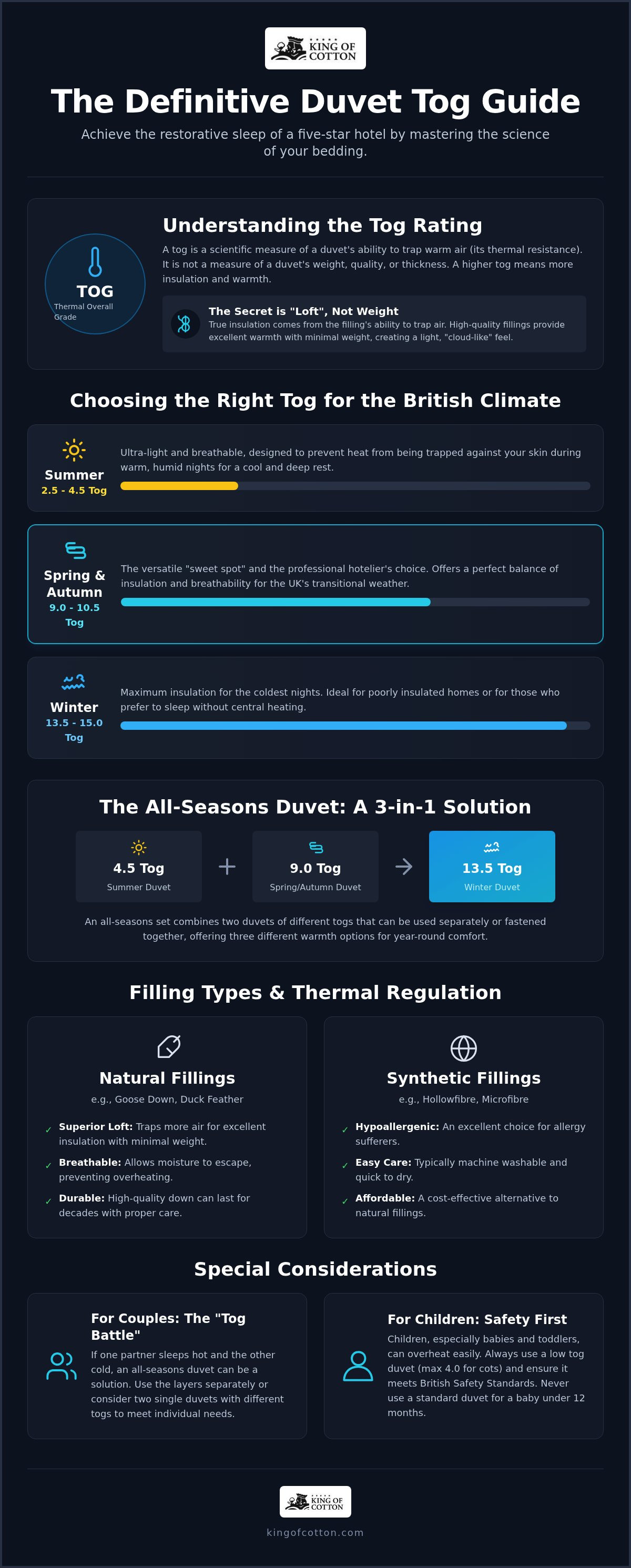
To achieve the serene, restorative sleep associated with the world's finest hotels, you must first understand the technical foundation of your bedding. The term "tog" is far more than a simple label. Tog is a scientific measure of a duvet’s ability to trap warm air whilst allowing moisture to escape. By mastering this metric, you can curate a sleep environment that mirrors the effortless comfort of a luxury suite. It's the difference between a restless night and waking up truly rejuvenated.
The Tog rating system, or Thermal Overall Grade, is the industry standard for measuring thermal resistance. In professional hospitality, this measurement is vital for maintaining guest satisfaction year-round. Many prestigious hotels opt for a 10.5 tog duvet as their primary benchmark. This specific rating offers a refined balance, providing enough insulation for cooler nights whilst remaining breathable enough to prevent overheating during transitional seasons. It represents a versatile standard of excellence that suits a wide variety of sleepers.
The UK Tog Scale Explained
The British scale typically spans from a breathable 1.5 to an exceptionally warm 15.0. These ratings aren't arbitrary; they're determined in strictly controlled laboratory environments using standardised plates to measure heat loss. It's a common misconception that a higher number indicates a superior product. In reality, a premium 4.5 tog duvet crafted from high-grade materials will offer a much more luxurious experience than a lower-quality 13.5 tog alternative. The "best" rating is entirely dependent on your personal thermal preference and the ambient temperature of your bedroom. Using a duvet tog guide helps you navigate these choices with confidence.
Why Weight Does Not Equal Warmth
One of the most persistent myths in bedding is that a heavy duvet is necessarily a warm one. True insulation comes from "loft", the ability of a filling to trap pockets of still air. High-quality natural clusters, such as goose down, are incredibly efficient at this. They provide superior warmth with almost no weight, creating that sought-after "cloud-like" feeling found in five-star accommodation. This allows for a feeling of indulgence without the physical pressure of a heavy quilt.
In contrast, synthetic materials like hollowfibre or microfibre require more density to achieve the same thermal resistance. Whilst these are excellent hypoallergenic choices, they often feel heavier on the body. By focusing on the quality of the filling rather than the physical weight, you can enjoy a more comfortable, unrestricted night's sleep. Pairing your selection with premium bed linen further enhances this effect, allowing the duvet to breathe and regulate your temperature as intended.
Seasonal Selection: Choosing the Right Tog for the British Climate
The British climate is famously unpredictable. A sudden April frost or a humid July night can easily disrupt your sleep cycle. Selecting the right insulation is essential for maintaining a stable body temperature. We've designed this duvet tog guide to help you navigate these shifts with the precision of a professional hotelier.
For the warmer months, a rating of 2.5 to 4.5 tog is ideal. These ultra-light options prevent heat from being trapped against your skin, allowing your core temperature to drop naturally for deeper rest. The British seasons generally demand the following breakdown for optimal comfort:
- Summer (2.5 – 4.5 Tog): Essential for maintaining a cool core during humid nights.
- Spring and Autumn (9.0 – 10.5 Tog): The versatile "sweet spot" for the UK's transitional weather.
- Winter (13.5 – 15.0 Tog): Necessary for heritage homes or those who prefer sleeping without the heating on.
True winter insulation remains a necessity for many, yet modern central heating has changed how we sleep. Many homeowners now prefer a slightly lower rating than the maximums suggested in a traditional duvet tog guide, as well-insulated bedrooms rarely reach the freezing temperatures of previous generations. Balancing your home's insulation with your bedding is key to avoiding that restless, overheated feeling at 2 am.
The All-Seasons Duvet: The Ultimate 3-in-1 Solution
The all-seasons duvet is a masterclass in efficiency. It consists of two separate quilts, typically a 4.5 tog and a 9.0 tog, which can be fastened together to create a 13.5 tog winter shield. Hotels frequently use this 3-in-1 system because it allows them to adapt room bedding instantly to weather forecasts or guest preferences. It's a sophisticated investment that ensures you're never caught out by a sudden cold snap or an unseasonable heatwave.
Matching Your Tog to Your Bedroom Temperature
Sleep experts generally recommend a bedroom temperature of approximately 18°C for the most restorative rest. If your room is consistently warmer, you'll find a lower tog rating more comfortable. Personal "sleep profiles" also play a role; some individuals naturally radiate more heat than others, whilst others feel the chill immediately. To fine-tune your comfort, consider how layers like mattress toppers or luxury bed linen add subtle warmth without the bulk of a higher-tog duvet. Choosing high-thread-count Egyptian cotton can enhance breathability, ensuring your chosen duvet performs at its peak. You might find that a high-quality hotel-standard duvet provides a more consistent temperature than lower-grade alternatives.
Filling Types and Their Impact on Thermal Regulation
Whilst the numerical rating is a vital baseline, the specific filling material dictates the actual sensory experience of your sleep. This duvet tog guide highlights a crucial professional secret: not all 10.5 tog duvets perform identically. Natural fillings generally regulate temperature with far greater finesse than synthetic alternatives. Because of this superior breathability, a high-quality natural duvet often feels more comfortable and less restrictive than a synthetic one of the same rating. It adapts more fluidly to your body's microclimate throughout the night.
Natural Fillings: Luxury and Longevity
Natural fillings like goose down and duck feather are the gold standard in prestigious accommodation globally. Goose down is particularly prized for its large clusters, which provide exceptional loft and insulation efficiency whilst remaining incredibly light. These clusters work by trapping air amongst their delicate filaments, creating a dry and serene sleep environment by wicking away moisture. We emphasise the importance of ethically sourced fillings, ensuring that your investment in quality aligns with international standards of responsibility. These materials offer a longevity that synthetic fibres often cannot match, maintaining their "cloud-like" feel for years.
Synthetic Fillings: Practicality and Performance
Synthetic options offer a sophisticated solution for those with specific hypoallergenic requirements or the need for frequent laundering. Modern engineering has allowed these materials to reach new heights of comfort:
- Hollowfibre: Features strands with a hollow centre to trap air, offering a breathable and robust feel that stands up well to daily use.
- Microfibre: Consists of extra-fine fibres that closely mimic the soft, airy texture of natural down cluster for cluster.
High-grade synthetics are designed to avoid the "sweaty" sensation often associated with cheaper, denser materials found in high-street alternatives. In professional hospitality settings, these materials are valued for their durability and their ability to maintain their shape after repeated industrial washing. They provide a consistent, reliable warmth that is easily managed.
The duvet casing is just as critical as the filling itself for managing your temperature. A high-thread-count cotton shell, particularly one crafted from Egyptian cotton bed linen, is vital for effective heat management. This natural fabric allows the filling to breathe, preventing heat from becoming trapped within the duvet. Without a premium casing, even the finest filling cannot perform to its full potential. It's the synergy between the casing and the filling that creates the perfect sleep environment.
Special Considerations: Couples, Children, and Health
Selecting bedding isn't a one-size-fits-all endeavour. Whilst our duvet tog guide provides a robust technical framework, personal circumstances such as age, health, and shared sleeping arrangements require a more nuanced approach. Achieving a serene night's rest often depends on addressing these individual variables with the same level of care found in a boutique hotel's guest services. It's about personalising the sleep environment to meet specific biological needs.
Safe Tog Ratings for Children
Safety is the primary concern when choosing bedding for younger family members. Children under 12 months should never use a duvet due to the risk of overheating. Once a child reaches the toddler stage and begins the transition from sleeping bags to duvets, a rating between 4.0 and 4.5 tog is the recommended limit. It's vital to remember that children cannot regulate their body temperature as effectively as adults. A duvet that feels comfortable to you may cause a small child to become dangerously warm. When moving your child to their first bed, prioritise lightweight, breathable options that allow for easy movement and temperature stability. This ensures their transition to "big bed" sleeping is both safe and restorative.
Partner Duvets and Custom Solutions
The "Battle of the Tog" is a familiar challenge for many couples. One partner may prefer the weightless warmth of a high-tog down quilt, whilst the other requires a cooler environment to avoid restlessness. Partner duvets, often referred to as "half and half" duvets, offer a sophisticated solution by featuring different tog ratings on each side. This allows both individuals to enjoy their preferred level of insulation without compromise. Alternatively, you can use a lower-tog base duvet and supplement one side with elegant throws or bedspreads. The foundation of any shared bed should be highly breathable cotton bedding to ensure moisture is wicked away efficiently. This material synergy is essential for maintaining a balanced microclimate amongst shared layers.
Health considerations also dictate your choice of filling. For those with sensitive skin or asthma, high-grade synthetic microfibre provides a hypoallergenic shield without sacrificing the luxurious feel of natural down. These materials are engineered to resist dust mites, providing a cleaner sleep environment for those with respiratory concerns. By matching your health requirements with the correct thermal resistance, you create a sanctuary that supports both physical well-being and indulgent comfort. If you're looking to invest in long-term sleep quality, you can browse our collection of luxury hotel duvets to find your perfect match.
The King of Cotton Standard: Investing in 5-Star Sleep
King of Cotton brings decades of experience from the world's most prestigious hotels directly to your bedroom. We believe that choosing the right insulation is not just a seasonal chore; it's a fundamental investment in your long-term wellbeing. This duvet tog guide has outlined the technicalities of thermal resistance, but the final step is ensuring those standards are maintained through material excellence. By selecting a duvet designed to meet the rigorous benchmarks of professional hospitality, you're choosing a product built for lasting comfort and restorative rest.
The Importance of the Duvet Cover
Your chosen tog rating is only as effective as the linen covering it. A heavy, non-breathable cover can trap heat even with a low-tog duvet, whilst a premium Egyptian cotton sheets set allows for optimal thermal regulation. The weave of your linen also plays a vital role in your sleep climate. For those who prefer a crisp, cool touch that aids temperature drops in summer, our Percale weaves are the ideal choice. If you desire a more indulgent, cosy feel for the winter months, Sateen offers a silk-like finish that retains warmth without sacrificing breathability. Our luxury bedding collections are specifically designed to enhance the performance of your duvet, ensuring that the air-trapping loft remains effective throughout the night.
Caring for Your Luxury Duvet
Preserving the integrity of your duvet requires professional-level care. Daily shaking is essential. This simple action redistributes the clusters, whether natural or synthetic, and prevents the filling from clumping together. Clumping creates cold spots, effectively lowering the tog rating in certain areas whilst causing overheating in others. When laundering, always follow the specific instructions for natural or synthetic fibres to avoid damaging the delicate structure of the filling. Professional cleaning is often recommended for natural down to preserve the essential oils that keep the clusters supple.
Even the finest duvets eventually reach the end of their lifespan. If you notice your duvet has "deflated" or the filling is no longer evenly distributed despite regular shaking, it's likely time for a replacement. A flattened duvet loses its ability to trap air, meaning it can no longer provide the thermal resistance indicated on its original label. By following the principles in this duvet tog guide and investing in material heritage, you ensure that every night's sleep mirrors the serene confidence of a five-star hotel experience.
Elevate Your Sleep to Hotel Standards
Achieving the perfect night's rest is a delicate balance of science and material excellence. This duvet tog guide has demonstrated that true comfort comes from understanding how air-trapping loft provides insulation without unnecessary weight. Whether you're selecting a breathable 4.5 tog for the summer or a versatile all-seasons solution, the quality of your filling remains paramount. Every cluster and fibre plays a role in your restorative journey.
King of Cotton is trusted by the world's most prestigious hotels to provide an unparalleled sleep experience. Our expertly crafted natural and synthetic fillings are designed to meet the highest standards of luxury and durability. With worldwide delivery available, you can easily bring this level of professional hospitality into your own home. It's time to stop settling for restless nights and start investing in your long-term health.
Take the final step toward a more refined lifestyle by choosing bedding that supports your body's natural temperature regulation. Explore our range of hotel-quality duvets and find your perfect tog today. You deserve the serene confidence of a five-star sleep every single night.
Frequently Asked Questions
What is the best tog for a duvet all year round in the UK?
A 10.5 tog duvet is widely considered the optimal choice for year-round use in the UK. This rating provides a sophisticated balance of insulation and breathability, making it suitable for both milder winters and cooler summer nights. Whilst personal preferences vary, this mid-range option mirrors the standards found in luxury hotels. It offers a consistent sleep environment that adapts well to modern central heating, ensuring you remain comfortable throughout the changing British seasons.
Can I use a 13.5 tog duvet in the summer?
Using a 13.5 tog duvet during the summer months is generally not recommended as it carries a high risk of overheating. These higher ratings are specifically engineered to trap significant heat for winter insulation. During a British summer, a 13.5 tog quilt will likely cause restlessness and disrupted sleep patterns. For warmer nights, this definitive duvet tog guide suggests transitioning to a breathable 4.5 tog option to maintain a stable and cool core temperature.
Is a 10.5 tog duvet warm enough for winter?
A 10.5 tog duvet is often perfectly sufficient for winter if your home is well-insulated or centrally heated. In modern residences, bedroom temperatures rarely drop low enough to necessitate a 13.5 or 15.0 tog quilt. However, if you live in a heritage property with significant heat loss, you might prefer a higher rating. You can also enhance a 10.5 tog duvet by layering it with high-thread-count Egyptian cotton linen for added refined warmth.
What tog duvet is safest for a toddler?
For toddlers over 12 months, a low rating between 4.0 and 4.5 tog is the safest choice. Children under 12 months should never use a duvet due to the risk of overheating. Young children cannot regulate their body temperature with the same efficiency as adults, making higher togs potentially dangerous. Always ensure their bedding is lightweight and breathable, facilitating a safe and restorative transition from infant sleeping bags to their first proper duvet.
Does a higher tog mean the duvet is heavier?
A higher tog rating does not necessarily mean the duvet is heavier. Tog measures thermal resistance rather than physical weight. For instance, a 13.5 tog duvet filled with premium goose down will feel significantly lighter than a 10.5 tog synthetic alternative. This is due to the superior air-trapping "loft" of natural clusters. When selecting your bedding, focus on the material quality and insulation rating rather than the density or bulk of the quilt itself.
How often should I wash my duvet to maintain its tog rating?
We recommend laundering your duvet every six to twelve months to maintain its hygiene and thermal performance. Over time, moisture and oils can cause the filling to clump, which creates cold spots and reduces the effective tog rating. To preserve the loft between washes, shake your duvet daily to redistribute the clusters. Professional cleaning is often the preferred method for natural fillings to ensure the delicate fibres remain supple and provide consistent, luxurious warmth.
What is the difference between an all-seasons duvet and a standard one?
A standard duvet is a single quilt with a fixed thermal rating, whilst an all-seasons duvet is a versatile 3-in-1 system. It typically comprises two separate quilts, such as a 4.5 tog and a 9.0 tog, which can be used individually or fastened together. This configuration provides a bespoke sleep solution for every month of the year. It offers the flexibility to adapt to unseasonable weather shifts with the effortless precision of a professional hotelier.
Why do hotels usually use a 10.5 tog duvet?
Hotels favour a 10.5 tog duvet because it represents the pinnacle of year-round versatility. This rating accommodates the vast majority of guests' thermal preferences whilst working in harmony with climate-controlled guest rooms. It provides a luxurious, substantial feel without the risk of causing guests to overheat. By using this duvet tog guide benchmark, prestigious establishments ensure a consistently high standard of comfort that remains restorative regardless of the external weather conditions or seasonal changes.