

Goose down pillow firmness, care and feather comparison
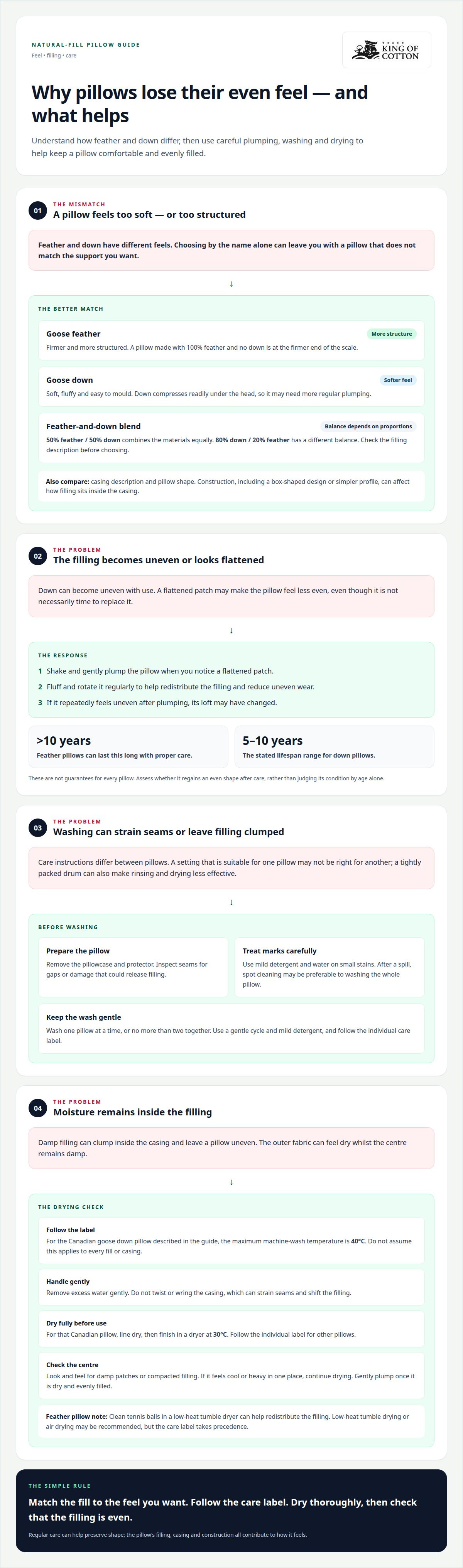
A feather pillow can hold its shape better than a goose down pillow, even though down feels softer and plusher. Feather fill is firmer and more structured, while down is light, fluffy and easy to mould. The right firmness also depends on how you sleep: back and side sleepers often prefer firmer support, while front sleepers tend to favour a softer feel.
If you’ve wondered whether feather pillows go flat faster, generally, they do not: they tend to retain their structure better and may need less frequent plumping. But firmness is only one part of choosing a pillow. Your sleep position, the blend of feather and down, and the care your goose down pillow needs all affect how it feels night after night.
This guide compares feather and down, explains how to care for these natural fills, and helps you match pillow firmness to your sleeping position. You’ll also learn what to consider when choosing a goose down pillow, whether you want a softer, more yielding feel or a firmer pillow with more structure, so you can make a considered choice for a more comfortable night’s rest.
Key Takeaways
- Feather fill generally offers more structure, while down feels softer and more easily moulded; a blend can sit between the two.
- Match firmness to how you sleep: firmer support often suits back and side sleepers, while front sleepers tend to prefer a softer feel.
- Follow the care label when washing, and dry the pillow thoroughly to help prevent the filling from clumping.
- Compare casing fabric and construction alongside the filling, as both contribute to the pillow’s feel and finish.
- Regular washing and thoughtful care can help manage dust mite exposure; the right choice also depends on your individual sensitivities.
Do feather pillows go flat faster than down?
Generally, feather pillows retain their structure better over time than down pillows. Down feels softer and plusher, while feather fill feels firmer and more structured. A goose down pillow may need more regular plumping to keep its loft even, so consider both the feel you want and the maintenance you’re prepared to do.
Choosing Goose Feather or Down
Choose goose down for a softer, more yielding feel, or goose feather for firmer structure. A blend sits between the two, but its proportions shape the balance. For example, a pillow with 50% feather and 50% down combines the materials equally; a goose down pillow with a higher down proportion will feel different. Read the filling description before choosing.
For UK pillow labels, look for the stated filling type and proportions, such as down, feather, or a feather-and-down blend. These details help you compare contents, but do not establish ethical sourcing or certification on their own.
To assess ethical sourcing, look for a named certification and check what it covers, including whether it applies to the down and its supply chain. A general quality statement alone does not mean a pillow is certified. A label naming a standard gives you a specific claim to evaluate alongside the fill description.
Fill and Pillow Construction
Down is the soft, fluffy underlayer close to a bird’s body. It has no visible quill and moulds readily. Feather is more structured plumage with a visible quill, giving a pillow a firmer feel. A goose down pillow filled with 80% down and 20% feather will have a different balance from one with a 50/50 blend.
Construction also affects how filling sits inside the casing. A pillow made with 100% feather and no down is at the firmer end of the scale. Compare the filling proportions, casing description, and pillow shape together. For example, a box-shaped construction and a simpler profile may distribute filling differently, so the fill percentage alone doesn’t describe the whole pillow.
Loft Over Time
Feather pillows tend to feel firmer and more structured, while down pillows feel softer and more mouldable. Down compresses readily under the head, creating a soft, mouldable feel, but the filling can become uneven with use. Shake the pillow and redistribute the fill when you notice a flattened patch. If a goose down pillow repeatedly feels uneven after plumping, its loft may have changed.
With proper care, feather pillows can last more than ten years, while down pillows can last between 5 and 10 years. These are different lifespan ranges, not guarantees for every pillow. Regular plumping, careful washing, and thorough drying all matter. For example, assess whether the pillow regains an even shape after care, rather than judging its condition by age alone.
Machine washing and care
Care instructions can differ between pillows, so read the label before washing. A Canadian goose down pillow can be machine washed at up to 40°C, but that temperature shouldn’t be assumed for every fill or casing. For example, if two pillows have different care labels, follow each one’s instructions rather than treating them as interchangeable. The right method helps avoid stressing the casing or leaving moisture trapped inside.
Before washing
Remove the pillowcase and protector, then inspect the seams for gaps or damage. A weak seam could release filling during washing. Treat small stains promptly with mild detergent and water, applying it carefully to the mark. After a spill, spot cleaning may be preferable to washing the whole pillow.
Wash one pillow at a time, or no more than two together. A tightly packed drum restricts movement and can make rinsing and drying less effective. Choose a gentle cycle with mild detergent, and follow the care label. Do not use a cycle or temperature that conflicts with your goose down pillow’s instructions.
Washing and drying
Down pillows are recommended for washing at least twice or four times a year, depending on use. Let the care label guide the method and temperature. Thorough drying matters because damp filling can clump inside the casing and leave the pillow uneven.
- Wash according to the care label. For the Canadian down pillow, the maximum machine-wash temperature is 40°C.
- Remove excess water gently. Don’t twist or wring the casing, which can strain seams and shift the filling.
- Line dry that Canadian pillow, then finish it in a dryer at 30°C. Follow the individual label for other pillows.
- Check the centre of the filling as well as the outer fabric before using the pillow again.
For a feather pillow, clean tennis balls in a low-heat tumble dryer can help redistribute the filling. Low-heat tumble drying or air drying may also be recommended, but the care label takes precedence. If the filling still feels damp or clumped, continue drying before putting the pillow back on the bed.
Between washes
Fluff and rotate your goose down pillow regularly to help redistribute its filling and reduce uneven wear. A removable, washable protector can shield it from everyday marks. Wash a soiled protector separately instead of automatically washing the pillow. Prompt stain treatment also makes care more practical between full washes.
After cleaning, check for damp patches and compacted areas. A pillow that feels cool or heavy in one place needs more drying. Once it feels dry and evenly filled, gently plump it before use. These simple checks help preserve its shape and keep care straightforward.
Pillow cover fabric and construction
The casing is the fabric surrounding the filling, so its material and construction matter alongside the fill. Cotton cambric appears on down pillows in two listed examples: one has a 400 thread count casing, while another has a 100% cotton cambric cover with a 233 thread count. These figures describe different specifications, not a complete measure of comfort.
Understanding cotton cambric
Cotton cambric is a closely woven cotton fabric used for pillow casings. To compare two examples, read the full description: note whether the cover is cotton, whether it is cambric, and what thread count is stated. A 400 thread count cambric casing and a 233 thread count cotton cambric casing share material details, but their stated construction differs.
Thread count can help distinguish labelled fabrics, but it shouldn’t be the only point you consider. For example, a 500 thread count cotton cover is a different specification from a 400 thread count cotton cambric casing. The figures alone don’t tell you the pillow’s fill, firmness, shape, or how the casing feels in use. Compare the complete pillow description rather than choosing on one number.
Materials and casing details
Start by distinguishing the filling from the casing. A pillow may contain down, feather, or a blend, while its casing may be cotton or cotton cambric. These are separate parts of its construction. A cotton cover, for example, does not tell you whether the filling is down alone or a blend, so check both descriptions before deciding.
Then consider how the pillow is assembled. Look for the casing fabric, stated thread count, fill composition and pillow profile in the same product description. A box-shaped pillow and a conventional pillow can present filling differently, so the outer shape provides useful context. Do not infer a particular construction from “cotton” or a thread-count figure alone.
How to compare pillow covers
Use these details as a simple comparison:
- Fabric: distinguish cotton from cotton cambric, as in the 100% cotton cambric example.
- Thread count: compare the stated figure, such as 233, 400, or 500.
- Fill: read whether the interior is down, feather, or a blend.
- Shape: note whether the pillow has a box construction or another profile.
If two pillows both have cotton covers, their filling and construction details can help explain why they feel different. Treat the cover as one factor, then weigh it alongside the filling and shape. This gives you a clearer comparison than thread count alone.
Pillow firmness and sleep positions
Your usual sleep position is a useful starting point for choosing pillow firmness. Back and side sleepers tend to prefer firmer support, while front sleepers often choose a softer pillow.
Choosing Pillow Firmness
Consider how much the pillow compresses under your head, not just its firmness label. A pillow made with 100% feather and no down sits at the firmer end of the scale. Down feels softer and more yielding, while a blend can balance those qualities. Compare the filling description and proportions, then consider whether the pillow’s support suits your usual position.
A combination sleeper who shifts between their back and side, for example, may value a medium-blend feel. Someone who stays face-down may prefer a softer fill that compresses more readily. These examples show why choosing by material name alone may not reflect how a pillow feels in use.
Matching Firmness to Sleep Position
Back and side sleepers tend to favour firmer pillows because they help keep the head and neck in a consistent, supported position. If you sleep on your side, consider whether the pillow feels supportive rather than overly yielding. Back sleepers can use the same principle: look for a steady feel beneath the head.
Front sleepers often prefer softer pillows. A very firm pillow can push the neck into an uncomfortable angle when lying face-down. Combination sleepers may find a medium-blend pillow a versatile compromise, especially if they move between positions during the night.
Try a simple comparison in your usual sleeping position before deciding. Notice whether your head feels held steadily or pushed upwards. A side sleeper, for example, can compare a firmer, feather-rich option with a softer, down-rich one. A front sleeper can check whether a softer pillow lets the head rest without tilting upwards.
Fill composition helps explain these differences. A goose down pillow offers a softer, more mouldable feel, whereas feather brings more structure. In a blend, the balance depends on the stated proportions. Use those details to shortlist pillows, then consider how each firmness feels in your usual sleeping position.
Use these points as a practical guide:
- Back sleeper: consider firmer support for a steady feel beneath the head.
- Side sleeper: compare firmer options and notice whether the head feels consistently supported.
- Front sleeper: try a softer pillow to avoid excessive firmness beneath the face.
- Combination sleeper: consider a medium blend as a flexible compromise between positions.
Reassess your choice if your main sleeping position changes. Someone who moves from front sleeping to side sleeping, for instance, may prefer a firmer feel than before. Let your usual position guide the firmness, and use the filling details to understand what creates that feel.
Are goose down pillows hypoallergenic, and what are the allergy risks?
A pillow’s natural filling does not, by itself, tell you how it will suit someone with allergies. The specific care concern identified for feather pillows is dust mites: feather pillows can be susceptible to them. Regular washing and periodic replacement are recommended, so consider maintenance alongside the filling when choosing.
Understand the risk
“Hypoallergenic” should not be treated as a promise that a pillow has no allergy risks. Feather fill may be susceptible to dust mites, and down and feather blends still contain feather when the label says so. For example, a 50/50 feather-and-down pillow includes both materials, so its description matters when comparing fills.
Separate the question of fill from the question of care. A label describing down, feather, or a blend tells you what is inside, not how often to wash the pillow or how well you’ll maintain it. If dust mites are a concern in your household, include the care instructions in your comparison rather than relying on a broad comfort or material description.
Build a practical care routine
Use the care label to guide washing and drying. Methods and temperatures can vary between pillows, so follow the instructions for the specific item. Wash removable protectors separately when they need cleaning, and keep the pillow protected between washes. A washable protector helps limit everyday marks on the casing.
After washing, dry the pillow thoroughly. Damp filling can clump inside the casing, making the pillow uneven and harder to maintain. Check the centre as well as the outer fabric before using it again. Regularly fluffing and rotating the pillow helps keep the filling distributed, while prompt attention to small stains can reduce the need for a full wash.
Know when to replace a pillow
Periodic replacement is part of the recommended approach for feather pillows, alongside regular washing. Consider the pillow’s condition as well as its age: persistent clumping, an uneven shape, or filling that no longer redistributes with gentle plumping can signal a change in comfort. These signs help you judge whether routine care is still working.
Follow a simple sequence: read the care label, protect the pillow with a removable washable cover, wash as directed, dry it completely, then reassess its shape. If washing and plumping restore an even feel, continue the routine. If the filling remains lumpy, consider replacement rather than expecting the pillow to recover.
Care cannot establish that a pillow suits every individual sensitivity. It does offer practical steps for addressing the dust-mite concern associated with feather pillows and keeping the filling clean and evenly distributed.
King of Cotton: Bed Linen
King of Cotton offers Duvets & Pillows for readers choosing between feather, down and blended fillings. Once you’ve matched firmness to your usual sleep position and considered the care involved, explore the range to compare pillow options for your bedroom. Bed Linen can complete the setting, while Towels and Bathrobes & Gowns bring the same considered approach to other parts of the home.
King of Cotton also supplies high-quality, durable cotton products for hospitality businesses and their guests. The next step depends on whether you’re refreshing your own bedroom or selecting guest-room essentials. Visit King of Cotton online to explore its home and hospitality offerings.
Choose the finishing touches for better rest
Your ideal goose down pillow is part of a bedroom that feels considered from the moment you settle in. Think about the textures and layers around it, and choose bedding that complements the atmosphere you want to create. King of Cotton offers Bed Linen, alongside Towels and Bathrobes & Gowns for a coordinated sense of comfort beyond the bedroom.
Whether you’re refreshing a guest room or making your own bed feel more inviting, focus on the details that matter most to you: the pillow’s feel, the look of the bedding and the atmosphere you want to create. Explore King of Cotton’s range at your own pace and find what suits your home.
Contact King of Cotton to discuss your requirements and move towards a more restful, refined space.
Frequently Asked Questions
So which should you actually buy?
Choose feather for a firmer, more structured feel, down for softness and easy moulding, or a blend if neither extreme feels right. Before deciding, consider your usual sleeping position, then compare the stated filling proportions and casing details. A side sleeper seeking firmer support, for example, may prefer a feather-rich blend, while someone who likes a softer, more yielding feel may choose down-rich filling.
What are Down Pillows?
Down pillows are filled with the soft, fluffy plumage found close to a bird’s body, rather than structured feathers with visible quills. This creates a lighter, more mouldable feel. Some pillows contain down alone, while others mix it with feather. Read the filling description and percentages to see what you’re considering: “feather and down” does not mean the same composition in every pillow.
What is a goose down pillow and how is it made?
A goose down pillow contains down from geese inside a fabric casing. The filling can be pure down or combined with goose feather, so the label is the clearest way to distinguish the contents. For example, a pillow described as 80% goose down and 20% goose feather contains both materials. Check the casing description too, since construction and filling are separate parts of the product.
What pillow firmness and fill power should I choose for my sleeping position?
Choose firmness around your sleeping position and preferred feel; fill power describes down’s loft, not firmness. It measures the cubic inches one ounce of down occupies. A fill power of 610 CUI, for example, tells you about loft, while the fill blend affects firmness. Back and side sleepers often look for firmer support; front sleepers usually prefer a softer pillow. Treat these as separate comparisons.
How do I wash, dry and care for a goose down pillow?
Follow the care label for the specific pillow, because washing and drying directions can vary. Remove the pillowcase and protector first, and treat small marks with mild detergent and water. After washing, check through the casing for damp or compacted areas. A pillow that feels dry outside may still hold moisture inside, so check the centre before putting it back on the bed.
How long do goose down pillows last, and when should I replace one?
A well-cared-for down pillow can last between 5 and 10 years. Replace it when its shape and support no longer recover after you redistribute the filling, or when persistent unevenness affects comfort. Age alone doesn’t show how well a pillow is performing. For example, if it repeatedly feels flat in the same area after plumping, assess whether it still provides the feel you chose it for.
How does goose down compare with duck down, feather, wool and synthetic pillows?
Goose down is softer, lighter and more mouldable than goose feather, which is firmer and more supportive. A down pillow can last 5 to 10 years with proper care, while synthetic pillows typically last two years; the material gives no comparison with duck down or wool.