

Contract Bedding for Hospitality Industry: The Ultimate Guide to Luxury and Durability
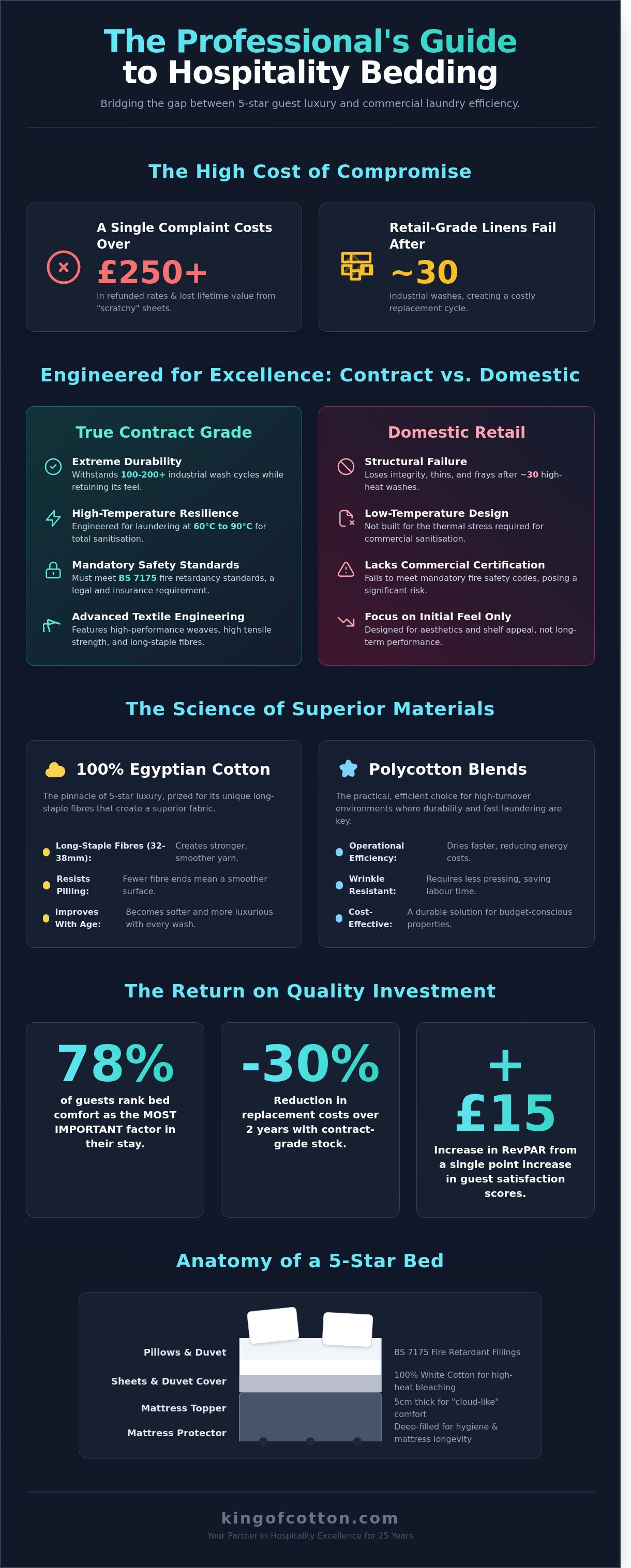
A single guest complaint about "scratchy" sheets can cost a UK boutique hotel more than £250 in refunded room rates and lost lifetime value. Investing in the wrong contract bedding for hospitality industry environments often leads to linens losing their structural integrity after just 30 industrial wash cycles. This creates a relentless replacement cycle that erodes your profit margins and damages your brand's prestige.
You understand that providing a five-star sleep experience is essential for your reputation, yet the battle between guest luxury and laundry room efficiency often feels like a compromise. This comprehensive guide reveals how to bridge that gap using our 25 years of experience as a supplier to the world's finest hotels. We will show you how to source fabrics that survive the rigours of commercial laundering while maintaining an indulgent feel. You'll learn how to select high-performance weaves that reduce drying times by 15% and discover the specific technical specifications that offer the best return on investment for your property.
Key Takeaways
- Understand the critical engineering differences between domestic retail linens and professional supplies designed to withstand frequent industrial laundering.
- Learn why 100% Egyptian cotton remains the pinnacle of five-star luxury and how long-staple fibres provide essential durability in a commercial environment.
- Discover how to source high-quality contract bedding for hospitality industry use that resists tearing and shrinkage even under high-heat drying conditions.
- Master a professional selection framework to align your linen investments with your specific guest demographics and laundry requirements.
- Explore bespoke customisation options, from professional embroidery to unique sizing, to elevate your property’s aesthetic and brand identity.
What is Contract Bedding for the Hospitality Industry?
Contract bedding for the hospitality industry represents the pinnacle of textile engineering, designed to offer guests an indulgent sanctuary while meeting the rigorous demands of a busy hotel environment. These textiles are specifically manufactured to survive 100 or more industrial wash cycles while retaining a crisp, luxurious feel. Unlike domestic linens found on the high street, professional supplies must withstand high-temperature laundering at 60°C to 90°C and heavy-duty pressing without thinning or fraying. For a 100-room UK hotel, the investment in true contract-grade stock can reduce replacement costs by 30% over a two-year period compared to retail-grade alternatives.
To better understand the technical requirements and the scale of these textiles, watch this helpful video:
When we discuss "hotel quality," we aren't using a marketing buzzword. It's a technical benchmark involving thread count, yarn type, and weave density. Professional linens often use a percale weave for breathability or a sateen weave for a silken touch, but both must pass rigorous tensile strength tests. Research shows that 78% of guests rank bed comfort as the most important factor in their stay. Improving sleep quality directly influences guest satisfaction scores; a one-point increase on a five-point scale can boost RevPAR by as much as £15 per room in competitive markets like London or Manchester. Investing in the contract bedding for hospitality industry standards ensures your property delivers the restorative experience guests expect from a premium brand.
The Essential Components of a Hospitality Bedding Set
A complete set includes more than just sheets. Deep-filled mattress protectors and thick 5cm toppers are vital for hygiene and that cloud-like comfort guests crave. While domestic beds vary, UK hotels typically stick to standard sizes like King (150cm x 200cm) or Super King (180cm x 200cm) to streamline laundry operations. Boutique establishments often require bespoke sizes for antique frames or extra-deep mattresses, which requires a specialist supplier. Using 100% white cotton remains the industry standard because it allows for high-heat bleaching. This ensures 100% sanitisation for every new arrival while maintaining a timeless, elegant aesthetic that never goes out of style.
Regulatory Standards and Safety
Safety is a legal requirement for any commercial establishment in the United Kingdom. All contract bedding must meet BS 7175 fire retardancy standards. This ensures that the bedding materials are resistant to ignition from sources like smouldering cigarettes or matches. This testing involves both the fabric and the filling of duvets and pillows. Additionally, 90% of premium UK hotels now look for OEKO-TEX Standard 100 certification to prove the textiles are free from harmful chemicals. This certification is crucial for guests with sensitive skin or allergies. Using "contract-grade" labelled products isn't just a choice; it's often a mandatory condition of commercial building insurance policies to protect both guests and the business owner.
The Science of Materials: Egyptian Cotton vs. Polycotton
Selecting the right contract bedding for hospitality industry use requires a balance between tactile luxury and operational efficiency. For five-star establishments, 100% Egyptian cotton remains the undisputed pinnacle of luxury. The secret lies in the long-staple fibres, which are typically 32mm to 38mm in length. These longer fibres create a smoother, stronger yarn with fewer joins, resulting in a fabric that resists pilling and becomes softer with every wash. In a commercial setting, this durability is vital. High-quality cotton can withstand over 200 industrial wash cycles before showing signs of structural fatigue.
For ultra-luxury boutique hotels, Giza cotton represents the "gold standard." Grown in the specific climatic conditions of the Nile Delta, Giza 45 or Giza 87 fibres offer a fineness and strength that regular cotton can't match. However, not every environment requires pure cotton. Polycotton blends, often a 50/50 or 70/30 mix, are the practical choice for high-turnover environments like budget-friendly chains or busy holiday lets. These "easy-care" fabrics dry up to 30% faster than pure cotton and require significantly less ironing, which reduces utility costs and labour time.
Durability isn't just about the fibre type; it's about how the material survives the heat and chemicals of professional cleaning. Managers should ensure their choices align with commercial laundering standards for hotel linens to prevent premature thinning or greying. While polycotton is resilient, it lacks the natural thermoregulation of 100% cotton, which allows air to circulate and keeps guests comfortable throughout the night.
Thread Count Decoded for Hotel Managers
The common myth that a higher thread count always equals better quality often leads to poor purchasing decisions. In the contract bedding for hospitality industry, the "sweet spot" for performance and comfort is between 300 and 600 TC. A 300 TC sheet offers excellent breathability and a crisp feel. Once you exceed 600 TC, the fabric becomes denser and heavier, often weighing over 150gsm. This extra weight increases drying times and laundry costs, while the tighter weave can trap heat, making the guest experience less comfortable during summer months.
Percale vs. Sateen: Choosing the Right Feel
The weave determines the finish and the "hand" of the linen. Percale uses a one-over, one-under structure that produces a matte, crisp finish. It's the classic "cool and fresh" hotel feel that many guests prefer. Sateen uses a four-over, one-under weave, creating a lustrous, silky sheen that feels warmer and more indulgent. While sateen is exceptionally soft, percale is generally more robust for industrial pressing and starching. The tighter structure of a high-quality percale weave helps it maintain its shape even after 25 years of professional heritage in the industry. For those seeking the ultimate balance of softness and strength, you can view our professional range of Egyptian cotton to find the perfect fit for your guest rooms.
Contract vs. Domestic: Why Retail Bedding Fails in Hotels
Choosing the wrong linens is a hidden financial drain that many hoteliers overlook until the replacement bills arrive. High-street retail bedding isn't engineered for the relentless turnover of a professional guest house. While a domestic sheet might feel soft in a showroom, contract bedding for the hospitality industry is built to a vastly different technical specification. It's the difference between a consumer car and a heavy-duty commercial vehicle.
Tensile strength is the first point of failure for retail fabrics. High-street sheets often use open-end yarns that snap under the 100°C heat of industrial calenders. Professional linens utilise ring-spun combed cotton instead. This creates a denser, more resilient weave that withstands the 1,200 RPM extraction cycles common in commercial laundries. Without this structural integrity, fabrics tear at the corners within weeks.
Shrinkage control is equally vital for operational efficiency. Retail sheets can shrink by as much as 10% during their first high-heat wash, leaving housekeeping staff struggling to fit a king-size sheet over a standard mattress. Specialist contract fabrics undergo sanforisation, a mechanical pre-shrinking process. This ensures the fit remains consistent for 200 or more wash cycles. We also focus on pilling resistance. Domestic cotton often develops "bobbles" after just three washes because the loose fibres haven't been removed. Professional suppliers use a singeing process to burn off surface fuzz, keeping the finish smooth and luxurious for the guest.
The "Cost Per Wash" metric is the most compelling reason to avoid retail options. A £25 domestic sheet might seem like a bargain compared to a £45 contract version. However, the domestic sheet typically fails after 40 washes, costing you 62p per use. A high-quality contract sheet from a specialist like King of Cotton often lasts 150 washes, bringing the cost down to just 30p per use. For a 20-room hotel, this durability represents a saving of over £2,400 across a single year.
The Rigours of the Industrial Laundry Cycle
UK health and safety standards require thermal disinfection at 71°C for at least three minutes to eliminate bacteria like MRSA. Domestic linens aren't designed for this thermal shock. Their fibres break down rapidly, and the elastic in retail fitted sheets loses its memory, becoming brittle and slack after ten cycles. Commercial detergents also use high-alkalinity formulas that strip natural oils from retail-grade cotton, leading to premature fraying and a "scratchy" feel that guests will certainly notice.
Durability Features to Look For
When sourcing contract bedding for the hospitality industry, look for overlocked edges and a minimum of 12 stitches per inch. These prevent hems from unravelling during mechanical agitation. Hotel-style envelope closures are the industry standard; buttons and zips are frequent points of failure that melt or snag other linens in the drum. High-grade contract bedding also uses VAT dyeing techniques. This ensures whites stay crisp and colours remain vibrant even after repeated exposure to the chlorine-based bleaches used in commercial facilities.
- Reinforced Stitching: Prevents fraying at the most vulnerable pressure points.
- Envelope Closures: Eliminates the need for repairs to broken buttons or zips.
- Optical Brighteners: Ensures a "like-new" appearance for the duration of the product's life.
A Professional Selection Framework for Your Property
Selecting the right contract bedding for hospitality industry requirements involves more than just aesthetics; it's a strategic investment in your property's operational health. Your choice of linen directly impacts guest satisfaction scores, staff productivity, and utility overheads. To make an informed decision, follow this four step framework used by the UK's leading procurement managers.
Step 1: Assessing your guest demographic and room rate positioning. Your linen must align with your Average Daily Rate (ADR). Properties with an ADR exceeding £200 typically require 300 to 400 thread count Egyptian cotton to meet guest expectations of luxury. For mid-market boutiques at the £100 to £150 mark, a high-quality 200 thread count percale provides the crisp, clean feel guests love without the premium price tag; you can learn more about T200 Percale Bed Sheets for hospitality to see examples of these specifications.
Step 2: Evaluating your laundry setup. If you manage laundry in-house, prioritise fabrics with lower Grams per Square Metre (GSM) to reduce drying cycles. If you outsource to a commercial laundry, your linen must be robust enough to withstand industrial 80°C wash cycles and high-pressure mangles. Many UK laundries charge by weight, so choosing a 130 GSM sheet over a 160 GSM alternative can save your business thousands of pounds annually.
Step 3: Calculating your Par Level. The "3-set rule" is the gold standard for operational efficiency. You need one set on the bed, one in the cupboard ready for the next change, and one in the wash. Operating with a par level below 3.0 leads to "linen stress," where housekeeping teams wait for dryers to finish, increasing labour costs and risking guest delays. For high-occupancy hotels, a par of 3.5 or 4.0 provides a vital buffer during peak seasons.
Step 4: Balancing luxury feel with energy costs. Heavy fabrics feel substantial but trap moisture. A 100% cotton sateen offers a silky touch that guests associate with five-star luxury, yet it often dries faster than heavy-duty polyester blends if the weave is engineered correctly. Expertly sourced contract bedding for hospitality industry use balances these competing needs.
Optimising for Laundry Efficiency
Drying time accounts for approximately 60% of total laundry energy consumption. By selecting linens with a specific GSM, you can directly influence your utility bills. A 125 GSM duvet cover will dry up to 15% faster than a 150 GSM version. We recommend "Easy-Iron" finishes which use a specialised heat-setting process during manufacturing. This reduces the time staff spend at the ironing station by roughly 20%. Standardising your sizes across the property is also essential. Using the same size pillowcases and flat sheets for both double and king beds simplifies the sorting process and prevents costly errors during room turnovers.
Future-Proofing with Sustainable Textiles
Environmental responsibility is no longer optional in the UK market. A 2023 Booking.com report found that 76% of travellers want to stay in eco-friendly accommodation. Investing in GOTS-certified organic cotton or linens blended with recycled fibres demonstrates a commitment to the planet. Durable, high-quality linen is inherently sustainable; it lasts for 200+ washes rather than 100, significantly reducing the carbon footprint of your supply chain. You can communicate these choices to guests through small bedside cards, linking your brand to the "Green" hospitality movement while justifying your premium room rates.
Ensure your property is equipped for success by choosing the finest contract bed linen designed for the rigours of professional use.
King of Cotton: Your Partner in Hospitality Excellence
Since 1995, King of Cotton has operated as a specialist supplier to the world’s most prestigious homes and hotels. Our 28-year history in the UK market has allowed us to refine a product range that balances aesthetic grace with industrial resilience. Elite UK establishments choose our luxury bed linen because it signals a commitment to guest comfort that cheaper alternatives cannot replicate. We understand that a hotel's reputation often rests on the quality of its sleep environment. Our team focuses on delivering that five-star experience through every fibre we weave.
Selecting the right contract bedding for hospitality industry use involves more than just picking a high thread count. Our products are engineered to survive the 60-degree Celsius wash cycles necessary for thermal disinfection in commercial laundries. We use long-staple Egyptian cotton fibres that resist pilling and thinning, even after 150 industrial launderings. This longevity reduces the replacement frequency for housekeepers, directly improving the bottom line for independent B&Bs and large hotel groups alike. It's about providing a product that looks as crisp on day 300 as it did on day one.
Customisation is a core part of our service. We provide bespoke embroidery for crests and logos using high-sheen, bleach-resistant threads. If your property features antique beds or custom-made mattresses, our team handles custom sizing requests to ensure a perfect fit. Our "Exceptional Quality Guarantee" ensures that every duvet cover, sheet, and pillowcase meets a minimum burst strength and pilling resistance score before it leaves our warehouse. We don't settle for "good enough" when your brand's reputation is on the line.
Wholesale and Contract Benefits
Efficiency is vital for maintaining healthy profit margins in the UK's competitive hotel sector. We provide tiered bulk pricing structures tailored for hotels, spas, and interior designers, ensuring that larger orders deliver maximum value. For properties undergoing large-scale refurbishments, we assign a dedicated account manager to oversee the timeline and logistics from initial quote to final delivery. You can browse our full range of professional hospitality products online to see how we accommodate various budget levels without compromising on our signature feel. Our wholesale portal makes reordering seamless for busy procurement teams.
Beyond the Bedroom: A Holistic Approach
A guest's journey doesn't end at the bedside. You can create a seamless aesthetic by coordinating your bedroom décor with our luxury bathroom collections. We supply 600gsm towels, plush robes, and anti-slip slippers that mirror the quality of our linens. These finishing touches turn a simple room into a sanctuary. Whether you need 500 sets of towels for a city-centre hotel or 10 bespoke robes for a boutique spa, our stock levels are maintained to ensure rapid fulfilment.
If you're ready to upgrade your guest experience, you should contact our experts to organise a consultation or sample pack. Seeing and feeling the quality firsthand is the best way to understand why we remain the industry leader. Our London-based specialists are available to discuss your specific requirements and provide tailored quotes that meet your operational needs and budgetary constraints.
Invest in the Future of Your Guest Experience
Choosing the right linens isn't just about aesthetics; it's a strategic business decision that directly impacts your bottom line. While domestic sheets might look fine on a shop shelf, they quickly fail under the pressure of 100 or more high-temperature industrial washes. Opting for authentic 100% Egyptian cotton ensures your investment lasts for years rather than months. As specialists in fine Egyptian Cotton for over 25 years, we've helped properties across the UK maintain the highest standards of luxury. We've earned an Excellent rating on Trustpilot by providing the world's finest hotels with linens that maintain their crisp, white finish long after cheaper alternatives have frayed. Selecting the correct contract bedding for hospitality industry use means balancing high thread counts with the tensile strength required for daily professional laundering. Your guests deserve the comfort of a luxury retreat, and your budget deserves the durability of professional-grade fabrics. It's time to move beyond retail limitations and embrace the quality that has defined global hotel standards for decades.
Upgrade your guest experience with King of Cotton’s professional hospitality range
Transform your guest rooms into havens of elegance that keep visitors coming back stay after stay.
Frequently Asked Questions
What is the best thread count for hotel bedding?
The best thread count for hotel bedding typically ranges between 200 and 400. While a 200-count percale offers the crisp feel and durability required for high-turnover rooms, a 400-count sateen provides the luxurious, silky touch associated with five-star establishments. Higher counts above 600 often lack the breathability needed for commercial laundering cycles. We've found that 300-count is the most popular choice for UK boutique hotels.
How many sets of linen should a hotel have per bed?
You should maintain a minimum of three complete sets of linen per bed to ensure smooth operations. This par 3 system allocates one set on the bed, one in the laundry, and one in the linen cupboard ready for the next change. For hotels using external laundry services, a par 4 system is safer to account for delivery delays or 48-hour turnaround times during busy bank holidays.
Why do hotels always use white bedding?
Hotels use white bedding because it provides a visual guarantee of cleanliness and can be laundered at high temperatures without fading. Since the early 1990s, when major chains standardised all-white beds, it's remained the industry benchmark for hygiene. It also allows housekeeping to wash sheets, towels, and robes together using oxygen-based bleaches to maintain a pristine, bright appearance for every new guest arrival.
Can I use domestic washing machines for contract bedding?
You shouldn't use domestic washing machines for contract bedding for hospitality industry needs because they lack the drum capacity and heating elements required for commercial disinfection. Professional bedding is designed for 60°C to 90°C cycles in machines with 10kg to 50kg capacities. Domestic units often fail under the weight of heavy-duty cotton, leading to premature motor burnout within 12 months of daily use.
What is the difference between Egyptian cotton and regular cotton for hotels?
Egyptian cotton differs from regular cotton due to its extra-long staple fibres which create a smoother, stronger yarn. This structural difference means Egyptian cotton sheets can last through 200 industrial wash cycles; standard cotton often shows signs of pilling or thinning after just 75 washes. It's the preferred choice for premium UK hotels seeking a balance of long-term value and superior guest comfort.
How long should hotel bed linen last before needing replacement?
Quality hotel bed linen typically lasts between 18 and 24 months before it requires replacement. In a high-occupancy environment, this equates to approximately 100 to 150 industrial launderings. You'll know it's time to restock when the fabric loses its snap, edges begin to fray, or the white starts to take on a greyish hue. We recommend auditing 10% of your stock every quarter to track wear.
Do you offer custom embroidery for hotel branding?
We provide bespoke embroidery services to help reinforce your hotel's unique brand identity on pillowcases, duvet covers, and towels. Most custom orders require a minimum lead time of 14 days and a small setup fee for the digital embroidery file. Adding a subtle logo in a 5,000-stitch count is a popular way for boutique properties to distinguish their contract bedding for hospitality industry collections.
What is the standard delivery time for bulk hospitality orders?
Standard delivery for bulk hospitality orders usually takes 3 to 5 working days for items currently in stock at our UK warehouse. If your order includes customisations or bespoke sizing, the timeline extends to 14 or 21 days. We use tracked pallet shipping for orders over 100kg to ensure your linen arrives in pristine condition and on the exact date requested by your management team.