

Are expensive towels worth it? Compare price, cotton and durability
Expensive towels can be worth it when their cotton and construction deliver the softness, absorbency and durability you want. But a higher price alone doesn’t guarantee a better towel. Whether expensive towels are worth it depends on how they feel and perform in everyday use, and how well they hold up to washing. A well-made mid-priced towel may suit you better than a heavier, plusher option.
It’s reasonable to expect a premium towel to feel special, but softness is only part of the picture. Cotton type, yarn construction and towel weight all affect its feel, drying performance and care needs.
This guide compares towel options by price positioning, cotton, absorbency and construction, then explains what practical testing reveals about drying and durability. You’ll have a clearer way to weigh comfort against everyday performance and choose a towel that suits your bathroom and routine.
Key Takeaways
- Judge a towel by its cotton, yarn and construction as well as its price; a premium label alone doesn’t guarantee better performance.
- Compare Turkish, Egyptian and Supima cotton by the qualities that matter to you, including softness, absorbency and how the towel may hold up over time.
- Look beyond plushness: towel weight and weave can affect how it feels, absorbs moisture and dries between uses.
- Pay attention to absorbency and odour retention in use, not just how a towel feels when it’s new.
- Inspect the loops and hems, then weigh durability against the comfort and everyday practicality you want.
Are Turkish or Egyptian cotton bath towels better?
Egyptian, Turkish and Supima cotton can all make soft, absorbent and durable towels when they use long-staple fibres. To judge value, compare the fibre, yarn construction and feel you prefer. Bamboo and synthetic blends offer different material choices, not an automatic upgrade.
Egyptian and Turkish cotton
Egyptian and Turkish cotton are both long-staple options associated with soft, absorbent and durable towels. The country name alone doesn’t tell you how a particular towel will feel: yarn twist and construction matter too. Turkish cotton may appeal if you want a plush cotton towel, while Egyptian cotton is another long-staple choice. Compare the finished towel, not just the label.
For a mid-tier towel, choose 100% cotton, ideally long-staple cotton. A towel’s value rests on the balance of comfort and construction, rather than its cotton name alone.
Supima cotton and bamboo
Supima cotton is another long-staple option, with the potential for softness, absorbency and durability associated with long-staple cottons. Bamboo offers a different material choice, but the word “bamboo” doesn’t establish a towel’s construction or performance. Compare the fibre content and feel of the finished towel with a cotton option before deciding.
If softness is your priority, feel the towel and consider its yarn construction. For a familiar cotton feel, compare Supima with Egyptian or Turkish cotton.
Combed cotton softness
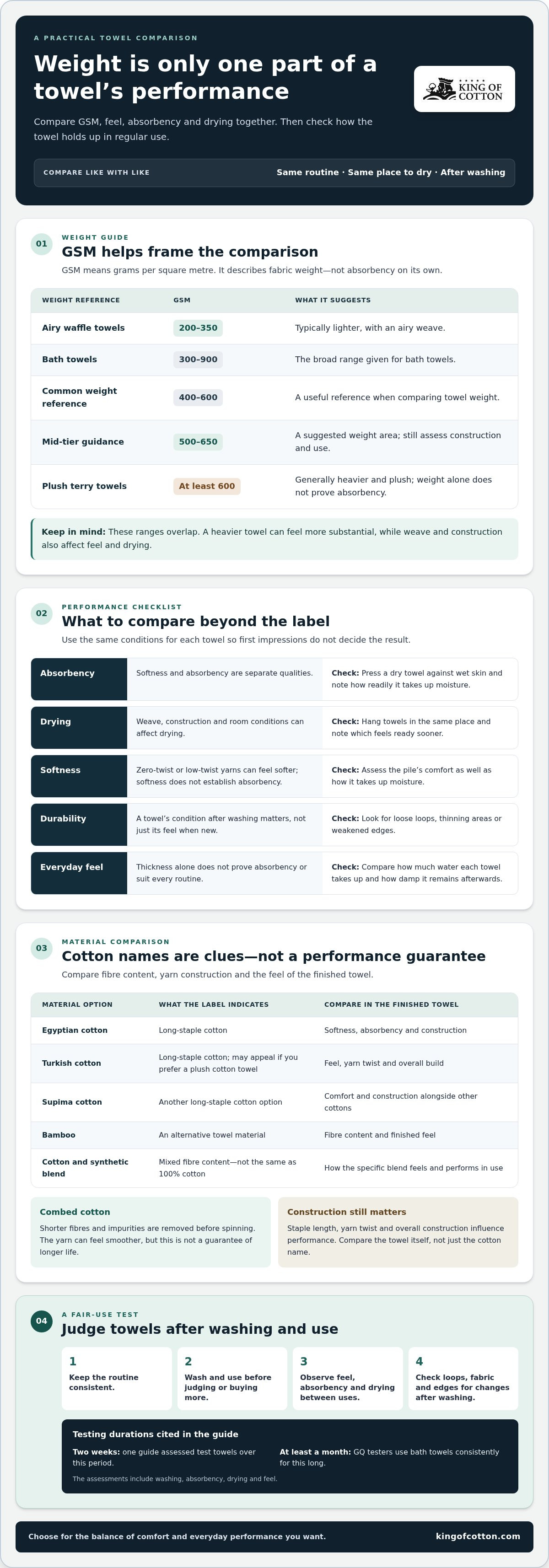
Combed cotton describes a preparation process: shorter fibres and impurities are removed before spinning. The resulting yarn can feel smoother against the skin than yarn made from less-selected fibres. That describes softness, not a guarantee of longer life. Staple length, yarn twist and overall construction still influence performance.
Zero-twist or low-twist yarns can also create a softer feel. When comparing combed cotton with Egyptian, Turkish or Supima cotton, treat “combed” as a clue about yarn preparation, not a substitute for checking the fibre and weave.
| Material option | Fibre or construction clue | What to compare |
|---|---|---|
| Egyptian cotton | Long-staple cotton | Softness, absorbency and finished construction |
| Turkish cotton | Long-staple cotton | Feel, yarn twist and overall build |
| Supima cotton | Long-staple cotton | Comfort and construction alongside other cottons |
| Bamboo | Alternative towel material | Fibre content and finished feel |
| Cotton and synthetic blend | Mixed fibre content | How the blend feels and performs in use |
When comparing cotton with synthetic fibres, read the composition: a cotton-synthetic blend is not the same material as 100% cotton. Synthetic content changes the fibre mix, so assess the actual towel’s feel and absorbency rather than assuming every blend behaves alike.
How to choose: prioritise 100% long-staple cotton for a balance of softness, absorbency and durability, then compare Turkish, Egyptian and Supima towels by yarn construction and feel; choose bamboo or a synthetic blend when its material characteristics better suit your preference.
How towels are tested for absorbency, drying and durability
A useful towel test looks beyond first impressions: absorbency, drying time, softness and condition after washing all matter. Compare towels under the same routine rather than judging a fresh towel by touch alone.
Weight, thickness and absorbency
A towel’s weight affects its feel and practicality, but thickness alone doesn’t prove absorbency. Lightweight towels can be easier to handle and dry, while a thick cotton bath towel may feel more enveloping. Compare how much water each takes up and how damp it remains afterwards. This helps you decide whether a plush feel suits your routine.
GSM and thickness
GSM means grams per square metre and describes fabric weight. Bath towels typically range from 300 to 900 gsm. Plush terry towels generally reach at least 600 GSM, whilst airy waffle towels typically weigh 200 to 350 GSM. A 400 to 600 GSM towel is another common weight reference; mid-tier guidance places towels around 500 to 650 GSM.
GSM can help narrow a comparison, but it doesn’t measure absorbency by itself. Check the towel’s weave and how it performs after washing. A heavier towel can feel substantial, while a waffle weave may feel lighter and airier. Compare each construction for your preferred balance of weight, softness and drying speed.
Absorbency and softness
Absorbency and softness are separate qualities, so test both. Press a dry towel against wet skin and note how readily it takes up moisture, then assess whether the pile feels comfortable. Zero-twist or low-twist yarns can feel softer, but softness alone doesn’t show how efficiently a towel absorbs.
For a fair comparison, wash and use a towel before buying more. Keep the routine consistent and observe its feel, absorbency and drying between uses. One guide assessed test towels over two weeks; GQ’s testers use bath towels consistently for at least a month, assessing washing, absorbency, drying and feel.
Include drying in your comparison: hang each towel in the same place after use, then note which feels ready sooner. Waffle towels’ airy construction and typically lower GSM distinguish them from plush terry, but room conditions and construction also affect drying. To assess durability, look for changes after repeated washing, such as loose loops, thinning areas or weakened edges. A towel that stays comfortable and absorbent through regular use is more useful than one that simply feels thick when new.
Compare cotton bath towels by their stated weight and construction, then consider how each fits your everyday routine.
Towel prices across luxury and lower-cost options
UK towel prices reflect material, weight, construction and presentation, but a higher cost doesn’t guarantee better performance. The question “Are expensive towels worth it?” is best answered by comparing what you gain with what you actually value.
Premium and budget towel prices
Budget and premium towels can differ in fibre content, pile, finishing and overall feel. Compare like with like: check the size, whether the fabric is pure cotton or a blend, and the stated weight. A heavier towel may feel more substantial, but it can take longer to dry and need more storage space.
Prices vary across retailers and product specifications, so focus on the details behind the figure instead of assuming one amount defines quality. Compare two similarly sized towels and note differences in material and hems. This helps show whether a higher price reflects useful construction or features you don’t need.
Luxury towel value
Luxury can mean a softer feel, a more generous pile or a refined finish. These qualities may be worth paying for if they make daily use more comfortable. Consider the full routine too: a heavier, plush towel may feel indulgent, while a lighter fabric can be easier to dry and store.
Staple cotton is one material detail to compare, but it doesn’t determine value on its own. Look at the towel’s weave and care needs too. A premium label is more meaningful when the fabric and construction deliver the feel you want after repeated washing.
Price and performance
Test a towel’s performance at home rather than judging it only by price or first touch. Wash it according to its care instructions, use it as usual, then consider how comfortable and absorbent it feels. Note whether it dries conveniently in your space, since a plush option may not suit every routine.
Ask yourself, “Are expensive towels worth it for my everyday needs?” If a lower-cost towel gives you the comfort and practicality you want, paying more may not add useful value. If you especially enjoy a softer, heavier feel, the difference may matter to you.
Brand value and customer reviews
There’s no single UK towel brand that offers the best value for everyone. Read customer reviews for specific comments about softness after washing, absorbency, drying and fabric condition. Detailed accounts of regular use can help you understand how a towel performs beyond its first impression.
Look for recurring themes across reviews, not just an isolated opinion. Repeated mentions of hems loosening or texture changing after washing, for example, are more useful than a general claim that a towel feels luxurious. Compare reviews using the same criteria for each brand, then weigh those observations against the towel’s material and construction.
What makes a towel absorbent?
Absorbency depends on how a towel’s fibres and loops take up water, but drying matters too. A towel that stays damp in a poorly ventilated bathroom can develop an unpleasant smell, even if it initially feels absorbent.
Hydrocotton towels are described as using thousands of fine, untwisted yarn loops with an airy hollow core. This construction gives water space to enter the loops, while the lighter, open structure can help air circulate through the material. Compare one with a dense, plush towel by using each after the same shower, then hanging both in the same place.
To compare drying speed, use a repeatable test: after each use, hang the towel fully open rather than folded over a rail. Check it at intervals until it feels dry, and note the bathroom’s ventilation and airflow. An absorbent towel can be ready for reuse within a few hours, but actual drying time depends on the towel and its surroundings. Limited airflow may leave even a lighter towel damp for longer.
Size affects drying too. A bath sheet uses more fabric than a smaller bath towel, so it can hold more moisture after use and needs space to air properly. Avoid leaving it bunched on the floor or folded on a hook. If you dry towels near clean sheets, keep damp fabric separate so the sheets don’t pick up stale moisture or odour.
Odour retention is a useful everyday measure of performance. After using a towel, notice whether it smells fresh once dry or retains a musty scent. Dampness trapped in thick folds or crowded storage can cause stale smells, so spreading the towel out exposes more material to air. Repeat the same routine after washing to see whether it dries and smells different when freshly laundered.
For a fair comparison, record three observations for each towel: how readily it absorbs water, how long it takes to feel dry, and whether any odour remains. Keep the washing routine and drying location consistent. For example, compare a lighter waffle towel with a thicker terry towel on the same bathroom rail. This shows whether quick drying or a more substantial feel better suits your home.
Absorbency alone doesn’t determine value. Consider the full cycle: how comfortably the towel dries you, whether it dries between uses, and how easily it can be stored without staying damp. A towel that performs well across those steps is more practical for daily use than one that feels plush but remains wet in a crowded bathroom.
Towel durability and reinforced hems
A towel’s lifespan depends on its construction and care, not just its softness when new. Look closely at the loops, edges and texture, then observe how they change with regular washing and drying.
Tightly woven loops and reinforced edges can help towels last longer. The loops form the absorbent surface, while firm hems help prevent edges from unravelling. Run your fingers along the hem before buying and check that the stitching looks even, without loose threads. After use, inspect the same areas for pulled loops or fraying.
Use a simple wash-and-wear comparison. Note a towel’s texture when new, wash it according to its care instructions, then check for changes in softness, shape and pile. Repeat this observation during regular use. A single wash offers only an early indication; thinning loops or a loosening hem matter more when the signs persist.
Washing frequency also affects how often a towel goes through laundering. Bath towels should be washed at least once a week, while hand towels should be washed every 2-3 days. Follow the care label and avoid treating all fabrics alike. For example, compare how a regularly used bath towel feels after washing with a spare towel used less often.
Drying habits can influence a towel’s condition between washes. After use, spread it out fully so it can dry, rather than leaving it bunched beside the bath mat. Check whether the loops feel dry and springy before folding it away. A towel left damp in a heap can retain an unpleasant smell, making it harder to judge its everyday freshness.
Egyptian cotton towels may be presented as a premium option, but the cotton name alone doesn’t establish durability. Examine the weave and reinforced hems, then track their condition through washing. The same method applies to any cotton towel: compare like with like, and judge the fabric by its construction and how it wears.
For a practical check, keep a short note after each wash:
- Record whether the hems remain secure or begin to fray.
- Notice whether loops pull, flatten or thin.
- Compare the towel’s texture and absorbency with its new condition.
- Note whether it dries fully when hung in your usual place.
These observations connect visible construction with performance at home. A towel with firm edges and closely woven loops has useful durability features, while consistent care helps you assess how well those features hold up. Compare bath towels by their construction and care details to find an option suited to your routine.
King of Cotton: Bed Linen
King of Cotton offers towels for readers weighing softness, absorbency and construction alongside everyday practicality. If your comparison points towards a particular cotton feel or towel weight, explore the range and consider which details matter most in your bathroom routine.
The range also includes bed linen, bathrobes and gowns, and duvets and pillows, so you can consider comfort across different parts of the home. Hospitality businesses seeking durable cotton products for guests can also explore hotel amenities.
Use the criteria in this guide to compare a towel’s material, construction and care needs with your priorities. Explore King of Cotton’s towels and choose an option that suits your preferences.
Choose the comfort you’ll enjoy every day
Deciding whether expensive towels are worth it comes down to the experience you want from your daily routine. Think beyond the first touch: choose a feel you’ll enjoy after repeated use, and consider whether the towel suits your bathroom habits and care routine. A considered choice can make an ordinary moment more comfortable without paying extra for features you won’t value.
Set a clear priority before choosing, whether that’s a soft, enveloping feel, easy everyday use or a balance between the two. Then select a towel that fits that preference rather than assuming the highest price must be right.
For a considered next step, ask King of Cotton about towels and explore an option that suits the way you want your bathroom to feel. Your everyday comfort starts with choosing what matters to you.
Frequently Asked Questions
Why are some towels so expensive?
Some towels cost more because their fibres, finishing and construction require more material or detailed production. A thick pile uses more yarn than a flatter weave, while carefully finished edges add another construction step. Branding and presentation can also affect the shelf price without changing how well a towel works. Compare the towel’s construction and care requirements with your priorities before treating a higher price as proof of superior quality.
What are the best towels to buy in the world?
There isn’t one best towel for every person or bathroom. Choose by the feel, weight and construction that suit your routine, then compare specific products rather than relying on country-of-origin claims alone. For example, King of Cotton’s MILANO 700gsm Egyptian Giza Cotton Towels are listed as 100% Egyptian Giza cotton. A different towel may suit you better if you prefer a lighter feel or quicker drying.
What does GSM stand for and what does it mean for a bath towel?
GSM means grams per square metre, a measure of fabric weight. It helps compare towels, but doesn’t by itself tell you how absorbent, soft or long-lasting one will be. For a concrete comparison, King of Cotton lists Mont Blanc Zero Twist towels at 550gsm and MILANO Egyptian Giza Cotton Towels at 700gsm. Consider those figures alongside weave and intended feel, rather than treating GSM as a quality score.
What is the best type of towel for a bathroom?
The best bathroom towel is the one that suits how you use and dry it. A compact hand towel is convenient beside a basin, while a larger bath towel gives more coverage after washing. If storage is limited, consider whether a bulky towel will fit your cupboard and drying rail. For a shared bathroom, choose a feel and size that household members find comfortable and practical to care for.
How much do towels cost in the UK by price range?
UK towel prices vary by size, material, construction and retailer, so there isn’t one dependable price band for every towel. Compare equivalent sizes and fibre compositions, then consider whether features such as a thicker pile or detailed finishing matter to you. Weigh the towel’s cost against its everyday comfort and care needs. Don’t assume a premium price automatically means a better fit for your home.
What makes premium towels more expensive, such as cotton type, GSM and construction?
Premium pricing can reflect the cotton selected, the amount of yarn in the fabric and details such as pile formation or edge finishing. GSM indicates fabric weight, while construction affects texture and handling. Consider these features together: higher GSM means more fabric weight, but doesn’t establish fibre quality or workmanship. Product descriptions are most useful when they explain several aspects, not just one impressive specification.
Are expensive towels more absorbent than budget towels?
Not necessarily. A higher price doesn’t guarantee that a towel will absorb more water, because fibre, yarn and weave all influence performance. To compare two options, use each under similar washing and drying conditions, then note how well it removes moisture and how it feels afterwards. This practical check matters more than price alone. Choose the towel that performs comfortably in your routine, rather than assuming cost predicts absorbency.
How soft and durable are luxury towels compared with cheaper towels after repeated washing?
Luxury towels may retain a pleasing feel, but durability depends on their construction and care. After several regular washes, compare each towel’s pile, edge stitching and feel with its original condition. Follow the care instructions, and don’t judge longevity from the first use. A less expensive towel can remain comfortable, while a premium one can lose appeal if its texture changes or its hems begin to fray.