

The Ideal Bedding Wash Temperature in Summer for Ultimate Hygiene and Care
As the balmy summer nights arrive, so does the quest for a perfectly fresh and hygienic bed. With increased perspiration and airborne allergens like pollen becoming a daily concern, you may find yourself questioning your laundry routine. Is a cool wash truly effective enough to banish bacteria and lingering odours? Conversely, are you worried that a hot cycle will diminish the sublime softness and integrity of your finest Egyptian cotton?
Striking the perfect equilibrium is key. The ideal bedding wash temperature summer calls for a nuanced approach-one that balances powerful purification with the delicate preservation of luxury fibres. As specialists in supplying the world's finest homes and hotels, we understand this challenge intimately. In this guide, we will unveil the expert-recommended washing temperatures and care techniques to ensure your linens remain impeccably clean, wonderfully soft, and utterly pristine, transforming your bed into a serene haven for a truly rejuvenating summer's rest.
Why Summer Demands a Different Approach to Washing Bedding
As the seasons shift and the days grow warmer, our approach to home comfort naturally evolves. We swap heavy duvets for lighter tog ratings and open windows to welcome the evening breeze. However, this seasonal change also calls for a more considered laundry routine for your luxurious bed linens. The combination of higher temperatures, increased humidity, and more time spent outdoors means your bedding faces a unique set of challenges that go beyond simple cleanliness.
To better understand the fundamentals of achieving a perfect wash, this video offers a helpful visual guide:
The Science of Sweat and Oils
During balmy summer nights, our bodies naturally perspire more to regulate temperature. This increased moisture, combined with natural body oils and skin cells, becomes embedded in the fibres of your sheets and pillowcases. Over time, this buildup can lead to a noticeable yellowing on pristine white and light-coloured linens. More importantly, if left untreated, these oils can begin to degrade the delicate, long-staple fibres of premium materials like Egyptian Cotton, compromising their signature softness and longevity.
Allergens and Dust Mites: The Unseen Guests
The warm, humid conditions found within your bedding during summer create an idyllic breeding ground for dust mites. These microscopic creatures thrive in such environments, and their presence can trigger allergies and disrupt a peaceful night's sleep. Furthermore, open windows, while refreshing, allow outdoor irritants like pollen and pollutants to settle on your fabrics. Adjusting your bedding wash temperature summer brings is therefore not just about cleaning, but about creating a truly hygienic sanctuary. Effective laundry hygiene practices are essential for neutralising these unseen guests, ensuring your bed remains a haven of pure comfort for a rejuvenating rest.
The Ideal Temperature: Balancing Hygiene with Luxury Fabric Care
While conventional wisdom often dictates a 60°C wash for maximum hygiene, this approach can be detrimental to the finest, most luxurious materials. High heat can damage the delicate long-staple fibres found in premium Egyptian Cotton, leading to shrinkage and a loss of that signature softness. The key is to strike a perfect balance between sanitation and preserving the integrity and elegance of your investment.
Before you do anything else, consult the care label. This is your definitive guide. The goal is to use the highest temperature your bedding can safely tolerate to achieve the ultimate clean without compromising on quality. Choosing the right bedding wash temperature summer cycles is crucial for both freshness and fabric longevity.
When is a 60°C Wash Necessary?
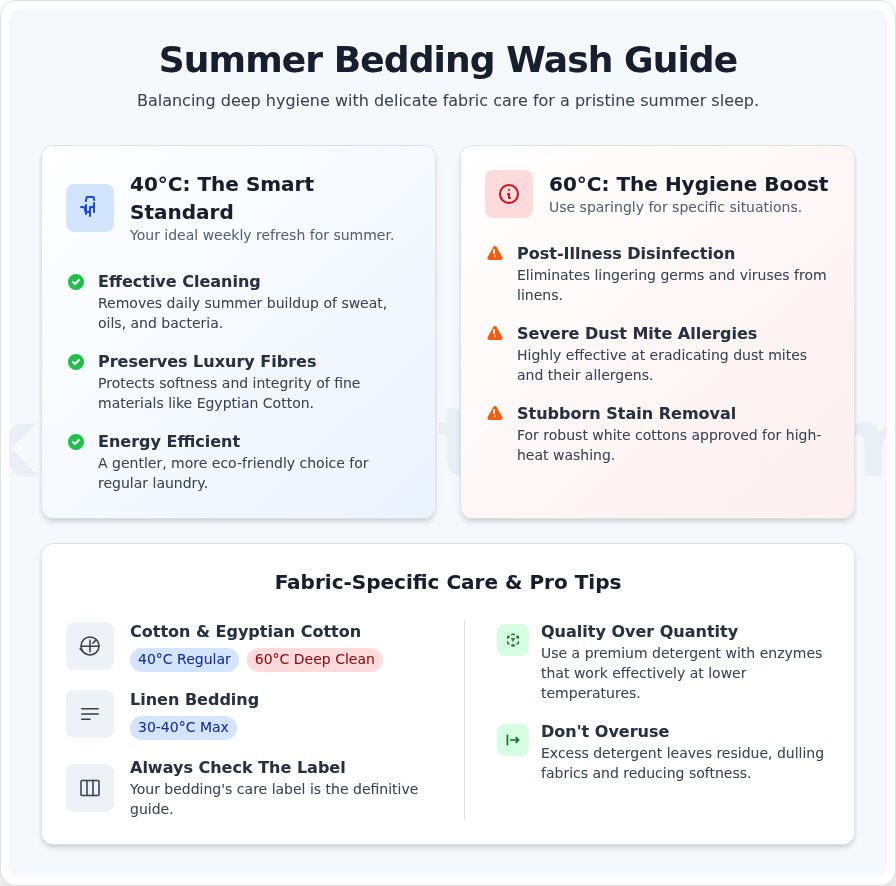
While a cooler wash is the standard for preserving fabric quality, there are specific instances where a higher temperature is non-negotiable for complete peace of mind. Reserve a 60°C wash for:
- Post-illness disinfection: To ensure any lingering germs and viruses are completely eliminated from your linens.
- Severe dust mite allergies: For those with significant allergies, a hot wash is essential. Extensive research on killing dust mites confirms that temperatures of 60°C are highly effective at eradicating them.
- Treating stubborn stains: For set-in stains or significant discolouration on robust white cottons that are approved for high-heat washing.
The Case for a 40°C Wash
For the vast majority of your weekly laundry, a 40°C cycle is the perfect harmony of effective cleaning and gentle fabric care. This lower temperature is more than capable of removing the sweat, body oils, and bacteria that accumulate during warmer nights, especially when paired with a premium detergent. It's a gentler, more energy-efficient option that protects the vibrant colour and luxurious feel of your linens, ensuring they remain beautiful for years to come.
The Role of Your Detergent
The effectiveness of a cooler wash is significantly enhanced by your choice of detergent. Modern, high-quality detergents are formulated with powerful enzymes that are designed to work brilliantly at lower temperatures. For protein-based stains like sweat, a biological detergent can be particularly effective, but always check your care label, as it is not suitable for delicate fibres like silk or wool. Crucially, resist the urge to use too much; excess detergent can leave a residue that dulls fabrics and diminishes their natural softness.
A Material-by-Material Guide to Summer Washing Temperatures
The ideal bedding wash temperature summer brings depends entirely on the fabric you are caring for. As specialists in luxurious materials, we understand that a one-size-fits-all approach simply won't do. Each textile, from crisp Egyptian Cotton to lustrous silk, possesses unique characteristics that dictate its ideal care routine. Following this material-specific guidance will ensure your bedding remains impeccably fresh, soft, and beautiful for years to come.
Cotton and Egyptian Cotton Bedding
Renowned for its durability and luxurious feel, our finest Egyptian Cotton is remarkably resilient. For regular summer upkeep, a 40°C wash is perfect for effectively cleaning the fibres while conserving energy. However, for a periodic deep clean to eliminate allergens and maintain that brilliant, hotel-fresh whiteness, a 60°C cycle is ideal. These robust natural fibres can handle the heat, which helps to keep your whites pristine and hygienically clean. Always opt for a 'Normal' or 'Cottons' cycle on your machine for a thorough, revitalising wash.
Linen Bedding
The rustic elegance of linen comes from its strong, natural flax fibres. As linen is highly absorbent and naturally breathable, it cleans beautifully at cooler temperatures. We recommend a gentle wash at 30°C, or 40°C at a maximum, to achieve perfect freshness. Exposing linen to hotter washes can cause the fibres to shrink or become brittle over time, compromising its signature relaxed texture and longevity. A cooler wash protects its structure while delivering the ultimate clean you desire.
Silk and Other Delicate Bedding
The ultimate in luxury, silk demands the most delicate touch. Heat is the enemy of this exquisite natural protein fibre, as it can cause irreversible damage, leading to a loss of sheen and strength. Therefore, you must wash silk bedding on a strictly cold cycle at 30°C, using your machine's 'Delicates' or 'Hand-Wash' setting. For a comprehensive overview of how to handle specific materials, the Good Housekeeping Institute offers an excellent fabric care guide. Crucially, always pair your silk wash with a specialist, pH-neutral liquid detergent formulated to protect its delicate structure and maintain its sublime softness.
Beyond Temperature: A Complete Summer Bedding Care Routine
Achieving that rejuvenating, five-star hotel freshness at home involves more than just selecting the correct wash cycle. While choosing the optimal bedding wash temperature summer weather demands is a vital first step, a complete care routine will elevate the comfort and longevity of your finest linens. From washing frequency to the art of drying, these expert tips ensure your bed remains a pristine sanctuary throughout the warmer months.
How Often to Wash Bedding in Summer
During summer, increased perspiration and higher pollen counts mean your bedding requires more frequent attention. We recommend washing your sheets and duvet covers once a week to manage sweat, body oils, and allergens effectively. For those who sleep particularly warm or suffer from allergies, increasing this to twice a week can provide significant relief. Pillowcases, which absorb oils from your face and hair, benefit from being changed even more frequently-perhaps every two to three days-to maintain a fresh and hygienic sleep surface.
The Art of Drying Summer Bedding
Whenever possible, embrace the natural benefits of line drying your bedding outdoors. The sun’s ultraviolet rays have remarkable sanitising and bleaching properties, leaving your white linens brilliantly bright and smelling wonderfully fresh. A word of caution for coloured linens: to prevent fading, avoid leaving them in intense, direct sunlight for extended periods. If using a tumble dryer is more convenient, select a lower heat setting. This gentle approach protects the delicate fibres of premium cotton, preventing shrinkage and preserving their luxurious softness for years to come.
Pre-Treating Summer Stains
Summer brings its own unique set of stains, from sun cream to perspiration. To tackle stubborn yellow sweat stains, pre-soak your linens in a solution with a gentle, oxygen-based bleach before the main wash. For oil-based marks from sun cream or lotions, it's crucial to treat them before they are set by the heat of the wash. Applying a small amount of washing-up liquid directly to the spot can help break down the grease. Investing in premium materials ensures your linens can withstand these necessary treatments. Explore our collection of durable, hotel-quality bed linen to build a foundation of lasting elegance.
Common Summer Laundry Mistakes and How to Avoid Them
Investing in the finest Egyptian cotton bedding is the first step towards creating a serene, hotel-style haven in your home. Preserving that ultimate comfort and elegance, however, requires careful laundering, especially during the warmer months. A few common missteps can diminish the quality and lifespan of your luxurious linens, compromising their superior feel. As specialists with over 25 years of experience supplying the world's finest homes and hotels, we have identified the most frequent errors and offer simple solutions to ensure your bedding remains impeccable.
Overusing Fabric Softener
While the promise of extra softness is tempting, commercial fabric softeners deposit a waxy coating on the natural fibres of your cotton sheets. This residue inhibits their breathability and moisture-wicking properties-two essential qualities for staying cool on a warm summer night. For a superior, natural alternative, add half a cup of white vinegar to the rinse cycle. It softens fibres, removes detergent residue, and keeps your linens wonderfully absorbent without compromising their premium quality.
Overloading the Washing Machine
To achieve a truly deep clean, your bedding needs ample space to move and circulate within the washing machine drum. Overloading the machine traps dirt, sweat, and skin oils, preventing them from being properly rinsed away. Even with the correct bedding wash temperature summer requires, a cramped machine cannot perform effectively. For the most hygienic results, we always recommend washing one set of bedding at a time. This ensures every fibre is thoroughly cleansed and refreshed.
Washing Bedding with Towels
Mixing your fine sateen or percale sheets with heavy, abrasive towels is one of the quickest ways to cause damage. The rough texture of towels can create friction, leading to unsightly pilling (bobbling) on the delicate surface of your sheets. Furthermore, towels shed a significant amount of lint, which will cling to your bedding. To preserve the pristine feel and appearance of your linens, always wash them in a separate load from towels and other heavy items. This simple step is fundamental to long-term linen care.
By avoiding these common pitfalls, you protect your investment and ensure every night feels as luxurious as the first. Proper care is the secret to enjoying the ultimate in comfort and quality, season after season. Explore our collection of the finest bed linen to experience true hotel-style luxury at home.
Elevate Your Summer Slumber with Perfect Care
As we've explored, the warmer months call for a refined approach to laundering your linens. The ultimate goal is to strike a perfect balance: achieving impeccable hygiene by eliminating summer sweat and allergens, while simultaneously preserving the delicate integrity of your luxurious fabrics. By understanding your materials and adopting a complete care routine, you can ensure your bed remains a fresh, cool sanctuary all season long.
Mastering the ideal bedding wash temperature summer demands is the first step towards protecting your investment in quality sleep. With over 25 years of experience as specialists in fine Egyptian Cotton and suppliers to the finest homes and hotels, we know that premium materials deserve premium care. High-quality bedding is not only more comfortable but is crafted to withstand mindful washing, rewarding you with lasting softness and elegance.
Discover our collection of fine cotton bedding, designed for lasting comfort and easy care. Here’s to a season of rejuvenating rest in impeccably fresh linens.
Frequently Asked Questions
Is it okay to wash bedding at 40°C in the summer?
Yes, washing at 40°C is perfectly suitable for maintaining the freshness of your bed linen during summer. This temperature effectively removes sweat and daily grime while being gentler on the delicate fibres of premium fabrics like Egyptian cotton. For a deeper, sanitising clean, especially after illness, a 60°C wash is advised. The ideal bedding wash temperature summer months require is one that balances impeccable hygiene with the preservation of your luxurious linens.
How often should I wash my duvet and pillows during the summer?
In the warmer months, we recommend laundering your duvet and pillows every two to three months to ensure a hygienic and rejuvenating sleep environment. Increased perspiration can lead to a faster build-up of oils and allergens within the fillings. Always consult the care label, as natural-fill items may require professional cleaning. Using high-quality protectors for your duvets and pillows will help maintain their integrity and extend the time between these deeper washes.
Does drying bedding in the sun really kill bacteria?
Indeed, it does. Drying your fine linens in direct sunlight is a wonderfully effective and traditional method for enhancing hygiene. The sun’s ultraviolet (UV) rays act as a natural disinfectant, helping to kill bacteria and neutralise any lingering odours. This process also has a gentle bleaching effect, which can help keep your white bedding looking brilliantly bright. For an even, crisp finish, simply turn your items halfway through the drying process.
How can I get yellow sweat stains out of my white bedding?
To restore the pristine elegance of your white bedding, you can pre-treat yellow stains before washing. Create a gentle soaking solution of one part white vinegar to four parts warm water and soak the affected area for an hour. Alternatively, apply a paste made from bicarbonate of soda and a little water directly to the stain. After pre-treating, launder as usual with a high-quality detergent to lift the discolouration without damaging the premium cotton fibres.
What is the most energy-efficient way to wash bedding without compromising on hygiene?
For an energy-efficient wash that upholds the highest standards of cleanliness, select a 30°C or 40°C cycle. Today’s advanced detergents are formulated to perform exceptionally well at lower temperatures. To further reduce energy consumption, use a high spin setting to extract maximum water, then line-dry your bedding outdoors whenever possible. This method costs nothing in electricity-saving you money on your bills-and imparts a natural freshness that machine drying simply cannot replicate.
Can I use a biological detergent on all types of bed linen?
While biological detergents are superb for stain removal on robust cottons, they should be used with discernment. The enzymes they contain can degrade delicate protein-based fibres like silk and wool over time, leading to damage. For these luxurious materials, a gentle non-biological detergent is essential. To preserve the sublime softness and longevity of your finest Egyptian cotton sateen or percale sheets, we consistently recommend using a high-quality non-bio formula.