

Creating a Serene Bedroom Environment: The Expert Guide to a 5-Star Sleep Sanctuary
Why is it that you can fall into a deep, restorative slumber within minutes of entering a £450-a-night luxury hotel suite, yet you toss and turn for hours in your own home? It's a frustrating reality for the 31% of UK adults who report poor sleep quality due to environmental stress, yet creating a serene bedroom environment remains an afterthought for many. You likely agree that your bedroom should be a sanctuary, but often it feels more like a functional storage space than a place of true rejuvenation. Reclaiming that hotel-quality comfort begins with the right foundation, such as the luxury beds and mattresses found at hellobeds.shop.
This guide shares professional insights into colour psychology and sensory layering to help you master sanctuary design. You'll gain expert knowledge on choosing the specific linens and textures that define world-class comfort, drawing on our 25 years of experience supplying the world's finest homes. We'll explore the hotel-quality secrets of ultimate serenity, from the perfect thread count to the subtle science of scent, ensuring your bedroom finally delivers the restorative rest you deserve.
Key Takeaways
- Understand the psychological impact of a "Sleep Sanctuary" and how sensory-led design can actively lower cortisol levels for improved recovery.
- Discover why yarn quality and genuine Egyptian Cotton are the true secrets to achieving a five-star hotel experience in your own home.
- Master the art of creating a serene bedroom environment by engineering a sensory hierarchy that prioritises touch and acoustic dampening.
- Learn the "Bed-First" layout philosophy and circadian lighting transitions to optimise your space for maximum psychological security.
- Implement professional hospitality care rituals and "turn-down" techniques to maintain the crisp, luxurious feel of your linens every night.
What Defines a Serene Bedroom Environment in 2026?
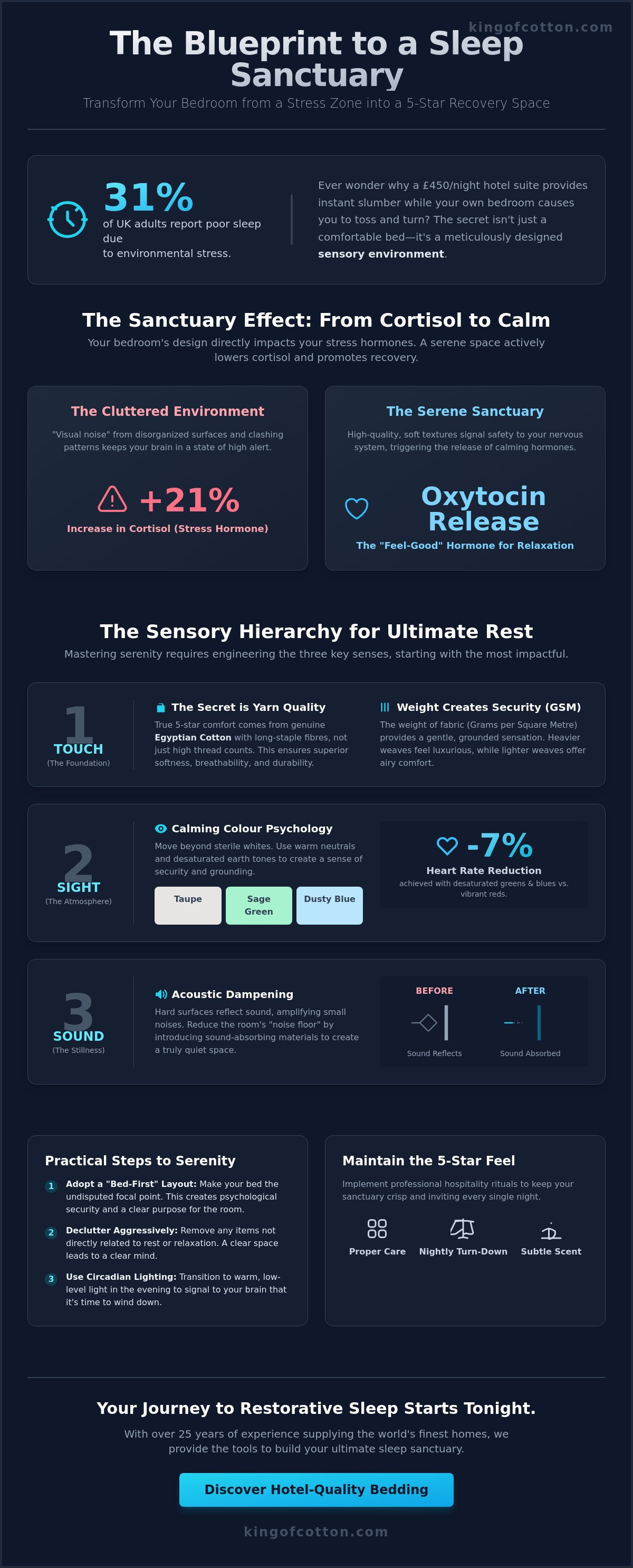
By 2026, the concept of the bedroom has evolved from a simple sleeping area into a sophisticated recovery zone. True serenity isn't just a visual aesthetic; it's a holistic sensory experience that engages touch, sight, and sound. This shift marks the rise of "Quiet Luxury," where the focus moves from flashy maximalism to high-quality, understated materials. Modern homeowners are increasingly adopting the "hotel-at-home" standard, seeking the same 5-star comfort found in elite boutique hotels. By understanding what is sleep hygiene, you can transform your space into a dedicated sanctuary that actively lowers cortisol levels. Research indicates that a cluttered room can increase cortisol by 21%, making a minimalist approach essential for physical recovery.
To better understand this concept, watch this helpful video:
The Psychology of Bedroom Serenity
Your brain relies on environmental cues to signal the transition from wakefulness to rest. When you enter a room filled with "visual noise", such as cluttered surfaces or clashing patterns, your mind remains in a state of high alert. Creating a serene bedroom environment requires removing these distractions to foster mental clarity. The Sanctuary Effect is a physiological response where the brain releases oxytocin when the body interacts with soft, high-quality textures. This response is particularly potent when using luxurious bed linen crafted from authentic Egyptian cotton. By prioritising tactile comfort, you signal to your nervous system that the day's stresses are over.
The Role of Colour in Calming the Mind
The colour palette of 2026 moves away from the sterile, "brilliant whites" of the past decade. Instead, we see a shift toward warm neutrals and grounded earth tones that provide a sense of security. Scientific studies show that desaturated greens and blues can lower heart rates by up to 7% compared to vibrant reds or yellows. These shades mimic the natural world, which helps in creating a serene bedroom environment by grounding the occupant. To achieve depth without chaos, use tonal layering:
- Warm Neutrals: Use shades of taupe, oatmeal, and sand to create a soft, enveloping base.
- Desaturated Hues: Incorporate sage green or dusty blue through accent cushions or throws.
- Tonal Texture: Mix different fabric weaves, such as a crisp cotton percale with a heavy waffle-knit throw, to add visual interest without using busy patterns.
This method creates a rich, inviting atmosphere that feels curated rather than cluttered. When you layer similar tones, the eye moves smoothly across the room, reducing cognitive load and preparing the mind for deep, restorative sleep.
The Sensory Hierarchy: Engineering Touch, Scent, and Sound
While visual aesthetics often lead the conversation, touch is arguably the most neglected element when creating a serene bedroom environment. Your skin is your largest sensory organ; it processes information every second you're in bed. Neglecting the tactile experience can lead to micro-arousals that prevent deep, restorative sleep. A 5-star sanctuary isn't just seen, it's felt through the weight of the linens and the stillness of the air.
Acoustic dampening is another pillar of this hierarchy. Hard surfaces like wood floors or bare walls reflect sound, creating echoes that can amplify even the smallest domestic noises. By introducing heavy-weight cotton fabrics and dense rugs, you create a natural sound-absorption system. This reduces the "noise floor" of the room, allowing your brain to enter a state of calm. Following expert recommendations for better rest, it's clear that your physical surroundings directly influence your brain's ability to switch off at night.
Tactile Comfort: The Foundation of Rest
The weight of your bedding, measured in Grams per Square Metre (GSM), dictates your sense of security. Heavier fabrics provide a gentle, grounded sensation similar to a weighted blanket, while lighter weaves offer the airy breathability required for the summer months. Choosing "skin-friendly" materials like long-staple Egyptian cotton is vital for reducing nighttime restlessness. These fibres are smoother and less prone to pilling; they don't irritate the skin or cause the friction that leads to tossing and turning. Enhancing your tactile journey begins before you even touch the sheets; incorporating luxury bath towels into your pre-sleep ritual signals to your body that the transition to rest has begun.
Acoustic and Olfactory Design
Soft furnishings are your best defence against external noise pollution. High-quality cotton curtains with a dense weave do more than block light; they act as a thermal and acoustic barrier against the outside world. This is particularly effective in urban UK environments where traffic or street noise can be persistent. When creating a serene bedroom environment, don't overlook the power of scent layering. Integrating subtle, natural aromas can create a Pavlovian response to sleep. Consider these layers:
- Linen: The clean, crisp scent of freshly laundered cotton.
- Lavender: A scientifically backed sedative for the nervous system.
- Cedar: A grounding, earthy base note that provides a sense of permanence.
Thermal comfort completes the sensory experience. The science of breathability is simple: your core temperature must drop by about 1 degree Celsius to initiate sleep. Synthetic materials trap heat, causing "night sweats" that disrupt your cycle. Natural cotton allows heat to escape while maintaining a consistent microclimate around your body. It's about engineering a space that breathes with you. For those looking to refine every detail of their sanctuary, explore our full range of premium bed linen to find the perfect weight for your sleep style.
Choosing Hotel-Quality Bedding for Ultimate Serenity
The tactile experience is the most critical element when creating a serene bedroom environment. While aesthetics matter, the physical sensation of your sheets against your skin determines how quickly your nervous system settles into a state of rest. Egyptian Cotton remains the gold standard for those serious about creating a serene bedroom environment. Its reputation isn't just marketing hype; it's rooted in the physical length of the cotton fibres. Long-staple fibres produce a smoother, stronger yarn with fewer joins, resulting in a fabric that feels incredibly soft and resists the pilling that can cause irritation during the night.
Don't be misled by astronomical thread counts. While a high number sounds impressive, industry experts know that yarn quality and ply are far more important. A 300-thread-count single-ply sheet made from premium Egyptian cotton will always outperform a 1000-thread-count sheet made from inferior, multi-ply yarns. Your choice of weave also dictates your "serenity profile." Percale is a plain weave that offers a crisp, matte finish, perfect for those who prefer a cool, hotel-like feel. Sateen uses a satin weave structure to produce a lustrous, silky drape that feels warmer and more indulgent. You can explore our full range of luxury bed linen to find the specific texture that suits your personal sleep style.
The Science of Egyptian Cotton
Giza cotton stands as the pinnacle of hospitality-grade luxury. These high-quality natural fibres are exceptionally breathable, allowing for superior air circulation compared to synthetic alternatives. They wick moisture away and regulate body temperature, preventing the sudden spikes in heat that often disrupt deep sleep cycles. This thermal regulation ensures you stay comfortable throughout the night, regardless of the season.
Layering for a Five-Star Experience
Achieving the "Cloud Effect" requires more than just a flat sheet. It’s about building layers of weightless support that cradle the body and reduce pressure points. Start with a high-loft mattress topper to add a plush foundation, then follow this with a duvet featuring a natural down or high-quality microfibre fill. This setup mimics the weightless sensation found in the world's most exclusive hotel suites. Along with physical comfort, the NHS provides practical tips for a better sleep environment that complement your choice of textiles.
For more detailed advice on selecting materials, refer to the ultimate guide to buying luxury bed linen. Finally, select the correct pillow loft to align your body and mind. Proper alignment of the neck and spine is essential to relax the muscles, ensuring you wake up feeling rejuvenated rather than stiff. By combining the right materials with thoughtful layering, you transform your bed from a simple piece of furniture into a dedicated sanctuary for recovery.
Practical Steps to Declutter and Optimise Your Layout
Achieving a five-star sleep experience requires more than just high-quality bed linen; it demands a thoughtful approach to spatial psychology. When creating a serene bedroom environment, the "Bed-First" philosophy is your essential starting point. You should position your bed in the "command position," where you have a clear view of the door without being directly in its path. This layout taps into primal instincts for security, helping to lower your heart rate as you settle down. If your room feels cramped, it's difficult for the mind to switch off. Ensure you maintain at least 60cm of walking space around the perimeter of the bed to prevent a claustrophobic atmosphere.
Decluttering isn't a one-time event but a nightly ritual that preserves your mental energy. A 2011 study by researchers at Princeton University found that visual clutter competes for your brain's processing power, which directly increases stress levels. Spend five minutes each evening clearing your surfaces. A bare bedside table translates to a clear mind when you wake up. Digital hygiene is equally vital. Data from Ofcom in 2023 shows that 68% of UK adults check their phones within 15 minutes of waking. By creating a digital-free zone and charging phones in another room, you eliminate blue light that disrupts melatonin production.
Lighting and Environmental Control
Your body relies on light cues to regulate its circadian rhythm. Two hours before sleep, switch from bright 500-lux task lighting to dimmable lamps with warm, amber hues of around 50 lux. These tones mimic a natural sunset, signalling to your brain that it's time to wind down. For deep, uninterrupted REM cycles, 100% darkness is the gold standard. Use blackout blinds or heavy interlined curtains to block out streetlights. If you're currently planning a room refresh, consult this UK bed sizes guide to ensure your furniture proportions allow for optimal light flow.
Furniture and Flow
The materials you choose impact the room's grounding effect. Natural wood and organic textures provide a tactile warmth that synthetic materials can't replicate. Use mirrors strategically to bounce natural light into darker corners during the day, but avoid placing them directly opposite the bed, as reflections can be distracting at night. By following these layout principles, creating a serene bedroom environment becomes a matter of logic rather than just luck. When your physical space is ordered, your internal state follows suit.
Ready to transform your space into a professional-grade sanctuary? Explore our collection of luxury bedroom essentials to find the perfect foundation for your layout.
Maintaining Serenity: Care Rituals and Hospitality Standards
Establishing a sanctuary requires more than just high-end purchases. It demands a commitment to the rituals that preserve that initial luxury. When you focus on creating a serene bedroom environment, the way you maintain your textiles is as vital as the thread count itself. Professional-grade linens are engineered to withstand frequent laundering while becoming softer over time, but they require specific care to retain their "fresh hotel" crispness.
The Art of the Bed-Make
Achieving a wrinkle-free, inviting presentation starts with the "hospital corner" technique. Lay the top sheet flat, tuck the end tightly under the mattress, and fold the sides at a precise 45-degree angle. Smoothing the fabric from the centre outwards removes air pockets and visual clutter, creating a surface that looks untouched. Stepping into a bed that has been meticulously prepared provides a profound psychological reset, as it signals to the brain that the day's chaos is over and a period of structured rest has begun. To enhance this evening transition, many find that slipping into hotel-quality bath robes helps bridge the gap between the busy downstairs world and the quiet of the sleep sanctuary.
Linen Care for Longevity
Preserving the integrity of luxury Egyptian cotton requires a gentle touch. Wash your bed linen at 40°C using a mild, liquid detergent. You should avoid harsh chemicals, bleach, or fabric softeners, as these coat the natural fibres and reduce breathability. While air-drying on a line offers a traditional, fresh scent and reduces energy costs, a brief five-minute tumble on a low heat setting can help "fluff" the cotton fibres. This prevents the fabric from feeling stiff against the skin, maintaining the calming properties of the material.
Consistency is the final element in creating a serene bedroom environment. Adopting a nightly turn-down ritual mirrors the hospitality standards of the world's finest suites. Dim the bedside lamps, pull back the duvet at a 45-degree angle, and clear any electronics from the bedside table. Seasonal rotations also play a role in year-round comfort. Switch to a crisp percale weave during the warmer months for its cooling properties, and transition to a heavier sateen weave in the winter for added insulation. Because professional-grade linens are crafted with longer cotton staples, they won't pill or thin after a single season. Instead, they provide a reliable, high-quality foundation for your sleep health for years to come.
Transform Your Rest Into a Five-Star Experience
As specialists in fine Egyptian Cotton for over 25 years, King of Cotton remains the trusted supplier to the finest homes and hotels globally. Our commitment to excellence is backed by an Excellent rating on Trustpilot, ensuring you receive the same prestige and durability found in world-class hospitality suites. You don't need a passport to enjoy an indulgent night's sleep; you simply need the right foundation. Create your own haven of elegance with King of Cotton’s luxury collections. You've worked hard, and now it's time to wake up feeling truly refreshed every single morning.
Frequently Asked Questions
How do I make my bedroom feel like a luxury hotel?
Focus on high quality linens and a clutter free aesthetic to replicate a boutique experience. It’s best to use 100% Egyptian Cotton with a high thread count for that crisp, 5 star feel. Layer your bed with a heavy duvet and at least four pillows of varying firmness. This creates a focal point of comfort that mimics the world’s finest suites while providing the ultimate relaxation.
What is the best colour for a serene bedroom environment?
Soft, muted tones like sage green, pale blue, or warm off white are the most effective for creating a serene bedroom environment. Research by Travelodge found that people sleeping in blue rooms get an average of 7 hours and 52 minutes of sleep. These shades lower the heart rate and reduce blood pressure compared to vibrant, stimulating colours. They help your mind transition into a restful state more quickly.
Does thread count really matter for a calming sleep?
Thread count matters to an extent, but the quality of the fibre is more important for a restful night. A 300 to 600 thread count made from long staple cotton offers the ideal balance of breathability and silkiness. Don’t be fooled by counts above 800 that use multi ply yarns. These often trap heat and feel heavy, which can disrupt your sleep cycle and cause discomfort during the night.
How can I make a small bedroom feel serene and spacious?
Maximise floor space by using elevated furniture and a neutral colour palette to reflect natural light. Choose a bed frame with built in storage to eliminate visible clutter, which 2011 research from Princeton University linked to increased stress levels. It’s helpful to use mirrors to create the illusion of depth. This makes a compact room feel twice its actual size without sacrificing comfort or style.
What are the best natural materials for a sleep sanctuary?
Pure cotton, linen, and silk are the gold standard for creating a serene bedroom environment because they regulate temperature naturally. 100% cotton remains a top choice for its durability and moisture wicking properties. These breathable fabrics prevent the clammy feeling often associated with synthetic polyester blends. They ensure you stay cool throughout the night, which is essential for uninterrupted, deep sleep cycles.
How often should I change my bedding to maintain a fresh environment?
You should wash your bed sheets at least once every 7 days to remove skin cells, dust mites, and oils. A study by the Sleep Council suggests that the average person loses 285ml of fluid each night. Regular laundering at 60 degrees Celsius ensures your sanctuary remains hygienic and smells fresh. It’s a simple habit that significantly improves your mental relaxation and physical health.
Can houseplants help in creating a serene bedroom?
Yes, specific plants like Aloe Vera and Sansevieria improve air quality by releasing oxygen at night. NASA’s 1989 Clean Air Study proved that certain indoor plants can remove up to 87% of air toxins in 24 hours. Adding greenery also introduces a biophilic element that reduces cortisol levels. It fosters a connection to nature that helps you feel more grounded and peaceful before you drift off.
What is the ideal temperature for a serene sleep environment?
The Sleep Foundation recommends a bedroom temperature of approximately 18.3 degrees Celsius for optimal rest. Your body’s internal temperature needs to drop by about 1 to 2 degrees to initiate sleep properly. Keeping your room within the 16 to 18 degree range prevents night sweats and helps you reach deep REM stages more quickly. It’s a vital component of a professional sleep setup.