

What to Look for When Buying Towels Online: Compare Sizes and Materials
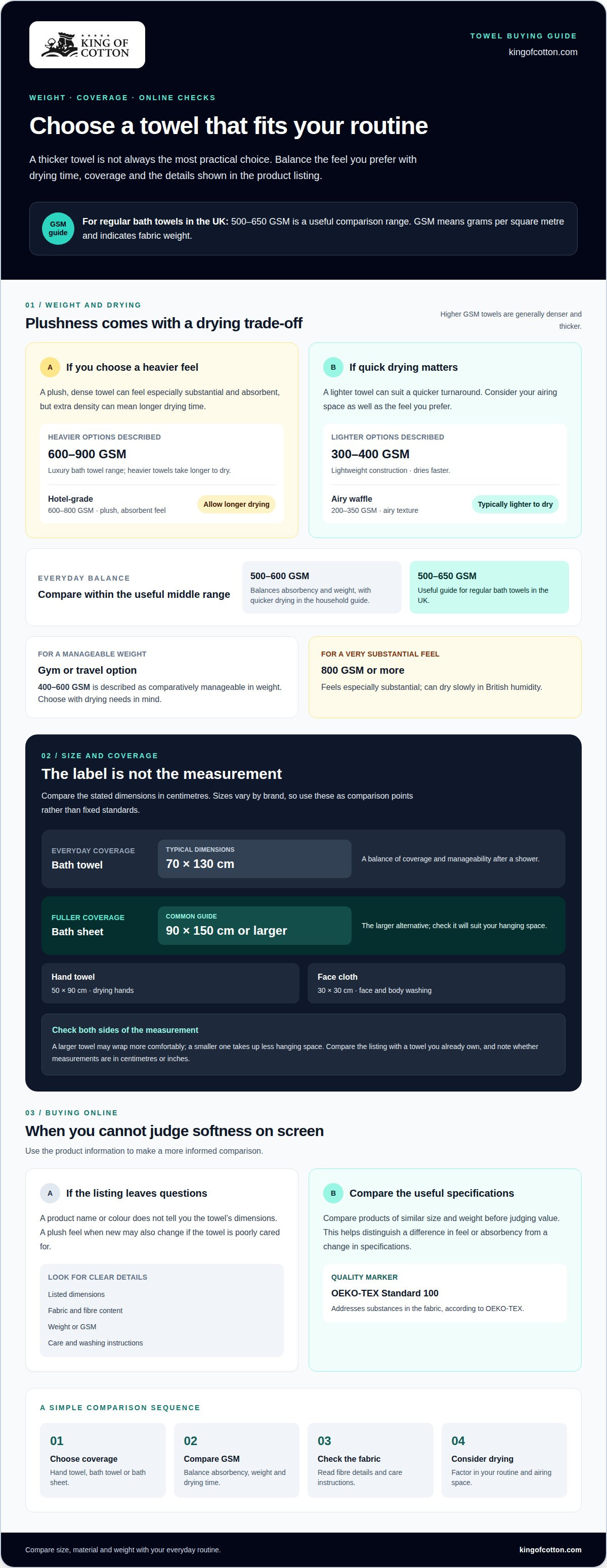
The thickest towel isn’t always the best choice. A practical answer to what to look for when buying towels online is to compare size, material and weight with your everyday routine. For a regular bath towel in the UK, 500-650 GSM is a useful guide; drying needs matter too.
It’s harder to judge softness on a screen, but product details can help. Look for clear dimensions, fabric and care information. OEKO-TEX Standard 100 addresses substances in the fabric, according to OEKO-TEX. These details offer a more informed way to assess what to look for when buying towels online.
This guide explains how bath towels, bath sheets and lighter options differ, and how material and weight affect feel, absorbency and drying time. You’ll also learn what product details and quality markers to check before buying, so you can choose a towel that suits your preferences and routine.
Key Takeaways
- Match towel weight to your routine: 500-650 GSM is a useful guide for everyday bath towels in the UK.
- Compare the listed dimensions, not just the product name, to decide whether a bath towel or bath sheet will give you the coverage you prefer.
- Look closely at fibre content and care instructions to judge how a towel may feel and perform after laundering.
- Use clear product details and quality markers to make a more informed choice online; OEKO-TEX Standard 100 addresses substances in the fabric.
- Balance a plush feel with practical drying needs when choosing a towel for your home.
What Makes a Good Bath Towel?
A good bath towel balances absorbency, softness and drying time. Compare its GSM with your routine, then consider how the fabric feels after washing.
Absorbency and softness after washing
Absorbency matters after a bath or shower, but a towel should also feel comfortable against the skin. Product descriptions can tell you about fabric and weight, while care instructions help you decide whether regular washing fits your routine. A towel that feels plush when new may not retain the same softness or absorbency if it is poorly cared for. Follow the washing guidance and consider both qualities together.
GSM, thickness and weight
GSM means grams per square metre and indicates fabric weight. Higher GSM towels are generally denser and thicker; towels in the 600-900 GSM range are described as heavier and more absorbent. For UK everyday use, 500-650 GSM is a practical comparison range. The table shows how the listed weights relate to common towel descriptions.
| Option | Weight | Feel or absorbency | Drying |
|---|---|---|---|
| Lightweight towel | 300-400 GSM | Lighter construction | Dries faster |
| Airy waffle towel | 200-350 GSM | Airy texture | Typically lighter to dry |
| Everyday household guide | 500-600 GSM | Balances absorbency and weight | Balances absorbency and quicker drying |
| UK everyday range | 500-650 GSM | Useful range for regular use | Depends on weight |
| Plush terry towel | At least 600 GSM | Thicker, plush pile | Can take longer |
| Luxury bath towel | 600-900 GSM | Dense, substantial feel | Heavier towels take longer |
| Hotel-grade towel | 600-800 GSM | Plush, absorbent feel | Allow for longer drying |
| Very heavy towel | 800 GSM or more | Feels especially substantial | Can dry slowly in British humidity |
| Full weight spectrum | 150-900 GSM | Varies with construction | Varies with weight |
| Gym or travel option | 400-600 GSM | Comparatively manageable weight | Choose with drying needs in mind |
Choose a GSM that balances plush absorbency with the time and space you have for drying.
Absorbency and drying time
Thicker towels can hold more moisture, but that extra density can extend drying time. Lightweight towels weighing 300-400 GSM dry faster, making them a practical option when quick turnaround matters. By contrast, an 800 GSM or heavier towel may feel especially plush, yet can take longer to dry in British humidity. Consider your airing space as well as the sensation you prefer.
Good-quality towel costs
Towel prices in the UK vary according to dimensions, material and construction. GSM is another useful comparison: a heavier towel has more fabric per square metre, while a lighter option may dry more quickly. Compare products of similar size and weight before judging value. This helps you distinguish a meaningful difference in feel or absorbency from a change in specifications alone.
Towel dimensions and available sizes
Size determines how much coverage a towel provides and how well it fits your routine. Compare the measurements in centimetres, since labels such as “bath towel” can refer to different dimensions.
Bath towel sizes
A typical bath towel measures around 70 × 130 cm, giving a useful balance of coverage and manageability after a shower. Some product guides look for bath towels at least 56 inches long and about 30 inches wide, so compare the actual measurements rather than relying on the label alone. A larger towel may wrap more comfortably, whilst a smaller one takes up less hanging space.
Bath sheet sizes
A bath sheet is the larger alternative, with fuller coverage after bathing. A common guide gives 90 × 150 cm or larger, while another describes bath sheets around 40 × 70 inches; sizes vary by brand. Check both dimensions in the listing before choosing, especially if you want to wrap the towel around yourself or need it to fit a particular rail.
| Towel type | Typical dimensions | Common use | Size comparison |
|---|---|---|---|
| Face cloth | 30 × 30 cm | Face and body washing | Compact square |
| Washcloth | 13 × 13 inches | Face, hands and body | Small square |
| Hand towel | 50 × 90 cm | Drying hands | Smaller than a bath towel |
| Bath towel | 70 × 130 cm | Drying after a bath or shower | Everyday coverage |
| Bath sheet | 90 × 150 cm or larger | Fuller body coverage | Larger than a bath towel |
These measurements are useful comparison points, not fixed standards. For example, a typical higher-end bath towel measures 30 × 58 inches, while a bath towel average is 27 × 52 inches. That difference can affect coverage, so check the stated width and length against a towel you already own. Also note whether measurements are listed in centimetres or inches to avoid confusing the two.
Colour and material labels answer different questions from size. A listing might describe Turkish cotton towels or a particular colour, but neither phrase tells you the towel’s dimensions. To compare options accurately, look for a size in centimetres alongside the colour name and fabric description. This makes it easier to choose durable cotton towels that suit your bathroom and match the coverage you prefer.
For a straightforward choice, decide first whether you need a hand towel, bath towel or bath sheet. Then compare the listed measurements with your preferred coverage and available hanging space. Explore bathroom towel styles with size in mind.
What Towel Material is the Best?
For softness, absorbency and durability, the guide favours 100% cotton towels. Compare the fibre description and composition on each listing, rather than treating a premium-sounding cotton name as proof of quality.
Cotton types
Egyptian cotton and Turkish cotton are names you may see in online towel descriptions. Treat them as material details, then compare the stated composition, product dimensions and care instructions. A cotton label tells you more about the fibre than a colour or style name, but it doesn’t describe every aspect of the finished towel. Look for clear, specific product information before deciding.
For hand towels or bath towels, 100% cotton is a straightforward choice if you value a naturally soft, highly absorbent feel. Cotton fibres take up moisture, making them suitable for drying after washing. The finished feel still depends on how the towel is made, so compare descriptions of pile and texture alongside the fibre content. A cotton name alone cannot tell you how plush a particular towel will feel.
Blended materials
A blended towel contains cotton alongside another fibre. The percentage of each fibre helps you understand what the product is made from; compare that composition with a 100% cotton option. A blend may feel or perform differently from a towel made entirely of cotton, so don’t assume the word “cotton” means the whole towel uses that fibre.
Read the full composition statement, not just the product title. If a listing names cotton and another fibre, note the stated proportions and check the care instructions. This gives you a clearer basis for comparing hand towels and bath towels. If softness and absorbency are priorities, consider how the stated contents fit your preferences.
Cotton fibre and staple length
Staple length describes the length of individual cotton fibres. It is one detail used to describe cotton yarn, but should be considered alongside the towel’s full composition and construction. A claim about staple length doesn’t replace practical details such as the weave, pile description or washing guidance.
For an online comparison, use a simple sequence: identify whether the towel is 100% cotton or blended, note any named cotton type, then read the care information. Compare those details across products before choosing. This helps separate useful material information from broad words such as “luxurious”, which describe an impression rather than a precise fibre composition. For cotton towels, clear material labelling is a more useful starting point than a premium-sounding name alone.
Softness and durability after laundering
For colourfastness and easy care, start with the care label. Check the washing instructions before buying, then follow them to help preserve the colour, fabric and softness.
Hems and stitching
Hems and stitching can show how neatly a towel is finished. In product photographs, look for even stitching along each edge and a hem that lies flat. Compare close-ups with the full product view; loose threads or uneven seams may indicate a less careful finish. Egyptian cotton describes the fibre, not the construction, so assess the edges separately when judging durability.
Check whether the listing clearly shows both ends and sides. A well-finished hem should look consistent, not gathered or puckered. If the towel is folded in the main images, use any detail photographs to inspect the seams. These visible construction details complement fabric descriptions and care guidance.
Colourfastness and easy care
To choose towels that are colourfast and easy to care for, read the washing instructions before buying and follow the stated temperature and drying guidance. Separate colours from whites for the first wash, then keep similar shades together. Clear care directions make it easier to protect colour and softness through regular laundering.
A guide recommends washing towels at 40°C for regular use and suggests 60°C occasionally for a deep hygiene wash. The towels in one test were washed at 30°C on a cotton programme, but that test setting isn’t a universal care instruction. Use the specific product label as your guide. If simple upkeep matters, choose fabric with straightforward care directions.
Durability and replacement
Regular washing gradually affects a towel’s softness and absorbency. One estimate puts the useful period for high-quality bath towels at two to three years with regular use and proper care, before those qualities fade. Another says a correctly washed quality cotton towel can last 5-7 years before absorbency drops. These figures differ, so judge the towel by its condition and performance.
Notice when the fabric feels rougher, absorbs less effectively or shows fraying hems. Those changes offer practical signs to compare with time-based estimates. A general replacement recommendation is every two to three years, while a common recommendation is every two years. Usage and care influence how quickly a towel wears, so reassess its comfort and absorbency rather than relying on age alone.
After washing, let towels dry fully before storing them. This simple step helps keep the fabric fresh between uses. When comparing Egyptian cotton and other cotton towels online, weigh the stated care requirements against your usual washing routine. A towel that fits your laundering habits is easier to maintain and can retain its softness and comfort over time.
Online quality checks
Product listings can reveal details that photographs alone can’t show. A useful approach to what to look for when buying towels online is to compare fabric information, certification, care instructions and customer feedback.
OEKO-TEX Standard 100 certification addresses substances in the fabric, according to OEKO-TEX. Consider this textile detail alongside the stated fibre content, while remembering that it doesn’t describe a towel’s weight, texture or construction. Each specification answers a different question, so assess them together rather than treating one as a complete quality measure.
Inspect product images for visible details that affect appearance and finish. Close-ups may show the pile texture, border and stitching. Compare these details with the written description. A fluffy-looking photograph can suggest a plush surface, but it can’t show how the towel feels after washing. Screen settings can also affect how colours appear, so read the listed colour name.
Customer reviews can offer practical descriptions of everyday use. Look for specific comments about how the fabric feels after washing, whether the colour stayed appealing or how quickly the towel dried. Compare several detailed reviews instead of relying on one broad opinion. Feedback about a lightweight towel, for example, may be especially useful if quicker drying matters to you.
When deciding what to look for when buying towels online, compare detailed reviews with the retailer’s stated return terms, then review delivery costs at checkout. Read the returns information for its process, deadlines and conditions, as terms vary between retailers.
- Composition: Confirm whether the listing describes cotton or a blend.
- Finish: Examine the border, seams and visible textile texture.
- Care: Read the washing instructions and consider your routine.
- Reviews: Prioritise specific comments about use and laundering.
- Ordering: Review return terms and delivery charges before checkout.
These checks are most useful together. Certification addresses substances in the fabric, photographs show visible details, and reviews describe customer experiences. None replaces the others. A clear image of a border, for instance, can’t explain how a towel feels after washing. Likewise, positive feedback won’t show every construction detail. Combine these sources for a fuller picture of what to look for when buying towels online.
Use the same criteria to compare bathroom towel options, considering fabric details and finish together.
King of Cotton: Towels
King of Cotton is a Trusted Brand for 25+ Years, offering towels for shoppers comparing material, size and everyday practicality. Its brand credentials include an Exceptional Quality Guarantee and a rating described as “Rated Excellent on Trustpilot”.
Explore towels that suit your preferred feel and routine. King of Cotton also offers bed linen and bathrobes and gowns for a considered bedroom and bathroom scheme.
For help choosing towels, contact King of Cotton.
Make your next choice a considered one
Choosing a towel is also a chance to shape how your bathroom feels day to day. Think about the comfort you want after a bath or shower, and how the colour and texture will work in your space. Knowing what to look for when buying towels online helps you choose with intention, rather than relying on appearance alone.
King of Cotton offers towels alongside bed linen and bathrobes and gowns, helping you consider coordinated comfort across your home. Let your preferred feel and routine guide your choice, whether you’re refreshing one bathroom or planning a more complete update.
Contact King of Cotton to discuss your towel choice and take the next step towards a more comfortable everyday ritual.
Frequently Asked Questions
What is Considered Luxury in Towels?
Luxury towels are often associated with a substantial, plush feel, refined finishing and comfortable use. A guide places luxury and hotel-grade towels in the 600-800 GSM range, although weight alone doesn’t determine quality. Consider whether the towel’s fabric, texture and care requirements suit your preferences. A thick towel may feel indulgent, whilst a lighter one can be more practical for frequent use.
How long do high quality towels last?
With regular use and proper care, high-quality towels can last two to three years before losing softness or absorbency; estimates for correctly washed cotton towels extend to 5-7 years before absorbency drops. These ranges differ because use and laundering affect wear. Assess the towel itself: persistent roughness, reduced absorbency, fraying hems or thinning fabric can matter more than its age alone.
Plain vs Patterned: Which Should You Choose?
Choose plain towels for a calm, coordinated look that works with changing bathroom colours. Patterned towels can add visual interest or echo a feature such as tiled walls. Consider how the design will look with your existing textiles and whether you want it to blend in or stand out. For a lasting scheme, compare the pattern’s scale with the room’s other details.
What are the Different Towel Sizes?
Common types include face cloths, hand towels, bath towels and bath sheets. A face cloth is useful for washing, while a hand towel suits a basin; bath towels and larger bath sheets provide body-drying coverage. Some guides list face cloths at 30 × 30 cm, hand towels at 50 × 90 cm, bath towels at 70 × 130 cm and bath sheets at 90 × 150 cm or larger.
What towel materials are best for softness, absorbency and durability?
For the softness, absorbency and durability many people want, 100% cotton is a strong starting point. Read the full fibre composition rather than relying on a product title that simply mentions cotton. Named types such as Egyptian or Turkish cotton describe the material, but the towel’s construction and care instructions also influence its feel and performance. Consider these details together when comparing options.
What GSM towel weight is best for bath towels?
For everyday use in the UK, 500-650 GSM is a useful bath towel range to consider. A towel around 500-600 GSM offers a balance between absorbency and quicker drying, while heavier options can feel denser and take longer to dry. Choose according to your preference for plushness and your usual drying space, rather than assuming the highest GSM is automatically the best fit.
What towel sizes are available in the UK, and which should I choose?
UK listings commonly include face cloths, hand towels, bath towels and bath sheets, with dimensions varying between brands. Use the measurements, not the label alone, to compare coverage. Choose a hand towel for a basin, a bath towel for everyday drying, or a bath sheet if you prefer more wraparound coverage. Check your hanging space before choosing a larger size.
How to compare towel absorbency, drying time and lint?
Compare fabric composition, GSM and construction, then read detailed reviews about how the towel performs after washing. Higher weight can mean a denser, more absorbent towel, but it may take longer to dry. Look for comments about shedding to assess lint, especially after laundering, rather than relying on product photographs. Care instructions also help you decide whether the towel suits your washing routine.