

Towel Material: The Definitive Guide to Luxury, Absorbency, and Longevity
Why does a towel that felt like a cloud in the showroom become a scratchy, sandpaper-like disappointment after just three washes? It's a common frustration for those trying to recreate a hotel-standard experience at home. You invest in a set that looks premium, only to find the absorbency is lacking or the fabric turns brittle far too soon. Selecting the perfect towel material is actually a delicate balance of fibre origin, weave technique, and weight.
We believe your bathroom should be a sanctuary of serene confidence and rejuvenation. This guide reveals the professional secrets used by the world's most prestigious hotels to ensure your linens deliver five-star softness and lasting performance. We'll demystify technical specifications like GSM and zero-twist technology, explaining how they impact the physical feeling of the fabric against your skin. Whether you're seeking the heritage of Egyptian cotton or the modern efficiency of sustainable blends, you'll gain the expertise needed to choose towels that stay fluffy for years. Discover how to master the technical details of luxury linens and finally achieve that elusive spa-like atmosphere in your own home.
Key Takeaways
- Understand why 100% natural cotton remains the premier towel material for superior absorbency and why synthetic blends often fail to meet luxury standards.
- Learn how to interpret GSM (Grams per Square Metre) to select the ideal weight, ranging from quick-drying gym essentials to dense, hotel-quality indulgence.
- Discover how different weave techniques, such as Terry Loop and Waffle, influence water retention and the overall sensory experience of your linens.
- Evaluate the trade-offs between pure cotton and modern alternatives like bamboo, focusing on long-term skin comfort and environmental considerations.
- Identify the professional construction markers, including double-stitched hems and header bars, that ensure your towels withstand frequent laundering whilst remaining soft.
The King of Fibres: Why Cotton Remains the Premier Towel Material
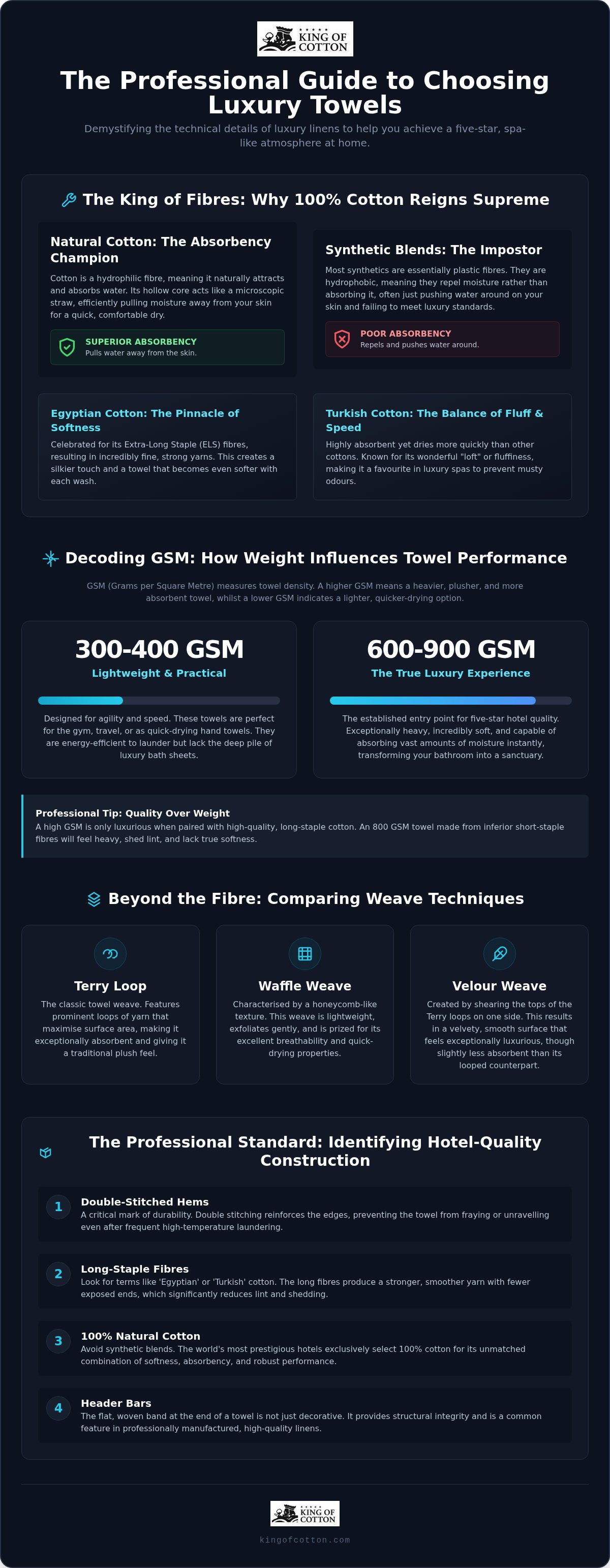
Cotton is the undisputed gold standard for towels. Synthetics fail because they're essentially plastic; they repel moisture rather than absorbing it. Cotton is a hydrophilic fibre. Its unique cellular structure includes a hollow centre, known as the lumen, which acts like a microscopic straw to pull water away from the skin.
The quality of your towel material depends heavily on the staple length of the cotton used. Long-staple varieties produce a smoother, stronger yarn with fewer exposed ends. This significantly reduces shedding, the frustrating process where a towel leaves lint all over your body. High-quality cotton is typically woven into Terry, Waffle, and Velour Weaves to maximise the surface area available for drying.
The world's most prestigious hotels exclusively select 100% cotton for its ability to provide a decadent sensory experience whilst maintaining structural integrity through hundreds of high-temperature wash cycles.
Egyptian Cotton: The Pinnacle of Softness
Egyptian cotton is celebrated for its extra-long staple (ELS) fibres. These fibres allow for the creation of incredibly fine, yet exceptionally strong yarns. Because the fibres are longer, there are fewer joins in the thread, resulting in a silkier touch that feels indulgent against the skin. The unique climate of the Nile River Valley provides the perfect conditions for these plants to thrive, producing a towel material that actually improves with age. Unlike cheaper alternatives, Egyptian cotton becomes softer and more supple amongst professional linens the more it's laundered.
Turkish Cotton: The Balance of Absorbency and Drying Speed
Turkish cotton offers a distinct advantage for those who value efficiency alongside elegance. Whilst it's highly absorbent, it doesn't hold onto moisture quite as stubbornly as Egyptian cotton. This makes it the preferred choice for luxury spas where towels must dry quickly between uses. Turkish cotton provides a wonderful "loft"—that airy, fluffy feeling—without being excessively heavy. This breathability is essential for preventing the damp, musty smells that can plague slow-drying fabrics in humid bathroom environments. It's the perfect solution for a bathroom that feels fresh and inviting every single morning.
Decoding GSM: How Weight Influences Towel Performance and Feel
Grams per Square Metre, or GSM, is the definitive technical measurement of a towel's density. For the discerning homeowner, understanding this scale is the key to curating a bespoke bathroom experience. It tells you exactly how much cotton has been woven into every square inch. A higher GSM indicates a denser, more absorbent product, whilst a lower GSM suggests a lighter, quicker-drying fabric.
Weight alone isn't a shortcut to quality. If the underlying towel material consists of inferior, short-staple fibres, a high GSM towel will feel cumbersome and shed lint after every wash. True luxury occurs when high density is paired with the hydrophilic properties of cotton. This combination ensures the towel doesn't just hold water, but actively draws it away from your skin. King of Cotton organises every collection by these specifications, allowing you to choose with the confidence of a professional hotelier.
300-400 GSM: Lightweight and Practical
Towels in the 300 to 400 GSM bracket are designed for agility. They're the perfect choice for gym bags, spa visits, or guest hand towels that see constant use. In this range, the priority is drying speed. You won't find the deep, sinking pile of a luxury bath sheet here, but you'll gain a towel that dries in a fraction of the time. Many high-turnover commercial settings prefer this weight because it's energy-efficient to launder. It remains a reliable towel material for those who need performance without the bulk.
600-900 GSM: The True Luxury Experience
A 600 GSM weight is the established entry point for five-star hospitality standards. This is where the sensory experience of a bathroom truly transforms. At the top end of the scale, a 900 GSM towel offers a level of indulgence that's difficult to match. It's exceptionally heavy, incredibly soft, and capable of absorbing vast amounts of moisture instantly. These towels feel like a weighted blanket of comfort. Because they're so dense, they require a little more attention. They take longer to dry naturally and often perform best when finished in a tumble dryer to keep the fibres open and fluffy. You can browse our full range of professional-grade towels to find the weight that suits your personal preference.
Beyond the Fibre: Comparing Terry, Waffle, and Velour Weaves
The architectural construction of a towel material dictates how it interacts with moisture and your skin. Whilst the fibre provides the essential foundation, the weave determines the total surface area available for absorption. Modern luxury bathroom design has evolved beyond the uniform pile. It now embraces diverse textures that serve specific functional roles in a sophisticated home. For those seeking comprehensive styling advice, we suggest reading our expert guide on choosing luxury bath towels.
The Terry Loop: Traditional Absorbency
Terry cloth is defined by its uncut loops of yarn that stand proud of the fabric base. These loops significantly increase the surface area of the towel material, allowing it to trap and hold vast amounts of water instantly. In professional settings, you'll encounter two main types. Single-loop construction is lighter and exceptionally soft. Double-loop construction uses two yarns per loop, creating a denser, more resilient fabric that withstands heavy laundering. This enduring performance is why terry remains the undisputed favourite for luxury bathroom textiles globally.
Waffle Weave: The Spa-Inspired Alternative
The distinctive honeycomb structure of a waffle weave offers a completely different sensory experience. Instead of loops, the fabric is woven into recessed squares. These pockets create a large surface area that allows the towel to dry the skin almost instantly through a gentle exfoliating action. Waffle towels are significantly lighter and more breathable than terry. They're the preferred choice for luxury bathrobes and aesthetic guest bathrooms because they fold flat and dry remarkably quickly between uses. It's a minimalist look that feels modern and efficient.
Velour: The Softest Touch
Velour represents the peak of tactile luxury. It's created by shearing the tops off terry loops to create a flat, velvety surface. This process results in a fabric that's incredibly soft and has a sophisticated, matte sheen. Many premium towels feature velour on the decorative side whilst maintaining a terry loop on the reverse for drying. There's a functional trade-off to consider. Because the loops are cut, the surface area is reduced, making velour slightly less absorbent than traditional terry. It's an elegant choice for those who prioritise a plush, decorative finish in their sanctuary.
Cotton vs Alternatives: Evaluating Bamboo and Microfibre for the Modern Bathroom
The search for the perfect towel material often leads beyond traditional cotton to modern alternatives like bamboo and microfibre. Whilst these options are frequently marketed as innovative or sustainable, they offer a vastly different sensory experience. Professional hotel linen suppliers continue to favour pure cotton for its predictable performance and superior durability. Understanding the trade-offs between these fibres is essential for anyone looking to curate a high-end bathroom that maintains its elegance over time.
Sustainability is a significant factor in the modern textile debate. Bamboo is often praised for its rapid growth, whilst cotton is valued for being a biodegradable, natural fibre. However, the chemical process required to turn woody bamboo into soft rayon can be intensive. In contrast, high-quality cotton remains a traditional choice that avoids the microplastic shedding associated with synthetic alternatives. Choosing the right material involves balancing these environmental considerations with the practical requirements of a busy home.
Bamboo Blends: Silky but Slow
Bamboo fibres are naturally antibacterial and offer a silk-like sheen that feels incredibly smooth against the skin. Most luxury options are actually bamboo-cotton blends. A common ratio of 70% bamboo to 30% cotton is often used to ensure the towel retains its shape. There is a functional downside to this towel material. Bamboo is exceptionally thirsty. It holds onto water so effectively that the towels can feel damp for hours after use. Unlike the breathable Turkish cotton discussed earlier, bamboo lacks the quick-drying efficiency required in high-turnover households. This can lead to a heavy, sodden feel that detracts from the spa-like atmosphere you're trying to create.
Microfibre: Function over Luxury
Microfibre is a synthetic material composed of polyester and polyamide. It's designed for maximum water retention in a very thin profile, making it a favourite for sports and travel. Despite its efficiency, it fails to provide the "hotel feel" desired in prestigious homes. The texture can feel "grabby" on the skin, lacking the soft, looped pile of a natural terry weave. From an environmental perspective, microfibre releases microscopic plastic fibres during every wash cycle. These microplastics eventually enter the water system, presenting a challenge for eco-conscious consumers. For those who value a traditional, luxurious touch, synthetic fibres rarely match the serene confidence provided by natural yarns.
If you're ready to upgrade your bathroom with the enduring quality of natural fibres, you can explore our collection of professional-grade towels today.
The Professional Standard: Selecting Hotel-Quality Materials for Your Home
The world's most prestigious hotels don't select their linens based on aesthetics alone. Every chosen towel material must undergo rigorous testing to survive thousands of commercial wash cycles without losing its structural integrity or sensory appeal. This professional standard ensures that the five-star experience remains consistent for every guest. By understanding these hospitality secrets, you can bring that same level of enduring luxury into your own residence.
King of Cotton has spent decades supplying the global hospitality sector. This heritage allows us to offer the same luxury towels to homeowners who refuse to compromise on quality. Our experience in the commercial sector means we understand exactly which specifications result in a product that stays soft and absorbent for years.
Zero-Twist Technology Explained
Longevity is the true marker of a premium product. Professional-grade cotton is essential for towels that face the frequent laundering of a busy home, as inferior towel material will quickly lose its loft. Look for specific construction markers that signify a hotel-quality standard. Double-stitched hems are vital; they prevent the edges from fraying or unravelling over time.
Header bars—the flat, woven sections often found near the ends of a towel—are not merely decorative. They provide essential stability to the fabric, ensuring it maintains its rectangular shape and resists warping after multiple washes. Our promise is to bring this industrial-strength durability to your personal sanctuary. Before making your next purchase, consult this final checklist:
- Verify the fibre origin: prioritise Egyptian or Turkish long-staple cotton.
- Check the weight: aim for 600-900 GSM for a true luxury feel.
- Inspect the finish: look for double-stitching and robust header bars.
- Confirm the technology: opt for zero-twist for maximum softness.
Elevate Your Sanctuary with Professional Expertise
Choosing the right towel material is an investment in your daily wellbeing. By prioritising long-staple Egyptian or Turkish cotton and understanding the technical nuances of GSM and weave construction, you can transform a routine necessity into a moment of pure indulgence. We've explored how the world's most prestigious hotels maintain their standards through rigorous material selection and innovative technologies like zero-twist yarns. Now, you can replicate that serene, spa-like atmosphere in your own home.
At King of Cotton, we've spent decades as trusted suppliers to the world's finest hotels, bringing an air of authority and mastery to every thread. Our linens are expertly crafted from the highest quality fibres to ensure they remain fluffy and absorbent year after year. Experience the difference that professional-grade quality makes to your bathroom ritual. Shop our collection of hotel-quality luxury towels today and enjoy free UK delivery on qualifying orders. Your journey to a more refined lifestyle begins with the simple touch of a perfect towel.
Frequently Asked Questions
What is the best material for bath towels?
100% natural cotton is widely considered the premier towel material for its innate ability to balance absorbency with a soft touch. Specifically, long-staple varieties like Egyptian and Turkish cotton provide the strength required for frequent laundering whilst maintaining an indulgent feel. These natural fibres outperform synthetic alternatives by drawing moisture into their hollow cores. Choosing a high-quality cotton ensures your bathroom remains a sanctuary of comfort and professional-grade performance.
Is Egyptian cotton better than Turkish cotton for towels?
Both represent the pinnacle of luxury, but they serve different purposes within a prestigious home. Egyptian cotton is prized for its extra-long fibres, which create an exceptionally soft and highly absorbent yarn. Turkish cotton is favoured for its quick-drying properties and airy loft, making it ideal for humid environments. Most five-star establishments use a combination of both to provide guests with a versatile and sophisticated sensory experience after every bath.
What does 600 GSM mean in towels?
GSM stands for Grams per Square Metre and measures the density of the fabric. A 600 GSM towel is the established benchmark for high-end hospitality quality, offering a substantial, weighted feel that signifies luxury. This weight provides excellent water retention without becoming excessively heavy or difficult to dry. It's the perfect middle ground for those seeking the opulent atmosphere of a professional spa whilst ensuring practical performance in a residential setting.
Are bamboo towels better than 100% cotton towels?
Whilst bamboo is celebrated for its silky texture and antibacterial properties, it doesn't always match the performance of 100% cotton in a busy household. Bamboo fibres are incredibly thirsty and can remain damp for significantly longer, which may lead to a heavy, sodden feel. Pure cotton remains the preferred choice for professional linen suppliers because it offers a more reliable balance of absorbency, breathability, and long-term durability through repeated wash cycles.
How do I keep my cotton towels soft and fluffy?
To maintain that cloud-like softness, you should use a modest amount of detergent and avoid fabric softeners entirely. Softeners coat the fibres in a waxy film that actually reduces absorbency over time. Instead, adding a splash of white vinegar to the rinse cycle helps to strip away mineral deposits. Finishing your towels in a tumble dryer on a medium heat setting will help to open the loops and restore their natural fluffiness.
What is the difference between terry and velour towels?
The primary difference lies in the finish of the loops. Terry towels feature uncut loops on both sides, which maximises the surface area for superior water absorption. Velour is created by shearing the loops on one side to produce a flat, velvety texture that feels incredibly smooth and looks sophisticated. Whilst velour is exceptionally soft and decorative, it's slightly less absorbent than traditional terry, which is why many premium towels combine both textures.
Why do hotels use white cotton towels?
White towels are the industry standard because they convey an immediate sense of pristine cleanliness and serenity. From a practical perspective, white cotton can be laundered at high temperatures with oxygen-based bleaches to ensure total hygiene without the risk of colour fading. This timeless aesthetic also complements any bathroom decor, allowing hotels to maintain a consistent, sophisticated look that feels fresh and inviting for every new guest who enters the room.
What is zero-twist cotton and is it worth it?
Zero-twist technology uses a high-quality towel material where the cotton fibres are strong enough to remain untwisted. This creates more air pockets within the pile, resulting in a significantly fluffier and more absorbent towel. It's certainly worth the investment if you prioritise a plush, cloud-like feel and faster drying times. These towels are especially gentle on sensitive skin, as the open fibres require less friction to effectively pull moisture away from the body.