

How to Choose a Pillow Protector: A Practical Buying Guide
A waterproof pillow protector isn’t automatically the best choice. If you’re wondering how to choose a pillow protector, start with what you want it to protect against, then weigh that against comfort and fit. A barrier designed to help guard against spills may feel different from a fabric option, and a poor fit can bunch beneath your pillowcase or compress the pillow.
The aim is to shield your pillow without adding unwanted heat, noise or stiffness. Check the protector’s material and construction, compare its dimensions with your pillow, and make sure its care instructions suit your routine. This guide explains the differences between cotton, synthetic and waterproof options, what protection claims can mean, and which practical details to look for before buying.
Key Takeaways
- Understand how a pillow protector differs from a pillowcase and which everyday marks it can help shield your pillow from.
- Learn how to choose a pillow protector by matching its material and barrier level to your priorities.
- Compare comfort, fastening and care details to find an option that suits your sleeping preferences.
- Measure your pillow before buying, as UK pillow dimensions can vary and a secure fit matters.
- Choose a protector that complements your pillow’s comfort and support as part of a considered bedding set-up.
What does a pillow protector do, and how is it different from a pillowcase?
A pillow protector is a removable layer fitted around the pillow, beneath its pillowcase. It helps shield the pillow from everyday marks, skin oils and moisture, which can make routine care easier. The level of protection depends on the material and construction. A fabric cover alone shouldn’t be assumed to stop liquid passing through.
A protector doesn’t replace a pillow or change the support it is designed to provide. Its role is to add a practical layer to your bedding. When deciding how to choose a pillow protector, consider its protective function separately from the feel and appearance of the pillowcase.
Pillow protector versus pillowcase: what does each layer do?
The protector fits around the pillow and is usually concealed beneath the pillowcase. Its fabric and fastening vary by design. The pillowcase is the visible, washable layer that rests against you and contributes to the bed’s look and feel. For a general overview of how pillows and their covers fit together, see Pillow.
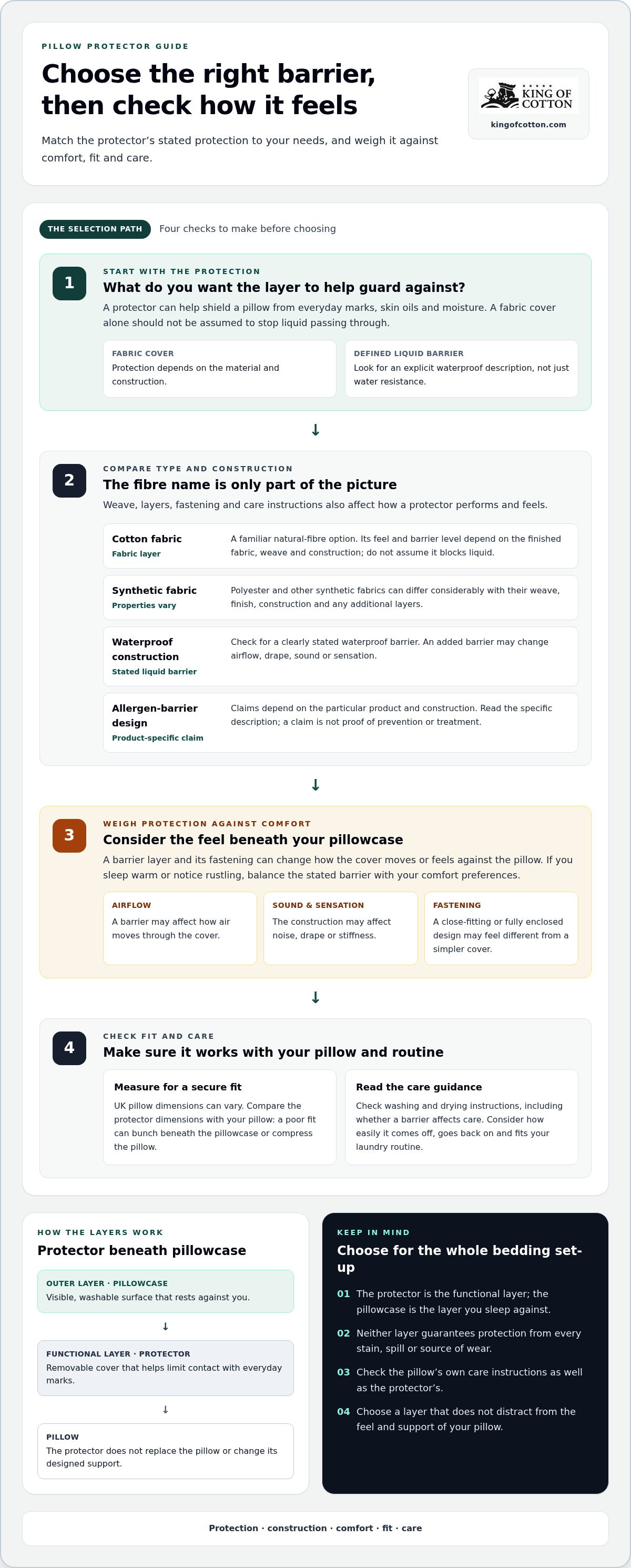
The protector is the functional layer; the pillowcase is the layer you sleep against. Used together, they have different jobs: the protector helps limit contact with everyday marks, while the pillowcase provides the surface against your skin. Neither guarantees protection from every stain, spill or source of wear. Follow the pillow’s own care instructions as well.
Who may benefit from adding a pillow protector?
A protector can be useful if you want a removable layer between your pillow and everyday use. It may make routine marks and pillow care easier to manage, particularly if you prefer to wash the outer bedding layers regularly. Whether it suits you depends on the pillow, the sleeper and your household’s laundry routine.
- Consider the pillow: Its filling and care instructions affect how you should clean and protect it.
- Think about comfort: Choose a layer that doesn’t distract from the feel of your pillow.
- Factor in your routine: Check how easily the protector comes off, goes back on and fits into your usual washing routine.
A protector isn’t essential for every bed, and it shouldn’t be chosen on the assumption that it offers a particular health benefit. Treat it as one practical part of your bedding. Once you know what you want it to help with, compare that purpose with its feel, construction and care requirements.
Which pillow protector type and material suits your priorities?
Start with the protection you need, then consider how the protector may feel beneath your pillowcase. A simple fabric cover, a waterproof construction and a product with an allergen-barrier claim are different options. The fibre name alone won’t tell you how a protector performs: weave, layers, fastening and care instructions also matter.
Choose a barrier that matches your needs and a construction that feels right for you. Use this comparison to narrow your options, then read each product description for the specific material, construction and care details.
| Type or fabric | Barrier level | Possible feel | Care to check | May suit |
|---|---|---|---|---|
| Cotton fabric | Depends on the weave and construction; don’t assume it blocks liquid. | A familiar natural-fibre option, with feel shaped by the finished fabric. | Follow the stated washing and drying instructions. | Those prioritising a fabric layer and cotton fibre. |
| Polyester or other synthetic fabric | Varies by fabric and any additional layers. | Can differ considerably with weave, finish and construction. | Check the label for temperature and drying guidance. | Those comparing specific fabric properties and care needs. |
| Waterproof construction | Look for a clearly stated waterproof barrier, not just water resistance. | An added barrier may change airflow, drape or the sound and sensation of the cover. | Check whether the barrier affects washing or drying. | Those who need a defined liquid barrier. |
| Allergen-barrier design | Claims depend on the particular product and its construction. | Fabric, fastening and any barrier layer contribute to the overall feel. | Check care guidance to understand how to maintain the construction. | Those comparing a specific, clearly described barrier claim. |
Cotton and synthetic fabrics: how might they feel?
Cotton is a familiar natural fibre, but the word alone doesn’t guarantee a particular level of softness, breathability or protection. Polyester and other synthetic fibres also vary. Weave, surface finish and fabric weight can all affect how a protector feels and performs. Read the full material description, not just the fibre name, and consider how it will sit beneath your usual pillowcase.
Waterproof and allergen-barrier protectors: when to compare them
“Water-resistant” and “waterproof” describe different stated levels of protection. A water-resistant surface may repel some moisture, while a waterproof claim indicates a barrier intended to prevent liquid passing through under the product’s stated conditions. Look for an explicit description rather than treating the terms as interchangeable. Allergen-barrier claims are specific to the product and shouldn’t be treated as proof of prevention or treatment.
A barrier layer may affect airflow and how the cover moves or feels against the pillow. The fastening can make a difference too: a close-fitting or fully enclosed design may feel different from a simpler cover. If you sleep warm or notice rustling, weigh the stated barrier against your comfort preferences rather than choosing by the protection claim alone.
Compare the protector’s description with the bed linen you use, as both layers contribute to how the bed feels. The right option for you is one whose stated protection, construction and care requirements work together.
How to compare pillow protectors for comfort, fit and value
A useful comparison goes beyond the fabric name. Consider the protection you need, how the cover will feel beneath your pillowcase and whether its construction suits your pillow and laundry routine. Treat claims such as “cooling”, “breathable” or “quiet” as prompts to check the product details, not as guarantees based on a headline.
Compare options using the same checklist:
- Comfort: Consider the fabric, any coating or barrier layer, and whether added texture or rustling might disturb you.
- Fit: Compare the protector’s stated dimensions with your pillow. A loose cover can shift; one that’s too tight may compress the pillow.
- Protection: Match the stated barrier to your needs. Don’t assume a basic fabric cover is waterproof or that a broad claim guarantees a particular level of protection.
- Fastening: Check how the opening closes and whether the design keeps the pillow covered during ordinary use.
- Care: Read the washing and drying instructions, especially if the protector has a coating or layered construction.
Value is about suitability over time, not simply the number of features. A protector that fits, offers the barrier you need and works with your washing routine may be a more practical choice than one with features you won’t use or care requirements that don’t suit your household.
Will a protector change your pillow’s feel?
It can. An extra fabric layer may subtly alter the pillow’s surface, while a barrier or coating can affect airflow, drape or sound. Consider whether you sleep warm, prefer a particularly soft surface or notice rustling easily. Review the construction details, then look for firsthand comments about feel, temperature or noise. Reviews describe individual experiences, so the protector may feel different to you.
Which fastening and construction details matter?
An envelope-style opening can make a cover straightforward to remove, while a zip fastening may enclose the pillow more fully. Neither is right for everyone. Consider how much coverage you want and whether the opening feels comfortable beneath your pillowcase. The protector should sit securely without pulling the pillow out of shape. If you’re refining the rest of the bed, explore bed linen options that suit your preferred feel.
To decide how to choose a pillow protector, prioritise the protection, comfort and care requirements that matter to you. Then rule out options with unsuitable dimensions or construction. This keeps your choice grounded in how you sleep and care for your bedding, rather than a feature list alone.
How to choose the right size and care for a pillow protector
Choose a size by measuring the pillow, not by relying on an assumed size label. UK pillow dimensions can vary, so “standard” isn’t a substitute for checking measurements. A protector that’s too tight may compress or distort the pillow; excess fabric can shift or bunch beneath the pillowcase. Use these steps before buying.
- Measure the pillow. Check its length and width, and note its depth if it’s particularly full or shaped. Measure it flat, in its usual uncompressed condition, without pulling it taut. If it has a shaped contour or a defined top and bottom, note that too.
- Compare the stated dimensions. Read the protector’s measurements rather than relying on a size name. Compare like with like and check the product description for guidance on the pillow shapes or orientation it suits. The protector should sit smoothly without forcing the pillow into a smaller space.
- Review the construction. Check where the opening and fastening sit, and whether the design can accommodate the pillow’s depth. A close fit should keep the protector in place without flattening the pillow or straining the seams.
For bedding dimensions more broadly, use the measurements given for each item rather than assuming a familiar size label means every product is identical. Checking dimensions helps you coordinate your bedding without compromising how the pillow is meant to sit.
How do you wash and maintain a pillow protector?
Follow the maker’s care label. It takes precedence over generic washing advice because fabrics, coatings and layered constructions may need different temperatures and drying methods. Before laundering, close zips or other fastenings if the instructions allow, to help prevent them catching on other items. Follow any guidance about washing separately.
Dry the protector fully before putting it back on the pillow. Check the seams, corners and any thicker or coated areas, as these may take longer to dry. Refitting it while damp can leave moisture trapped beneath the pillowcase. Once dry, smooth it over the pillow and make sure the closure is secure without pulling the pillow out of shape.
Care is part of choosing well. A good fit won’t make a protector with unsuitable care instructions right for your routine, and easy maintenance won’t compensate for the wrong size. Weigh the dimensions, construction and care label together. To complete your bedding arrangement, explore bedroom essentials alongside your pillow and bed linen.
Choose a pillow protector as part of a considered bedroom set-up
A well-chosen protector can support pillow care, but it shouldn’t take priority over the pillow’s comfort or support. Start with the pillow you own, identify the everyday concerns you want a barrier to address, then weigh the protector’s feel, fit and care requirements. This keeps the decision focused on what suits your bedroom rather than claims or features you may not need.
Before deciding how to choose a pillow protector, run through this checklist:
- Check the fit: Compare the stated measurements with your pillow, including its shape and depth.
- Match the barrier to your needs: Decide what everyday marks or moisture you want the protector to help shield against, then look for a clear description of its protection level.
- Review the construction: Consider the fabric, any barrier layers and how the protector fastens. These details can affect coverage and feel.
- Read performance claims carefully: Look for product-specific information behind terms such as “waterproof”, “cooling” or “quiet”. Don’t assume a claim applies to every construction or suits every sleeper.
- Check the care label: Make sure the washing and drying instructions suit your routine and the protector’s materials.
A protector is one layer in a considered bedding arrangement. It can make pillow care more manageable, but it won’t improve a pillow that doesn’t provide the comfort or support you need. Choose a pillow for how it feels and functions first, then select any extra layer to complement it. That helps maintain a comfortable feel while making a practical choice for your household.
Bring together the rest of your bedroom linen
The pillow, its coverings and the bed linen all contribute to the feel of a bedroom. Coordinated textures and materials can help create a calm, comfortable setting, while straightforward care instructions make bedding easier to maintain. If you’re refreshing the room, explore the bedroom linen collection as part of the wider arrangement.
Keep your priorities in view: suitable protection, a comfortable feel, a secure fit and care you can follow. Choose an option that fits naturally into your bedding routine, without expecting it to replace the pillow’s role in comfort and support.
Explore refined bedroom essentials to bring a considered finish to your bedroom.
Make your next bedding choice with confidence
Keep your pillow at the centre of the decision. Whether you prioritise a softer feel, straightforward care or an extra everyday barrier, use those needs to guide your choice. Knowing how to choose a pillow protector is about finding a suitable match for your pillow and the way you sleep, not a single option that works for everyone.
That same care can guide the rest of your bedroom. King of Cotton supplies pillows and bedroom linen for homes and hospitality customers, with a focus on quality, comfort and luxury. Consider how each layer works together, from the pillow’s support to the feel and finish of the linen, to create a space that invites you to unwind.
Keep comfort at the heart of your bedding choices. Explore refined bedroom essentials from King of Cotton to find inspiration for a more considered bedroom.
Frequently Asked Questions
Do you put a pillowcase over a pillow protector?
Yes, a pillowcase is usually placed over the protector. The protector wraps around the pillow, while the pillowcase provides the visible surface you sleep against. You can remove and wash the pillowcase as part of your usual bedding routine, leaving the protector in place until its care instructions call for cleaning. Use both layers if they suit your comfort and pillow-care preferences.
Can a pillow protector make you feel hot at night?
It can, depending on the fabric and construction. A coated or waterproof barrier may feel less airy than a simple fabric cover, although products differ. If you tend to sleep warm, look beyond terms such as “cooling” or “breathable” and check the material and construction details. Reviews that mention warmth may offer context, but experiences vary.
How often should you wash a pillow protector?
Follow the protector’s care label rather than applying a fixed washing schedule. Recommended care varies with the fabric, finish and construction, and unsuitable washing or drying may affect the product. If there’s a spill or visible mark, check the label before treating or laundering it. Make sure the protector is fully dry before putting it back on the pillow.
Will a pillow protector change the firmness of a pillow?
A protector doesn’t replace the pillow’s support, but a close-fitting or substantial cover may slightly affect its surface feel. If a pillow is already firm or full, a tight protector could compress it; excess fabric may shift and create unevenness. After fitting one, lie on the pillow in your usual position and check that it still feels comfortable. The pillow itself should remain the main source of firmness and support.
Are pillow protectors waterproof?
No, not all pillow protectors are waterproof. A standard fabric cover may help shield against everyday marks without stopping liquid passing through. If liquid protection is important, look for an explicit waterproof claim and details of the barrier construction. “Water-resistant” and “waterproof” aren’t interchangeable. Read the care instructions too, as washing and drying guidance may depend on the barrier.
Can a pillow protector help with dust mites or allergies?
Some protectors are designed and described as allergen barriers, but claims depend on the product and its construction. Don’t assume any cover will block dust mites or relieve allergy symptoms. If this is a priority, look for clear information about the stated barrier and how the cover closes around the pillow. A protector shouldn’t be considered a treatment or a substitute for advice from a health professional.
How do you know what size pillow protector to buy?
Measure your pillow and compare its dimensions with the protector’s stated measurements. Don’t rely on “standard” or “king” alone, as sizes can vary between products. Include the pillow’s depth if it’s particularly full, and consider its shape if it isn’t a typical rectangle. The protector should fit securely without squeezing the pillow or leaving so much spare fabric that it gathers beneath the pillowcase.