

Restaurant Table Linen: Choose Fabric for Daily Service
A restaurant tablecloth has to do more than look polished. For busy daily service, polyester is a practical choice because it resists stains and snagging; linen brings a crisp texture and natural drape, while cotton offers softness and versatility. The best fabric for restaurant table linen depends on the balance you want between durability, care and dining-room atmosphere.
Appearance often leads the decision: a table setting helps shape the experience before the meal arrives. But fabric also affects how the linen feels in use and how well it fits the demands of regular service.
This guide compares cotton, polyester blends, linen and vinyl so you can weigh their qualities against your restaurant’s style and routine. It also explains how fabric choice shapes the atmosphere, from relaxed everyday dining to a formal setting, and what to consider when selecting linen for repeated use.
Key Takeaways
- Match the fabric to your service rhythm: softness, stain resistance and ease of care each matter in different ways.
- Compare cotton, polyester blends, linen and vinyl by how they feel, wear and contribute to the table setting.
- Choose linen care practices that suit the fabric and the demands of frequent restaurant use.
- Use colour, texture and drape to shape the atmosphere, from relaxed dining to a more formal experience.
- Consider how tablecloths, napkins and runners work together to create a polished, practical setting.
1. What is the best fabric for restaurant tablecloths?
For daily service, the best fabric for restaurant table linen balances a polished appearance with manageable care. Washable, reusable linen offers a crisp texture and natural drape; cotton feels soft, while polyester blends prioritise practical resistance to stains and snagging. The right choice depends on your service routine and the atmosphere you want each table to create.
Linen tablecloths, napkins and runners create a coordinated setting without relying on disposable paper. A linen weight of 130-180 gsm is a useful guide for tablecloths, balancing presence with everyday practicality. Fabric napkins can offer a more refined dining experience, while paper napkins are generally discarded after one use. Reusable serviettes also help maintain a consistent look across repeated services.
Table linen does more than frame a place setting. A tablecloth helps shield the surface from food spills and everyday marks, while a runner adds a defined line of colour or texture. A plain cloth with a contrasting runner, for instance, can make a table feel finished without introducing a busy pattern. Placemats define individual settings, especially on bare tables.
Size affects both appearance and how comfortably guests use the table. For everyday dining, a standard tablecloth drop is typically 8-12 inches; a commonly preferred drop is 30-40 cm. Dinner napkins are usually 45-55 cm square, giving diners enough fabric for a full setting. A preferred placemat size is 38 cm, while a 40 cm-deep placemat suits a table that is 120 cm deep.
In UK restaurant service, the practical hygiene routine is to set tables with clean linen and remove soiled pieces promptly. Linen is commonly washed at 40-60°C, with an occasional 90°C cycle for heavily soiled items. For protein-based stains such as milk or egg, pre-soak in cold water because heat can set the mark.
Commercial restaurant linen costs depend on fabric, weave, finish, size and expected laundering life, so compare those factors rather than relying on a single fabric-based figure. To choose well, match the cloth’s look and hand-feel to its cleaning demands, then consider how napkins and runners complete the setting. The same attention to fabric and care can guide choices of cotton bed linen for guest rooms.
Napkin format can be chosen to suit the service. Fabric napkins provide a better-quality experience than disposable paper napkins, while linen serviettes are reusable. Paper napkins are thrown away once used. Common cocktail napkin dimensions include 15x15cm or 15x22cm, and 25x25cm cocktail napkins are also popular. Luncheon napkins are approximately 36-42cm square, giving diners a larger napkin option.
Linen tablecloths also help protect restaurant tables from food spillages and germs. This protective role complements the presentation of a coordinated setting, while reusable serviettes provide an alternative to disposable paper. Considering tablecloth protection, napkin quality and napkin format together can help keep the setting suited to the service.
2. Fabric choices: cotton, polyester blends, linen and vinyl
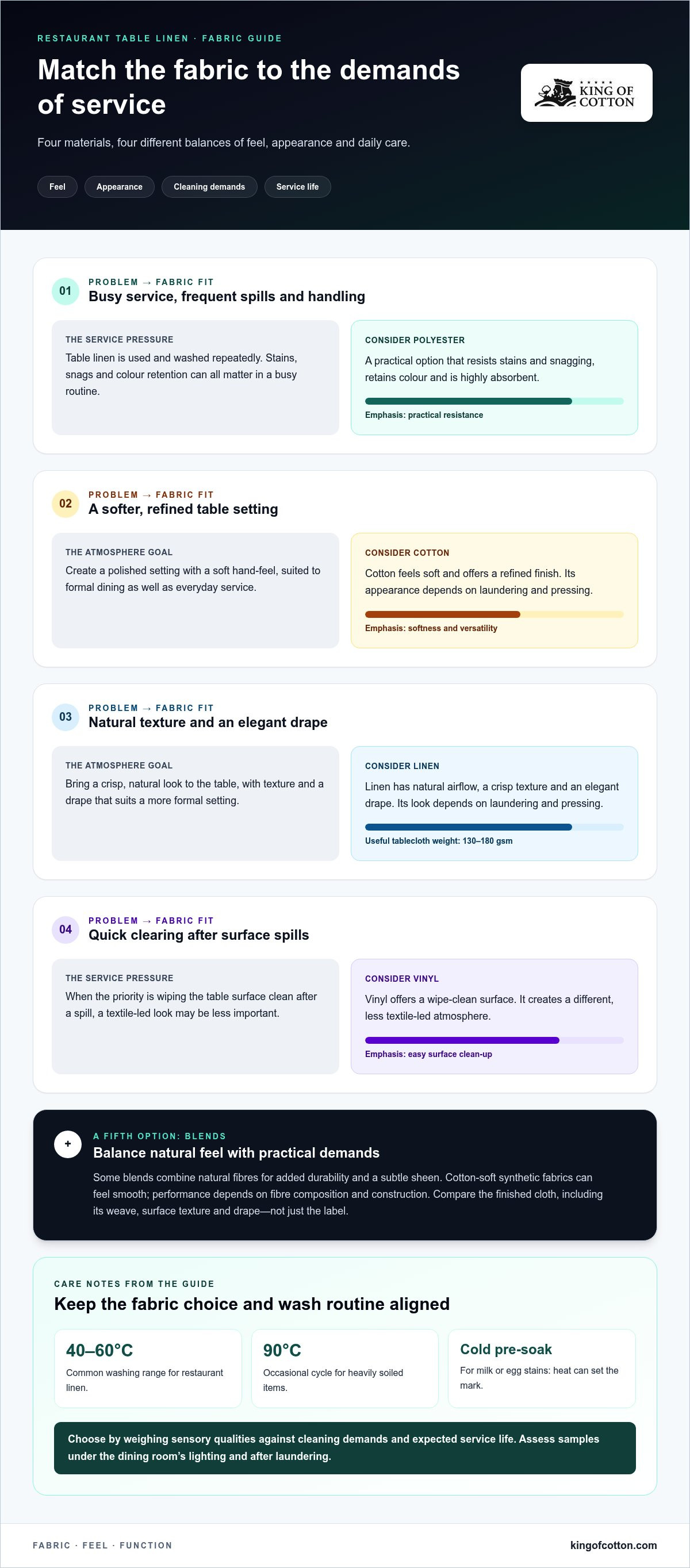
Each fabric offers a different balance of feel, appearance and daily care. Cotton feels soft and suits formal dining as well as everyday service. Linen has natural airflow, a crisp texture and an elegant drape. Polyester is popular for restaurant use because it resists stains and snagging, retains colour and is highly absorbent. Vinyl offers a wipe-clean surface, useful when quick clearing matters.
Blended fabrics can combine the feel of natural fibres with the demands of busy tables. Some premium blends combine natural fibres for added durability and a subtle sheen. Cotton-soft synthetic fabrics offer a smooth feel, though performance depends on fibre composition and construction. Compare the finished cloth, not just its label: the weave, surface texture and drape all influence the dining experience.
For stains, spills and creases, polyester is a practical option because it resists stains and is less likely to snag. Linen and cotton offer a more natural look, but their appearance depends on laundering and pressing. Vinyl wipes clean after surface spills, although it creates a different, less textile-led atmosphere.
Fine dining often suits linen’s natural drape or cotton’s soft, refined finish; casual dining can prioritise easy-care polyester or vinyl. For outdoor restaurants, choose a surface that suits the exposure and cleaning routine, then consider how its texture and temperature feel at the table. Colour and finish can make the same setting feel relaxed or formal.
Thread count alone doesn’t provide a reliable comparison across cotton, linen and synthetic fabrics. Assess the weave and finished weight alongside laundering needs; for linen tablecloths, a useful guide is 130-180 grams per square metre. That weight can help balance a substantial appearance with practical handling, while the fabric’s construction affects its drape and feel.
Environmental impact varies with fibre source, production and how long the linen remains in use. Linen comes from flax, which can grow without fertilisers or pesticides. Recycled polyester can be made from post-consumer waste, including plastic bottles. Cotton’s impact depends on how it is grown and processed, so consider provenance and useful life rather than judging by fibre name alone.
To choose the best fabric for restaurant table linen, weigh its sensory qualities against cleaning demands and expected service life. Compare samples under the dining room’s lighting, then assess their appearance after laundering. A fabric that suits the menu, setting and care routine will support consistent table presentation.
3. Durability under intensive restaurant use
Restaurant table linen can go through a fresh cycle of use and washing every day. That repeated handling makes colour fastness, crease resistance and construction central to durability. A cloth may look elegant at first, but lasting performance depends on how well it holds its colour, shape and finish after regular laundering.
Professional washing puts particular demands on fabric. Linen table linen can withstand professional washing at 60°C, making it suitable for a frequent care routine. Industrial machines and high-temperature cycles can be demanding, so match the wash programme to the fabric’s care instructions. Repeated exposure to unsuitable temperatures can affect appearance and shorten useful life.
Inspect the details before choosing cloths for a high-turnover setting. Check seams, hems and corners, especially on rectangular tablecloths that are pulled and repositioned throughout service. Runners receive concentrated contact from dishes and cutlery, so a firm weave and well-finished edges help them retain a neat appearance. Loose threads or weak hems can deteriorate with repeated washing.
Fabric choice also shapes the work involved after each sitting. Polyester is valued in restaurants for stain resistance, reduced snagging and colour retention. Linen offers a classic texture and natural drape, while cotton feels soft. Compare each fabric’s appearance after washing, not only its fresh-from-storage finish. This gives you a realistic view of the daily standard your team can maintain.
Separate linen promptly after service and treat marks according to their type. Protein stains, including milk and egg, should be pre-soaked in cold water because heat can set them. For greasy and organic marks, linen table linen can be washed at 40-60°C with an enzymatic professional detergent. An occasional 90°C cycle is possible for heavily soiled linen.
Storage matters between the wash and the next setting. Keep clean table linen in a cool, dry place to limit dampness and creasing. Fold pieces consistently, and avoid packing them away while moisture remains. Before service, inspect each cloth under the dining-room lighting; visible marks or deep creases can undermine even a carefully arranged luxury setting.
A useful durability check is to compare a sample before and after laundering. Look for colour change, persistent creasing, edge wear and changes in drape. Consider the complete setting too: tablecloths, napkins and runners all need care routines your operation can repeat. This practical assessment helps balance a polished presentation with the demands of daily restaurant use.
4. Polyester and recycled polyester
Polyester table linen suits restaurants that need a consistent finish across repeated services. It is popular in hospitality because it resists stains and snagging, retains colour and is highly absorbent. These qualities can help a setting maintain a tidy appearance through busy meals. Check the cloth’s weave and surface, since construction affects how it hangs and feels.
Recycled polyester uses recovered material, including post-consumer waste such as plastic bottles. That describes its source material, not the finished cloth’s quality or environmental impact. For a fair comparison, consider the material source, manufacturing, expected service life and disposal route. A recycled label alone does not show how the fabric will perform on restaurant tables.
Assess the finished linen as you would conventional polyester. Look at its colour, texture, weight and drape, then compare these with the room’s lighting and tableware. A smooth, even finish, for example, can create a restrained backdrop for detailed crockery, while a more textured surface adds visual interest. The right result depends on the whole setting.
Placemats and tablecloths can also make polyester practical across different table formats. Place a sample beside the restaurant’s plates and cutlery to see whether its colours complement or compete with them. On a rectangular table, check that the cloth hangs evenly at each end. A coordinating placemat can define each diner’s space without changing the main cloth.
Before choosing a full set, examine a sample after washing and drying it according to its care instructions. Compare its surface, shape and colour with the original, and inspect the hems and seams, which affect the finished appearance. Record any changes, then assess recycled polyester samples in the same way.
Follow the specific fabric’s care instructions rather than making assumptions about all synthetics. Separate stained pieces promptly, identify the mark and use a suitable cleaning approach. Do not assume recycled polyester is automatically more or less resistant than standard polyester. Fibre source and finished construction are separate considerations, so assess them independently.
For daily service, polyester can be a practical choice when easy coordination and a consistent look matter. Recycled polyester offers a way to use post-consumer material, but it still needs to meet the restaurant’s needs for finish, comfort and appearance. Compare both options in the actual dining room, with the same placemats, tableware and lighting used during service.
5. Restaurant table linen and dining-room atmosphere
A table setting shapes the mood before guests taste the first course. White tablecloths remain popular because they create a clean, fresh impression, while coloured cloths can make a room feel more relaxed or distinctive. Match the linen to the restaurant’s lighting, tableware and service style. A simple white cloth, for example, lets colourful plates take centre stage.
Fibre and finish influence the atmosphere as much as colour. Linen’s natural drape brings a composed, refined quality; cotton offers a softer, familiar feel. Polyester supports a neat, consistent appearance across tables, which can suit a contemporary dining room. Compare each fabric in the actual setting, since warm lighting and polished surfaces can change how colours appear.
Table linen also affects the room’s sound and helps protect the table. Tablecloths can help reduce dining-room noise, while table protectors or molletons can soften the sound of plates and cutlery. They also help protect tables from hot plates and serving dishes. A protector beneath a cloth, for example, adds a discreet layer without changing the visible setting.
Use layers to add character without crowding the place setting. A plain white overlay can contrast with a coloured cloth beneath it, while a runner can add a decorative line down the centre. Runners are decorative, so choose their colour and texture to support the room’s style rather than relying on them to catch spills. Leave enough clear space for dishes and serving pieces.
The amount of visible fabric also changes the formality of a room. A tablecloth drop of around 15 inches is suggested for formal occasions, creating a longer, more pronounced drape. Table linen can contribute to a more formal dining-room atmosphere, while settings without it may feel more casual. Choose a drop and finish that fit the guest experience you want to create.
Make your decision by testing a complete setting, not an isolated swatch. Place the cloth, napkins, tableware and runner together, then assess the colours from the entrance and from a seated guest’s position. Consider whether the result feels calm, celebratory or relaxed. This comparison helps ensure the linen supports the restaurant’s identity and daily service.
For hospitality settings that extend beyond the dining room, coordinated textiles can carry a considered welcome into guest bedrooms. Explore bed linen for guest rooms as part of the wider stay experience.
Elasticated table skirting offers an easy-to-fit option that looks the same when covered by a slip cloth. Overlays are usually plain white, creating contrast with the tablecloth beneath. Table runners are now decorative; historically, they caught spills and kept the tablecloth clean.
King of Cotton: Bed Linen
King of Cotton supplies bed linen to hospitality businesses creating a considered guest-room experience. Once you’ve chosen table fabrics to suit your restaurant’s service and atmosphere, coordinated bedroom textiles can extend that attention to comfort throughout a guest’s stay.
Explore bed linen alongside the dining-room decisions covered here, focusing on the look and feel that best complements your establishment. King of Cotton also offers towels, bathrobes and gowns, duvets and pillows for guest accommodation. These products are useful when furnishing or refreshing bedrooms and bathrooms, rather than choosing restaurant tablecloths, napkins or runners.
Visit King of Cotton online to explore bed linen and other hospitality essentials.
Shape a more considered guest experience
Your dining room’s character comes from the details guests notice and remember. Use table linen to express your restaurant’s style, then carry the same care into the wider hospitality experience. The best fabric for restaurant table linen is the one that feels right in your setting and works with the standards your team wants to maintain.
For guest accommodation, King of Cotton offers bed linen, towels, bathrobes and gowns. These pieces can bring a thoughtful sense of comfort beyond the dining room, with textile choices that complement the wider experience of a stay.
Whether you’re refining a guest-room setting or exploring hospitality essentials, contact King of Cotton to discuss your requirements. Take the next step towards a welcome that feels polished from the table to the bedroom.
Frequently Asked Questions
What is the best fabric for restaurant tablecloths?
Polyester is a practical choice for high-turnover service, while linen and cotton suit restaurants prioritising a natural, refined finish. For a neighbourhood bistro, polyester may make daily upkeep easier; for a tasting-menu setting, linen’s drape can support a more formal presentation. Choose by balancing the room’s style with the cleaning routine your team can maintain consistently.
Why is high-quality linen important?
High-quality linen helps a restaurant maintain a composed table presentation through repeated use. Natural fibres provide airflow, while linen’s crisp texture and drape give settings distinctive character. It is reusable, so it can be laundered and returned to service rather than discarded after one meal. Consider the weave, fabric weight and care routine together when deciding whether linen fits your operation.
What fabrics are best for restaurant tablecloths and napkins?
Choose fabric according to each item’s job. Polyester can suit tablecloths in busy areas because it resists stains and snagging; cotton offers a soft feel for napkins, and linen creates an elegant coordinated setting. You can also combine fabrics, such as a practical polyester cloth with linen napkins, to balance routine care with a more tactile guest experience.
Which table linen fabric is most durable for commercial laundering?
Polyester is a strong option where stain resistance, colour retention and reduced snagging matter during frequent service. Linen table linen can also withstand professional washing at 60°C. Durability depends on the fabric’s construction and whether its care instructions suit your laundering routine. Assess samples after repeated wash cycles, paying attention to colour, shape and surface condition before choosing linen for all tables.
Are linen tablecloths practical for restaurants and how do they compare with polyester?
Yes, linen tablecloths are washable and reusable, and bring a natural drape to the dining room. Polyester is often more practical when stain resistance and reduced snagging are priorities. A restaurant might use linen in its signature dining area and polyester in a faster-turnover section. Compare each fabric’s appearance, feel and care demands with the service style of each space.