

Pilling Resistant Bed Sheets: The Expert Guide to Smooth, Long-Lasting Linens
There is little more disappointing than investing in what you believe to be the finest, high-thread-count bed linen, only for it to develop those small, rough bobbles after just a few washes. This frustrating process, known as pilling, can quickly transform a luxurious sanctuary into a coarse, uncomfortable bed, making your investment feel wasted and your sheets look prematurely worn.
The secret to enduring smoothness, however, lies not simply in a higher price tag, but in understanding the specific qualities that make for truly pilling resistant bed sheets. It is the key to unlocking the lasting softness and pristine finish you associate with a five-star hotel experience, night after night.
In this expert guide, we unveil the science behind pilling and provide the knowledge you need to confidently select premium linens. Prepare to decipher bedding labels like a professional and discover how to create a haven of elegance with sheets that remain impeccably smooth, crisp, and inviting for years to come.
Key Takeaways
- The length of a fibre-not the thread count-is the number one predictor of pilling. Learn to identify long-staple cottons for guaranteed smoothness.
- Discover why synthetic blends like polycotton are the primary cause of pilling and why 100% natural fibres are the superior choice for lasting elegance.
- Simple changes to your laundry routine, such as using a gentle cycle and washing linens inside out, can dramatically extend their bobble-free life.
- Learn how to choose truly pilling resistant bed sheets by understanding the key differences in materials, weaves, and fibre quality used in the world's finest hotels.
What is Pilling and Why Does It Ruin Your Bed Sheets?
There is little more disappointing than investing in what you believe to be luxurious bed linen, only to find it covered in tiny, unsightly bobbles after just a few washes. This common frustration is known as pilling-the formation of small, tangled balls of fibre on the surface of the fabric. It occurs when friction from everyday use, such as tossing and turning, and the agitation of laundering causes weaker surface fibres to break, loosen, and knot together.
To better understand how fabric quality influences this process, the following overview offers a valuable visual insight:
While pilling certainly compromises the elegant appearance of your bedding, the issue extends far beyond aesthetics. These abrasive little knots create a rough, scratchy texture against the skin, transforming a once-silky surface into an uncomfortable one. This diminishes the sensory pleasure of high-quality sheets and can even affect the fabric's breathability. The search for truly pilling resistant bed sheets is, therefore, a pursuit of lasting, uncompromised comfort.
The Anatomy of a Fabric Pill
Pills form when loose, broken fibres migrate to the fabric’s surface and are entangled by friction. While all fabrics can pill to some extent, synthetic fibres like polyester tend to hold onto these bobbles more stubbornly due to their inherent strength. In contrast, high-quality natural fibres are more likely to shed them. It is important to distinguish pilling from lint; pills are firmly anchored to the fabric, whereas lint is simply loose fibres that can be brushed away. Understanding this is key to providing better bedroom linen care.
Common Culprits: Why Your 'Luxury' Sheets Failed
Often, the primary cause of pilling is the use of 'short-staple' fibres-short, low-grade strands that are more prone to breaking. Some manufacturers use these inferior fibres to artificially inflate thread counts, resulting in a product that feels soft initially but quickly deteriorates. For a deeper understanding of the mechanics, you can explore what is textile pilling? Other contributing factors include:
- Excessive Heat: Tumble drying on high heat can weaken and damage the fine cotton fibres, making them susceptible to breakage.
- Friction Points: Areas of the bed that experience the most movement, such as the foot of the bed or where your shoulders and hips rest, will almost always pill faster.
The Science of Pilling Resistance: Fibers, Staples, and Weaves
The enduring smoothness of luxurious bedding is not a matter of chance, but of meticulous science. The frustrating appearance of tiny fabric balls, or 'pills', is a direct result of short or broken fibers tangling on the surface of the fabric. Understanding the core principles behind The Science of Pilling reveals that the key to prevention lies in the quality of the raw material and the precision of its construction. For truly pilling resistant bed sheets, three factors are paramount: fiber length, the spinning process, and the tightness of the weave.
Long-Staple Cotton: The Gold Standard
The single most important predictor of pilling resistance is the length of the cotton fiber, known as its 'staple'. Long-Staple and Extra-Long-Staple (ELS) cottons, such as the world-renowned Egyptian Giza cotton, feature individual fibers that are significantly longer than those of standard cotton. This superior length means fewer individual fiber ends are exposed on the yarn's surface, creating a smoother, stronger, and more unified thread that is inherently less likely to fray and form pills. This quality is further enhanced by the 'combing' process-a vital step where shorter, weaker fibers are mechanically removed, ensuring only the finest, longest strands are spun into the final yarn for our premium bed linen.
Percale vs. Sateen: Which Resists Pilling Better?
While high-quality fiber is the foundation, the weave provides the structure. The two most popular weaves for luxury bedding, Percale and Sateen, offer different tactile experiences and levels of pilling resistance.
- Percale: Woven with a simple and robust 'one-thread-over, one-thread-under' grid pattern. This creates an incredibly tight, strong fabric with maximum structural integrity. The fibers are locked securely in place, leaving little room to loosen, making percale exceptionally resistant to pilling. It is prized for its cool, crisp feel.
- Sateen: Woven with a 'four-threads-over, one-thread-under' pattern. This technique exposes more thread surface, creating the signature silky-smooth feel and luminous sheen. While exquisitely soft, these 'floated' threads can make the fabric slightly more susceptible to snagging and eventual pilling compared to the fortress-like structure of percale.
Ultimately, when crafted from premium long-staple cotton, both weaves offer excellent durability. Your choice depends on personal preference: percale for a crisp, cool sleep, and sateen for a silky, warmer embrace.
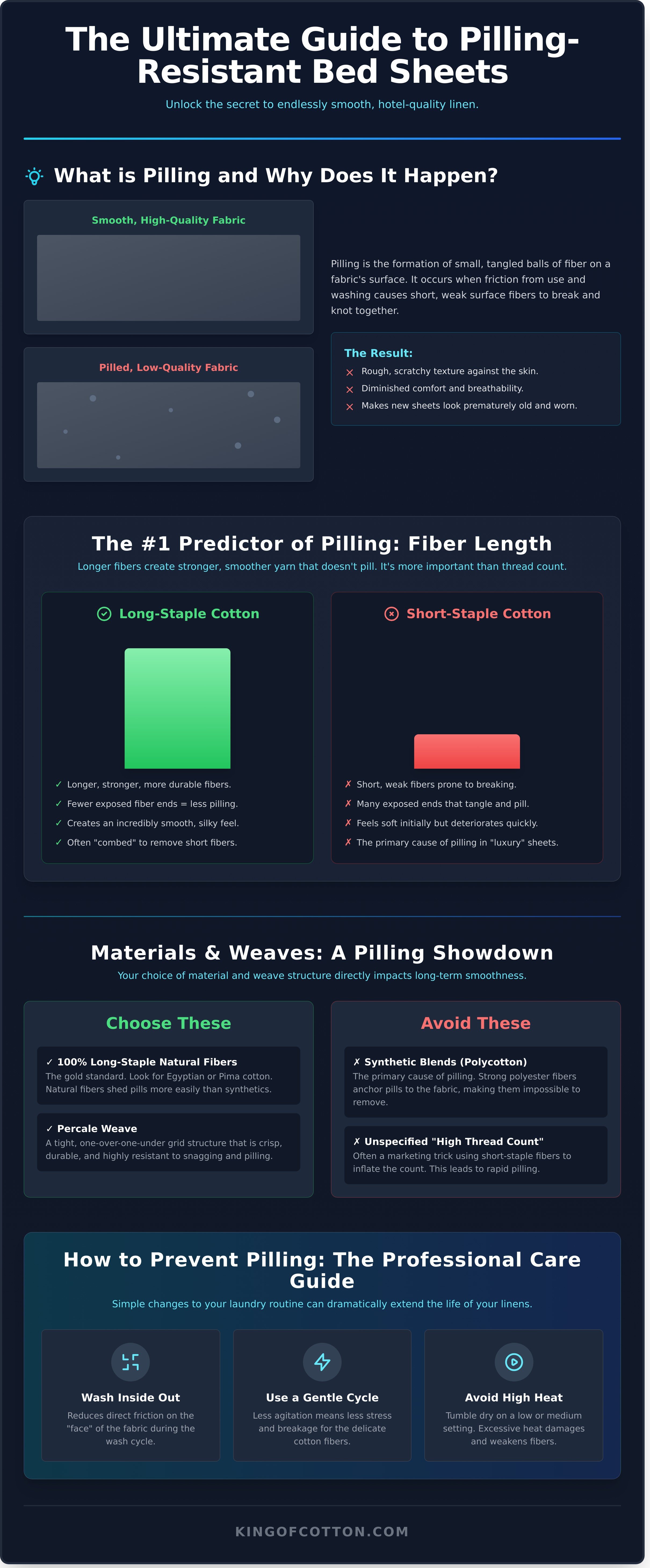
Materials to Choose vs. Materials to Avoid for a Smooth Bed
The secret to a pristine, bobble-free bed lies in one crucial choice: the fabric. While many factors contribute to a luxurious sleep experience, the material composition is the single most important determinant of whether your sheets will pill. Understanding the fundamental differences between fibres is the key to investing in truly pilling resistant bed sheets.
Here is a brief comparison of the most common materials:
- 100% Long-Staple Cotton: The undisputed champion. Long, smooth fibres like those in Egyptian Cotton are inherently strong and less likely to break and tangle. Natural breathability keeps the fibres healthy, and any minor pilling that occurs sheds naturally in the wash.
- Linen: A premium natural fibre known for its exceptional durability and breathability. Made from the long fibres of the flax plant, linen is highly resistant to pilling and grows softer with every wash.
- Microfiber & Polyester: These synthetic materials are prone to pilling due to their fine, plastic-based threads. They trap heat and moisture, which can accelerate fibre degradation and create a rough, uncomfortable surface over time.
- Polycotton Blends: Often marketed as an 'easy-care' option, these blends are the primary cause of permanent, stubborn pilling.
The Danger of Synthetic Blends
The issue with polycotton is a simple matter of physics. The strong, synthetic polyester fibres act as an anchor, clinging tightly to the weaker, shorter cotton fibres as they break. This creates tiny, unbreakable knots that cannot be washed or shaved away. These blends also trap moisture against your skin, leading to sweat-induced fibre damage and a less hygienic sleep environment. Furthermore, every time these sheets pill and shed, they release microplastics into our waterways.
Why Hotels Exclusively Use High-Grade Cotton
The world's finest hotels choose 100% long-staple cotton for a reason. Their linens must endure hundreds of high-temperature industrial washes without degrading. This rigorous standard proves that investing in premium cotton products offers a far lower cost-per-use over the long term. More importantly, only high-quality natural fibres can deliver and maintain the cool, crisp, and breathable feel that defines a truly luxurious and rejuvenating sleep experience.
How to Prevent Pilling: The Professional Care Guide
Investing in premium linen is the first step toward a luxurious sleep experience; proper care is the second. Even the finest pilling resistant bed sheets require a considered laundering routine to maintain their integrity and hotel-quality smoothness. Following these professional guidelines will preserve the beauty and comfort of your bedding for years to come.
Laundering for Longevity
The secret to preventing pilling begins in the washing machine. Friction and heat are the primary adversaries of fine cotton fibres. To protect your investment, adopt a gentle approach:
- Choose a Cool Wash: Opt for a 30-40°C cycle. While a 60°C wash is often recommended for hygiene, excessive heat can weaken and break the long-staple cotton fibres that resist pilling.
- Protect the Surface: Always turn duvet covers and pillowcases inside out before washing. This simple 'Inside Out' trick shields the sleeping surface from direct friction with the drum and other items.
- Wash Separately: Never wash your fine linens with heavy or abrasive items like towels, denim, or clothing with zips. This minimises fabric-on-fabric abrasion. Ensure the drum is not overloaded to allow the sheets to move freely.
- Select a Mild Detergent: Use a gentle, liquid detergent. Harsh chemical powders and enzymatic formulas can degrade delicate fibres, making them more susceptible to pilling. Avoid fabric softeners, as they coat fibres and encourage them to clump together into pills.
Drying Without Damage
How you dry your sheets is just as crucial as how you wash them. High, direct heat can damage fibre ends, leading to roughness and pilling over time.
- Air Dry When Possible: Line drying is the kindest method, allowing sheets to dry naturally without the stress of mechanical heat.
- Use Low Heat: If using a tumble dryer, select a low temperature setting and remove the sheets while they are still slightly damp to iron or fold. Over-drying "bakes" the fibres, making them brittle.
- Embrace the Cool Down: Always use your dryer's 'cool down' cycle. This vital step allows the fibres to relax and set, reducing wrinkles and preventing heat shock.
- Store Correctly: Keep your laundered sheets in a cool, dry, and well-ventilated linen cupboard. Avoid sealing them in plastic containers, which can trap moisture and weaken the fabric.
By following these professional care steps, you ensure your investment in superior pilling resistant bed sheets delivers unparalleled comfort and elegance, night after night. Discover our collection of the finest cotton linens at kingofcotton.com.
King of Cotton: 25 Years of Pilling-Resistant Luxury
For over a quarter of a century, King of Cotton has been the trusted supplier to the world's finest homes and hotels. This heritage has given us unparalleled insight into what creates truly exceptional, long-lasting bed linen. We've learned that the secret to genuinely pilling resistant bed sheets isn't an inflated thread count, but the fundamental quality of the cotton fibre itself.
This is why every set of King of Cotton sheets begins with premium, long-staple cotton. The fibres are meticulously combed to remove shorter, weaker threads, leaving only the longest and strongest ones to be woven. The result is a fabric that is inherently smoother and more durable. Our classic 200 thread count Percale, for example, consistently outperforms 'cheap' 1000TC alternatives in pilling tests, proving that superior materials and craftsmanship always triumph over misleading numbers.
Our Signature Collections
Our commitment to quality is evident across our curated collections, each designed to offer a distinctively luxurious and durable sleep experience.
- 100% Egyptian Cotton Percale: Our flagship collection and the ultimate choice for a crisp, cool, and breathable finish that improves with every wash while actively resisting pilling.
- The Giza Cotton Range: For those seeking the pinnacle of softness, Giza cotton features some of the longest and most uniform fibres in the world, creating a sublimely smooth and lustrous surface.
- Eco-Friendly Options: Discover sustainable luxury with our organic and responsibly sourced cottons that deliver exceptional texture and durability without compromise.
Why 5-Star Hotels Trust Us
The world’s leading hoteliers choose King of Cotton because our linens are engineered to withstand the rigours of commercial laundering while maintaining their five-star feel. This professional-grade quality is built on three pillars:
- Commercial Durability Testing: Our linens undergo exhaustive testing for shrinkage, colour-fastness, and pilling to ensure they meet the highest hospitality standards.
- Unwavering Fibre Consistency: We have maintained our relationships with elite cotton growers for over 25 years, guaranteeing a consistent supply of the finest long-staple fibres.
- Direct-to-Consumer Pricing: By bringing our hotel-grade bedding directly to you, we eliminate the middleman, offering professional quality at an accessible price.
We invite you to experience the difference for yourself. Feel the superior quality and craftsmanship in person at our London and regional stores, or explore the complete collection online to create your own haven of elegance and comfort.
Your Journey to a Perfectly Smooth Bed Ends Here
The quest for eternally smooth bed linen ends with understanding the details. As we've explored, pilling is simply the result of short, weak fibres, and the secret to preventing it lies in choosing superior materials-especially long-staple cottons with a durable weave-and following a mindful care routine. By investing in true pilling resistant bed sheets, you are choosing years of uninterrupted comfort and elegance for your home.
At King of Cotton, we have dedicated over 25 years to perfecting this standard. As specialists in fine, long-staple Egyptian Cotton and the trusted supplier to the world's finest hotels, our commitment to lasting quality is reflected in our 'Excellent' Trustpilot rating. We believe everyone deserves to experience the serene luxury of impeccably smooth linens, night after night.
Ready to banish bobbles for good? Shop our collection of pilling-resistant, hotel-quality bed linen and bring home the five-star comfort you deserve. A perfectly smooth sleep awaits.
Frequently Asked Questions
What is the best material for sheets that don't pill?
The finest materials for preventing pilling are those with long, smooth fibres. Long-staple cottons, particularly genuine Egyptian cotton, are renowned for their strength and resistance to abrasion. This inherent quality results in a sumptuously soft yet durable fabric that remains smooth over time. Similarly, Tencel™ Lyocell and high-quality linen are excellent choices, offering a graceful drape and exceptional longevity, ensuring your bedding remains a haven of comfort and elegance, free from unsightly bobbles.
Does a higher thread count mean the sheets won't pill?
While often associated with luxury, a high thread count is not a guarantee against pilling. The quality of the yarn is far more crucial. Sheets crafted from long-staple cotton fibres, even at a moderate 300 or 400 thread count, will outperform those with a higher count made from inferior, short-staple fibres. True durability and a lasting smooth finish come from the integrity of the material itself, not just the density of the weave. True quality is an investment in superior fibres.
Can you fix bed sheets that have already pilled?
While you cannot reverse the fibre breakage that causes pilling, you can temporarily restore a smoother appearance. A fabric shaver or a new disposable razor, gently skimmed over the surface, can remove the existing bobbles. However, this is a temporary solution as the underlying fabric has already been weakened. To ensure a permanently smooth and luxurious feel, investing in high-quality, pilling resistant bed sheets from the outset is the most effective approach for long-term satisfaction.
Is Egyptian cotton more pilling resistant than regular cotton?
Absolutely. The superior pilling resistance of genuine Egyptian cotton lies in its extra-long staple fibres. These long, silky threads are spun into stronger, finer yarns that are less prone to breaking and tangling, which is what causes pilling. This structural integrity means the fabric surface remains exceptionally smooth and lustrous, wash after wash. Regular cotton, with its shorter staples, has more fibre ends that can surface and form pills, which is why we champion the unparalleled quality of true Egyptian cotton.
Do bamboo sheets pill more than cotton sheets?
The pilling potential of bamboo largely depends on its manufacturing process. Bamboo viscose, the more common type, uses shorter fibres that are quite prone to pilling. In contrast, high-quality bamboo lyocell is more durable. However, when compared to the finest long-staple cottons like Egyptian cotton, premium cotton typically offers superior strength and a more reliable resistance to pilling over time, making it the benchmark for enduring luxury and performance in fine bedding.
How often should I wash my sheets to prevent pilling?
While regular washing is essential for hygiene, the method is more critical for preventing pilling than the frequency. We recommend laundering your sheets weekly on a gentle cycle to remove abrasive particles like skin cells and dust that contribute to friction. Over-washing or using harsh cycles can stress the fibres unnecessarily. Proper care is about preserving the integrity of the fabric, ensuring your luxurious bedding maintains its pristine condition and sumptuously smooth feel for years to come.
Does fabric softener cause sheets to pill?
Yes, fabric softeners can contribute to pilling. These products work by coating the fibres with a waxy, lubricating residue. While this may create an initial feeling of softness, it can weaken the fibres over time and cause them to break more easily under friction. This residue can also attract lint, which exacerbates the formation of pills. To preserve the natural softness and integrity of your fine linens, we advise against using fabric softeners entirely.
Why do my sheets pill only on one side of the bed?
This common issue is almost always due to concentrated friction in a specific area. The pilling you see is likely located at the foot of the bed where your feet and legs rub against the fabric throughout the night. It can also occur on the side of a sleeper who is more restless. This constant, localised abrasion causes the fibres in that spot to break and tangle. Investing in high-quality pilling resistant bed sheets with strong, long fibres helps withstand this friction more effectively.