

Durable Napkins for Restaurant Use: The 2026 Professional Selection Guide
The most expensive napkin your restaurant will ever buy is the one you have to replace after only a month of service. With new 2026 regulations like the "Skip the Stuff" law pushing the industry away from single-use items, the transition toward permanent, high-quality textiles is no longer optional. Selecting durable napkins for restaurant use requires a shift in perspective, moving away from flimsy alternatives and toward high-performance fabrics that maintain their structural integrity through hundreds of rigorous commercial laundry cycles.
You likely understand the frustration of seeing premium table settings lose their crispness or succumb to stubborn grease stains that won't budge even in a professional 60°C wash. It’s a recurring challenge that erodes both your long-term linen budget and your guest's perception of quality. This guide promises to show you how to balance 5-star luxury with industrial-grade durability to choose the perfect napkins for your establishment. We will explore the technical synergy of high GSM weights, mercerised fibres, and superior hemming that ensures your linens remain pristine and sophisticated, dinner after dinner.
Key Takeaways
- Understand the critical role of Grams per Square Metre (GSM) and how it dictates the balance between a soft, luxurious hand-feel and the structural integrity required for heavy commercial use.
- Learn how to identify durable napkins for restaurant use by evaluating weave density and advanced hemming techniques that prevent fraying at the edges.
- Discover professional maintenance protocols that preserve the crispness and vibrant colour of your linens despite the high temperatures of industrial laundry cycles.
- Explore why transitioning from single-use alternatives to high-performance cloth provides a superior return on investment while aligning with 2026 environmental standards.
- See how King of Cotton’s heritage in providing professional-grade linens can transform your dining room into a space of refined, 5-star hospitality.
Selecting Durable Napkins for High-Turnover Restaurant Environments
Professional dining demands more than just aesthetic appeal. To truly understand the specific requirements of a busy dining room, one must look at the history and evolution of napkins, which has transitioned from simple utility to a hallmark of refined service. Selecting durable napkins for restaurant use means choosing textiles specifically engineered for high-intensity environments. While a domestic napkin might look elegant on a home table, it lacks the tensile strength and edge integrity required to survive the mechanical stress of industrial machinery.
To better understand the various types of linens available for your establishment, watch this helpful video:
The shift from paper to cloth isn't merely a stylistic choice; it's a strategic branding move. As 2026 regulations like the "Skip the Stuff" law push the global industry away from single-use items, restaurants find that high-quality cloth linens enhance guest perception while meeting sustainability goals. A substantial, well-weighted napkin signals quality before the first course arrives. It feels indulgent and provides a sensory anchor that paper simply cannot replicate. Key indicators of this quality include high tensile strength to prevent tearing, colour fastness to resist fading, and superior edge integrity to stop fraying.
The Economics of Durability: Cost-Per-Wash
Investing in premium textiles requires a focus on lifecycle value. When you calculate the cost-per-wash, selecting the most durable napkins for restaurant use allows you to lower annual replacement costs. Cheap linens often suffer from thinning or permanent grease staining after just a few services. This leads to high replacement rates that quietly drain your operational budget. A truly durable napkin maintains its crispness and shape, ensuring every guest receives a 5-star experience without the need for constant restocking.
Commercial vs. Residential Napkins
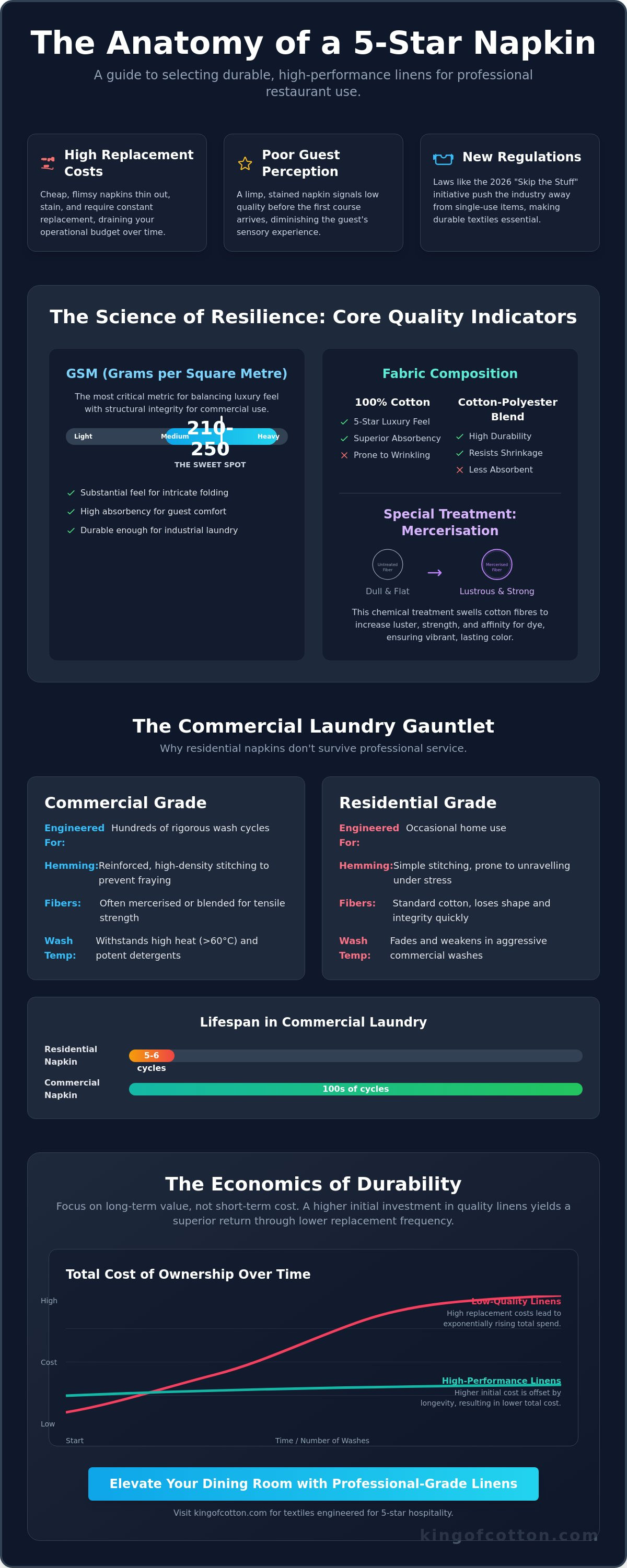
Commercial laundry processes are far more aggressive than home washing. They involve higher temperatures, often exceeding 60°C, and potent detergents designed to strip away organic oils. Residential napkins typically lose their shape and begin to fray after only five or six of these cycles. For a deeper look at how to source professional textiles that withstand these rigours, consult our guide on hotel linen suppliers. True restaurant-grade linens are designed with expert hemming and specific fibre blends to ensure they remain a long-term asset to your business.
The Science of Resilience: Fabric, GSM, and Weave
True resilience in hospitality textiles is an exercise in precision engineering. To select the most durable napkins for restaurant use, you must first understand the technical specifications that separate professional-grade linens from standard retail offerings. The most critical metric is the Grams per Square Metre (GSM). For a napkin to withstand the rigours of a high-turnover dining room, a GSM between 210 and 250 is generally considered the "sweet spot." This weight provides the necessary substance for intricate folding while ensuring the fabric remains absorbent and manageable for the guest.
When evaluating these materials, professionals often look to the ACT Performance Guidelines to gauge physical properties like physical strength and colourfastness. While 100% cotton remains the hallmark of luxury, many establishments opt for cotton-polyester blends. These hybrids leverage the synthetic strength of polyester to resist shrinkage and wrinkling, though they often sacrifice the superior tactile experience and absorbency of pure natural fibres.
Mercerisation serves as another vital indicator of quality. This treatment swells the cotton fibres to increase their surface area, resulting in a deeper lustre and significantly improved tensile strength. Unlike bed linen, where thread count is a primary measure of softness, thread count in table linens focuses on the density of the weave. A tighter weave prevents food oils and sauces from penetrating deep into the fibres, making the laundering process more efficient and extending the life of the textile.
100% Cotton: The Gold Standard for Fine Dining
Pure cotton remains unmatched for its natural absorbency and sophisticated hand-feel. High-quality cotton fibres respond exceptionally well to professional starching, allowing the napkin to hold a sharp, architectural fold throughout the service. This "crispness" is a definitive marker of a luxury table setting. It provides a tactile reassurance to the guest that they're dining in an establishment that values heritage and quality. You can explore our full range of professional-grade textiles in our comprehensive product collection.
Percale vs. Satin Weaves for Table Use
The choice of weave dictates both the aesthetic and the durability of the napkin. A percale weave offers a traditional matte finish and a tight, plain structure that's incredibly durable for high-volume bistros. It's robust and resists pilling over time. Conversely, a satin weave provides that signature hotel sheen, perfect for formal events and evening service. While satin is more evocative of indulgence, percale is often better at hiding minor snags or pulls, making it a pragmatic choice for busy environments that don't want to compromise on elegance.
Design Features That Prevent Fraying and Colour Fading
The structural integrity of a napkin is often determined by the details that guests rarely notice but laundry managers certainly do. While fabric choice provides the foundation, the construction methods used during manufacturing dictate how many service cycles a piece can survive. For those sourcing durable napkins for restaurant use, the difference between a premium product and a budget alternative lies in the precision of the finish. Construction is the invisible backbone of longevity, ensuring that a textile remains an asset rather than a recurring expense.
Vat dyeing is the gold standard for colour retention in the hospitality sector. This process involves immersing the yarn in a dye bath where the colourant becomes part of the fibre itself, rather than sitting on the surface. It ensures that bold colours remain vibrant and whites stay brilliant, resisting the "grey-out" effect caused by repeated exposure to high-heat drying and industrial minerals. Furthermore, the 50x50cm size is the recognised industry standard for professional hospitality. This specific dimension provides the ideal surface area for complex folding techniques while maintaining the weight necessary to sit perfectly on a guest's lap throughout the meal.
Stitch density plays a quiet but vital role in a napkin's lifespan. A higher number of stitches per inch ensures that the hem stays locked even when the fabric is subjected to high-speed centrifugal extraction in commercial machines. When the stitching is too loose, the mechanical stress of the wash cycle can cause the thread to snap, leading to rapid degradation of the entire piece.
The Importance of Edge Integrity
Poor hemming is the primary cause of "unravelling" in industrial tunnel washers. Standard hems often overlap at the corners, creating a bulky, weak point that is prone to snagging. In contrast, a quality mitred corner is sewn at a 45-degree angle to create a flat, elegant finish. This technique is significantly more durable because it eliminates excess bulk and distributes tension evenly. Double-stitching in these high-stress areas provides a secondary layer of protection, ensuring the edges remain crisp and secure for hundreds of uses.
Maintaining Pristine Whites and Bold Colours
Optical whites are essential for a clean restaurant aesthetic, as they reflect light and signal hygiene to the guest. To prevent grey-out in heavily used white linens, professionals rely on vat-dyed fabrics that resist soil re-deposition during the wash. Maintaining this level of brilliance requires a textile that can withstand the chemical intensity of commercial brighteners without thinning. To complement these napkins, our collection of tablecloths and runners provides a unified aesthetic that meets these same rigorous durability standards.
Maximising Longevity: Commercial Laundry and Maintenance
Maintaining durable napkins for restaurant use is as much an art as it is a science. While the initial quality of the textile is paramount, the longevity of your investment depends entirely on the rigours of your laundry protocol. A well-managed wash cycle doesn't just clean; it rejuvenates the fibres and restores the original lustre of the material. Proper maintenance ensures that your linens remain a credit to your establishment for hundreds of services rather than becoming a recurring expense.
Commercial washing requires a delicate equilibrium. While industry standards recommend temperatures between 40°C and 60°C to ensure hygiene, consistently exceeding these limits can lead to premature fibre degradation. Industrial pressing serves a dual purpose. It provides the crisp, professional finish that guests expect while effectively "locking" the surface fibres. This process makes the fabric more resistant to future soil penetration and helps maintain the napkin's geometric shape. To ensure your stock remains in peak condition, view our professional hospitality collection for textiles designed to withstand these intensive processes.
Storage is the final, often overlooked, step in the maintenance cycle. Linens must be completely dry before being stored in a cool, well-ventilated area. Stacking damp napkins leads to mildew and a distinct yellowing that is nearly impossible to reverse. Rotating your stock using a "first-in, first-out" system ensures even wear across your entire inventory, preventing specific batches from becoming prematurely thin or frayed.
Dealing with Tough Restaurant Stains
Organic food proteins and tannins from red wine require specific chemical intervention to break down effectively. The secret to napkin longevity is immediate action; soaking soiled linens as soon as they leave the floor prevents stains from becoming permanent. Avoid the use of harsh chlorine bleach whenever possible. While it provides an immediate whitening effect, it aggressively weakens the cellulose structure of cotton fibres. Instead, opt for oxygen-based whitening agents that preserve the tensile strength of the fabric while maintaining a brilliant, optical white finish.
Professional Starching and Folding
Starching is not merely for aesthetic "crispness." It creates a thin, sacrificial layer on the surface of the fabric that acts as a barrier against future staining. This protective shield prevents oils and sauces from reaching the core of the fibre, making the next wash cycle more effective. Training your staff on proper handling is equally vital. Avoid sharp tugging or aggressive folding that can break the internal fibres. Instead, use graceful, measured movements that respect the craftsmanship of the textile, ensuring each piece remains a symbol of refined hospitality.
King of Cotton: Elevating Your Dining Room with Professional Grade Linens
Our heritage is built on a simple, unwavering commitment to quality. For decades, King of Cotton has served as a trusted provider to the finest homes and hotels in the world, establishing a benchmark for excellence that transcends fleeting trends. When you choose our durable napkins for restaurant use, you aren't just purchasing table linens; you're investing in a legacy of craftsmanship. We understand that in a professional setting, your textiles must perform under pressure while maintaining an air of understated luxury.
The King of Cotton difference lies in our meticulous attention to technical specifications. By focusing on high-GSM fabrics and superior construction, we provide linens that offer a tangible sense of indulgence. Our B2B bespoke services allow you to align your table settings with your unique brand identity. From precise embroidery of your logo to custom sizing for non-standard tables, we ensure your dining room reflects the sophistication of your culinary offering. Transitioning to a sustainable, durable linen program is a seamless process with our expert guidance, helping you reduce waste while enhancing the guest experience.
Our Professional Range for Hospitality
Our collection features a curated selection of 100% cotton and luxury blends designed to meet the rigours of modern hospitality. Whether you require the matte resilience of a percale weave or the luminous sheen of satin, our textiles are engineered for longevity. You can easily match your napkins with our luxury table linens to create a cohesive and polished aesthetic. We offer dedicated corporate account benefits and wholesale opportunities tailored to the needs of high-volume establishments, ensuring you receive the best value for your investment.
Seamless Ordering and Support
We pride ourselves on an efficient logistical framework that supports the fast-paced nature of the restaurant industry. You can find detailed information regarding our delivery and lead times for bulk orders on our website, ensuring your operations remain uninterrupted. For those who prefer a tactile experience, we invite you to visit our London stores for a hands-on fabric consultation with our knowledgeable team.
- Expert advice on selecting the right GSM for your specific dining environment.
- Guidance on customisation options, including bespoke embroidery and dimensions.
- Comprehensive support for large-scale wholesale procurement.
Your dining room deserves the authority and mastery that only a seasoned textile expert can provide. If you're ready to upgrade your establishment's presentation, request a professional quote today and discover how our linens can transform your service.
Setting the Standard for Future Service
Transitioning to a high-performance linen program is a strategic investment that pays dividends in guest satisfaction and operational efficiency. By prioritising high-GSM industrial-grade cotton and advanced construction techniques like mitred corners, your establishment can move beyond the cycle of constant replacement. Selecting the most durable napkins for restaurant use ensures every table setting remains as pristine and sophisticated as the first service, even after hundreds of commercial wash cycles.
As seasoned suppliers to the world’s finest hotels, we understand the specific demands of the professional hospitality sector. Our textiles are engineered to withstand rigorous cleaning while maintaining an atmosphere of serene confidence and luxury. Bulk wholesale pricing is available to support your establishment’s commitment to quality and refinement. View our collection of professional-grade restaurant napkins to discover the perfect synergy of elegance and resilience. We look forward to helping you elevate your dining experience to a new benchmark of excellence.
Frequently Asked Questions
What is the most durable fabric for restaurant napkins?
Mercerised 100% cotton is widely regarded as the most durable natural fabric for high-end dining. The mercerisation process strengthens the fibres and improves colour retention significantly. For high-volume establishments, spun polyester is a popular alternative. It offers exceptional resistance to pilling and shrinking while mimicking the tactile feel of natural linen. Selecting durable napkins for restaurant use requires balancing these material properties with your specific service requirements.
How many napkins should a restaurant stock per seat?
Most hospitality professionals recommend a stock level of 2.5 to 3 napkins per seat. This ratio ensures you have one napkin in active service, one in the laundry process, and a sufficient reserve in storage. Maintaining this par level prevents unnecessary strain on your inventory. It also ensures you always have pristine linens available for unexpected surges in guest numbers or large private events.
Can 100% cotton napkins withstand industrial laundering?
Professional-grade 100% cotton napkins are specifically engineered to withstand the rigours of industrial laundering. Unlike domestic linens, these textiles feature higher tensile strength and reinforced hemming to survive repeated 60°C wash cycles. When properly maintained with professional starching and pressing, high-quality cotton remains crisp and sophisticated through hundreds of uses. It's a reliable choice for the most demanding and prestigious dining environments.
What is the best napkin size for dinner service?
The 50x50cm square is the definitive industry standard for formal dinner service. This size provides ample material for intricate architectural folds that enhance your table presentation. It also offers superior lap coverage for guests, ensuring comfort throughout a multi-course meal. Smaller sizes, such as 40x40cm, are typically reserved for casual lunch service or bistros where a more understated aesthetic is preferred.
How do I prevent my white napkins from turning grey?
Preventing "grey-out" requires a combination of high-quality textiles and precise chemical management. Avoid using chlorine bleach, as it weakens the fibres and can lead to a yellow or grey tint over time. Instead, utilise oxygen-based whitening agents and ensure your laundry process includes a thorough rinse cycle. This prevents minerals and loosened soil from re-settling into the fabric, keeping your whites brilliant and sharp.
Is it better to buy cotton-polyester blends for durability?
Cotton-polyester blends offer excellent durability and wrinkle resistance, making them a pragmatic choice for high-turnover environments. These fabrics dry faster and require less intensive pressing than pure cotton. However, for a truly luxurious guest experience, many 5-star establishments prefer 100% cotton. It provides superior absorbency and a more refined hand-feel that synthetic blends often struggle to replicate after multiple wash cycles.
How often should a restaurant replace its cloth napkins?
A restaurant should typically replace its cloth napkins every 12 to 18 months, depending on the frequency of use. Most durable napkins for restaurant use are designed to last between 100 and 150 industrial wash cycles before showing signs of thinning or edge degradation. Regular inspections are vital. You should retire any pieces that exhibit permanent staining, fraying, or a loss of their original structural crispness.
What is the ideal GSM for a professional dinner napkin?
The ideal weight for a professional dinner napkin is between 210 and 250 GSM. This specific range provides the necessary substance for a napkin to hold its shape when folded into complex designs. A napkin within this weight bracket feels substantial and luxurious on the guest's lap. It remains light enough for guest comfort and isn't overly bulky during the intensive laundering and industrial pressing process.