

Breathable Duvets for Menopause Night Sweats: A UK Guide
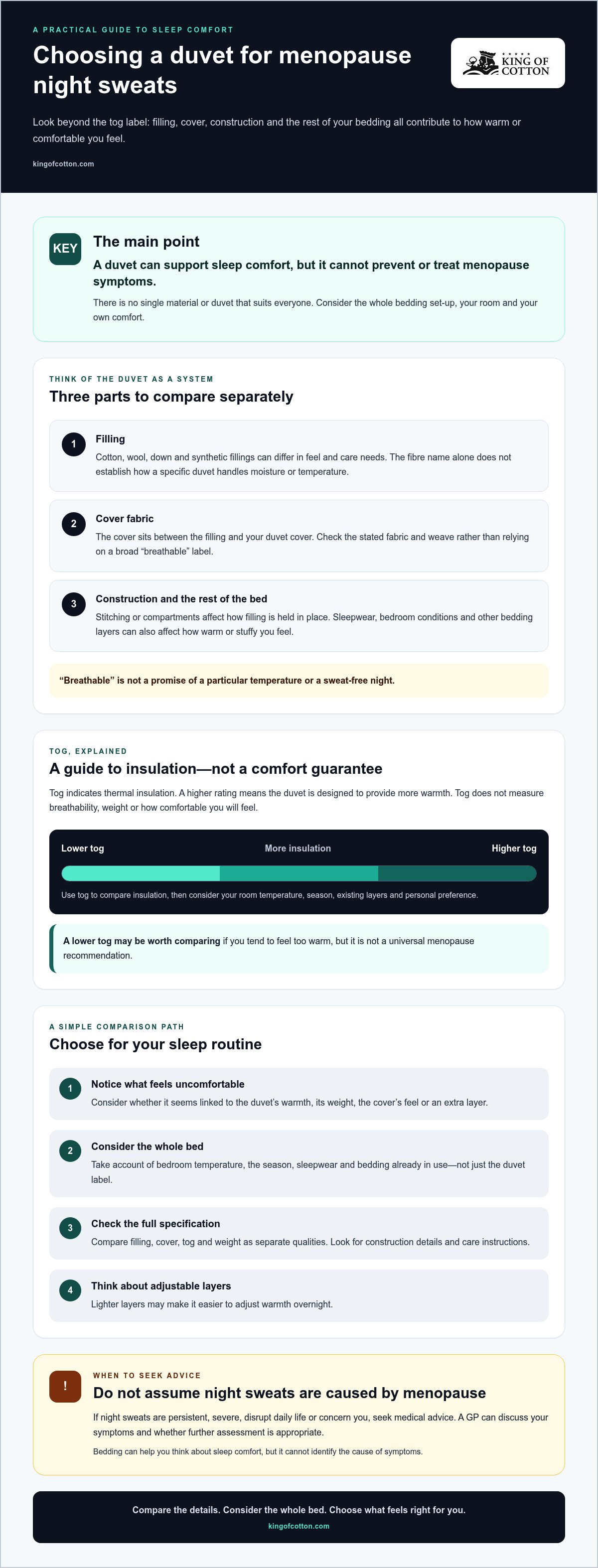
A lower-tog duvet might not be the whole answer to waking hot and damp. Choosing a breathable duvet for menopause night sweats also means considering its filling, cover fabric and the bedding around it, as each can affect how warm or comfortable you feel overnight.
If you’re struggling to settle again after a night sweat, it’s understandable to hope that changing your duvet will make a noticeable difference. Bedding can influence your sleep comfort, but it can’t prevent or treat menopause symptoms, and no single material suits everyone.
This guide explains what tog ratings indicate and how different fillings, cover fabrics and layers may affect perceived warmth. You’ll find practical points to compare when choosing a duvet for your home and sleep preferences, without relying on a one-size-fits-all recommendation. We’ll also cover when persistent, severe or concerning night sweats may warrant advice from a healthcare professional.
Key Takeaways
- A breathable duvet for menopause night sweats is one part of a bedding system, not a treatment for menopause symptoms.
- Compare filling, cover fabric and construction separately. The word “breathable” alone doesn’t tell you how a duvet will feel.
- Use tog as a guide to insulation, then consider your bedroom temperature, current bedding and personal comfort before choosing.
- Check the full product specification, including care instructions, and consider whether lighter layers could make it easier to adjust warmth overnight.
- King of Cotton offers duvets and pillows. Check current product details, and speak to a healthcare professional if night sweats are persistent or concerning.
What makes a duvet breathable for menopause night sweats?
Waking hot or damp can make an already disrupted night feel harder, especially when it takes time to settle again. A breathable duvet for menopause night sweats may feel more comfortable for some people, but night sweats can have different causes and bedding won’t suit everyone in the same way.
“Breathable” describes how heat and moisture may move through bedding. It doesn’t promise a particular temperature or a sweat-free night. A duvet’s filling, outer fabric and construction all play a part, as do your sleepwear, bedroom conditions and the other layers on your bed. For a basic overview of what a duvet is and the kinds of filling it can contain, see this reference.
This video offers one perspective on bedding marketed for hot sleepers. Treat it as an example, not a guarantee that a particular product or material will suit you.
Can a duvet make night sweats feel more manageable?
Bedding affects how warm and stuffy you feel. A duvet that feels too insulating, or bedding that holds moisture close to the skin, may add to discomfort; a different combination may feel more comfortable. Individual responses vary, so assess the whole bed rather than judging a duvet by one feature or label. If you’re comparing options, note whether discomfort seems related to the duvet’s warmth, its weight, the cover’s feel or an extra layer.
A duvet can support sleep comfort, but it can’t diagnose or treat night sweats.
When should night sweats be discussed with a GP?
If night sweats are persistent, severe, disrupt daily life or concern you, seek medical advice rather than assuming menopause is the cause. A GP can discuss your symptoms and whether further assessment is appropriate. Check current NHS guidance for advice relevant to your situation, particularly if you’re unsure what to do next. This article can help you think about bedding, but it can’t identify the cause of symptoms.
How duvet filling, cover and tog affect sleeping comfort
A duvet’s comfort isn’t determined by its filling alone. Think of tog as one clue to insulation, then weigh it alongside the cover, construction, weight and your existing bedding. Comparing the complete sleep system is more useful than treating a fibre name or “breathable” label as a promise of a cooler night.
What does duvet tog mean for a hot sleeper?
Tog indicates thermal insulation: a higher rating means the duvet is designed to provide more warmth. It doesn’t measure breathability, weight or how comfortable you’ll feel. Comfort also depends on your bedroom, sleepwear and personal preferences. A lower tog can be a useful comparison point if you tend to feel too warm, but it isn’t a universal menopause recommendation.
Before changing tog, consider the season, your room temperature and the layers already on your bed. If you feel warm under the duvet but comfortable when you remove it, comparing options with less insulation may be worthwhile. The National Institute on Aging’s guidance on menopause and sleep problems also provides wider context on sleep disruption, including night sweats.
How should you compare duvet fillings and covers?
Filling and cover are separate parts of a duvet. Cotton, wool, down and synthetic fillings can differ in feel and care needs, but the fibre name alone doesn’t establish how a particular duvet handles moisture or regulates temperature. Check reliable, product-specific information before relying on those performance claims.
The cover matters too. Its fabric and weave sit between the filling and your duvet cover, while the duvet’s stitching or compartments affect how the filling is held in place. Weight and care instructions can also determine whether an option suits your routine. Check the full specification for:
- Filling and cover: Confirm the stated materials rather than relying on a broad label.
- Tog and weight: Compare insulation and how substantial the duvet feels as separate qualities.
- Construction and care: Look for details about how it is made and how it should be cleaned.
- Performance wording: Check that any claim about breathability, moisture handling or temperature regulation applies to that specific duvet.
This is a more dependable way to assess a breathable duvet for menopause night sweats than choosing by fibre or tog alone. If you’re comparing options, explore the King of Cotton bedroom collection and review each duvet’s current specifications before deciding.
Breathable duvet options compared: what should you weigh up?
A useful comparison looks beyond the filling name. Check the cover, tog, weight and care instructions together, then consider whether the complete duvet suits your bedroom and routine. The table offers questions to ask, not a ranking. Product construction and verified specifications matter more than broad claims about a fibre.
| What to compare | What to check | Questions to ask |
|---|---|---|
| Filling | Material stated in the current product specification. | Does it suit your preferences, sensitivities and care routine? |
| Cover | Cover fabric and any details about its weave or construction. | Is the cover material specified, or is the description general? |
| Tog | Insulation rating, considered alongside the season and room. | Does your current duvet feel too warm, or do you need more coverage? |
| Weight | Any stated weight or useful description of how substantial it feels. | Will the feel and coverage suit you, especially if you share a bed? |
| Care | Cleaning and maintenance instructions. | Can you follow the care requirements comfortably? |
Natural and synthetic duvet fillings: which details matter?
Material categories can help narrow a search, but they don’t guarantee how a duvet will feel or perform. Natural and synthetic fillings can vary between products in construction, weight and care needs. Check the stated composition, sourcing information if relevant, and any specific performance claims. If you have sensitivities or allergies, consider the full product details and seek suitable advice where needed. Neither “natural” nor “synthetic” is, by itself, proof that a duvet will keep you cooler. The NHS explains that night sweats can have different causes, including menopause, in its guidance on night sweats.
Is a summer duvet or a lighter tog the better choice?
A lighter duvet may suit someone who feels too warm under their current bedding, while another sleeper may prefer greater coverage. Consider room conditions, season and whether you share a bed, as one person’s comfort may differ from another’s. Rather than selecting a particular tog by default, compare the insulation rating with your own experience and the bedding layers you already use.
No filling is automatically best for every hot sleeper. Use the specification to compare options, then decide which balance of coverage, care and feel makes sense for you. To browse duvet options, take a look at King of Cotton’s bedroom collection and check each item’s current details.
How to choose a breathable duvet for your sleep routine
Start with what happens in your own bed, not a material trend or a label. For a few nights, note when you feel too warm, what you’re sleeping under and the conditions in your room. That record can help you identify which specifications are worth comparing. For a breathable duvet for menopause night sweats, the aim is to find a considered match for your routine, not a guaranteed solution to symptoms.
A five-step duvet selection checklist
- 1. Review your current bedding and bedroom. Note whether your duvet feels too warm, heavy or damp, and whether the room feels stuffy. Include the season and the layers already on the bed.
- 2. Identify what you want to change. Decide whether insulation, the cover’s feel, the duvet’s weight or its care requirements matters most. A clear priority makes comparisons more useful.
- 3. Compare full product specifications. Check the stated tog, filling, cover fabric, construction and care instructions. Don’t rely on “breathable” alone; look for specific, verifiable details behind any performance claim.
- 4. Check the size and shared-bed needs. Match duvet dimensions to your mattress and preferred coverage. If you share a bed, consider whether one duvet suits both sleepers’ warmth and coverage preferences. Consult a UK bed-size guide if you’re unsure which dimensions to compare.
- 5. Factor in sensitivities and upkeep. Check the listed materials if you have personal sensitivities, and make sure you can follow the care instructions. A duvet that’s difficult to maintain may not suit your routine.
What else can you adjust besides the duvet?
The duvet is only one part of the bed. Sleepwear, room ventilation, the cover fabric and additional blankets can all affect how warm or covered you feel. These are comfort considerations, not treatments for night sweats. Try changing one factor at a time, such as removing an extra layer for a few nights. This makes it easier to notice what feels different instead of changing everything at once.
Use the comparison criteria from the earlier sections to assess the whole duvet rather than choosing by fibre or tog in isolation. For another option to explore, explore bedroom bedding and check the current specifications of any duvet you’re considering.
Choosing a duvet from King of Cotton: specifications before style
King of Cotton supplies duvets and pillows to individual customers and hospitality businesses. If you’re considering a breathable duvet for menopause night sweats, assess individual options using the criteria in this guide rather than assuming every duvet in a range has the same properties. Style and finish matter, but the specification is the better place to begin.
What to check in the current duvet range
Product details can change, so confirm the current information for each duvet before comparing or making a choice. Look for the stated filling and cover materials, tog rating, construction and care instructions. Check availability on the product page too. Don’t infer a material, rating or performance feature from a general category description.
Then match the verified details to your own checklist. If your current duvet feels too warm, compare its tog with alternatives, remembering that tog describes insulation rather than breathability. If the cover feels uncomfortable, check its stated fabric and weave where provided. Consider weight, care requirements, bed size and personal sensitivities as well. Any claim about moisture handling or temperature regulation should be supported by product-specific information, not just the word “breathable”.
- Filling and cover: Are both materials clearly identified?
- Tog and construction: Do the stated details suit your room, season and preferred coverage?
- Care and availability: Can you maintain the duvet as instructed, and is the option currently available?
This comparison won’t identify a universal best choice. It can help you make a more informed decision based on the complete specification and the conditions in which you sleep.
When bedding advice is not enough
A duvet is a comfort choice, not a menopause treatment, and night sweats can have causes other than menopause. If symptoms persist, feel severe or worry you, speak with a healthcare professional. You can also consult current NHS guidance on night sweats for UK-specific advice. Bedding adjustments may support comfort, but they shouldn’t take the place of medical guidance when you need it.
For broader buying considerations, revisit the guide’s advice on comparing duvet size, materials, tog and care. When you’re ready to review bedroom products, explore the bedroom collection and check the current specifications of each duvet that interests you.
Choose bedding with your comfort in mind
A more comfortable night may start with a closer look at your whole bedding arrangement. Tog indicates insulation, while filling, cover fabric, construction and care details all help you assess whether a duvet suits your preferences and bedroom. There’s no single material or specification that works for every hot sleeper, and bedding can support comfort without treating menopause symptoms.
Use product details to compare options carefully rather than relying on the label “breathable” alone. King of Cotton supplies duvets and pillows to individual customers and hospitality businesses, so you can review its current range against the criteria discussed in this guide. If night sweats persist, disrupt daily life or cause concern, seek advice from a healthcare professional.
Ready to compare options? Explore the bedroom collection and check each duvet’s current specifications. A thoughtful choice can help you shape a sleep environment that feels more suited to you, one considered adjustment at a time.
Frequently Asked Questions
Is a breathable duvet helpful for menopause night sweats?
A breathable duvet for menopause night sweats may feel more comfortable for some sleepers, but individual results vary. Breathability describes how heat and moisture may move through bedding; it isn’t a medical treatment and can’t guarantee fewer night sweats. Compare the duvet’s verified filling, cover and tog details, along with its construction and care instructions. If symptoms persist, disrupt daily life or concern you, seek advice from a healthcare professional.
Can a lower-tog duvet help if I feel hot at night?
A lower-tog duvet provides less thermal insulation, which may suit some people who feel too warm under their current bedding. Your comfort also depends on the bedroom, season and other layers, so a lower rating won’t suit everyone. Consider whether you share a bed, as your sleeping partner may prefer different coverage. Compare product specifications and, if you make a change, pay attention to how the whole bedding arrangement feels.
Which duvet filling is best for menopause night sweats?
There isn’t one duvet filling that’s best for everyone experiencing menopause night sweats. Compare the verified material and construction, along with weight, care requirements and any personal sensitivities. A fibre name alone doesn’t show exactly how a particular duvet will feel or perform. Check product-specific information for claims about moisture handling or temperature regulation, and consider how the filling works with the cover and bedding layers you already use.
What tog duvet should I choose if I get night sweats?
There’s no universal tog rating for people who get night sweats. Tog describes thermal insulation, not a guaranteed measure of breathability or personal comfort. Check the product specification, then consider your bedroom temperature, the season, sleepwear and any additional bedding. If you’re deciding whether to change tog, compare your current duvet with suitable alternatives and make a careful choice based on your own conditions. Follow the retailer’s product and care information.
Can changing my duvet stop menopause night sweats?
No duvet change can be promised to stop night sweats or treat menopause. Bedding can influence how warm or comfortable you feel, so a different combination may suit you better, but it won’t address the underlying cause of symptoms. If night sweats persist, worsen, disrupt everyday life or concern you, speak with a healthcare professional and check current NHS guidance. Don’t assume every episode is caused by menopause.
How do I know whether a duvet is genuinely breathable?
The word “breathable” can be used broadly, so check the product details rather than treating the label as proof of a particular result. Look for the stated filling, cover fabric, construction, tog and care instructions. If a product description makes claims about temperature regulation or moisture handling, look for specific supporting information. These details can help you compare options, but they can’t guarantee how comfortable a duvet will feel to you.
Should I change my duvet cover as well as my duvet?
It’s reasonable to assess the duvet cover as part of the bedding combination, since its fabric and feel contribute to your overall comfort. Check the confirmed fibre, weave and care details rather than assuming a particular material will prevent night sweats. If you’re unsure what affects your comfort, try changing one factor at a time, such as the cover or an extra layer. This makes it easier to notice which arrangement you prefer.