

Best Bath Mat Material: An Expert Guide to Luxury and Longevity
What if the most important design choice in your bathroom isn't the tile or the tub, but the 900gsm fabric waiting under your feet? Why a five-star hotel suite feels like a sanctuary often comes down to this single detail. Most homeowners settle for thin, synthetic rugs that stay soggy for six hours and lose their vibrant colour after just three trips through the laundry. Finding the best bath mat material is the simplest way to upgrade your daily routine from a functional necessity to a moment of genuine indulgence.
You likely agree that nothing ruins a relaxing shower faster than stepping onto a cold, slippery floor or a mat that has lost its plush texture. We believe your home should mirror the standards of the world's finest resorts. With over 25 years of experience as specialists in fine linens, we'll show you how to identify the best bath mat material to ensure superior absorbency and safety. This guide explores the science of premium fibres like Egyptian cotton, promising a bathroom that feels like a spa while remaining easy to machine wash. You'll learn exactly which textures provide the ultimate longevity so your investment feels as soft in two years as it does today.
Key Takeaways
- Learn why selecting the best bath mat material is the foundation of a hygienic, safe, and sophisticated bathroom environment.
- Discover why world-class hotels prioritize long-staple cotton fibers to achieve an unparalleled balance of durability and indulgent softness.
- Master the technical specifications of luxury linens, including how to identify the ideal GSM for that signature five-star plushness.
- Understand the critical trade-offs between cotton, microfiber, and memory foam to avoid common hygiene and drying pitfalls.
- Uncover professional laundering secrets, such as the "vinegar trick," to keep your premium mats absorbent and exceptionally fluffy for years to come.
Why the Right Bath Mat Material is Essential for Your Bathroom
Choosing the best bath mat material is a decision that impacts your daily routine far beyond simple aesthetics. While many homeowners view a mat as a finishing decor touch, it's actually a critical functional tool for maintaining bathroom hygiene and personal safety. A high-quality mat serves as the primary barrier between a wet, slippery floor and your feet, absorbing moisture before it can cause a fall or seep into floor grout. Luxury hotels have mastered this balance for decades; they understand that the underfoot feel is often the first sensory detail a guest notices when stepping out of a walk-in shower.
It's vital to distinguish between a bath rug and a bath mat. A bath rug is designed for style and warmth, often featuring a longer pile that's meant to stay dry. In contrast, a bath mat is engineered for functional absorbency and frequent laundering. The material you select dictates how effectively the mat pulls water away from your skin and how quickly it releases that moisture back into the air. Without the right fibre composition, a mat becomes a breeding ground for bacteria, leading to persistent odours and a compromised environment.
To better understand how professional-grade materials impact your daily experience, watch this helpful video on the top selections for 2025:
Absorbency vs. Drying Time: The Great Trade-off
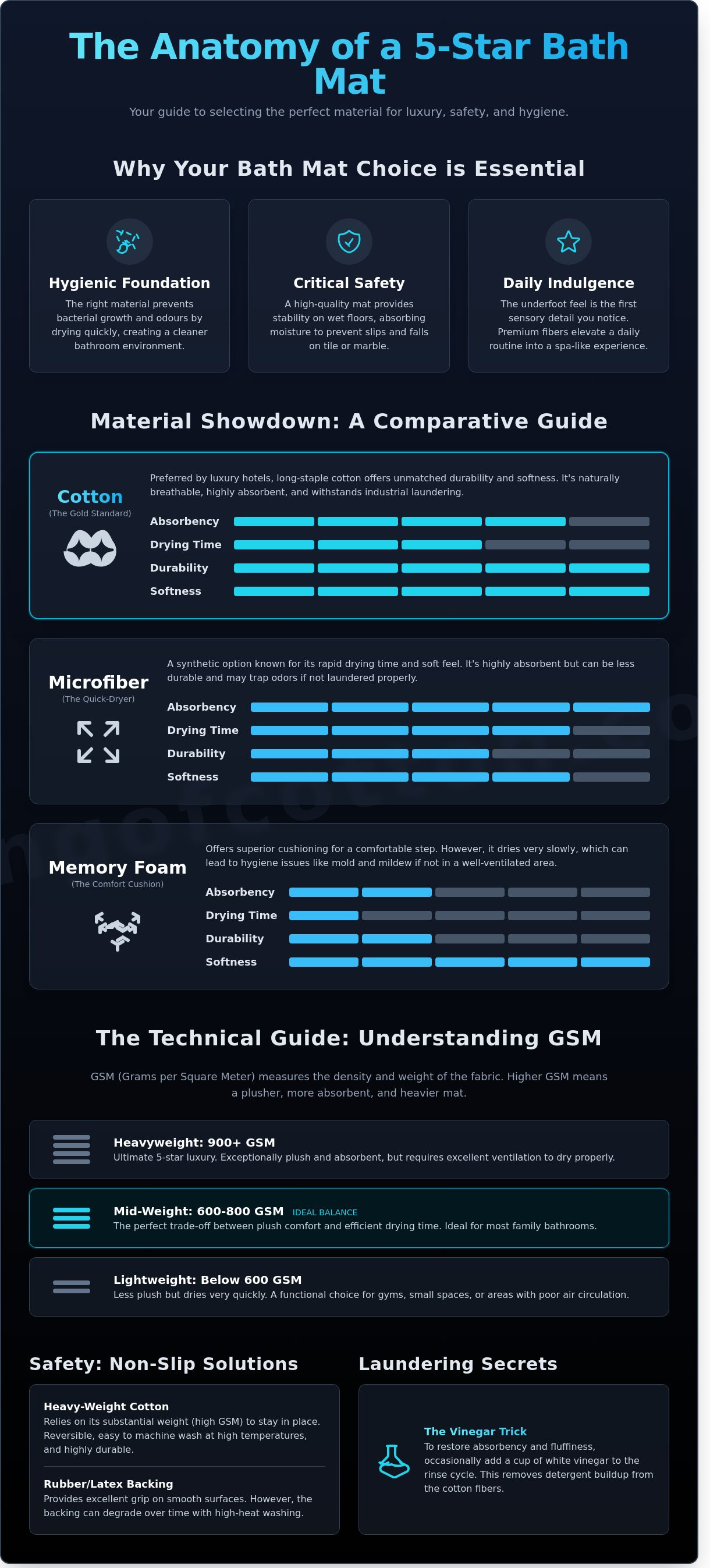
Dense materials like high-GSM Egyptian cotton offer unparalleled luxury because they can hold up to 3 times their weight in water. However, this density requires excellent bathroom ventilation to prevent "soggy mat syndrome." This common issue isn't usually caused by a lack of washing; it's a result of choosing a material that's too heavy for a room with poor air circulation. Most terrycloth mats use a looped pile weave to increase surface area, which helps moisture evaporate faster than flat-weave alternatives. If your bathroom lacks a window or a high-powered extractor fan, a mid-weight mat around 600 to 700 GSM provides the ideal balance of plushness and drying efficiency.
Safety and Non-Slip Considerations
The interaction between bath mat fibres and floor surfaces like polished marble or ceramic tile is a major safety factor. Integrated rubber or latex backings provide immediate grip, but they don't always withstand the high-temperature washes required to kill bacteria in a professional setting. Many luxury establishments prefer heavy-weight, reversible cotton mats from a dedicated bathroom collection because they're durable and easy to sanitise. In the context of British safety standards for hospitality, "non-slip" refers to a material's ability to achieve a Pendulum Test Value (PTV) of 36 or higher on a wet surface, indicating a low slip potential. Choosing the best bath mat material means looking for options that provide stability through either weight or specialised backing to ensure your sanctuary remains safe.
The Gold Standard: Cotton Varieties for Premium Bath Mats
Cotton remains the undisputed choice for the world's most prestigious hotels and spas. It's a natural material that balances immediate comfort with heavy-duty durability. When searching for the best bath mat material, cotton stands out because it's built to withstand industrial laundering processes that would destroy synthetic fibers. This resilience is why five-star establishments have relied on it for over 25 years to provide a consistent, high-end guest experience.
The performance of a premium mat depends on the science of long-staple fibers. Unlike short-staple cotton, which can feel scratchy and shed lint, long-staple varieties create a smoother, stronger yarn. This structural integrity prevents the mat from pilling or thinning after multiple wash cycles. It also enhances the mat's ability to manage moisture. Cotton is naturally breathable, allowing air to circulate through the loops. This means your mat dries faster than polyester alternatives, which often trap water and can develop unpleasant odors if not dried immediately.
For the eco-conscious home, cotton is a 100% biodegradable and renewable resource. It doesn't release microplastics into the water system during the wash, making it a responsible choice for modern interiors. Quality is often measured by weight; a superior mat typically sits between 700 and 1000 GSM (grams per square meter). This resource explains GSM in textiles and how these measurements impact the plushness and water-wicking capabilities of your bathroom essentials.
Egyptian Cotton: The Pinnacle of Luxury
Egyptian cotton is unique due to the specific climate of the Nile River Valley, which produces fibers with extraordinary porosity. These fibers absorb more water than standard cotton, making it an ideal best bath mat material for high-traffic family bathrooms. Because the fibers are naturally fine and long, they can be woven into a denser pile that actually becomes softer with every wash. You can learn more about these characteristics in our Egyptian cotton towels guide.
Organic and Giza Cotton Options
Giza cotton is often called the "queen" of Egyptian cotton. It represents the top 10% of the harvest, selected for its uniform fiber diameter and incredible strength. For those with sensitive skin or chemical-free homes, organic cotton provides a pure alternative grown without synthetic pesticides. When shopping for professional bathroom collections, look for GOTS or OEKO-TEX certifications to ensure you're getting genuine, high-quality textiles. These certifications guarantee that the fibers meet strict environmental and social standards from the field to your floor.
Comparing Cotton to Alternative Bath Mat Materials
Selecting the best bath mat material requires a balance between sensory indulgence and practical performance. While synthetic microfibre and polyester options offer high absorbency, they often lack the premium tactile experience found in high-end textiles. These materials feel utilitarian rather than luxurious. They tend to trap heat and can feel static-heavy against the skin, which detracts from the serene atmosphere of a well-appointed bathroom.
Memory foam mats provide excellent cushioning for the feet, but they're notorious for slow drying times. A dense polyurethane core can trap moisture for over 24 hours in humid environments. This creates a breeding ground for bacteria and unpleasant odours. Modern diatomaceous earth or stone mats dry almost instantly. Despite this efficiency, they feel cold and unforgiving underfoot. They lack the warmth required for a truly rejuvenating post-bath ritual. Bamboo and wooden slats offer a distinct spa-style aesthetic, yet their water retention is nearly non-existent. Water often pools on the floor beneath them, which can damage flooring over time.
Synthetic vs. Natural Fibres
The environmental impact of synthetic mats is a growing concern for discerning homeowners. Research from Plymouth University in 2016 indicated that a single wash of synthetic textiles can release hundreds of thousands of microplastic fibres into the water system. Natural fibres like cotton and linen are better for skin health because they allow for superior breathability and are naturally hypoallergenic. While a synthetic mat might show signs of pilling or flattened pile after just 12 wash cycles, high-grade natural cotton maintains its structural integrity and plushness for years. It's a more sustainable, durable investment for the home.
Hard Surface Mats: Stone and Wood
The "Natural Step" trend has popularised stone surfaces. While visually striking, stone is rarely the best bath mat material for those who value daily comfort. It offers no "give" for the arches of the feet. Wooden slats provide excellent drainage in wet rooms but require significant maintenance. Without regular oiling, wood can develop rot or mould within 6 to 12 months in humid conditions. This is why elite establishments, including the world-class hotels we've supplied for over 25 years, almost exclusively choose high-grade cotton. You can view our professional-standard range in our bathroom collection. Cotton provides a level of hygiene, warmth, and soft comfort that hard surfaces simply cannot replicate.
The Technical Guide: GSM and Weave Patterns
The density of the fabric is the most reliable measure of quality when you're searching for the best bath mat material. This is measured in GSM, or Grams per Square Metre. In the textile industry, GSM dictates the weight and thickness of the weave. While standard retail mats often sit around 400 GSM, true luxury hotel-style mats range between 500 and 900 GSM. A mat with 900 GSM provides a dense, cushioned feel underfoot that mimics a high-end spa experience; it absorbs moisture rapidly without becoming soggy or limp.
Durability is just as vital as density. In high-traffic family bathrooms, the edges of a mat are usually the first area to fail. You should look for double-stitched edges. This specific construction technique prevents the fabric from fraying after repeated industrial-grade laundry cycles. It ensures the mat maintains its structural integrity and rectangular shape for years, even with daily use. Selecting the best bath mat material involves looking beyond the surface and into these technical specifications that define long-term performance.
Looped Pile vs. Cut Pile
The weave pattern determines how the mat feels and how quickly it dries. Looped pile is the industry secret to maximum water absorption. Because the cotton fibres remain in intact loops, they offer more surface area to trap moisture. This makes them ideal for busy households where the mat needs to dry quickly between users. Cut pile, often referred to as velour, involves shearing the loops to create a flat, velvet-like surface. While cut pile is the ultimate in softness and looks incredibly sophisticated, it's slightly less absorbent than its looped counterpart. For a balance of easy maintenance and performance, a dense looped pile is often the superior choice.
Reversible Bath Mats: Practicality Meets Luxury
Reversible mats offer a "two in one" benefit that extends the time between laundry days. These mats are typically crafted without a rubber backing, which often cracks or peels in the dryer. Instead, heavy-weight reversible mats (900+ GSM) rely on their sheer mass and density to stay firmly in place on the floor. This lack of synthetic backing makes them much easier to wash and dry alongside your towels. You can find these high-density options in our full product range, where we prioritise traditional weaving techniques over modern synthetic shortcuts. They provide the weight of a traditional rug with the absorbent properties of fine Egyptian cotton.
Upgrade your bathroom with professional-grade textiles designed for the world's finest hotels. Shop our luxury bath mat collection today.
Maintaining Your Bath Mat: The King of Cotton Way
Investing in the best bath mat material is only the first step toward bathroom luxury. To preserve the plush texture and high absorbency of 100% Egyptian cotton, you must adopt a professional care routine. Fine cotton is a living fibre. It needs to breathe to remain effective. If the fibres become clogged or flattened, the mat loses its ability to trap moisture, leading to a damp and uninviting bathroom floor.
Laundering at the correct temperature is vital for both hygiene and material health. We recommend a "sweet spot" of 40 to 60 degrees Celsius. A 60-degree cycle is powerful enough to eliminate 99% of bacteria and fungal spores that thrive in humid environments. However, constant high heat can eventually brittle the cotton bond. Alternating between 40 degrees for regular refreshes and 60 degrees for deep cleans ensures your mat stays sterile without sacrificing its lifespan.
If your mat begins to feel stiff or "crunchy," it's likely suffering from detergent build-up. The "vinegar trick" is a professional secret used to restore softness. Simply add 125ml of distilled white vinegar to the rinse cycle once a month. The acetic acid gently breaks down alkaline mineral deposits and soap scum that cling to the cotton loops. This process strips away the residue, allowing the fibres to "open" up and regain their natural, airy loft.
The Hotel Secret to Fluffy Mats
Five-star hotels rarely use fabric softeners on their highly absorbent textiles. While these products promise softness, they actually coat the best bath mat material in a water-repellent silicone film. This coating prevents the cotton from soaking up water effectively. For the best results, skip the chemicals and rely on mechanical action. Tumble drying on a medium heat setting is superior to air drying. The constant movement in the drum agitates the fibres, preventing them from drying in a flat, matted state. You can find more detailed maintenance techniques in our hotel towels softness guide.
When to Replace Your Bath Mat
Even the highest quality cotton eventually shows signs of fibre fatigue. After approximately 18 to 24 months of daily use, the base weave may begin to thin. You'll notice a decline in absorbency, often evidenced by the mat staying damp for more than 12 hours after use. This slow drying time is a hygiene marker; it indicates the core is no longer shedding moisture quickly enough to prevent mildew. When the pile becomes permanently flattened despite proper laundering, it's time for a replacement. If you're ready for an upgrade, visit our London stores to feel our latest premium collections in person.
Step Into Lasting Five-Star Comfort
Choosing the best bath mat material isn't just about aesthetics; it's about investing in daily rejuvenation. Fine Egyptian cotton stands as the industry benchmark, offering a superior blend of absorbency and durability that synthetic alternatives simply can't match. By focusing on technical specifications like high GSM and tight weave patterns, you ensure your mat retains its plush texture through hundreds of wash cycles. It's the difference between a functional accessory and a piece of enduring craftsmanship that enhances your home for years.
At King of Cotton, we've spent 25+ years as specialists in fine Egyptian cotton. We've served as trusted suppliers to the world's most prestigious hotels, bringing professional grade quality to private residences. Our Excellent rating on Trustpilot reflects this unwavering commitment to excellence and customer satisfaction. You don't have to wait for your next luxury getaway to experience this level of indulgence. Shop our collection of hotel-quality cotton bath mats and transform your bathroom into a serene, sophisticated sanctuary. Your daily routine deserves the touch of elegance that only the finest materials can provide.
Frequently Asked Questions
What is the most absorbent material for a bath mat?
High-quality Egyptian cotton is the most absorbent material for a bath mat because its long-staple fibers can hold up to 27 times their own weight in water. This natural fiber draws moisture away from your feet instantly, providing the same level of performance found in five-star hotel suites. While microfibre absorbs quickly, it lacks the deep, luxurious capacity of a 1000 GSM cotton weave.
Is cotton or microfibre better for bath mats?
Cotton is the superior choice for those seeking the best bath mat material due to its breathability and natural elegance. Unlike microfibre, which is a synthetic petroleum-based plastic, 100% cotton mats allow air to circulate through the fibers, preventing that sticky synthetic feel. Research into textile longevity shows that cotton mats can withstand 50 or more high-temperature industrial washes while maintaining their structural integrity.
How often should I wash my bath mat to keep it hygienic?
You should wash your bath mat every 3 to 7 days to prevent the accumulation of bacteria and skin cells. In a household of 4 people, a mat can harbor over 1,000 colony-forming units of bacteria per square inch if left unwashed for two weeks. Regular laundering at 60 degrees Celsius ensures your bathroom remains a hygienic sanctuary, mirroring the strict cleanliness standards of the professional hospitality industry.
Can I put a bath mat with a rubber backing in the washing machine?
You shouldn't put bath mats with heavy rubber backings in a standard washing machine as the heat often causes the latex to peel and crack after 5 to 10 cycles. These crumbling particles can clog your machine's drainage pump, leading to expensive repairs. For a safer alternative, choose a heavy-weight cotton tufted mat that provides natural slip resistance without the need for a volatile synthetic backing.
What GSM should a high-quality bath mat be?
A high-quality bath mat should have a weight between 700 and 1,000 GSM (grams per square metre) to ensure a premium feel. At the 900 GSM level, a mat provides a dense, plush cushion that effectively bridges the gap between a standard towel and a rug. This weight is the industry standard for luxury hotels, offering the perfect balance of absorbent depth and manageable drying times.
Why do my bath mats always smell damp after use?
Bath mats smell damp when moisture trapped in the fibers cannot evaporate, often due to poor bathroom ventilation or the use of synthetic materials. If a bathroom's humidity stays above 60 percent, bacteria thrive and produce the characteristic musty odour. Switching to the best bath mat material, like a high-grade cotton, allows for better airflow and faster natural drying compared to dense, non-porous synthetic alternatives.
Are stone bath mats better than cotton for preventing mould?
Stone mats made from diatomaceous earth dry in under 60 seconds, which significantly reduces the window for mould growth compared to damp fabrics. However, they lack the warmth and underfoot comfort that 25 years of textile expertise has perfected in cotton designs. While stone is effective for moisture evaporation, a high-quality cotton mat washed weekly offers a more traditional, luxurious experience without the risk of mould.
What is the difference between a bath mat and a pedestal mat?
A bath mat is a rectangular piece designed for use outside a tub or shower, while a pedestal mat features a specific U-shaped cutout to fit around the base of a toilet. Most standard bath mats measure approximately 50cm by 80cm, providing a large surface area for drying. Pedestal mats are typically smaller, focusing on providing a warm, dry spot for your feet in the specific 40cm area around the commode.