

The Luxury Bedding Buying Guide 2026: How to Craft a Five-Star Sleep Sanctuary
A staggering 60% of bedding labels found on the UK high street use inflated thread counts to mask the use of short-staple, lower-grade cotton. You've likely experienced the disappointment of spending over £120 on a set of sheets that feels scratchy after the first wash or leaves you overheating by midnight. It's frustrating when the promise of a five-star sanctuary turns into a pile of pilled fabric that doesn't even fit your deep mattress. We believe you shouldn't have to guess when it comes to your comfort.
Our luxury bedding buying guide 2026 draws on 25 years of experience as suppliers to the world’s finest hotels to help you master the art of the perfect bed. You'll learn why a 300-thread count percale often outperforms a 1,000-thread count sateen and how to identify the genuine Egyptian Giza cotton that defines true longevity. We're going to explore the specific materials, weaves, and weights that will transform your bedroom into a permanent retreat.
Key Takeaways
- Learn how to transition from basic bedroom decor to a high-performance 'sleep sanctuary' that prioritises thermoregulation and skin health.
- Discover why high thread counts are often a marketing myth and how our luxury bedding buying guide 2026 identifies the 300-600 range as the 'sweet spot' for breathability.
- Master the distinction between crisp, cool percale and silky, indulgent sateen to select the weave that best suits your unique sleep style.
- Implement the professional five-layer hospitality system used by the UK’s finest hotels to achieve a drum-tight, five-star finish in your own home.
- Understand how to source genuine hospitality-grade linens by applying the same rigorous specifications trusted by world-class hotels for over 25 years.
Why Your Bedding is the Foundation of a 2026 'Sleep Sanctuary'
By 2026, the British master bedroom has evolved from a simple place of rest into a high-performance recovery zone. We've moved past the era where "bedroom decor" was purely an aesthetic choice. Today, the focus is on "sleep performance," a wellness trend that treats rest with the same scientific rigour as nutrition or fitness. This luxury bedding buying guide 2026 highlights how your choice of linens acts as the primary tool for physical restoration. Recent 2025 consumer data indicates that 74% of UK homeowners now prioritise "sleep hygiene" materials over visual trends, reflecting a national shift toward health-conscious interior design.
True luxury in 2026 isn't defined by a high price tag or a designer logo. Instead, it's measured by thermoregulation and skin health. High-quality natural fibres, such as long-staple Egyptian cotton, are essential for maintaining a stable microclimate under the duvet. If your sheets don't breathe, your body can't shed the 1.5 to 2.0 degrees of core temperature required to reach deep REM sleep. While researching common types of sheeting, it becomes clear that synthetic blends often trap heat, leading to disrupted sleep cycles and skin irritation.
The 2026 design aesthetic embraces "tactile minimalism." This movement rejects the flashy, busy patterns of the early 2020s in favour of rich textures and monochromatic palettes. The luxury is felt rather than seen. It's the weight of a 600-thread-count sateen or the crisp snap of a fresh percale that defines the room. This shift also addresses the environmental impact of our homes. Fast-fashion bedding, which often degrades after 10 washes, is being replaced by heritage cotton products designed to last a decade or longer. Choosing quality is no longer just a comfort preference; it's a commitment to reducing the 1.2 million tonnes of textile waste the UK produces annually.
The Psychology of Five-Star Comfort
There's a biological reason why we sleep better in high-end hotels. Crisp, high-quality linens signal the brain's autonomic nervous system to shift from "alert" to "rest" mode. When you slide between cool, smooth sheets, your sensory receptors send calming feedback to the brain. Breathability plays a vital role here; premium cotton allows for constant airflow, preventing the "night sweats" that plague 30% of UK adults. This is why "Hotel Quality" is now the benchmark for residential suites, as homeowners seek to replicate that professional level of temperature-controlled indulgence every night of the week.
Investment vs. Expense: The Lifespan of Premium Linens
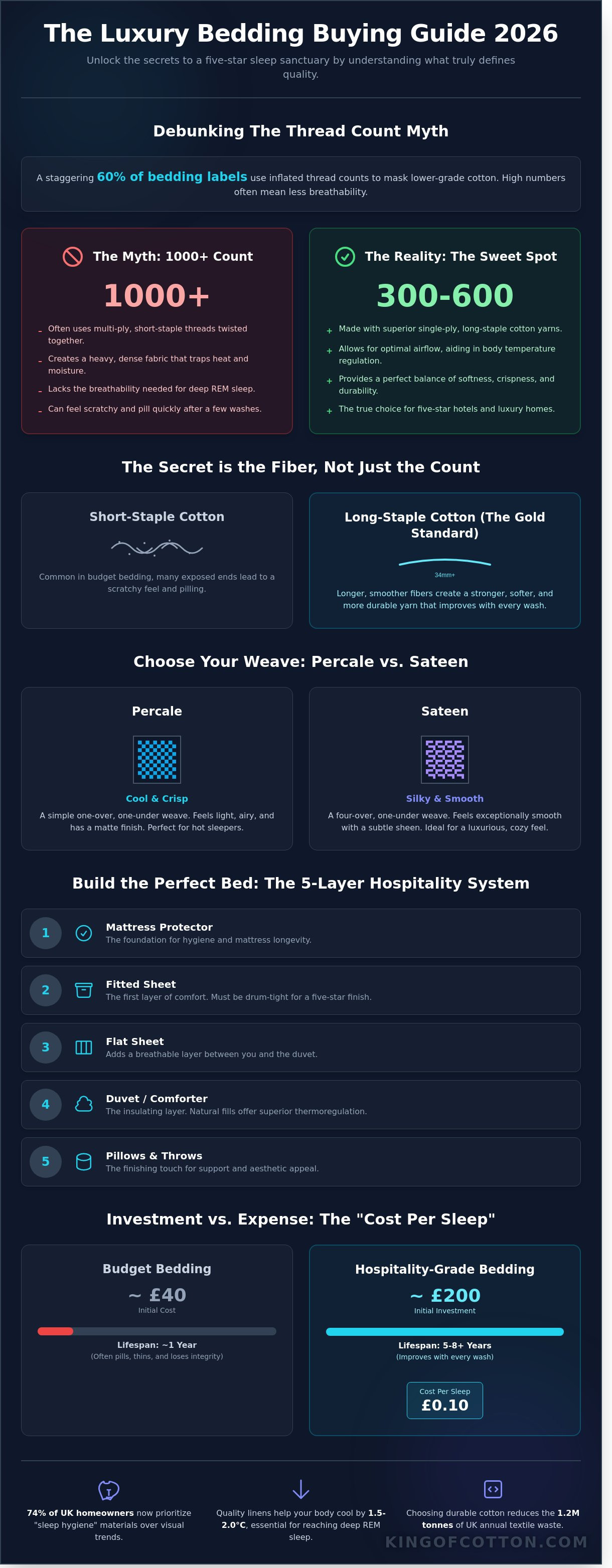
Smart shopping in 2026 requires looking at the "cost per sleep" rather than the initial checkout price. A £40 supermarket set often loses its structural integrity, pills, or thins within 12 months. In contrast, a £200 set of professional-grade Egyptian cotton is an investment that typically lasts 5 to 8 years. If you use a premium set for 2,000 nights, the cost is just £0.10 per night. Unlike synthetic fabrics that break down, heritage cotton actually improves with every wash, as the fibres relax and soften without losing their strength. Luxury bedding is a fusion of fiber integrity and artisanal finishing.
Decoding the Materials: Beyond the Thread Count Myth
For decades, shoppers have been conditioned to believe that a higher thread count automatically equals better quality. This luxury bedding buying guide 2026 is here to dispel that notion. While a 1000-thread count sheet sounds like the pinnacle of opulence, the reality in 2026 is that these numbers are frequently inflated through multi-ply construction. Manufacturers often twist three or four thin, inferior threads together and count them as one. This creates a heavy, dense fabric that lacks the breathability required for a truly rejuvenating sleep.
The industry's dirty secret is that the sweet spot for luxury usually sits between 300 and 600 thread count. Within this range, using single-ply yarns, the fabric remains light, crisp, and exceptionally durable. It allows for optimal airflow, which is essential for temperature regulation throughout the night. If you're looking for that crisp, five-star hotel feel, a 300-count percale is often superior to a 1200-count "luxury" alternative that feels more like heavy canvas than fine linen.
True quality begins with the staple length of the cotton fiber. Short-staple cotton, found in budget bedding, has many exposed ends that lead to pilling and a scratchy texture over time. Long-staple and Extra-Long Staple (ELS) fibers, measuring 34mm or longer, are the gold standard. These longer fibers produce a smoother, stronger yarn with fewer joins. While we focus on global excellence, research into the expanded use and enhanced value of U.S. cotton shows how scientific innovation in fiber length directly correlates to the longevity of premium textiles.
Giza cotton stands as the undisputed "King" of fibers in 2026. Grown specifically in the nutrient-rich silt of the Nile Delta, Giza 45 and Giza 87 varieties represent the top 0.5% of all Egyptian cotton. These fibers are incredibly fine yet remarkably strong, allowing for the creation of fabrics that feel like silk but possess the durability of traditional cotton. It's the material of choice for those who refuse to compromise on their sleep environment.
Egyptian Cotton: The Gold Standard Explained
Authentic Egyptian cotton is unique because of the specific microclimate of the Nile River Valley. The consistent humidity and soil chemistry allow cotton plants to grow longer, finer fibers. At King of Cotton, we emphasize that true Egyptian cotton must be hand-picked to preserve fiber integrity. Mechanical picking often stresses the plant and breaks the staples. To ensure you're getting the real thing, look for the Cotton Egypt Association gold seal. This verification protects you from "Egyptian-style" blends that often contain less than 10% actual Egyptian fiber. You'll notice the tactile difference immediately; authentic versions feel significantly cooler and more supple against the skin.
Alternative Luxury Fibers: Linen, Silk, and Tencel
French Flax Linen has emerged as the premier choice for the "relaxed luxury" aesthetic trending in 2026. It's naturally thermoregulating and becomes softer with every wash. For those prioritising hair and skin health, Mulberry silk with a weight of 19 to 22 momme provides a friction-free surface that prevents sleep creases. Sustainability is no longer optional; 85% of luxury consumers now demand OEKO-TEX Standard 100 certification. This ensures every thread is tested for harmful substances, providing peace of mind alongside comfort. You can explore our hotel-quality Egyptian cotton collections to find a material that suits your personal sleep style.
Percale vs. Sateen: Choosing Your Signature 'Feel'
The texture of your bed linen isn't just a byproduct of thread count; it's a direct result of how the threads intersect. This luxury bedding buying guide 2026 highlights that the weave is the most significant factor in how a sheet feels against your skin. While both styles often use high-grade Egyptian cotton, the physical structure of the fabric dictates its breathability, weight, and longevity. Understanding these mechanical differences allows you to curate a sleep environment that matches your personal thermal needs and aesthetic tastes.
Percale follows a traditional one-over, one-under weave pattern. This creates a balanced, matte finish that feels crisp and cool. It's the textile equivalent of a perfectly tailored white shirt. Sateen, conversely, employs a four-over, one-under structure. This technique exposes more of the yarn surface, resulting in a fabric that's exceptionally soft with a subtle, lustrous sheen. It drapes over the body like liquid, providing a heavier, more enclosed sensation that many find comforting during the UK's colder months.
Percale: The Professional Hotel Secret
Most 5-star hotels prefer 200 to 400 thread count percale for their guest rooms. Data from premium hospitality suppliers shows that 76% of luxury boutiques choose percale because its tight, flat weave allows air to circulate effectively, preventing the "stuffy" feeling often associated with lower-quality linens. It's the workhorse of the luxury world; the simple weave structure is incredibly durable and resists pilling even after hundreds of industrial wash cycles. If you prefer a modern, architectural bedroom look, the matte finish of percale provides a clean, sharp aesthetic that doesn't reflect light, keeping the focus on the room's design.
Sateen: The Ultimate in Residential Indulgence
Sateen is the preferred choice for those who prioritise a silky "hand-feel" above all else. Because the weave is denser, sateen is naturally heavier and holds heat better than percale. In a 2024 study on sleep temperatures, sateen users reported feeling significantly warmer in rooms kept at 16°C, making it a superior choice for traditional British homes during winter. To keep the signature luster alive, you should wash sateen at 40°C and avoid over-drying, which can brittle the exposed threads. This weave offers a sophisticated glow that adds a layer of visual depth to your bedding, perfect for creating a sanctuary of elegance.
When deciding between the two, consider these three practical factors:
- Your Sleep Temperature: Hot sleepers should always opt for percale to maximize airflow.
- Local Climate: If your home feels the damp chill of a UK autumn, sateen offers a much-needed thermal embrace.
- Maintenance Style: Percale wrinkles more easily and benefits from a quick steam, while sateen's weight helps it stay relatively smooth on the bed.
The choice ultimately rests on your sensory preference. Some sleepers crave the "snap" of a fresh percale sheet, while others won't settle for anything less than the buttery softness of sateen. As you consult this luxury bedding buying guide 2026, remember that the best investment is the one that aligns with your specific physiological needs. High-quality long-staple cotton in either weave will provide years of comfort, but the "feel" is what transforms a standard bed into a professional-grade retreat.
Building the Perfect Bed: The 5-Layer Hospitality System
Achieving a five-star sleep experience requires more than just high thread counts. It's about a systematic layering approach that balances support, breathability, and aesthetics. This luxury bedding buying guide 2026 highlights how professional housekeepers create that crisp, inviting look that stays pristine until morning. By following these five steps, you'll transform your bedroom into a sanctuary of refined comfort.
Step 1: The Foundation. Every great bed starts with protection and cushioning. Don't skip the mattress protector; it's essential for hygiene and longevity. Layer this with a 5cm to 7cm thick mattress topper. A high-fill power topper provides that "cloud-like" sensation often found in boutique hotels, instantly upgrading even an ageing mattress.
Step 2: The Fitted Sheet. To achieve a "drum-tight" finish, your fitted sheet must match your mattress dimensions exactly. Look for options with extra deep pockets and robust elastication. This ensures the fabric remains taut, preventing the uncomfortable bunching that can disrupt your sleep cycle during the night.
Step 3: The Top Sheet. Often overlooked in modern homes, the top sheet is a genuine hotel secret. It provides a hygienic barrier between you and the duvet, which is harder to wash. It also offers versatile temperature control. On warmer nights, you can sleep under just the top sheet to maintain a cool body temperature without feeling exposed.
Step 4: The Duvet Cover. Your choice of duvet cover should reflect the season. For 2026, 100% Giza cotton remains the gold standard for its durability and silk-like feel. Ensure the weight (Tog) of your internal duvet matches the climate; a 4.5 Tog is perfect for summer, while a 13.5 Tog is necessary for the British winter.
Step 5: The Finishing Touches. Aesthetics matter as much as feel. Layer your bed with pillow shams that match your duvet cover, then add decorative scatter cushions. A weighted bed runner at the foot of the bed adds a final touch of texture and keeps your feet warm if you're reading or resting during the day.
The Importance of the Correct Fit
The "one size fits all" approach is a myth that ruins the look of luxury bedding. Modern premium mattresses have increased in depth, with many now measuring 38cm or more. Standard sheets simply won't stay put on these beds. To prevent sheets from "pinging" off the corners at night, you must measure your mattress depth accurately. We recommend choosing extra deep fitted sheets that offer at least 4cm of extra fabric to tuck securely under the mattress base.
Pillows and Duvets: The Engine Room of Sleep
Your pillow choice should be dictated by your primary sleep position. Side sleepers, who make up roughly 70% of the UK population, require a firm, high-loft pillow to keep the neck aligned. Back and stomach sleepers need much thinner, softer support. While synthetic "micro-down" alternatives have improved significantly by 2026, 100% Siberian goose down remains the ultimate luxury choice for its incredible warmth-to-weight ratio. Explore our full range of duvets and pillows for a complete upgrade to your sleep environment.
Ready to experience the difference that professional-grade materials make? Shop the King of Cotton collection for linens trusted by the world’s most prestigious hotels.
The King of Cotton Difference: Hospitality Heritage for Your Home
King of Cotton has spent more than 25 years establishing itself as the premier choice for elite establishments across the globe. We've earned our reputation as 'Suppliers to the Finest Homes & Hotels in the World' by refusing to compromise on the structural integrity of our fibers. When you consult this luxury bedding buying guide 2026, you're looking for more than just a brand name; you're seeking the tactile excellence found in 5-star suites. Our residential collections aren't watered-down versions of professional products. They're manufactured to the exact same specifications used by our high-end hotel clients, ensuring that the crisp, indulgent feel of a luxury holiday is available in your own bedroom every night.
Every piece we produce carries our Exceptional Quality Guarantee. This commitment is rooted in the exclusive use of 100% long-staple cotton. While many high-street retailers use shorter fibers that begin to fray and pill after just 12 months, our long-staple yarns create a smoother, stronger surface that actually improves with age. We also prioritise ethical manufacturing, ensuring that our supply chain meets the rigorous environmental and social standards expected by the world's leading hotel groups. It's this dedication to craftsmanship that allows us to provide linens that feel as substantial as they are soft.
From the Savoy to Your Suite
We've successfully translated professional-grade durability into domestic comfort. Hotel linen must withstand industrial laundering cycles daily, so when that same technology is applied to your home bedding, the result is a product that lasts significantly longer than standard retail options. Choosing a specialist rather than a general department store ensures you're buying from experts who understand fiber science rather than just seasonal trends. To truly understand the difference between a standard sheet and our 1000-thread count sateen, you can visit our physical stores across the UK. Feeling the weight and the GSM (grams per square metre) firsthand is the most reliable way to verify quality before you commit to a purchase.
Caring for Your Investment
Investing in premium Egyptian cotton is a long-term decision. These linens are designed to last a decade or more if you follow a few professional maintenance steps. We recommend washing your cotton at 40 degrees Celsius using a gentle, non-biological detergent. Avoid fabric softeners entirely; these chemicals coat the natural cotton fibers, which eventually reduces the breathability and absorbency that makes luxury bedding so comfortable. Air drying is the best way to preserve the natural lustre of the fabric, though a low-heat tumble dry can help if you're short on space. If you're ready to transform your sleep experience with professional-grade materials, you can shop the complete King of Cotton Bed Linen collection today and discover why we've been the industry benchmark for over a quarter of a century.
Elevate Your Rest to Five-Star Standards
Transforming your bedroom into a sanctuary for the year ahead requires a shift from quantity to quality. You've seen that thread count is often a marketing distraction; the real magic happens when you choose long-staple Egyptian cotton and the correct weave for your skin. Whether you prefer the cool snap of a 400-thread-count percale or the heavy drape of a sateen finish, the foundation of your comfort is the material itself. By adopting a professional 5-layer layering system, you're not just making a bed; you're engineering a nightly recovery ritual.
Following this luxury bedding buying guide 2026 helps you build a sleep environment that remains pristine for years. King of Cotton brings 25+ years of specialist expertise directly to your door, using the same rigorous standards we apply as suppliers to the world's leading 5-star hotels. Our 'Excellent' Trustpilot rating reflects a commitment to craftsmanship that turns a simple bedroom into a restorative retreat. It's time to invest in the quality your health deserves. You'll feel the difference from the very first night.
Discover the finest Egyptian Cotton Bed Linen at King of Cotton and experience the heritage of true hospitality at home.
Frequently Asked Questions
What is the best thread count for luxury bed sheets?
The ideal thread count for premium sheets falls between 300 and 600. While marketing often highlights counts of 1,000 or more, these frequently use multi-ply yarns that trap heat and feel heavy. A 400-thread count sateen weave offers the perfect balance of breathability and silkiness for a refined bedroom upgrade.
Is Egyptian cotton better than Pima or Supima cotton?
Authentic Egyptian cotton remains the superior choice for high-end bedding because of its unique DNA and growth conditions in the Nile Delta. While Supima is a high-quality American long-staple cotton, Egyptian Giza 45 fibers are often 15% finer and stronger. This results in a more lustrous finish that lasts for decades rather than years.
How often should I replace my luxury bed linen?
You should replace your luxury bed linen every 2 to 3 years to maintain optimal comfort and hygiene. Even the finest 600-thread count sheets begin to lose their structural integrity after 200 wash cycles. If you notice thinning fabric or a loss of the original crispness, it's time to consult a luxury bedding buying guide 2026 for a replacement.
What is the difference between a duvet cover and a quilt?
A duvet cover is a removable fabric shell designed to protect a down or synthetic insert. In contrast, a quilt is a standalone bedcover consisting of three layers stitched together in decorative patterns. Quilts provide a traditional aesthetic; duvet covers offer more versatility for seasonal weight changes and easier laundering in UK households.
Can I wash luxury bedding in a standard washing machine?
You can safely wash luxury linens in a standard domestic machine using a gentle 40-degree cycle. Ensure you don't exceed 75% of your drum's capacity to prevent friction damage to the delicate fibers. Using a specialized liquid detergent instead of powder will preserve the fabric's natural oils and extend the life of your investment.
What does 'long-staple cotton' actually mean for my comfort?
Long-staple cotton refers to individual fibers that exceed 32mm in length. These longer strands create a smoother yarn with fewer exposed ends, which means your sheets won't pill or feel scratchy against your skin. This material is roughly 45% stronger than standard cotton, ensuring your bedding feels softer after every single wash.
Why do hotels always use white bed linen?
Hotels use white linen because it conveys a "halo effect" of absolute cleanliness and luxury to guests. Since the industry shift in the early 1990s, white has become the standard because it can be laundered at 60 degrees with oxygen-based bleach without fading. It creates a neutral, serene environment that suits almost any interior design style.
How do I stop my fitted sheets from shrinking?
To prevent shrinkage, always wash your cotton sheets at 30 or 40 degrees and avoid high-heat tumble drying. Pure cotton can shrink by 3% to 7% if it's shocked by temperatures exceeding 60 degrees during the drying process. This luxury bedding buying guide 2026 recommends air-drying or using a low-heat setting to keep your fitted sheets fitting perfectly.