

The Expert Guide to Choosing the Perfect Cotton Duvet for 2026
A 2023 survey by The Sleep Council revealed that roughly 40% of people in the UK struggle with night sweats, yet many continue to sleep under synthetic materials that trap heat. You likely know the frustration of tossing and turning because your bedding feels like a sauna; it's equally disappointing when a once-plump quilt turns flat and lifeless after its first wash. It's easy to feel overwhelmed by technical jargon, especially when labels blur the line between a simple cover and a genuine cotton duvet with natural filling.
We believe your home deserves the same standard of excellence found in the world's most prestigious hotels. This guide reveals how to select a hotel-quality cotton duvet that balances breathability, weight, and luxury for the ultimate night’s sleep. We'll demystify tog ratings and thread counts to ensure your bedroom becomes a five-star sanctuary that remains soft and rejuvenating for years to come.
Key Takeaways
- Understand the superior thermoregulation of 100% natural fibres and why they are the preferred choice for luxury hotels.
- Learn to distinguish between covers and fillings to ensure your cotton duvet provides the perfect balance of breathability and loft.
- Master the Tog rating system to select the ideal weight for the United Kingdom’s fluctuating seasonal temperatures.
- Decode the relationship between thread count and weave to choose between the crispness of Percale or the silkiness of Sateen.
- Discover professional laundering and air-drying techniques to maintain the structural integrity and premium feel of your bedding.
Understanding the Luxury and Breathability of a Cotton Duvet
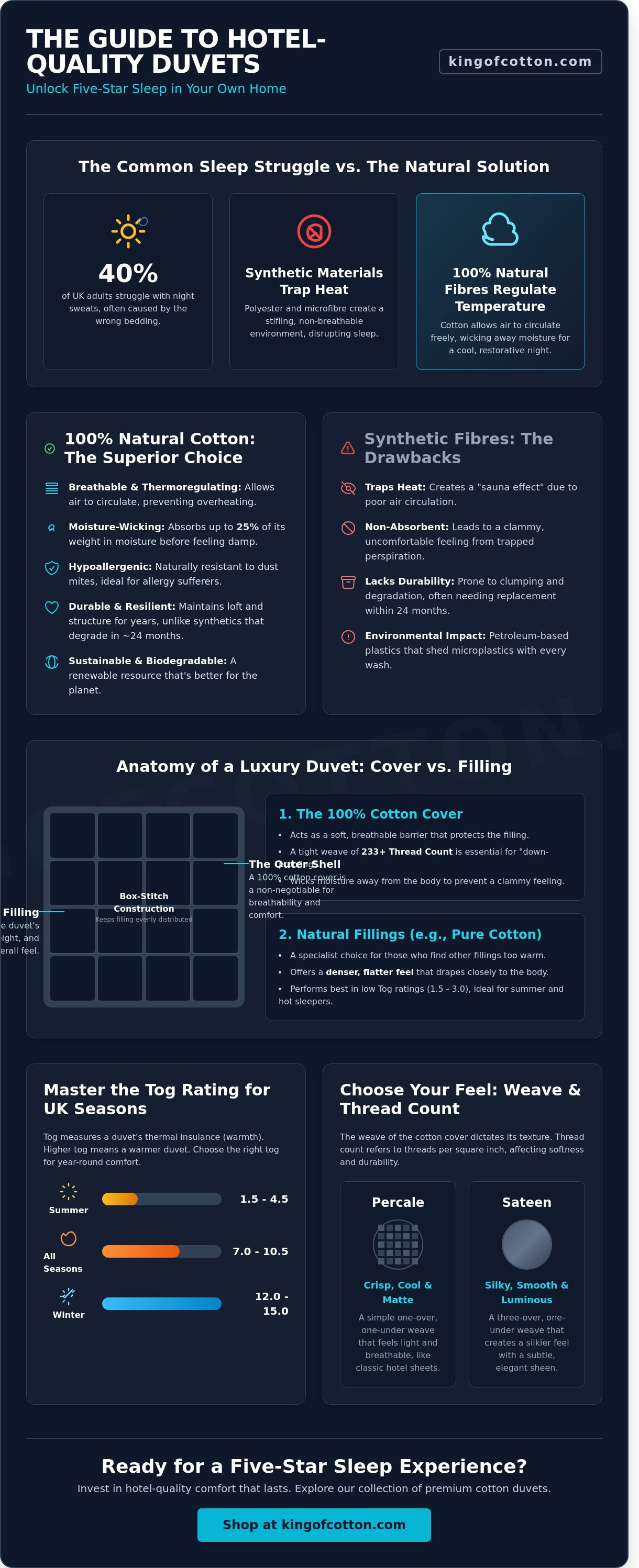
A premium cotton duvet serves as the cornerstone of a refined bedroom, offering a level of breathability that synthetic materials cannot replicate. At King of Cotton, we've spent more than 25 years as specialists in fine Egyptian cotton, providing sleep solutions to the finest homes and hotels globally. A high-quality Duvet featuring natural cotton is favoured by luxury hospitality brands because it facilitates superior thermoregulation. While polyester traps heat and creates a stifling environment, cotton allows air to circulate freely. This moisture-wicking capability is essential for preventing night sweats; cotton can absorb up to 25% of its weight in moisture before feeling damp. This ensures you wake up feeling rejuvenated rather than overheated. By adopting the same standards used in five-star suites, you bring a benchmark of durability and comfort into your own home.
The Benefits of 100% Natural Cotton Materials
Natural cotton is inherently hypoallergenic, which is vital for the one in four people in the UK who suffer from skin sensitivities or allergies. The breathable nature of the fibres prevents the humid, stagnant conditions where dust mites thrive. Unlike cheaper synthetic alternatives that degrade and clump quickly, high-grade cotton fibres are incredibly resilient. A 100% natural cotton duvet maintains its structure and loft through years of use. Investing in quality bedroom essentials means you won't need to replace your bedding every 24 months, as is common with low-cost microfibre products.
Cotton vs Synthetic: Why Natural Fibres Win
The choice between natural and synthetic fibres has significant environmental implications. Synthetic duvets are often manufactured from petroleum-based plastics that shed microplastics during every wash cycle. Cotton is a renewable, biodegradable resource that supports a more sustainable lifestyle. Beyond the ecological impact, the tactile experience is incomparable. Cotton provides a crisp, cool sensation that feels fresh against the skin. It also possesses a superior drape, settling into the natural curves of your frame to eliminate cold spots. This snug fit creates a more secure, cocoon-like environment that encourages deeper, uninterrupted sleep cycles. You can find these superior materials in our luxurious bed linen collections.
Comparing Cotton Covers and Cotton Fillings
Selecting the perfect cotton duvet requires a clear understanding of what sits inside the casing versus the material used for the shell. It's a common point of confusion for many shoppers. Most high-end duvets feature a cotton cover as standard, but the internal filling determines the warmth, weight, and "loft" of the product. While a duvet might be marketed under the cotton category, you must distinguish between a cotton-covered down duvet and a pure cotton-filled alternative to ensure you get the sleep experience you desire.
The Importance of the Outer Cotton Shell
A 100% cotton cover is a non-negotiable feature for any premium bedding, regardless of whether the filling is natural or synthetic. This outer layer acts as a breathable barrier that protects the internal fibres while remaining soft against your skin. For duvets filled with feathers or down, a high-thread-count shell is essential for "down-proofing." A weave of at least 233 threads per square inch ensures that fine down clusters and sharp feather quills don't leak through the fabric over time.
Cotton's natural moisture-wicking properties mean the cover helps regulate your temperature by drawing perspiration away from the body. This prevents the "clammy" feeling often associated with polyester-blend covers. To complete your bedroom sanctuary, you can coordinate these high-quality shells with items from our luxury bed linen collection, which offers the same hotel-standard durability and softness found in the world's finest residences.
Natural Fillings: When to Choose Pure Cotton
Pure cotton filling is a specialist choice, often favoured by those who find traditional feather or wool fillings too heavy or warm. These duvets don't possess the "loft" or fluffiness of down. Instead, they offer a flatter, denser feel that drapes closely to the body. This makes them the ultimate choice for the British summer or for individuals who suffer from night sweats.
- The Tog Sweet Spot: Pure cotton fillings perform best in the 1.5 to 3.0 tog range. This provides just enough weight to feel secure without trapping excessive heat.
- Quilted Construction: Because cotton fibres don't "clump" like down, these duvets use a quilted or "box stitch" design. This keeps the internal cotton layers perfectly uniform across the entire surface.
- Weight vs. Loft: A cotton duvet feels heavier than a down duvet of the same tog rating. If you prefer a "tucked-in" sensation without the heat of a thick winter quilt, cotton filling is the ideal solution.
Deciding between the two depends on your personal climate control needs. Choose a cotton-covered down duvet if you want that classic, cloud-like volume and insulating warmth. Opt for a pure cotton-filled duvet if you require a hypoallergenic, low-profile cooling layer that stands up to frequent machine washing. If you're looking to upgrade your entire sleep environment, you might consider how a new duvet pairs with our premium bedroom essentials to create a truly rejuvenating space.
Selecting the Right Tog and Weight for Every Season
Selecting the right Tog rating is essential for a restorative sleep, especially given the unpredictable nature of British weather. Tog, or Thermal Overall Grade, measures a duvet's ability to trap warm air. In the UK, where temperatures can drop from 20°C to 5°C in a single evening, your choice of bedding dictates your nightly comfort. A premium cotton duvet excels in these conditions because cotton acts as a natural thermoregulator. It allows moisture to escape while maintaining a consistent, dry microclimate around your body, preventing the "clammy" feeling often associated with synthetic alternatives.
Your home's architecture plays a significant role in this decision. Modern homes with high-efficiency insulation and double glazing often maintain a steady internal temperature above 19°C, meaning a heavy duvet might cause overheating even in January. Conversely, those living in traditional Victorian terraces or stone cottages with lower EPC ratings will require higher thermal resistance to combat evening draughts. For total flexibility, the "All-Seasons" approach is the gold standard. This system uses two separate duvets, typically a 4.5 tog and a 9.0 tog, which you can clip together to create a 13.5 tog shield for the coldest weeks of the year.
Low Tog Cotton Duvets for Refreshing Summer Nights
Summer months or naturally warm sleepers require a 1.5 to 4.5 tog rating. This lightweight configuration provides that coveted "cool-side-of-the-pillow" sensation across your entire body, ensuring you don't wake up overheated during a July heatwave. It's the perfect balance for those who need the security of a cover but crave breathability. For a deeper dive into these specifications, read our guide on How to Choose the Perfect Duvet.
Winter Warmth: High Tog and Natural Insulation
When the frost arrives, 10.5 to 13.5 tog options provide the necessary loft to trap body heat. A high-thread-count cotton cover is vital here. The dense, luxurious weave helps retain the warmth generated by the filling, while still allowing the skin to breathe. To achieve a true five-star hotel aesthetic, try layering your cotton duvet with quilted throws or bedspreads from our collection of bedroom accessories. This adds both visual elegance and an extra layer of insulation for those sub-zero nights.
A Buyer’s Framework: Thread Count, Weave, and Size
Selecting the right cotton duvet requires looking past the surface. Thread count is frequently misunderstood as a simple "higher is better" metric, but it actually measures fabric density. It refers to the number of horizontal and vertical threads woven into one square inch of fabric. While marketing often pushes for four-figure counts, a 200 to 400 thread count provides a perfect balance of breathability and durability for a high-quality cotton duvet. Higher counts, such as 600 or 800, create a denser, heavier fabric that feels more substantial against the skin and offers that specific, weighted luxury found in world-class hotels. It's about how the fabric feels against your skin and how well it maintains its structural integrity after years of laundering.
Percale vs Sateen: Choosing Your Texture
Your choice of weave dictates the daily experience of your bed. Percale uses a traditional "one-over, one-under" pattern that results in a matte finish. It's the "crisp white shirt" of bedding; cool to the touch, highly breathable, and perfect for those who get warm at night or prefer a fresh feel during British summers. Sateen, conversely, uses a "four-over, one-under" structure. This exposes more thread surface, creating a silky, lustrous sheen and a heavier drape. Sateen feels warmer and more indulgent, making it a favourite for those who enjoy a smooth, liquid-like touch. For a deeper weave analysis, you can read our Egyptian cotton bedding guide.
Matching Your Duvet to UK Bed Sizes
A common mistake is buying a duvet that matches the mattress size exactly. For a true hotel-style finish, your cotton duvet should be one size larger than your bed frame. This creates a generous, aesthetic drape that hides the mattress edges and prevents "draughty gaps" if you share the bed. If you have a Double bed, choosing a King size duvet adds a layer of visual luxury and extra comfort. Use these standard UK dimensions as your baseline:
- Single: 135cm x 200cm
- Double: 200cm x 200cm
- King: 230cm x 220cm
- Super King: 260cm x 220cm
Refer to our UK Bed Size Guide for exact measurements and further advice on achieving the perfect fit. Ensuring the duvet covers the bed frame properly is the secret to that polished, professional look seen in luxury guest houses.
Ready to transform your bedroom into a five-star retreat? Explore our luxury bed linen collection to find your perfect match.
Maintaining Hotel-Quality Comfort at Home
Investing in a high-quality cotton duvet is a significant step toward improving your sleep health. To ensure your bedding retains its loft and luxurious feel for years, you must treat the natural fibres with expert care. Standard domestic laundering can sometimes be harsh, but following a few professional secrets will help you maintain that crisp, five-star hotel finish in your own bedroom.
Washing and Drying Your Cotton Duvet
Most cotton-covered duvets perform best when laundered on a gentle cycle at 40 degrees. This specific temperature is effective enough to remove allergens and oils without compromising the structural integrity of the cotton weave. Always opt for non-biological detergents. Biological cleaners contain enzymes that can break down natural fibres over time, which leads to a noticeable loss of strength and softness.
Drying is the stage where many people accidentally damage their bedding. While tumble drying is convenient, air-drying remains the preferred method for natural cotton fibres because it prevents heat-related shrinkage and allows the material to breathe. If you need to use a dryer, select a low heat setting and use the "tennis ball trick." Placing two or three clean tennis balls in the drum helps to beat air back into the filling. This prevents clumping and ensures your cotton duvet remains perfectly plump and evenly distributed.
Why King of Cotton is the Choice of 5-Star Hotels
For more than 25 years, King of Cotton has operated as a specialist supplier to the finest homes and hotels globally. Our products are specifically engineered for the professional hospitality industry. This means they're designed to withstand frequent laundering while maintaining their aesthetic appeal and structural durability. This professional heritage is why we provide an Exceptional Quality Guarantee and maintain excellent ratings on Trustpilot from thousands of discerning customers.
Because choosing the right bedding is a personal journey, we invite you to visit King of Cotton stores for a tactile experience. Feeling the weight of the cotton and the softness of the casing in person helps you make a confident choice for your home. Once you've experienced the difference that hospitality-grade materials make, it's hard to settle for anything less.
Ready to transform your sleep sanctuary? You can shop the full range of luxury cotton duvets and bedding online to bring the ultimate hotel-style indulgence into your daily life.
Elevate Your Sleep Standards for 2026
Choosing the right bedding is a vital investment in your daily wellbeing. By focusing on the breathability of natural fibres and selecting the appropriate tog for the British climate, you've established the framework for a perfect night. A high-quality cotton duvet provides the essential temperature regulation needed for deep, uninterrupted rest throughout every season. Whether you prefer the crisp touch of percale or the silky drape of sateen, the right weave ensures your comfort remains consistent for years to come.
King of Cotton has spent over 25 years perfecting the art of luxury linens. As a trusted supplier to the world’s finest hotels, we bring professional-grade craftsmanship into your own home. Our commitment to excellence is reflected in our Excellent rating on Trustpilot, where thousands of customers have already upgraded their sleep experience. It's time to stop settling for average bedding and start enjoying the restorative rest you deserve every single night.
Experience 5-star luxury at home with our premium cotton duvets
Your journey to a more refined lifestyle begins with the very first layer of comfort.
Frequently Asked Questions
Is a 100% cotton duvet better than a synthetic one?
A 100% cotton duvet is superior to synthetic alternatives because it offers natural breathability and moisture-wicking properties that polyester cannot match. While synthetic fillings often trap heat and lead to discomfort, cotton allows air to circulate freely to maintain a stable body temperature. Research indicates that natural fibres can help sleepers stay in the deep sleep phase for 25% longer compared to those using synthetic bedding.
What tog cotton duvet is best for summer in the UK?
A 4.5 tog rating is the ideal choice for a cotton duvet during a typical British summer. This lower tog provides enough weight for comfort without the excessive heat retention of a 10.5 or 13.5 tog winter quilt. During rare heatwaves where indoor temperatures exceed 20°C, some sleepers switch to a 2.5 tog ultra-lightweight option to ensure a refreshing night's rest.
Can I wash my cotton duvet in a standard washing machine?
You can wash most cotton duvets in a standard domestic washing machine if the drum capacity is at least 7kg for a single or 9kg for a king size. Always check the care label for specific temperature instructions, though 40°C is generally sufficient to kill dust mites. If your machine is too small, the filling won't rinse properly, so a professional laundry service is a safer bet for larger items.
What is the difference between a cotton duvet and a cotton duvet cover?
A cotton duvet is the actual quilted bed covering filled with natural cotton or down, whereas a duvet cover is the decorative fabric sleeve that protects it. Think of the duvet as the mattress for your top layer and the cover as the pillowcase. Using a high-quality cover ensures your cotton duvet stays clean and lasts for its full 10-year lifespan while adding a touch of hotel-style elegance.
Do cotton duvets help with night sweats?
Cotton duvets are exceptionally effective at managing night sweats due to their high absorbency and natural moisture-wicking capabilities. Unlike polyester, which traps sweat against the skin, cotton can absorb up to 27 times its own weight in water. This process draws moisture away from the body and allows it to evaporate, keeping you dry and comfortable even during humid UK nights or hormonal fluctuations.
What thread count should I look for in a cotton duvet cover?
You should look for a thread count between 200 and 400 for the best balance of softness, durability, and breathability. While some brands market counts of 1,000 or more, these often use multi-ply yarns that can actually reduce the fabric's ability to breathe. A 300-thread-count percale or sateen weave provides that crisp, five-star hotel feel that remains durable after 50 or more washes.
How often should I replace my cotton duvet?
You should replace your duvet every 5 to 10 years depending on the quality of the filling and how well it's been maintained. Over time, the cotton fibres can compress or lose their loft, which reduces the duvet's insulating properties and overall comfort. If you notice the filling has become lumpy or the duvet feels significantly flatter than when it was new, it's time to invest in a fresh replacement.
Is Egyptian cotton better for a duvet cover than standard cotton?
Egyptian cotton is superior to standard cotton because its extra-long staple fibres create a much stronger and smoother yarn. This results in a fabric that's significantly softer to the touch and far more resistant to pilling or fraying over time. Since Egyptian cotton represents less than 1% of the world's cotton production, it's a premium choice for those seeking the ultimate in bedroom luxury and longevity.