

How to Wash Pillows in a Washing Machine: A Care Guide
Can you put your pillow in the washing machine without damaging its filling or leaving it damp inside? If you’re unsure how to wash pillows in washing machine, start with the care label. The right method depends on the pillow’s construction and the manufacturer’s instructions, not just the name of its filling. Drying it thoroughly matters just as much as washing it.
A cycle that is too vigorous can affect a pillow’s shape, while moisture trapped in the filling can leave it musty. This guide explains what to check before you load the drum, how to choose the settings stated on the care label, and how to check that the pillow is dry before using it again. It also covers common filling types and practical ways to keep pillows fresh between washes. Whether yours contains down, feathers, polyester or memory foam, follow its own instructions rather than relying on a general rule.
Key Takeaways
- Check the care label and inspect the pillow’s cover before deciding whether machine washing is suitable.
- Follow a careful, care-label-led process to help protect the filling and washing machine.
- Use filling type as a starting point only. Care instructions vary between pillows, even when their fillings are similar.
- Use only the drying method permitted by the label, and make sure the pillow is fully dry before putting it back on the bed.
- Keep pillows fresh between washes with a clean pillowcase and everyday care suited to the product.
Can you wash pillows in a washing machine? Check these things first
Machine-wash a pillow only when its care label permits it. The filling, outer cover and construction can all affect whether washing is suitable. A pillow may look sturdy but still be damaged by water or agitation, so don’t decide based on appearance or a general rule about its filling.
Check the pillow’s instructions separately from those for its removable pillowcase. Take the case off and read both labels, since the fabric and permitted settings may differ. A machine-washable pillow is one whose own care instructions allow it to be cleaned in a washing machine, using the stated settings and drying method. For general background on pillow types and construction, see Pillow.
For a visual overview of the process, watch this pillow-care demonstration:
How to read a pillow’s care label
Look for a sewn-in label, often along a seam or inside the cover. Check for written instructions as well as care symbols. A wash tub may show a temperature or marks indicating a gentler cycle. Check the drying symbols too: a crossed-out wash tub means don’t machine wash, while a crossed-out tumble-dryer symbol means don’t tumble dry.
Use the temperature, cycle and detergent guidance stated for that specific pillow. If the label is missing, faded or unclear, look for the manufacturer’s care guidance for the exact product rather than guessing. If you can’t establish a safe method, keep it out of the washing machine.
When a pillow should not go in the washing machine
Foam pillows, including solid memory foam, should not be machine washed. Agitation can damage the foam, and absorbed water may be difficult to remove. Follow the manufacturer’s alternative care method, such as spot-cleaning if the instructions recommend it. A removable cover does not mean the pillow itself is washable: check and care for the cover separately.
Inspect the pillow before washing. Loose seams, thinning fabric, a split cover or filling escaping through the casing are reasons to stop and reassess. A wash could worsen the damage, release filling into the drum or leave the pillow misshapen. Check the maker’s guidance for an appropriate alternative. These checks are the essential starting point for anyone researching how to wash pillows in washing machine.
How to wash pillows in a washing machine, step by step
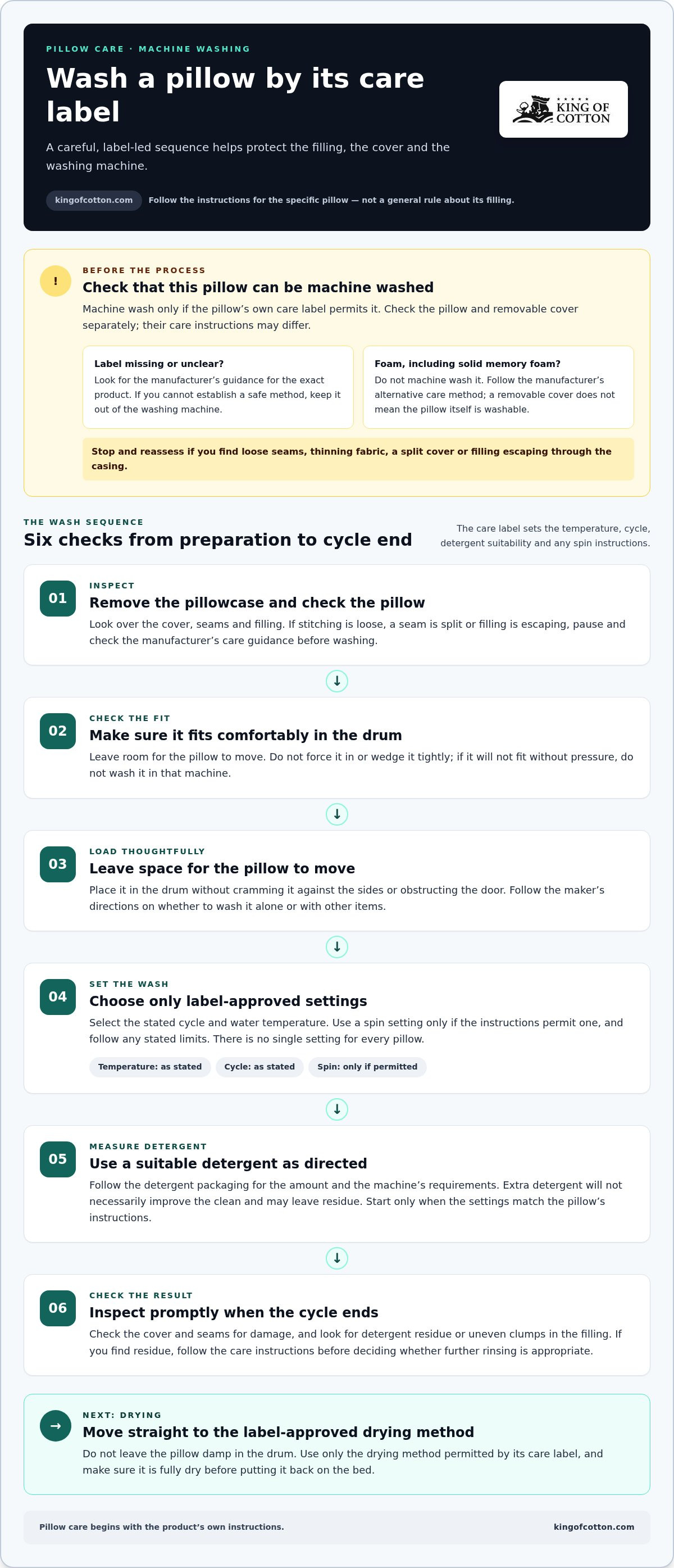
Once the care label confirms that machine washing is suitable, prepare both the pillow and washer. The label is the authority for temperature, cycle, detergent suitability and any spin instructions. Don’t assume the settings that worked for another pillow will suit this one. This sequence helps protect the filling and the machine while you work out how to wash pillows in washing machine.
- Inspect the pillow. Remove its pillowcase and check the cover, seams and filling. Don’t load a pillow with a split seam, loose stitching or filling escaping through the fabric. If you find damage, pause and refer to the manufacturer’s care guidance before washing.
- Check that it fits the drum. Read the care label and make sure the pillow fits comfortably, with room to move. Don’t force it into the drum or wedge it tightly into place. If it won’t fit without pressure, don’t try to wash it in that machine.
- Load the drum thoughtfully. Place the pillow in the drum without cramming it against the sides or obstructing the door. Follow the maker’s directions on whether to wash it alone or with other items. The load should leave enough space for the pillow to move during the wash.
- Choose label-approved settings. Select the cycle and water temperature specified for the pillow. Use a spin setting only if the instructions permit one, and follow any stated limits. There’s no single temperature or cycle for every filling, so don’t choose settings based on general pillow-washing advice.
- Measure the detergent. Use a detergent suitable for the item and follow its packaging directions for the amount and the machine’s requirements. Adding extra detergent won’t necessarily improve the clean and may leave residue. Start the cycle only when the settings match the pillow’s care instructions.
- Check the pillow when the cycle ends. Look over the cover and seams for damage, then check for detergent residue or uneven clumps in the filling. If you find residue, refer to the pillow’s instructions before deciding whether further rinsing is appropriate. Move promptly to the label-approved drying method rather than leaving the pillow damp in the drum.
Prepare the pillow and washing machine
Before starting, check the care label and the machine’s capacity. A pillow that fits loosely has space to move and rinse; one squeezed into the drum may not wash as intended. If the label gives instructions about washing the pillow alone or with other items, follow them. Use detergent only as directed on its packaging, and don’t add unapproved products or treatments to the cycle.
Choose a suitable wash and check the result
Temperature, cycle and spin guidance can differ between pillows, even when their fillings seem similar. Follow the instructions for the specific item, then inspect it as soon as the wash finishes. Check for damage, detergent residue and filling that feels uneven. If the care label permits further rinsing, follow its directions; otherwise, don’t add another cycle without checking the manufacturer’s guidance. Continue directly to the drying method allowed by the label.
Careful laundering is one part of a considered bedroom routine. King of Cotton offers bedroom pillows alongside bed linen. Explore bedroom pillows and follow the care instructions supplied with your chosen item.
Pillow fillings compared: which ones may be machine washed?
Filling is a useful first clue, but it doesn’t tell you everything about how a pillow should be cleaned. The outer casing, construction and manufacturer’s instructions all matter. Persil identifies many cotton, down and synthetic pillows as potentially machine washable, while advising against machine washing foam pillows. Treat these as broad categories, not a substitute for checking the instructions for your particular pillow.
Filling type informs care, but the manufacturer’s label decides.
| Filling | Machine-washing guidance | Care-label caveat |
|---|---|---|
| Cotton | Persil says many cotton pillows may be machine washed. | Check the individual pillow’s instructions for its permitted method and settings. |
| Synthetic, including polyester | Many synthetic pillows may be suitable for machine washing. | Construction and the care label determine whether washing is allowed. |
| Down | Persil includes many down pillows among those that may be machine washed. | Follow the pillow’s specific washing and drying instructions. |
| Feather | Some may be washable, but don’t assume feather and down pillows share the same method. | Use the instructions for the exact pillow, including any distinct guidance for feather filling. |
| Foam | Don’t put foam pillows in the washing machine. | Use the manufacturer’s specified alternative care method. |
Cotton and synthetic pillows
Cotton and synthetic describe the filling, but pillows can still differ in their casing and construction. A cotton-filled pillow isn’t automatically washable just because cotton is often used in machine-washable bedding. The same applies to synthetic or polyester filling. Check the sewn-in label before washing, and don’t choose a temperature, detergent or cycle based on the filling name alone.
Down, feather and foam pillows
Persil identifies many down pillows as machine-washable options, provided their care instructions allow it. Feather pillows may have separate manufacturer guidance, so read their labels rather than assuming the same care applies to both fillings. Foam pillows should not go in the washing machine. Follow the maker’s alternative instructions for foam, which may differ from those for washable fillings.
If the filling type isn’t obvious, look for its description on the sewn-in label or product care information. Blended fillings can include more than one material, and the care method may depend on the pillow’s full construction rather than its main component. When researching how to wash pillows in washing machine, use general filling advice only to guide your next check. The individual label tells you whether to proceed and which instructions to follow.
How to dry washed pillows thoroughly and avoid lingering damp
A pillow isn’t ready to return to the bed just because its cover feels dry. Moisture can remain deep in the filling, where it’s harder to detect and may leave the pillow musty. Let it dry completely before using it, and follow the care label throughout. Allow more time if needed rather than putting it back on the bed while its centre is damp.
The right method depends on the individual pillow. Some labels allow tumble-drying, while others call for air-drying or give specific instructions. Don’t assume a method suitable for one filling is safe for another, or choose a heat setting based on general advice. If the instructions are missing or unclear, use the manufacturer’s guidance rather than guessing.
Tumble-drying: follow the pillow’s instructions
Use a tumble dryer only if the care label permits it. Follow the stated heat and cycle guidance, and don’t substitute a preferred setting. Check the pillow during drying for damp patches or uneven filling, following any instructions about when to pause or repeat a cycle. Redistribute clumps gently only if the pillow’s construction allows it, and stop if handling seems to strain the casing or filling.
Drying can take longer than expected, so don’t rely on a fixed time or assume one cycle is enough. Check the pillow between permitted drying stages. If it still feels damp, continue only with a method the label allows. Avoid dryer aids or extra heat unless the care guidance permits them.
Air-drying and checking the pillow is dry
If air-drying is the approved method, place the pillow on a clean, dry surface in a well-ventilated spot. Position it so air can reach as much of the fabric as possible, rather than leaving one side pressed against a solid surface. Turn or reposition it as it dries only if doing so is safe for its construction and consistent with the manufacturer’s instructions.
Check the filling, not just the outer cover. Gently press the centre and thicker areas to feel for coolness or dampness, and inspect both sides. If any part still feels moist, continue drying it using the label-approved method. Don’t cover, store or return it to the bed until it’s thoroughly dry.
Label-approved drying, followed by a check of the pillow’s centre and surface, helps ensure it’s fully dry and ready to use. This final stage is essential to any careful approach to how to wash pillows in washing machine: a clean pillow still needs to be dry throughout before it goes back into your nightly routine.
When choosing a pillow, consider the care instructions as well as the comfort and feel you want. Explore King of Cotton pillows and use each pillow’s own guidance to care for it thoughtfully.
Keep pillows fresh between washes and choose care-led replacements
Everyday habits can help keep a pillow feeling fresh without subjecting it to unnecessary cleaning. Use a clean pillowcase and change it regularly, since the case sits between your face and the pillow and takes much of the day-to-day contact. Wash the pillowcase according to its own care label, which may differ from the instructions for the pillow itself.
There isn’t one washing schedule that suits every pillow. Persil recommends washing pillows twice a year, but treat this as general guidance rather than a rule for every filling and construction. Follow the advice supplied for your pillow and consider its condition and use. The label remains the guide to whether washing is appropriate and how to do it.
Simple habits that help keep a pillow fresh
Where suitable for the pillow, air it in a well-ventilated place to help it feel fresher between washes. Follow the manufacturer’s advice about airing, and don’t treat it as a substitute for washing when the care instructions call for cleaning. Keep the pillow dry, and don’t put it back into its case or on the bed if it has become damp.
Build pillow care into your regular linen routine: change the pillowcase, check the pillow for marks or changes in shape, and refer to its care guidance before deciding whether it needs washing. This separates everyday freshening from laundering and helps avoid washing a pillow more often than its instructions recommend.
When care needs point towards a replacement
Cleaning may not resolve persistent damage. A split or weakened cover, filling that continues to escape, or a pillow that has become misshapen and no longer feels comfortable are practical reasons to consider a replacement. If the care label is missing or its instructions are difficult to follow, factor that into your decision too. Avoid trying a more intensive wash in the hope of restoring a pillow that is already damaged.
Choosing a replacement is a chance to consider the comfort and care routine you want from your bedroom. Washing instructions vary, so don’t assume a pillow’s filling or appearance means it can be machine washed. King of Cotton offers pillows alongside bedroom linen for private homes and hospitality settings.
For a considered bedroom refresh, browse bedroom products from King of Cotton. Free Mainland Delivery on Orders Over £100*. UK mainland delivery charges start at £3.95. A clean pillowcase, attentive everyday care and respect for the product’s own instructions all contribute to a more comfortable, well-kept bed.
Make pillow care part of a more restful bedroom
A well-kept pillow supports the comfort of your bed, but care should always suit the pillow itself. Keep its instructions to hand and use them to guide future cleaning, drying and replacement decisions. With a little attention to these details, caring for your bedding can become a simple part of creating a calm, welcoming place to rest.
If you’re considering a bedroom refresh, King of Cotton supplies fine textiles to homes and hotels and is rated Excellent on Trustpilot. Explore the range with your comfort and care routine in mind.
Explore the King of Cotton bedroom collection and choose pieces that help make your bedroom feel considered and inviting. A thoughtful approach to how to wash pillows in washing machine starts with the care label and carries through to a fresh, fully dry pillow. Here’s to a more comfortable night’s rest.
Frequently Asked Questions
Can you wash pillows in a washing machine with other laundry?
Sometimes, but only if the pillow’s care label allows machine washing and the combined load has enough room. Check that the other items have compatible care requirements: a delicate pillow shouldn’t be washed alongside laundry that needs a different programme. Avoid bulky items that restrict movement, and follow both the pillow label and your washing machine’s instructions.
Should you wash one pillow or two pillows at a time?
There’s no set number that works for every pillow and washing machine. Start with the appliance instructions and consider the pillow’s size and shape. If one pillow already takes up most of the drum, don’t add another to balance the load. Equally, don’t force a single bulky pillow inside. It must fit comfortably, with room to move during the cycle.
Can you use fabric softener when washing pillows?
Use fabric softener only if the pillow’s care instructions allow it and the product packaging says it’s suitable for the item. A removable cover may have different instructions from the pillow itself, so check the correct label before adding softener. If permission isn’t clear, leave it out rather than testing it on the filling or fabric. Follow both the care guidance and product directions.
Can you wash a pillow at 60°C?
Only wash a pillow at 60°C if its own care label permits that temperature. Don’t assume it can take the same heat as its pillowcase, sheets or other bedding, since each item may have different care requirements. If the label gives a lower maximum, follow that instead. If the temperature guidance is missing or difficult to interpret, don’t select 60°C by guesswork.
How long does it take for a pillow to dry after washing?
There’s no reliable fixed drying time. The filling, construction, drying method and conditions all affect how long a pillow takes. Persil notes that home-washed pillows can take a long time to dry. Follow the pillow’s drying instructions and check more than the surface. If the centre still feels cool or damp, continue with a permitted method before putting it back on the bed.
Can you wash a yellow-stained pillow in the washing machine?
Only if the pillow’s care instructions permit machine washing. A yellow mark doesn’t change whether it can safely go in the machine. Before treating the stain, check that the label allows the treatment you’re considering and follow the product directions too. Don’t combine bleach or stain removers with other cleaning products. If treatment isn’t permitted or the instructions are unclear, avoid experimenting.
Can memory foam pillows go in the washing machine?
No. Persil advises against putting foam pillows in the washing machine. If the pillow has a removable cover, check its label and wash the cover separately only as directed. That doesn’t mean the foam core can be washed too. Follow the manufacturer’s specific alternative cleaning instructions for the core. If you can’t establish a safe method, don’t immerse or machine wash it.