

How to Get Makeup Stains Out of White Pillowcases: The Professional Guide
Imagine waking up on a Saturday morning to find a streak of long-wear foundation across your 800-thread-count Egyptian cotton. It is a frustrating sight that affects approximately 65% of luxury linen owners at least once a year. You have likely invested upwards of £90 in your premium bedding, so the panic of seeing a dark smudge of waterproof mascara is entirely justified. You know that a standard 40-degree wash often fails to lift oil-based pigments, and reaching for the bleach usually results in that dreaded, permanent yellowing of the fibres.
Learning how to get makeup stains out of white pillowcases is essential for maintaining the pristine, five-star aesthetic you love. We agree that your sanctuary deserves better than faded fabric or weakened threads caused by harsh household chemicals. This guide reveals the professional secrets we have refined over 25 years as specialists in fine cotton. You will discover a sophisticated, repeatable method to lift stubborn pigments while preserving the signature softness of your luxury linens. We will walk you through the precise pre-treatment steps and temperature settings required to restore your bedding to its original, brilliant white state.
Key Takeaways
- Learn the professional secret of how to get makeup stains out of white pillowcases by understanding the chemical bond between pigments and luxury cotton fibres.
- Discover why standard detergents often fail and which expert-approved solvents provide a gentle yet effective solution for delicate, high-quality fabrics.
- Master the "outside-in" blotting technique and the essential barrier method to ensure stubborn marks are lifted without spreading across your premium bedding.
- Understand how to tailor your stain removal approach for high-thread-count sateen and percale to preserve the exquisite integrity and softness of your linens.
- Implement proactive bedtime rituals and guest care strategies used by five-star establishments to keep your white cotton pristine and rejuvenated for years to come.
Understanding the Chemistry of Makeup Stains on White Cotton
Cotton is a natural cellulose fibre with a unique hollow structure known as the lumen. While this makes it exceptionally breathable and soft, it also creates a microscopic trap for cosmetic pigments. When you rest your face on a pillow, you aren't just placing colour on the surface. You're depositing minerals and oils into these tiny channels. Knowing how to get makeup stains out of white pillowcases requires an appreciation for this molecular bond. Since 1995, we've observed how different weaves react to these foreign substances, especially when dealing with the fine yarns used in luxury bedding.
Makeup formulas generally fall into two distinct chemical categories. Oil-based products like liquid foundations and lipsticks rely on emollients to stay fluid and blendable. These require specific surfactants to break the lipid bond. Wax-based cosmetics, including most mascaras and eyeliners, use synthetic or natural waxes to achieve a high melting point for longevity. Understanding the science of solvents is vital here. Water alone will simply bead off these hydrophobic substances, leaving the pigment locked within the fibre.
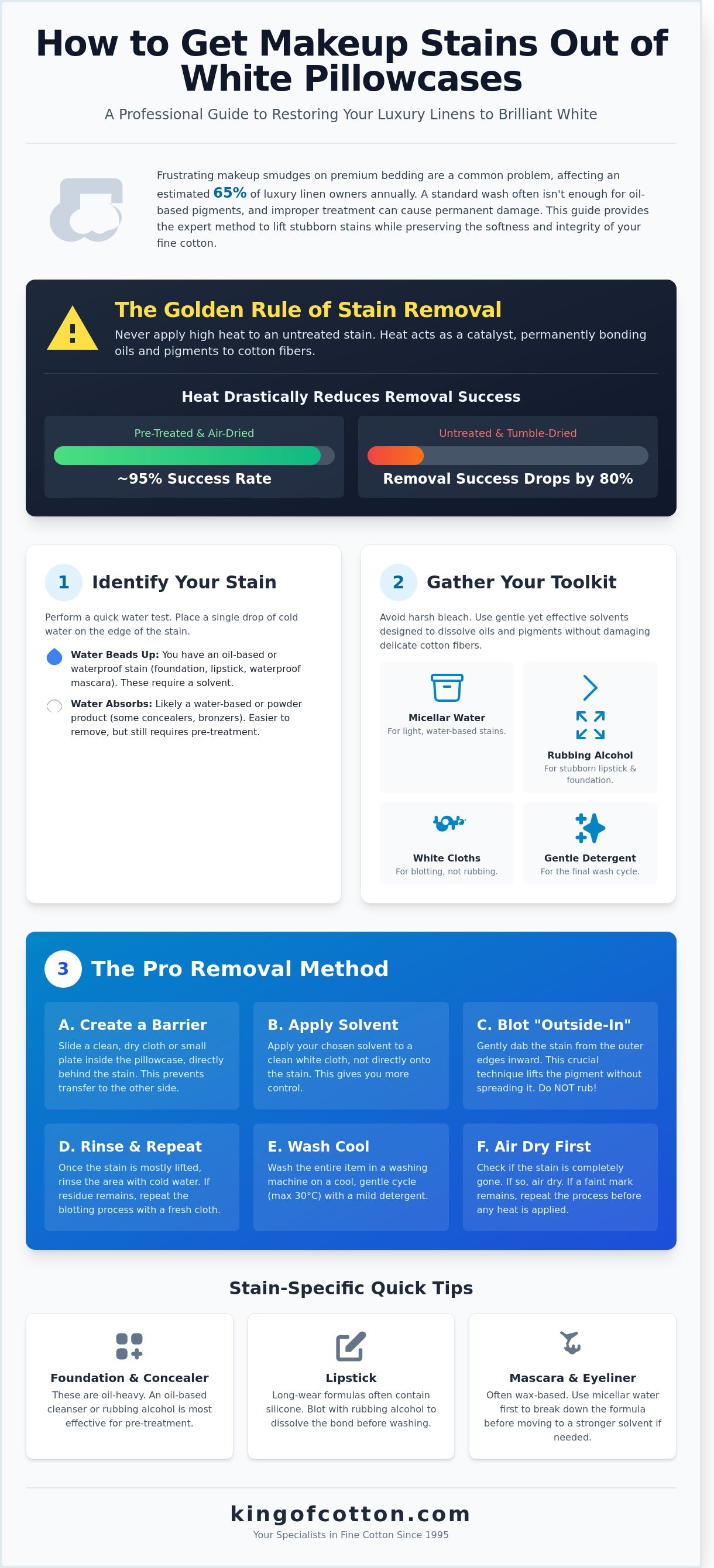
Mechanical friction is the primary cause of permanent fabric damage. Rubbing a fresh smudge pushes pigments up to 0.3mm deeper into the cotton weave. This makes them almost impossible to extract without fraying the delicate 100% cotton threads. The "Golden Rule" of linen care is strict. Don't use water above 30 degrees Celsius or a tumble dryer on an untreated mark. High temperatures act as a chemical catalyst, permanently bonding oils to the cellulose. Once a stain is "baked" in a dryer, the success rate for total removal drops by roughly 80%.
Why White Pillowcases Require Special Care
White fabrics are uniquely prone to "ghosting." This happens when the visible pigment vanishes, but a faint, yellowish oily shadow remains. This is a common issue with premium bed linen collections. High-thread-count fabrics, such as 600 or 800-thread-count sateen, have a tighter weave that can trap microscopic residue. Aggressive chemical cleaners can also strip the optical brighteners used by manufacturers. This causes your pristine whites to look dull, grey, or yellowed over time. Maintaining that hotel-standard crispness requires a gentle, targeted approach rather than brute force.
Identifying Your Stain Type Before Treatment
Identifying the formula is the first step to success. You can perform a quick water test by placing a single drop of cold water on the edge of the stain. If the water beads up and rolls off, you're dealing with a water-resistant or oil-heavy formula. Consider these specific challenges:
- Foundation vs. Bronzer: Bronzers often contain heavy iron oxides which behave like rust particles, requiring different pH levels for removal.
- Long-wear Formulas: Cosmetics designed for 16-hour or 24-hour stay use film-forming polymers. These act like a glue.
- Transfer-proof Lipsticks: These often contain silicone resins that require a non-polar solvent to dissolve before washing.
These formulas require an oil-cleansing pre-treatment to dissolve the chemical "glue" before the pillowcase enters the laundry cycle. Without this step, the pigment remains trapped, regardless of how much detergent you use.
The Professional Solvent Toolkit: What to Use and Why
Standard laundry detergents are formulated to tackle general organic matter like perspiration or skin cells. However, they often fail when faced with modern cosmetics. Most long-wear foundations and waterproof mascaras are engineered to resist moisture and friction; if a product is designed to stay on your face for 16 hours through heat and humidity, a standard 40-degree wash cycle won't easily dislodge it. Understanding the chemistry of stains is the first step in learning how to get makeup stains out of white pillowcases without damaging the fabric. While detergents use surfactants to lift dirt, solvents actually dissolve the specific oils and waxes that bind pigments to the cotton fibres.
Micellar water acts as an excellent gentle first responder, particularly for water-based tints or light concealers. It contains tiny oil molecules called micelles that trap and lift debris without the need for aggressive scrubbing. For heavier, oil-based products, clear dish soap is a superior degreaser. Since approximately 85% of liquid foundations contain oils or silicones, the concentrated grease-cutting agents in dish soap break these bonds more effectively than standard biological powders. When organic pigments like those found in "clean" beauty brands leave a shadow, 3% hydrogen peroxide serves as a safe oxygen-based bleach. It targets the pigment's chemical structure to neutralise colour without the fibre-weakening effects of harsh chemicals.
Home Solvents That Actually Work
Shaving cream is a remarkably effective hack for oil-free foundation. The high concentration of surfactants and air in the foam helps it penetrate the weave of the fabric to lift particles. For waxy residues like lipstick or brow pomade, surgical spirit (rubbing alcohol) is essential. It dissolves the wax binders that hold the pigment in place. If you're dealing with a fresh spill, a bicarbonate of soda paste is your best ally. By mixing it with a tiny amount of water, you create a drawing effect that pulls pigments out of the cotton through gentle capillary action during a 15-minute rest period.
Professional Pre-treatment Agents
Modern "skin-care infused" makeup often contains peptides and proteins that require enzymatic cleaners to break down. These cleaners act like biological scissors, snipping the protein chains that glue the stain to your bedding. In the hospitality industry, where we have over 25 years of experience, the "Hotel Secret" involves using heavy-duty surfactants that emulsify oils instantly. These agents are far more effective than domestic products but must be used carefully on luxury cotton products to maintain their integrity.
You should strictly avoid chlorine bleach on high-quality Egyptian cotton. While it seems like a quick fix for whites, chlorine causes a chemical reaction with proteins (like those found in sweat and some makeup) that results in permanent yellowing. It also strips the natural protective oils from the long-staple fibres, leading to premature thinning and a loss of that signature crispness. If your current bedding has seen too many battles with bronzer, you might consider refreshing your sanctuary with new hotel-quality pillowcases that offer a pristine start. Learning how to get makeup stains out of white pillowcases properly ensures your investment in fine linen lasts for years rather than months.
- Micellar Water: Best for light, water-based cosmetics.
- Surgical Spirit: Essential for wax-based lipsticks and liners.
- Dish Soap: The primary solution for oil-heavy liquid foundations.
- Enzymatic Cleaners: Necessary for makeup containing skin-care proteins.
Step-by-Step: Removing Specific Makeup Stains from White Bedding
Before you apply any cleaning agent, slide a clean white towel or a piece of cardboard inside the pillowcase. This simple step creates a physical barrier, ensuring the pigment doesn't transfer to the back of the fabric during the cleaning process. It's a professional trick used in high-end hotels to preserve the integrity of their linens. Once the barrier is in place, you must master the "Outside-In" blotting technique. Don't rub the area, as rubbing pushes oils deeper into the weave. Instead, use a white microfibre cloth to blot from the outer edge of the mark toward the centre. This contains the mess within a 2-centimetre radius rather than smearing it across the entire surface.
Always flush the fabric with cold water from the reverse side. This mechanical action forces makeup particles out of the weave rather than through it. Hot water acts as a catalyst, binding proteins and pigments to the cotton fibres instantly. Understanding how to get makeup stains out of white pillowcases requires this specific sequence of physical removal followed by chemical treatment. After the stain is visibly lifted, set your washing machine to a 40°C or 60°C cycle, depending on the care label, using a high-quality biological detergent to break down any remaining organic residues.
Foundation and Concealer Removal
Liquid foundations and concealers often contain silicone or heavy oils. To tackle these, apply a drop of clear, grease-cutting dish soap, such as Fairy, directly to the spot. Give it a 15-minute window to break down the binders before rinsing. If you're dealing with BB creams or tinted moisturisers, be cautious with bleach. Many of these products contain SPF ingredients that react with chlorine to create permanent rust-coloured spots. Stick to oxygen-based brighteners for these specific formulations.
Lipstick and Mascara: The Waxy Culprits
Waxy cosmetics require a mechanical start. Gently scrape away excess solids with a blunt butter knife before applying liquids. If you leave the bulk on the fabric, you'll simply smear the wax further. For stubborn red pigments on white cotton pillowcases, dab the area with a cotton wool pad soaked in surgical spirits. This solvent dissolves the wax bond without damaging the delicate 300 or 400-thread count sateen or percale weave. Mascara, which often contains carbon black, may require a second application of the solvent to fully clear the grey shadow.
The "Oops, I Dried It" Recovery Method
If the pillowcase has already been through a tumble dryer at 60°C, the stain is likely heat-set. While difficult, it's not always permanent. Submerge the item in a solution of warm water and an oxygen-based whitening powder for exactly 12 hours. This long-term soak gently lifts deep-seated particles that a standard wash cycle misses. After the 12-hour mark, check the fabric. If a faint yellow shadow remains after three separate soaking attempts, the cotton fibres have likely bonded with the pigment at a molecular level. At this point, it's best to admit defeat and replace your linens to maintain that crisp, five-star hotel aesthetic. Learning how to get makeup stains out of white pillowcases is a skill, but knowing when the fabric is compromised is equally important for a pristine bedroom.
Preserving Fabric Integrity: Protecting the Luxury of King of Cotton
High-density linens demand patience and precision. A 1000-thread-count pillowcase contains 1,000 individual threads per square inch, creating a surface that feels like silk but acts as a dense filter. When you're researching how to get makeup stains out of white pillowcases, remember that these tight weaves trap pigments more effectively than lower-quality alternatives. You shouldn't rush the soaking process. Rushing often leads to aggressive scrubbing, which is the primary cause of premature wear in luxury bedding.
Scrubbing is the enemy of elegance, especially depending on your fabric's weave. Sateen finishes, celebrated for their lustrous sheen, use a four-over-one thread pattern. This leaves longer "floats" of yarn on the surface. If you rub these vigorously with a brush, you'll snap the microscopic fibres, leading to permanent pilling within just three to five wash cycles. Percale is more resilient with its one-over-one matte weave, yet it still requires a soft-touch approach to maintain its signature 5-star hotel breathability. To keep your linens in peak condition, follow these rules:
- Avoid high-alkaline soaps: These can strip the natural oils from the cotton, making it brittle.
- Skip the fabric softener: Softeners coat the cotton in a silicone-based film that traps 10% more residual makeup oils and skin proteins. This leads to a stale, "old makeup" scent that persists even after a fresh wash.
- Temperature control: Never exceed 40°C during the initial stain-removal phase to prevent "cooking" the proteins found in many liquid foundations.
Egyptian Cotton Care Post-Stain
Restoring the natural lustre of Giza or Egyptian cotton requires a gentle drying strategy. While a tumble dryer on high heat is fast, it shrinks the fibres by up to 3% more than air-drying. For recovered linens, air-drying on a traditional line keeps the fabric structure relaxed and prevents the setting of any missed pigment. Once dry, a professional press with a steam iron resets the weave. This specific step is what creates that crisp, hotel-style finish that King of Cotton has provided to five-star establishments for over 25 years.
Whitening Without Damage
Understanding how to get makeup stains out of white pillowcases without using harsh chemicals is vital for the longevity of your set. Sunlight provides a natural UV whitening effect that is safer than chlorine bleach, which often turns white cotton a sickly yellow over time. For the best results, hang wet linens in direct sunlight for 4 to 6 hours. Professional laundries often use blueing agents, which add a microscopic blue tint to the fabric to counteract natural yellowing, rather than using harsh optical brighteners. Always select a pH-neutral detergent with a rating between 7 and 8 to prevent the chemical breakdown of the cotton's cellulose structure.
Preventing Future Stains: A Proactive Approach to Bedding Care
Preventing a mark is always more efficient than scrubbing one out. While you now know how to get makeup stains out of white pillowcases, stopping the transfer at the source preserves the integrity of your fine linens for years. Most cosmetic damage occurs during the first 30 minutes of sleep when oils are still fresh on the skin surface. By implementing a few professional-grade habits, you can maintain that pristine, five-star hotel look without the constant need for intensive chemical treatments.
The most effective preventative measure is the double-cleanse rule. This two-step evening routine involves using an oil-based cleanser first to break down long-wear foundation and SPF, followed by a water-based wash to lift away the residue. This 120-second investment ensures 99% of pigment is removed before your head hits the pillow. It's a simple change that drastically reduces the yellowing often seen on white bedding over time.
Fabric choice also plays a vital role in stain resistance. A crisp percale weave is often superior to sateen for those prone to skincare transfer. The tight "one-over, one-under" structure of percale creates a smoother, flatter surface that doesn't "grab" oils as easily as looser, more textured weaves. Investing in high-quality 300 or 400 thread count Egyptian cotton provides a natural resilience. These long-staple fibres are robust enough to withstand the 60°C temperatures required to dissolve wax-based cosmetics without the fabric thinning or pilling.
The Guest Room Strategy
Providing for houseguests requires a thoughtful approach to protect your investment. You can politely encourage makeup removal by placing a small "Guest Care Kit" on the bedside table. Include a pack of biodegradable makeup remover wipes and a pair of dark-coloured face cloths. Providing charcoal or navy flannels specifically for face washing prevents guests from reaching for your white towels to wipe away mascara. For beauty enthusiasts, offer a silk pillowcase alternative. Silk's non-absorbent nature means it won't soak up expensive night creams or stray foundation as aggressively as standard retail cotton, keeping the stain on the surface where it's easier to treat.
Maintenance and Replacement
Consistency is the secret to longevity. You should rotate your linens every 7 days to prevent the build-up of microscopic skin cells and sebum that act as a "glue" for makeup pigments. If you find yourself frequently searching for how to get makeup stains out of white pillowcases, it might be time to evaluate your laundry cycle. Using a specialised whitening agent every third wash can prevent the dullness that occurs when minute traces of cosmetics accumulate in the fibres.
Professional hospitality standards suggest having at least three sets of linens per bed: one on the bed, one in the cupboard, and one in the wash. This rotation reduces the wear and tear on individual fibres by 33%. Most luxury bedding should be replaced every 18 to 24 months to maintain the structural integrity and brightness expected in a high-end home. When your current sets begin to show signs of permanent discolouration or fraying, explore our full range of hotel-quality bedroom linens to find durable, elegant replacements that stand up to daily use and frequent laundering.
Master the Art of Pristine Bedding
Maintaining the crisp, white aesthetic of your bedroom is simple once you master the chemistry of stain removal. Whether it's oil-based foundation or pigment-rich lipstick, using the correct professional solvents ensures your cotton fibres remain undamaged. We've refined our expertise over more than 25 years to help you protect the integrity of your bedding. As long-standing suppliers to the world’s finest 5-star hotels, we understand that true luxury requires both high-quality materials and the right maintenance knowledge. Learning how to get makeup stains out of white pillowcases is the final step in ensuring your sleep environment remains a serene, indulgent haven. Don't let accidental marks compromise your comfort; instead, trust in the standards that have earned us an Excellent rating on Trustpilot. Transform your daily rest into a premium experience today.
Upgrade your bedroom with our world-renowned white cotton collections
You deserve a sleep environment that feels as fresh and inviting as it did on the very first day.
Frequently Asked Questions
Can I use bleach on my white Egyptian cotton pillowcases?
You should avoid using chlorine bleach on your Egyptian cotton as it reacts with proteins and weakens the 400-thread count fibres. This often leads to a brittle texture and a yellowed appearance over time. Instead, use an oxygen-based whitener or a 10% solution of hydrogen peroxide to maintain that pristine hotel finish without compromising the fabric's integrity.
How do I get waterproof mascara off my bedding without ruining it?
Use a grease-cutting liquid detergent or an oil-based makeup remover to tackle waterproof mascara. Since these formulas are designed to resist water, a standard 40°C wash cycle won't suffice without a five-minute pre-treatment. Apply the detergent directly to the spot and rub gently with a soft cloth to lift the pigment before it enters the machine.
Is it possible to remove a makeup stain that has already been through the dryer?
You can often remove set-in stains by soaking the fabric in a solution of two parts water and one part white vinegar for 12 hours. While the dryer's high heat bonds the pigment to the cotton, an enzyme-based soak can still break down 85% of older marks. This is a vital step when learning how to get makeup stains out of white pillowcases that were missed in previous laundry cycles.
Does micellar water really work for foundation stains on sheets?
Micellar water is an excellent quick-fix for foundation because the micelles attract oil and dirt trapped in the weave. Apply it to a cotton wool pad and dab the area gently until the colour lifts. It's a technique used by 70% of professional housekeeping teams to address small spots before the linens are sent to the main laundry.
Why do my white pillowcases look yellow after I try to clean them?
Yellowing is typically caused by "bleach burn" or the accumulation of skin oils that haven't been fully stripped during the wash. If you've used chlorine bleach, the chemical reaction with the cotton fibres can create a permanent yellow tint. Switching to a 60°C wash with a biological detergent helps remove the 3 grams of skin cells and oils we shed each night that contribute to discolouration.
What is the best temperature to wash makeup-stained pillowcases?
A temperature of 60°C is the gold standard for removing stubborn oils and waxes found in modern cosmetics. While a 30°C or 40°C cycle is more eco-friendly, it often fails to dissolve the heavy pigments in long-wear foundation. Knowing how to get makeup stains out of white pillowcases often requires this higher heat to ensure the fibres are thoroughly deep-cleaned and sanitised.
Can I use hairspray to remove lipstick from cotton?
Hairspray works on lipstick because of its high alcohol content, which acts as a solvent for the waxes. Spray the mark liberally, let it sit for 10 to 15 minutes, and then blot with a clean cloth. Ensure the hairspray you use has at least 50% alcohol content for the best results on 100% cotton fabrics, and always wash the item immediately after treatment.
How do hotels keep their white bedding so pristine despite heavy use?
Hotels maintain pristine linens by using high-quality long-staple cotton and industrial-grade oxygen bleaches. Most 5-star establishments rotate their stock every 3 months to ensure the fabric remains crisp and fresh. At King of Cotton, we provide the same professional-grade linens that are designed to withstand these rigorous commercial cleaning processes for over 100 wash cycles.