

Anti-allergy bedding and practical ways to limit bedroom allergens
More than 40% of people in the UK suffer from allergic rhinitis, and dust mites can trigger symptoms such as rhinitis and asthma. This anti-allergy bedding guide explains how tightly woven covers can create a barrier against dust mites, while some treated fabrics are designed to inhibit them. Bedding can help form part of an allergy-conscious bedroom, but it isn’t a substitute for medical advice.
If you’re weighing up mattress and pillow protection, choosing a filling or deciding how often to wash your bedding, the details matter. A comfortable, well-made bed should feel inviting and suit your household’s needs.
This anti-allergy bedding guide explains how protectors work, what to consider when comparing natural and synthetic fillings, and how washing and everyday bedroom habits fit into allergy care. Use these practical points to create a bedroom that feels fresh and restful.
Key Takeaways
- Consider tightly woven or zipped covers for mattresses, pillows and duvets to help create a barrier against dust mites.
- Use the care label to guide washing; where suitable, washing bedding at 60°C or above can help reduce dust mites.
- Air the bed before making it and keep bedding stored somewhere dry to limit trapped moisture.
- Compare fillings for comfort and care needs, and look for recognised cleanliness standards when considering feathers and down.
- Small bedroom habits, such as damp dusting and regularly washing soft toys, can help reduce dust build-up.
Is anti-allergy and anti-dust mite bedding important?
Yes. House dust mites can trigger asthma and rhinitis, and may worsen eczema. This anti-allergy bedding guide explains how tightly woven covers can form a barrier, while some treated fabrics are intended to inhibit dust mites, mould and bacteria.
Bedding is one part of bedroom care. Washing, drying and storage habits also affect how well your routine manages allergens.
For a visual overview of bedroom allergy measures, watch this video:
Bedroom Allergens and Night-time Symptoms
House dust mites are common bedroom allergens, and their faeces can cause reactions that may trigger asthma attacks. Night-time symptoms can be linked to exposure near the bed, where people spend hours close to bedding. Covers may reduce contact with mites, but they work alongside cleaning, not instead of it.
For people diagnosed with a dust mite allergy, the NHS recommends barrier bedding covers, including anti-allergy pillows. The NHS also advises visiting a doctor if you think you may have an allergy. A protector offers one practical barrier, while washing and careful bedroom upkeep address other sources of allergen build-up.
Bedding Materials and Washability
Synthetic-fibre duvets and pillows designed for allergy-friendly use can be washed at 60°C. That can make them a practical choice for households seeking washable bedding, but care labels determine whether an item is machine washable and which temperature it can tolerate. Follow the instructions to avoid damaging the filling or casing.
Wool, cotton and silk suit different comfort preferences, but a material name alone doesn’t make bedding dust-mite-proof. Consider the fabric, barrier and washing instructions together. Look for tightly woven or zipped covers, then choose bedding that fits your care routine.
UK retailers may offer products with named certifications, but certification applies to a stated product, not automatically to a whole shop’s range. Synthetic fillings described as meeting OEKO-TEX® Standard 100 have a named textile-testing reference. Check the product information for the certification and its scope; it isn’t the same as proof of allergy protection.
For dust mite allergies, washing pillows at 60°C or higher is recommended where possible. Wash sheets, pillowcases and protectors at 60°C or more if their care labels permit it. Dry each item thoroughly before remaking the bed, then pull back the covers to let moisture escape.
Anti-allergy treatments are intended to inhibit dust mites, mould or bacteria; they don’t remove the need to wash bedding or manage dust. People with allergies or night sweats may need to wash bedding more frequently than average. Between uses, store clean bedding in a dry place, away from moisture and dust.
Protecting mattresses and pillows from allergens
Barrier covers for mattresses, pillows and duvets help limit contact with dust mites. UK prices vary by size, filling and construction, so compare each item and its care requirements rather than assuming one price applies to every type.
Protection works best as a coordinated routine: encasements, washable bedding and a suitable mattress each have a role.
Protective Bedding Layers
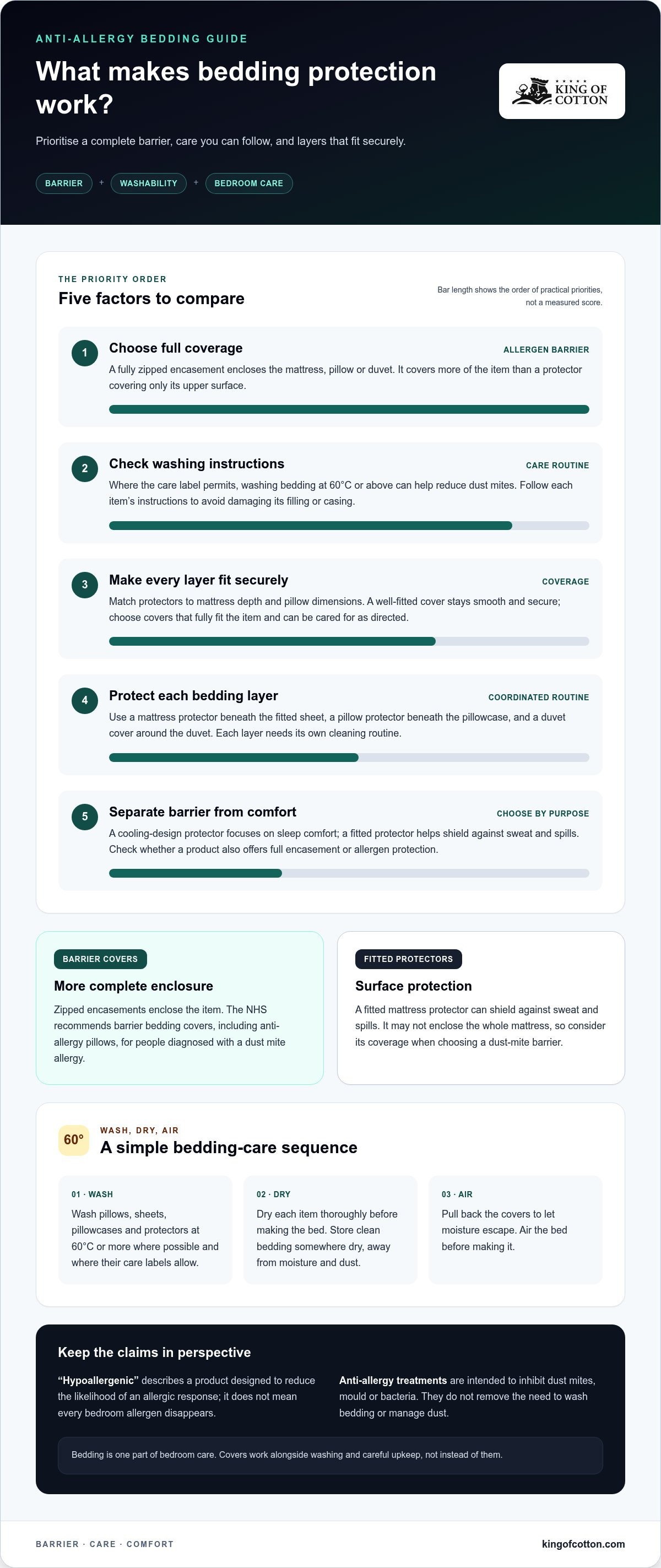
Protective bedding layers combine covers and protectors to create a barrier around places where allergens can collect. A fitted sheet sits above the mattress protector, pillowcases cover pillows, and duvet covers enclose duvets. Each item needs its own protection and cleaning routine.
A fully zipped encasement covers a mattress, pillow or duvet, helping block dust mites from the enclosed item. A fitted mattress protector also shields the mattress from sweat and spills, while a removable pillow protector adds a washable layer beneath the pillowcase. Keep each layer intact and fitted securely.
The NHS recommends barrier bedding covers, including anti-allergy pillows, for people diagnosed with a dust mite allergy. “Hypoallergenic” describes a product designed to reduce the likelihood of an allergic response; it doesn’t mean every bedroom allergen disappears. Choose covers that fit the item fully and can be cared for as directed.
Barrier and Cooling Protectors
Barrier protectors encase a mattress or pillow to help reduce exposure to dust mites. Zipped versions can fully enclose these items, unlike protectors that cover only the upper surface. This distinction matters for a dust mite allergy: a complete barrier covers more of the item, while a fitted protector can still guard against spills.
Cooling protectors address a different concern: sleep comfort. Compare the stated construction and care instructions, then choose a protector that fits securely over the mattress or pillow. A cooling label doesn’t replace a dust-mite barrier, so check whether the product also offers full encasement or allergen protection.
Mattress choice can contribute too. Natural latex mattresses are resistant to house dust mites, mould and mildew, making them one option for an allergy-prone bedroom. Resistance isn’t the same as a complete barrier, so pair the mattress with a suitable protector and keep sheets and pillowcases washable.
To compare options, separate your needs into three areas: an allergen barrier, protection from sweat or spills, and sleeping comfort. A zipped encasement provides coverage; a fitted protector helps shield the mattress surface; a cooling-design protector focuses on comfort. One item may not serve all three purposes equally.
Match the protector to the mattress depth and pillow dimensions so it stays smooth and secure. Follow its care label, since washing instructions vary by product. A well-fitted cover that can be cleaned as directed is a practical part of bedroom allergy care, alongside regular washing of sheets and pillowcases.
Sharing a bedroom with someone who has allergies
Anti-allergy bedding may help address dust-mite concerns, while other allergy triggers may need to be managed in other ways. Agree on shared routines for cleaning, airing the room and managing items that collect dust.
Bedroom Allergens and Symptoms
Bedroom allergens are substances or particles that can trigger reactions, including dust mite faeces, pet dander, pollen and mould. Dust mites can trigger asthma and rhinitis, and may worsen eczema. Bedding is only one possible source, so focus on the right measures for your bedroom rather than expecting one fabric or protector to address every trigger.
Note when symptoms appear and what bedroom activities happen beforehand. For example, track whether they coincide with changing bedding, opening windows during pollen season or disturbing dusty furnishings. These observations can help identify patterns to discuss with a doctor. If someone thinks they may have an allergy, the NHS advises visiting a doctor, while services like allergy testing Fresno illustrate how targeted clinical diagnosis can accurately identify environmental triggers.
Bedding for Different Allergies
Tightly woven or zipped covers can help create a barrier against dust mites, but they don’t trap every allergen in a shared bedroom. Pet dander and pollen can settle on fabric, while mould is associated with moisture. Choose bedding for its stated purpose, then use cleaning measures to address other sources present.
Natural materials such as cotton, wool or feather fillings don’t automatically prevent allergy symptoms. The useful distinction is between the material itself and its cover, care instructions and intended function. Washable covers and bedding support regular cleaning, while a dust-mite barrier targets exposure from an enclosed pillow, duvet or mattress.
Agree a manageable routine together. Ideally, wash bedding every 2 weeks to keep it clean and refreshed. Wash soft toys regularly and remove them from the bed between uses. Use a damp cloth for dusting, since it picks up dust instead of moving it around the room.
- Vacuum bedroom carpets frequently to remove dust and allergens.
- Steam-clean soft furnishings, such as curtains and carpets, to limit places where dust mites thrive.
- Pull back the covers after sleeping so moisture can escape before making the bed.
Decluttering also makes shared cleaning easier. Keep spare cushions, soft toys and fabric items off the bed when they aren’t needed. Store clean bedding in a dry place, away from dust and moisture. Bedroom humidity between 30% and 50% is recommended to discourage allergen growth, so ventilation and moisture management can support the routine.
Washing bedding at high temperatures
A 60°C wash can help reduce dust mites in washable bedding. The care label comes first: it determines whether cotton sheets, protectors or pillows can tolerate that temperature.
Washing frequency matters too. One recommendation is to wash all bed linen once or twice per week. Sheets and pillowcases collect skin flakes and perspiration, so regular washing helps remove everyday build-up.
Match the wash to the item
Check each item’s care label before choosing a washing-machine setting. It specifies the permitted temperature and whether machine washing is suitable. A duvet and its cover may need different care, so don’t assume one label applies to both. Follow the instructions to protect the fabric, seams and filling.
Synthetic-fibre duvets and pillows designed for allergy-friendly use can be washed at 60°C. For dust mite allergies, washing pillows at 60°C or higher is recommended where possible. The same temperature is recommended for sheets, pillowcases and bedding protectors, provided their labels allow it.
Sort items by care requirements instead of washing every layer together. For example:
- Wash cotton sheets and pillowcases at the temperature permitted by their labels.
- Wash a removable protector separately if its label gives different instructions.
- Wash allergy pillows at 60°C only when their care label permits it.
These checks help prevent damage from a temperature the fabric or filling cannot withstand. If a pillow is too large for the machine or needs special care, follow its stated cleaning method rather than forcing it into a wash cycle.
Drying and refreshing bedding
Dry each item fully before putting it back on the bed. Damp filling can feel uncomfortable and trap moisture inside a duvet or pillow. Use the drying method on the care label, and check that the centre of a thick pillow is dry, not just its outer fabric.
After making the bed, pull back the covers to let moisture escape. This simple step helps keep the sleeping space drier between washes. Store spare clean bedding somewhere dry and away from dust, rather than beside a steamy bathroom or in a damp cupboard.
For an allergy-conscious routine, combine the right wash temperature with suitable frequency and complete drying. If a cotton sheet can be washed at 60°C, use that setting when appropriate; if a duvet label sets a lower limit, follow it. Consistent care protects the bedding while helping keep the bedroom fresh.
Anti-allergy and anti-bacterial bedding filling
Filling affects how a duvet or pillow feels, retains warmth and handles moisture. For allergy-conscious choices, consider washability, comfort and the product’s stated standards together, rather than treating “anti-allergy” as a complete solution.
Natural fillings and synthetic fibres offer different qualities. Feather and down can provide soft, light insulation, while microfibre is used in some allergy-friendly duvets and pillows. The right fit depends on preferred warmth, texture and care routine. A filling label explains what’s inside, but the casing and washing instructions matter too.
For feather and down, cleanliness standards provide useful information. According to the European Committee for Standardization (CEN), the EN 12935 standard covers the cleanliness and purity of feathers and down. This standard addresses the material’s cleanliness; it is not a promise that the finished bedding prevents allergy symptoms.
European standards specify a minimum turbidity reading of 300 mm for down and feather products, and an oxygen test result of less than 20. Natural duvets described in the available product information have turbidity levels between 500 and 1000 mm. These measures relate to cleanliness, so compare them as technical details, not as a guarantee of dust-mite protection.
Synthetic fillings can be a practical alternative for people who prioritise routine washing. Synthetic duvets and pillows designed for allergy-friendly use can be washed at 60°C, subject to their care labels. The synthetic fillings described in the product information are tested to meet OEKO-TEX® Standard 100. That gives a material-testing reference, but it doesn’t mean every product with synthetic fibres has the same properties.
Some bedding treatments are intended to help inhibit bacteria, mould and dust mites. They don’t replace washing, drying or a barrier cover. Moisture can collect in bedding during sleep, so air the bed before making it and dry washed filling fully. Follow the care label to protect fibres and retain the filling’s loft.
Comfort matters as much as care. The National Eczema Society says temperature control in eczematous skin is often flawed and overheating is common. A lightweight anti-allergy or hypoallergenic duvet, with a wool blanket on cooler nights, can help avoid excess warmth. Adjusting layers gives sleepers more control than relying on one heavy duvet in every season.
- Compare filling, stated testing and care instructions together.
- Choose warmth and weight to suit the sleeper, then adjust layers as needed.
- Keep bedding dry and follow its washing label.
For bedding suited to a considered bedroom set-up, explore bedroom bedding and compare the filling and care details that support your routine.
King of Cotton: Bed Linen
King of Cotton offers bed linen, duvets and pillows for people refining their bedroom choices. If you’re comparing feel, filling and care instructions, these ranges help you consider the complete bed set-up, from the layers closest to you to the duvet and pillows.
Choose bedding to suit your comfort preferences and washing routine, and follow each product’s care label. Anti-allergy claims and barrier covers address different needs, so consider those details alongside the materials and construction rather than treating any one item as a complete allergy solution.
For a considered bedroom refresh, explore King of Cotton’s bed linen and bedding range. Visit kingofcotton.com to browse the collection.
Make your bedroom choices work together
A considered bedroom starts with the needs of the people who use it. Think about comfort, preferred materials and how easily each item fits your household’s routine. This anti-allergy bedding guide can help you set those priorities before choosing pieces for a calmer, more comfortable space.
King of Cotton offers bed linen, towels, and bathrobes and gowns, bringing a refined feel to bedrooms and bathrooms. If you’re deciding which bedding details matter most for your home, contact King of Cotton for bedding advice. The right conversation can help you focus on the qualities you value, from the feel of the fabric to the overall bedroom look.
Take your time choosing pieces that suit your preferences and create a bedroom you’ll enjoy returning to. Thoughtful choices can make everyday rest feel more comfortable.
Frequently Asked Questions
What's the difference between hypoallergenic and regular bedding?
Hypoallergenic bedding is designed to reduce exposure to particular allergens or lower the likelihood of an allergic response; regular bedding makes no such specific claim. Look for product details describing a tightly woven barrier, full encasement or an allergy-friendly filling. These features address different needs, so compare the stated purpose and care instructions rather than relying on the label alone. No bedding label promises protection from every bedroom allergen.
Are synthetic fills best for a mite-free sleep?
Synthetic fills can suit allergy-conscious routines, but they don’t make a bed mite-free by themselves. Some synthetic-fibre duvets and pillows designed for allergy-friendly use can be washed at 60°C, subject to their care labels. A zipped barrier cover, regular laundering and complete drying also matter. Choose a filling for its comfort and washability, then combine it with the protection and cleaning routine appropriate to your bedroom.
Can allergy-friendly bedding help with asthma symptoms?
It can help reduce exposure to dust mites in bedding, which may be relevant for people whose asthma is triggered by them. Dust mite faeces can cause allergic reactions that may trigger asthma attacks. Bedding is only one part of managing possible triggers, and it cannot diagnose or treat asthma. The NHS advises visiting a doctor if you think you may have an allergy; discuss recurring symptoms with a healthcare professional.
How can allergies impact your sleep and overall health?
Allergy symptoms such as rhinitis can disturb rest, while dust mite reactions may also trigger asthma or worsen eczema. Night-time exposure can matter because bedding and bedroom furnishings may hold allergens close to the sleeper. Effects vary with the allergen and the person’s response. If symptoms repeatedly interrupt sleep or affect daily wellbeing, note when they occur and seek medical advice.
How often should I replace my bedding for optimal allergy relief?
Replace bedding when it no longer provides a clean, intact and comfortable sleeping surface. For example, a pillow with a damaged casing or uneven filling may be difficult to keep fresh; a torn protector can no longer fully enclose the item. There’s no single replacement interval for every duvet, pillow or mattress. Use condition, care instructions and the item’s ability to stay clean as your guide.
How often should I wash my linen?
One recommendation is to wash all bed linen once or twice per week, particularly when managing dust mite allergies. Sheets and pillowcases are in close contact with the sleeper, so include both in your routine. Follow each care label, since cotton, protectors and other fabrics can have different temperature limits. More frequent washing may be appropriate if someone in the household has allergies or night sweats.
How often should you wash your bedding?
Bedding should ideally be washed every 2 weeks to keep it clean and refreshed. This is a general routine; pillowcases, sheets and protectors may need more frequent washing, especially where someone has allergies or night sweats. Separate items according to their care labels, and dry duvets and pillows thoroughly before use. If a filling needs a special cleaning method, follow the instructions for that item.
What Bed Linen Should I Use For My Allergies?
Choose bed linen that feels comfortable, has care instructions you can follow and works with a suitable dust-mite barrier. A tightly woven cover can help limit mite exposure, while washable sheets make regular laundering easier. Cotton may suit your preferred feel, but the fibre alone doesn’t make linen allergy-proof. King of Cotton offers bed linen; compare fabric and care details to find options that fit your routine.