

What Towels Do 5-Star Hotels Use? Secrets to Softness
The secret to that cloud-like fluffiness found in a luxury suite isn't a magic detergent; in fact, the fabric softener you're using at home is likely the culprit behind your scratchy linens. If you've ever wondered what towels do 5 star hotels use to maintain that indulgent texture, you're not alone. Most of us have felt the frustration of watching a once-plush towel transform into something resembling sandpaper after just a few cycles in the wash. It's a common disappointment that makes the dream of a spa-like bathroom feel frustratingly out of reach.
You deserve a daily routine that feels like an escape, and achieving it is simpler than you might think. We'll reveal the exact technical specifications, from high GSM counts to the superiority of long-staple Egyptian cotton, that define world-class hospitality standards. You'll discover a repeatable laundry protocol that eliminates greyish discolouration and restores absorbency whilst avoiding the chemical build-up that ruins fine fibres. By understanding the balance of material science and mechanical care, you can finally enjoy towels that stay sumptuously soft for years.
Key Takeaways
- Discover what towels do 5 star hotels use by prioritising high-GSM Egyptian cotton, which provides the foundational density required for lasting luxury.
- Learn to implement a professional "Restore Cycle" that strips away the waxy chemical residues responsible for making once-plush towels feel like sandpaper.
- Master the mechanical secret of load management, ensuring your washing machine is never overloaded so that cotton fibres can properly agitate and soften.
- Adopt the "Low Heat, Long Duration" drying philosophy to preserve the integrity of the cotton whilst achieving a cloud-like finish that air drying cannot replicate.
- Identify the technical textile markers, such as long-staple fibres and Zero Twist technology, that guarantee your linens remain absorbent and elegant for years.
Why Do Towels Become Hard and Scratchy?
Most homeowners believe that towels lose their softness simply because they're old or have been washed too many times. In reality, towel stiffness is a reversible condition caused by a combination of mineral deposits and microscopic structural failure. When you ask what towels do 5 star hotels use, you're really asking how they manage the delicate balance between deep cleanliness and fibre integrity.
In many parts of the UK, particularly across the South and East, hard water minerals like calcium and magnesium act as a microscopic glue. These minerals bind to the cotton during the wash cycle, turning a soft pile into a rigid, sandpaper-like surface. This effect is compounded when detergent isn't fully rinsed away, creating a stubborn, water-repellent coating that prevents the towel from doing its primary job. If you're trying to understand what towels do 5 star hotels use to stay soft, the answer starts with neutralising these environmental factors.
To better understand the technical aspects of high-quality linens, watch this helpful guide:
The Science of Fibre Compaction
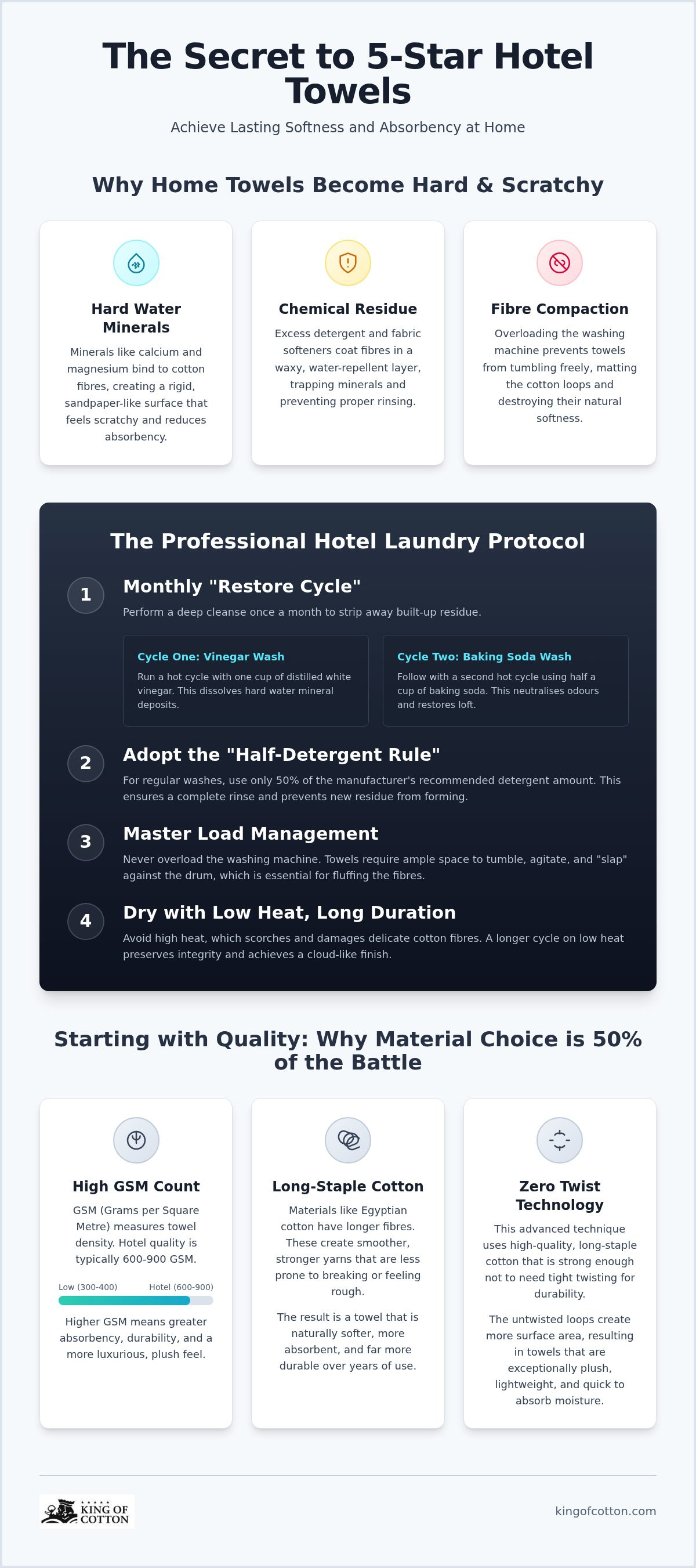
Terry towels rely on thousands of tiny loops, known as the pile, to create surface area for absorption. For these loops to remain soft, they must stay upright and separated. When a washing machine is overloaded, there isn't enough space for the towels to tumble and "slap" against the drum, which is a vital part of the softening process. This lack of mechanical agitation leads to matted surfaces where the fibres lie flat and lose their spring. Capillary action is the ability of liquid to flow into the narrow spaces between cotton fibres, a process that is physically blocked when the loops are matted or stiffened by residue.
The Role of Chemical Residue
It's tempting to use extra detergent for a "deeper" clean, but this is often the enemy of fluffiness. High-GSM (Grams per Square Metre) weaves, like those found in our luxury bathroom collections, are dense. This density means surfactants easily become trapped within the core of the towel whilst washing. Perhaps the greatest irony lies in fabric softeners. Whilst they provide a temporary scent, they actually coat the cotton in a waxy layer that reduces absorbency and traps minerals inside the weave. Understanding Towel materials and construction is the first step in realising that luxury cotton doesn't need chemical additives; it needs proper care to breathe. Finally, over-drying at extreme temperatures in a domestic setting can scorch the delicate cellulose, making the cotton permanently brittle and prone to shedding.
The Professional Hotel Laundry Protocol
The secret behind the enduring softness of elite hospitality linens isn't a proprietary chemical. Instead, it's a disciplined approach to the laundry cycle. When considering what towels do 5 star hotels use, the protocol is just as important as the purchase. Luxury spas and hotels utilise a "Restore Cycle" to strip away the waxy coatings and mineral deposits that build up over time, ensuring every guest enjoys a fresh, cloud-like experience.
One of the most vital adjustments you can make at home is the "Half-Detergent Rule". Most domestic users over-dose their machines, assuming more soap equals cleaner towels. In reality, modern detergents are highly concentrated. Using only half of the recommended amount ensures that the rinse cycle can actually do its job. To balance the naturally alkaline pH of laundry soap, professionals often utilise natural acids during the final rinse. This neutralises the fibres and prevents them from becoming brittle as they dry.
Step 1: The Deep Cleanse (Stripping Residue)
To replicate this professional finish at home, perform a monthly strip wash. Begin by running a cycle with one cup of distilled white vinegar in the drawer and no detergent. The acetic acid dissolves the calcium and magnesium deposits common in UK hard water. Once finished, run a second cycle with half a cup of baking soda. This helps to "open up" the cotton loops, lifting the pile and restoring the towel's natural loft. You don't need to do this every week; once a month is sufficient to reset the textile's performance. If you've wondered what towels do 5 star hotels use to stay so white, this simple chemical reset is the foundational answer.
Step 2: The Perfect Wash Temperature
Precision with heat is equally important. For regular maintenance, 40°C is the absolute "sweet spot". It's warm enough to activate surfactants and remove body oils without stressing the delicate cellulose of the cotton. Whilst 60°C is necessary for sanitisation in a professional hospitality context, it shouldn't be the default setting for every wash. High heat over time can lead to fibre fatigue and shrinkage, especially in high-density weaves.
Choosing towels designed for these professional standards is essential for long-term satisfaction. Our King of Cotton Bathroom Collections are specifically engineered to withstand frequent professional-grade laundering whilst retaining their sumptuous texture. By following this simple, repeatable protocol, you can ensure your investment feels brand new for years.
The Secret of Mechanical Action: Load Size and Agitation
Whilst chemical balance is vital, the physical environment inside your machine determines the final texture of your linens. If you've wondered what towels do 5 star hotels use to maintain that consistent fluffiness, the answer lies in the space they provide for the fabric to breathe. Professional laundries never treat a washing machine like a cupboard; they treat it like a precision tool designed for movement.
The "Golden Rule" of luxury textile care is to never overload the drum. When a machine is packed to the brim, towels clump together in a heavy, sodden mass. This prevents water from penetrating the core of the weave and stops the rinse cycle from whisking away residues. It creates a "clumping" effect where the towels simply rotate as one solid block, rather than tumbling independently. Without this independent movement, the cotton fibres remain matted and flat.
Optimising the Drum Space
For the best results, aim for a half-load or a "lifting" load. A simple rule of thumb used by housekeeping experts is the "hand-width" space. You should always be able to place your hand vertically at the top of the drum without compressing the cotton. Whilst it feels less efficient to run smaller loads, the resulting longevity of your towels justifies the extra cycle. Restricted movement is the primary reason why domestic towels lose their "spa feel" so quickly compared to professional stock.
The Power of Agitation
Softness is often a product of physical force. For cotton loops to remain plush, they must tumble freely and "slap" against the sides of the drum. This mechanical action acts like a microscopic comb, separating the fibres and preventing them from matting together. A high-speed spin is essential for removing excess water, but it also pins the fabric against the drum wall. Adopting a non-negotiable hotel secret is key: shake every towel out vigorously before it enters the dryer. This "snapping" motion untangles the loops and resets the pile before the heat sets them in place.
In the dryer, the goal is to maintain this separation. Many professional spas include laundry balls or clean tennis balls in the cycle. These objects bounce amongst the linens, physically lifting the fabric and ensuring air can circulate between every fibre. When you understand what towels do 5 star hotels use, you realise that luxury is as much about the air trapped inside the towel as it is about the cotton itself.
Drying and Storage: Preserving the "Spa Feel"
The final stage of the laundry process is where the sensory experience is either perfected or lost. If you've wondered what towels do 5 star hotels use to maintain that signature loft, the answer often lies in the drying room. Whilst it might seem eco-friendly to hang linens on a line, the lack of movement during evaporation is what creates that "sandpaper" texture. Without the mechanical action of a drum, the cotton loops settle into a rigid, flattened state.
Professional laundries prioritise movement during the drying phase. Tumble drying is superior for cotton because it keeps the fibres agitated as they dry, preventing the loops from sticking together. The secret to success is the "Low Heat, Long Duration" philosophy. High heat can scorch the delicate cellulose fibres, leading to a brittle feel and premature thinning of the textile. You're aiming for a gentle warmth that coaxes the moisture out without baking the cotton.
One critical error in domestic settings is over-drying. Once the moisture is gone, continuing the heat cycle creates static and makes the cotton feel harsh. Modern professional dryers include a "Cool Down" phase. This five to ten minute period of cold tumbling sets the fluffiness and allows the fibres to relax before they are handled. It's this temperature transition that locks in the softness you expect from a luxury suite.
The Tumble vs Air Dry Debate
In the UK climate, pure air drying often results in a stiff finish. If you prefer to avoid constant tumble drying, consider the "Hybrid Method". Air dry your towels until they are slightly damp to the touch, then finish them in the dryer for the final fifteen minutes. This provides enough movement to soften the pile without the energy consumption of a full cycle. For more insights on selecting the right materials for this process, read our sibling article: How to Choose The Perfect Luxury Bath Towels: An Expert Guide.
Professional Storage Techniques
Storage is the final step in preserving the "spa feel". You should never iron your towels. The weight and heat of an iron flatten the terry loops, which significantly reduces the towel's absorbency and softness. Instead, adopt the "Hotel Fold" or "The Roll". Rolling towels is often preferred in smaller spaces as it prevents the heavy weight of a stack from crushing the pile of the towels at the bottom. If you want to know what towels do 5 star hotels use, they use ones that are allowed to breathe.
Ensure your linen cupboard is well-ventilated. A lack of airflow can lead to musty odours amongst the stacks, even if the towels were perfectly clean when stored. By maintaining a cool, dry environment, you preserve the integrity of the cotton. To experience this level of quality in your own home, explore our range of professional-grade luxury towels.
Starting with Quality: Why Material Choice is 50% of the Battle
While a rigorous laundry protocol is essential, the foundation of a spa-like experience is the material itself. If you've ever wondered what towels do 5 star hotels use, the answer is rarely found in standard retail aisles. High-end establishments invest in specific textile architectures designed to withstand industrial washing whilst maintaining a sumptuous hand-feel. Material choice is effectively half the battle; without the correct staple length and density, even the most careful washing will eventually result in a thin, lifeless towel.
At King of Cotton, we've spent decades as a premier supplier to the finest hotels in the world. We understand that a towel's performance is dictated by its DNA. Cheap cotton with short fibres will inevitably fail, no matter how many "Restore Cycles" you perform. By starting with professional-grade materials, you ensure that the effort you put into your laundry routine yields the luxurious results you deserve.
Understanding GSM for Home Use
GSM, or Grams per Square Metre, serves as the primary metric for towel quality and weight. For a perfect balance of indulgence and practicality, the 500-600 GSM range is considered the gold standard in the hospitality industry. These towels provide enough weight to feel substantial and absorbent, yet they're thin enough to dry efficiently within a standard cycle. In contrast, 700+ GSM towels offer unparalleled luxury but require significantly more professional care to prevent them from holding onto dampness. Essentially, GSM is to towels what thread count is to luxury bed linen.
The Benefits of Long-Staple Cotton
The secret to enduring softness lies in the length of the cotton fibre. Long-staple cotton, such as the Egyptian varieties we specialise in, produces smoother yarns with fewer exposed ends. It's these ends that eventually fray and create a scratchy texture over time. Zero Twist technology is another hallmark of the hotels we serve; it uses longer, stronger fibres that don't require the tight twisting of traditional yarns. This leaves more surface area for absorption and creates a cloud-like softness that lasts for years.
Beyond the cotton itself, the quality of the dyes and stitching plays a critical role. Cheap pigments can coat the fibres in a rigid layer that feels abrasive, whereas professional-grade linens use reactive dyes that bond at a molecular level. This preserves the towel's flexibility and prevents the stiffening effect often seen in budget alternatives. We invite you to explore our full range of products to upgrade your bathroom with the actual textiles used by 5-star establishments globally.
Elevate Your Bathing Ritual to Hotel Standards
Achieving the cloud-like comfort of a prestigious suite requires a balance of professional-grade materials and disciplined care. By adopting the "Restore Cycle" to strip away mineral build-up and ensuring your machine is never overloaded, you can maintain that indulgent texture for years. You've discovered that what towels do 5 star hotels use is only part of the secret; the rest lies in avoiding the waxy softeners and high heat that compromise fine cotton fibres.
Since 1995, King of Cotton has operated with family-run expertise to provide the finest homes and hotels with high-GSM luxury linens. We specialise in the long-staple Egyptian cotton and organic textiles that define international standards of excellence. It's time to move beyond scratchy, sandpaper textures and invest in the enduring softness of professional hospitality.
Upgrade to the towels the world’s finest hotels trust: Shop King of Cotton Bathroom Collections.
Transform your bathroom into a serene sanctuary where every wash feels like a fresh beginning.
Frequently Asked Questions
How much white vinegar should I add to my towel wash?
Add approximately 250ml of distilled white vinegar directly into the detergent drawer for a standard load. This precise amount is sufficient to neutralise the alkaline residues from previous washes and break down mineral deposits in hard water areas. For the best results, don't add any detergent during this specific cycle. The vinegar acts as a natural clarifier, restoring the cotton's ability to absorb water whilst softening the texture without leaving a scent.
Can I use fabric softener on hotel-quality towels?
You should avoid fabric softeners entirely when caring for professional-grade linens. These products contain silicones and oils that coat the cotton fibres in a waxy layer, which significantly reduces absorbency over time. This coating also traps dirt and minerals inside the weave, leading to a greyish discolouration. To understand what towels do 5 star hotels use to stay soft, look to mechanical agitation and vinegar rinses rather than using chemical additives.
Is it better to wash towels at 60 degrees or 40 degrees?
A temperature of 40°C is ideal for regular maintenance to preserve the integrity of high-quality cotton fibres. Whilst 60°C is effective for deep sanitisation and killing bacteria, frequent washing at this higher heat can lead to fibre fatigue and shrinkage. Reserve the 60°C setting for towels used during illness or for heavily soiled items, ensuring you always follow with a gentle tumble dry on a low heat to restore the pile's natural loft.
How do I fix towels that have become scratchy and hard?
Restore scratchy towels by performing a two-stage strip wash without any detergent. First, run a cycle at 60°C with one cup of white vinegar to dissolve mineral build-up. Follow this immediately with a second cycle using half a cup of baking soda to lift the pile and neutralise odours. Finish by tumble drying on a low heat with laundry balls to physically separate the fibres and return them to their original, cloud-like softness.
What is the best detergent for keeping towels soft?
Choose a high-quality liquid detergent that is free from optical brighteners and heavy perfumes. Liquids typically rinse away more cleanly than powders, which can leave gritty residues amongst the loops of the towel. Use only half the manufacturer's recommended dose. This prevents the over-sudsing that traps surfactants in dense, high-GSM weaves, ensuring the rinse cycle can effectively clear all chemical traces from the fabric and leave the cotton feeling light and airy.
Why do my towels smell musty even after washing?
Musty odours are usually caused by bacteria trapped in detergent residue or towels that remained damp for too long. To fix this, run a Restore Cycle with vinegar to kill the bacteria and strip away the waxy build-up. Always ensure towels are completely dry before folding them for storage. A ventilated linen cupboard is essential, as even a small amount of residual moisture can lead to mildew in enclosed spaces and ruin the freshness.
Should I use a tumble dryer for Egyptian cotton towels?
Tumble drying is the preferred method for maintaining the loft of Egyptian cotton. The mechanical action of the drum prevents the fibres from matting together, which often happens during air drying in the UK climate. Use a low heat setting and include wool dryer balls to help the air circulate. This technique ensures the long-staple fibres remain separated and upright, providing that signature plushness found in luxury hotel bathrooms across the world.
How often should I perform a "Restore Cycle" on my linens?
Aim to perform a Restore Cycle once every month or after every ten washes. This frequency prevents the gradual accumulation of hard water minerals and detergent surfactants that eventually lead to stiffness. Regular maintenance ensures your linens perform at their peak for years. When you consider what towels do 5 star hotels use, remember that their longevity is a result of these consistent, professional-grade care routines that prioritise fibre health over chemical shortcuts.