

Choosing the Best Material for Bathrobes: A Luxury Guide for 2026
Why does a bathrobe that felt like a cloud in the boutique often transform into a heavy, scratchy burden after just three washes? It’s a common frustration to find yourself trapped in a robe that takes hours to dry or fails to provide that serene, spa-like warmth you crave. Finding the best material for bathrobes isn't just about initial softness; it's about understanding the technical balance between fiber length and water wicking. You shouldn't have to settle for anything less than the five-star experience found in the world's most prestigious suites.
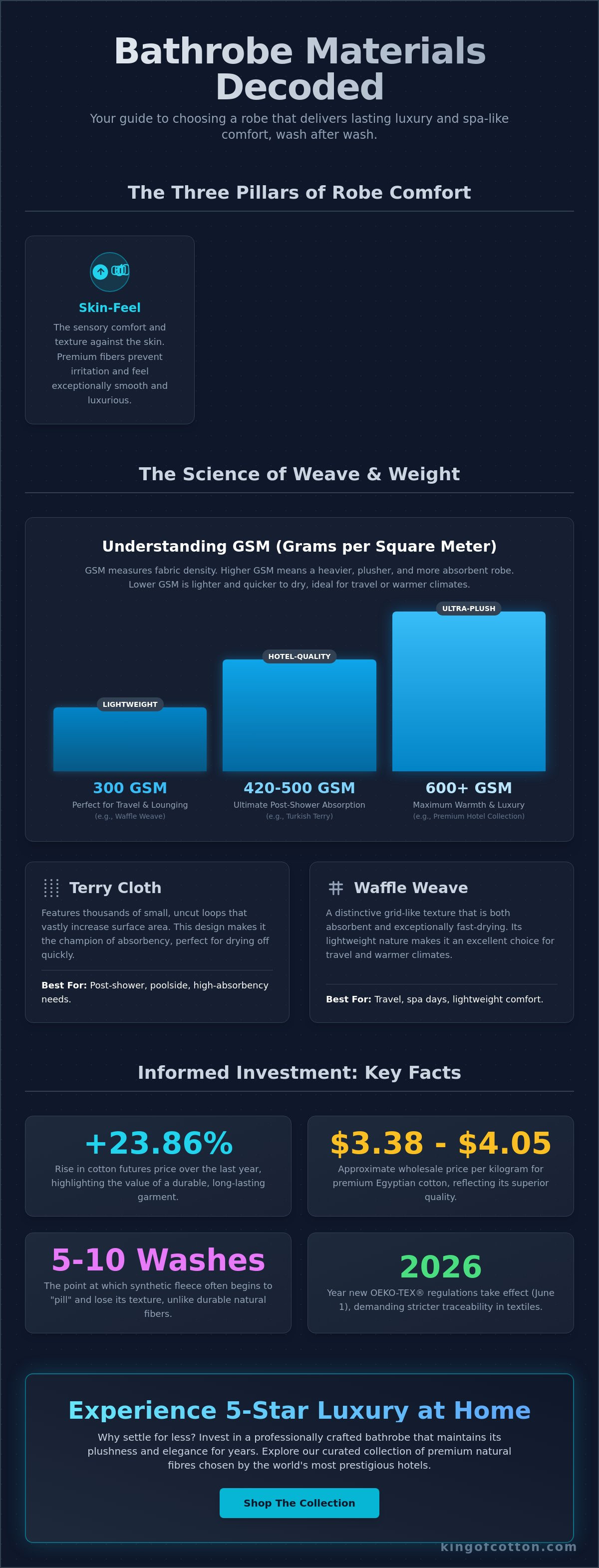
We'll show you how to choose a garment that stays plush and rejuvenating for years. With the new June 1, 2026 OEKO-TEX regulations demanding stricter traceability and the price of cotton futures rising 23.86% over the last year, making an informed investment is more critical than ever. We'll explore why a 420 to 500 GSM Turkish terry cloth offers the ultimate post-shower absorption, while a 300 GSM waffle weave provides the perfect lightweight alternative for travel. From the legendary softness of Egyptian cotton to the modern sustainability of bamboo, this guide ensures your daily routine becomes a haven of elegance.
Key Takeaways
- Learn how the three core functions of fabric—absorbency, insulation, and skin-feel—dictate the longevity and comfort of your daily lounge experience.
- Compare the unique characteristics of premium natural fibers to find the best material for bathrobes, whether you prioritize the silkiness of Egyptian cotton or the fast-drying nature of Turkish varieties.
- Decode the technical details of GSM and weave styles to ensure your robe provides the perfect balance of warmth and water-wicking for your specific climate.
- Discover the professional secrets behind five-star hotel amenities that allow for a durable, spa-like softness that remains luxurious wash after wash.
Why Material is the Most Important Factor in Your Bathrobe Choice
The transition from a warm shower to the cool air of your bedroom is a delicate moment. Choosing the best material for bathrobes is the difference between extending that serene, spa-like feeling and a sudden, chilly awakening. Your selection must balance three core functions: absorbency to wick away moisture, insulation to maintain body temperature, and skin-feel to provide sensory comfort. A mistake here leads to a garment that feels damp, causes skin irritation, or traps heat until you're uncomfortably sweaty.
While there are many common bathrobe materials ranging from silk to microfiber, the functional success of a robe depends on how these fibers interact with moisture and air. High-quality materials don't just feel better; they perform better. If you've ever felt a robe become heavy and cold against your skin, it's likely because the fabric has reached its saturation point without allowing for breathability.
To better understand the visual and functional differences between these luxury options, watch this helpful video:
It's also vital to distinguish between a "bathrobe" and a "dressing gown." A true bathrobe acts as a wearable towel, designed with high-absorbency fibers to dry the skin. A dressing gown is typically a layering piece intended for warmth over pajamas, often using materials that prioritize insulation over water-wicking. For the ultimate post-bath experience, you need a material that masters both.
Absorbency vs. Insulation: What Do You Need?
If your primary goal is to step directly from the tub into your robe, you need the "wearable towel" approach. This requires a looped pile or a specific weave that increases surface area for water capture. Conversely, if you're looking for a companion for slow Sunday mornings over coffee, insulation is your priority. The physical architecture of a fiber, specifically the presence of a hollow core or "lumen" in cotton, determines its capacity for capillary action and water retention.
The Long-Term Value of Natural Fibres
Synthetic fleece might feel soft on the hanger, but it often loses its texture and becomes "pilled" after just 5 to 10 washes. More importantly, polyester traps sweat, which can lead to skin congestion. Natural fibers like cotton and bamboo breathe, allowing your body to regulate its temperature naturally. Investing in quality pays off; a premium cotton robe maintains its structural integrity and softness for years. You can find these expertly crafted options in our bathroom collection, where every piece is designed for professional-grade longevity. We've spent over 25 years perfecting these blends to ensure they remain a haven of elegance in your home.
Comparing Natural Fibres: Egyptian Cotton, Turkish Cotton, and Bamboo
While the technical weight of a fabric defines its warmth, the origin of the fibre determines the tactile soul of the garment. Many guides treat "cotton" as a generic category, yet the difference between standard short-staple cotton and premium varieties is profound. When searching for the best material for bathrobes, the debate usually centres on the geographic heritage and staple length of the plant. In 2026, the approximate wholesale price for Egyptian cotton sits between US$3.38 and US$4.05 per kilogram, a cost that reflects its status as a premium global commodity.
Egyptian Cotton remains the pinnacle of textile excellence. The unique climate of the Nile River Valley produces extra-long staple (ELS) fibres, which are significantly longer than standard cotton strands. These longer fibres allow for a much finer, tighter spin that results in a stronger and smoother yarn. This is why an Egyptian cotton robe feels exceptionally silky against the skin. According to Good Housekeeping's guide to bathrobe fabrics, the choice of fibre determines everything from long-term durability to how the robe handles repeated laundering.
Turkish Cotton offers a distinct functional advantage. While still a premium long-staple fibre, it's prized for its unique balance of absorbency and drying speed. Because Turkish cotton fibres are slightly less absorbent than Egyptian ones, they don't hold onto moisture for as long. This makes them ideal for humid climates. Turkish cotton production is forecast to decrease to 525,000 metric tons for the 2026/2027 marketing year, making high-quality Turkish robes an increasingly exclusive luxury. If you prefer a robe that dries quickly on the hook without sacrificing plushness, this is your ideal choice.
The Science of Egyptian Cotton
The secret to the longevity of Egyptian cotton lies in its tensile strength. Because each fibre is longer, there are fewer "ends" in the yarn, which prevents the pilling and fraying common in cheaper materials. Unlike synthetic alternatives, Egyptian cotton actually becomes softer and more supple with every wash. For those interested in how these fibres perform throughout the home, our collection of Egyptian cotton bed linen provides excellent context for how these materials behave over years of use.
Bamboo and Cotton Blends
Bamboo is the rising star of 2026, particularly for those with sensitive skin. It possesses natural antimicrobial properties and a unique ability to wick moisture away from the body. However, 100% bamboo can sometimes lack the structural "heft" associated with five-star luxury. A blend, typically 60% cotton and 40% bamboo, provides the best of both worlds. It combines the silky drape and hypoallergenic qualities of bamboo with the durable foundation of cotton. This blend is particularly effective in warmer environments where a heavy cotton robe might feel too stifling. You can explore our full range of these premium fibres in our comprehensive product collection.
The Science of Weave and Weight: Terry, Waffle, and GSM Explained
While the origin of the fibre dictates the tactile soul of your robe, the weight and weave determine its functional performance. GSM, or Grams per Square Metre, is the metric that professionals use to measure fabric density. It tells you exactly how much material has been woven into every inch of the garment. When searching for the best material for bathrobes, understanding GSM is essential to ensure your purchase aligns with your lifestyle. For a plush, hotel-style experience, industry experts recommend a weight between 420 and 500 GSM for absorbent terry cloth, while a lighter waffle weave typically sits in the 300 to 350 GSM range.
The choice of weight also impacts the "hug" factor of the garment. A heavyweight robe exceeding 500 GSM offers maximum insulation and a comforting, weighted feel that is ideal for cold winter mornings. In contrast, the global bamboo clothing market, forecast to grow at a CAGR of 8.5% between 2026 and 2032, often focuses on lighter weights that provide a silky, breathable drape. Whether you seek the dense embrace of a traditional hotel robe or the airy freedom of a modern waffle weave, the GSM and weave type are the scientific foundations of your comfort.
Understanding GSM Tiers
Lightweight options (200 to 350 GSM) are the preferred choice for travel and summer use. They pack easily and won't weigh you down in warmer weather. Medium weight (400 to 500 GSM) represents the versatile "hotel standard" that most five-star establishments provide to guests. It's thick enough to be absorbent yet light enough for year-round comfort. Heavyweight robes (500+ GSM) are the ultimate luxury for those who prioritize warmth and a substantial, cozy feel during the colder months.
Weave Types and Their "Feel"
Terry cloth remains the classic choice for a reason. Its structure consists of thousands of uncut loops that increase the surface area of the fabric, allowing it to trap water molecules instantly. This makes it the superior choice for use directly after a bath. If you prefer a more refined, velvet-like aesthetic, velour is the answer. Velour is created by shearing the tops of the terry loops, resulting in a smooth, lustrous finish that looks exceptionally elegant. However, because the loops are cut, the exterior surface is slightly less absorbent than traditional terry cloth.
The waffle weave has seen a significant rise in popularity through 2024 and 2026. Its distinctive honeycomb structure allows for rapid air circulation, meaning the garment dries much faster than its looped counterparts. This makes it an excellent choice for spa environments or humid climates where heavy cotton may stay damp for too long. By matching the weave to your specific ritual, you ensure your robe remains a functional tool for relaxation rather than just an extra layer of clothing.
Selecting the Right Material for Your Lifestyle and Climate
Your home environment is the most significant variable in determining the best material for bathrobes. A drafty Victorian terrace in the peak of winter requires a vastly different solution than a modern, climate-controlled apartment. While luxury is often associated with weight, the true mark of a premium robe is its ability to regulate your body temperature without causing discomfort. Choosing the wrong fabric can lead to a garment that feels heavy when wet or, worse, traps heat until you're uncomfortably sweaty.
For the colder months, heavyweight Turkish or Egyptian terry cloth remains the gold standard for post-bath warmth. If you prefer a robe for lounging over pyjamas rather than drying off, brushed cotton offers a sophisticated alternative. It provides a soft, flannel-like texture that insulates effectively without the bulk of traditional loops. Conversely, summer calls for the breathability of a linen-cotton blend or a lightweight waffle weave. These materials allow for maximum air circulation, ensuring you stay cool while enjoying your morning coffee.
Skin health is a factor that many high-street brands overlook. Synthetic "super-soft" robes are often composed of 100% polyester, which acts as a non-breathable barrier against your skin. This can exacerbate conditions like eczema or cause general irritation. Natural fibres such as bamboo and organic cotton are hypoallergenic and inherently more hygienic. With the June 1, 2026 OEKO-TEX standards now requiring stricter proof of biodegradability and chemical safety, choosing certified natural materials is the only way to guarantee your robe is as kind to your skin as it is to the environment.
Climate-Specific Recommendations
In the UK, where indoor humidity can fluctuate, a 450 GSM cotton robe is a versatile choice for most households. It provides enough heft to keep you warm in a damp bathroom but remains breathable enough for year-round use. Effective breathability ensures that moisture evaporates away from the skin, preventing the unpleasant "clamminess" often felt in poorly ventilated fabrics. Avoid the trap of "ultra-plush" synthetics; they may feel soft initially, but they fail to wick moisture, leaving you feeling chilled as the dampness lingers against your skin.
Durability and Care
The longevity of your investment depends on how the material handles the laundry cycle. High-quality long-staple cotton resists the "crunchiness" and pilling that plagues cheaper alternatives. To maintain that signature hotel softness, you must avoid liquid fabric softeners. These products coat the fibres in a waxy layer, which significantly reduces the cotton's ability to absorb water. For more detailed insights on maintaining your garment's silhouette, you can explore our bathroom collection for professional style advice. You can find our full range of durable, hotel-standard options by browsing our premium products today.
Why 5-Star Hotels Choose King of Cotton Materials
For more than 25 years, King of Cotton has held a distinguished position as a Supplier to the Finest Homes & Hotels in the World. This heritage isn't built on marketing alone; it's rooted in a deep technical understanding of textile performance. When a luxury hotel selects a garment, they aren't just looking for initial softness. They require a product that maintains its structural integrity and "loft" after hundreds of industrial wash cycles. This professional-grade durability is what we bring to your master suite, ensuring your investment remains a haven of elegance for years to come.
The "Hotel Secret" to that iconic, plush feeling lies in the specific combination of high-density weaving and premium fiber choice. While we've discussed that 420 to 500 GSM is the standard for absorbency, many five-star establishments opt for our 500+ GSM Egyptian cotton ranges. This creates a weightless yet warm sensation that synthetic alternatives simply can't replicate. By using the best material for bathrobes, hotels ensure that the guest experience is one of serene confidence and rejuvenation, regardless of how many times the robe has been laundered.
Material choice also plays a critical role in the aesthetic of a luxury gift. A dense, high-quality weave provides the perfect canvas for monogramming, allowing embroidery to sit proudly on the surface without sinking into the pile. Whether you're purchasing for a boutique hotel or your own home, the quality of the base fiber determines the final elegance of the garment. Our rigorous testing processes ensure that every thread meets the exacting standards required by the global hospitality industry.
The King of Cotton Difference
Our commitment to being specialists in fine Egyptian cotton means we never compromise on fiber length or yarn strength. Our 100% cotton and Giza cotton ranges are engineered to provide the ultimate tactile experience. If you're unsure which texture suits your post-bath ritual, we invite you to visit our physical stores. Feeling the substantial "hand" of a 500 GSM terry robe versus the crisp, modern texture of a waffle weave often makes the final decision clear.
Final Checklist for Your Purchase
Before you make your final selection, consider this summary of how to find the best material for bathrobes based on your specific needs:
- For Maximum Absorbency: Choose high-GSM Turkish or Egyptian cotton terry cloth.
- For Summer or Spas: Opt for a lightweight waffle weave or a breathable bamboo blend.
- For Sensitive Skin: Prioritize organic cotton or hypoallergenic bamboo fibers.
- For Winter Lounging: Look for heavyweight velour or brushed cotton for superior insulation.
Elevate your daily routine by choosing the same materials trusted by the world's most exclusive resorts. You can shop our professional-grade bathrobe collection today and begin transforming your home into a sanctuary of comfort and style.
Elevate Your Post-Bath Ritual for 2026
Your choice of fabric is the final touch in a truly restorative routine. Whether you prioritize the heavyweight warmth of 500 GSM Egyptian cotton or the breathable, fast-drying nature of a Turkish waffle weave, the technical details define your comfort. Selecting the best material for bathrobes is about more than just initial softness; it's an investment in a garment that breathes, absorbs, and remains supple through years of laundering. You deserve a robe that performs as beautifully as it feels.
As a Supplier to the Finest Homes & Hotels in the World for over 25 years, King of Cotton understands the science of luxury. Our products are rated Excellent on Trustpilot, reflecting a long-standing commitment to professional-grade quality that you can enjoy every day. Don't settle for synthetic alternatives that trap heat and lose their texture after a few cycles. Instead, create a sanctuary of elegance in your own home with natural materials designed to withstand the test of time.
Explore our collection of the finest cotton bathrobes and dressing gowns and discover the difference that expert craftsmanship makes. It's time to transform your morning routine into the five-star experience you've been waiting for.
Frequently Asked Questions
Which is better: a cotton or polyester bathrobe?
Cotton is the superior choice because it is a natural, breathable fiber that absorbs moisture, unlike polyester which is a synthetic plastic that traps heat and sweat. While polyester might feel soft on a shop hanger, it often leads to overheating and skin irritation after a few minutes of wear. Natural cotton allows your body to regulate its temperature. It also becomes softer over time, whereas polyester often becomes scratchy and pilled after 5 to 10 washes.
What is the softest material for a dressing gown?
Egyptian cotton is widely considered the softest material for a dressing gown due to its extra-long staple fibers. These long fibers create a smoother and finer yarn, which results in a silky texture that is gentle on sensitive skin. If you prefer a velvet-like feel, cotton velour is an excellent alternative. It features a sheared loop finish that provides an incredibly plush surface without the synthetic feel of mass-market fleece robes.
What does GSM mean for bathrobes and which is best?
GSM stands for Grams per Square Metre and it measures the weight and density of the fabric. For a classic hotel-style experience, a range of 420 to 500 GSM is the ideal balance of plushness and absorbency. If you're looking for the best material for bathrobes for summer use, a lower weight of 300 GSM is more appropriate. For maximum winter warmth, seek out heavyweight options that exceed 550 GSM for a substantial, cozy feel.
Is Egyptian cotton good for bathrobes?
Egyptian cotton is the best material for bathrobes if you prioritize long-term durability and a premium, high-end texture. Its unique climate-grown fibers are stronger than standard cotton, meaning the robe won't fray or lose its shape after repeated laundering. This material is also exceptionally absorbent, making it highly functional for use directly after a bath. Because it is a breathable natural fiber, it prevents the clammy feeling associated with cheaper alternatives.
Why do hotel bathrobes feel so much better than mine?
Hotel robes feel superior because they utilize high-GSM long-staple cotton and are laundered using professional techniques that preserve fiber loft. Most five-star establishments avoid liquid fabric softeners, which actually coat fibers and reduce their natural fluffiness. By investing in professional-grade materials from a specialist with over 25 years of expertise, you can replicate this experience. Our robes are designed to withstand industrial-strength cleaning while maintaining their signature softness and elegant silhouette.
Which bathrobe material is most absorbent?
Turkish cotton is the most absorbent material for bathrobes when it is woven into a traditional terry cloth weave. The looped structure of the fabric creates a large surface area that pulls water away from the skin instantly. While bamboo blends are popular for their silkiness, they don't match the heavy-duty water-wicking capabilities of a high-quality cotton loop. A 500 GSM Turkish terry robe is the most efficient tool for drying off quickly after a shower.
How do I stop my cotton bathrobe from getting stiff?
To prevent stiffness, you should stop using liquid fabric softeners and instead dry your robe in a tumble dryer on a medium heat setting. Softeners leave a waxy residue that causes fibers to clump together and lose their ability to absorb water. Adding half a cup of white vinegar to the rinse cycle can help strip away mineral deposits from hard water. This simple maintenance step keeps the cotton fibers open and soft for years of use.
Are waffle robes actually warm?
Waffle robes are not designed for warmth; they are engineered for breathability and rapid drying. Their distinctive honeycomb structure allows air to circulate freely, which makes them perfect for summer mornings, spa visits, or humid climates. While they provide a light layer of coverage over pajamas, they don't offer the thick insulation found in a heavyweight terry cloth robe. If your primary goal is staying warm in a cold house, a dense Egyptian cotton robe is a more functional choice.