

How to Stop Pillows Going Flat and Keep Them Plump
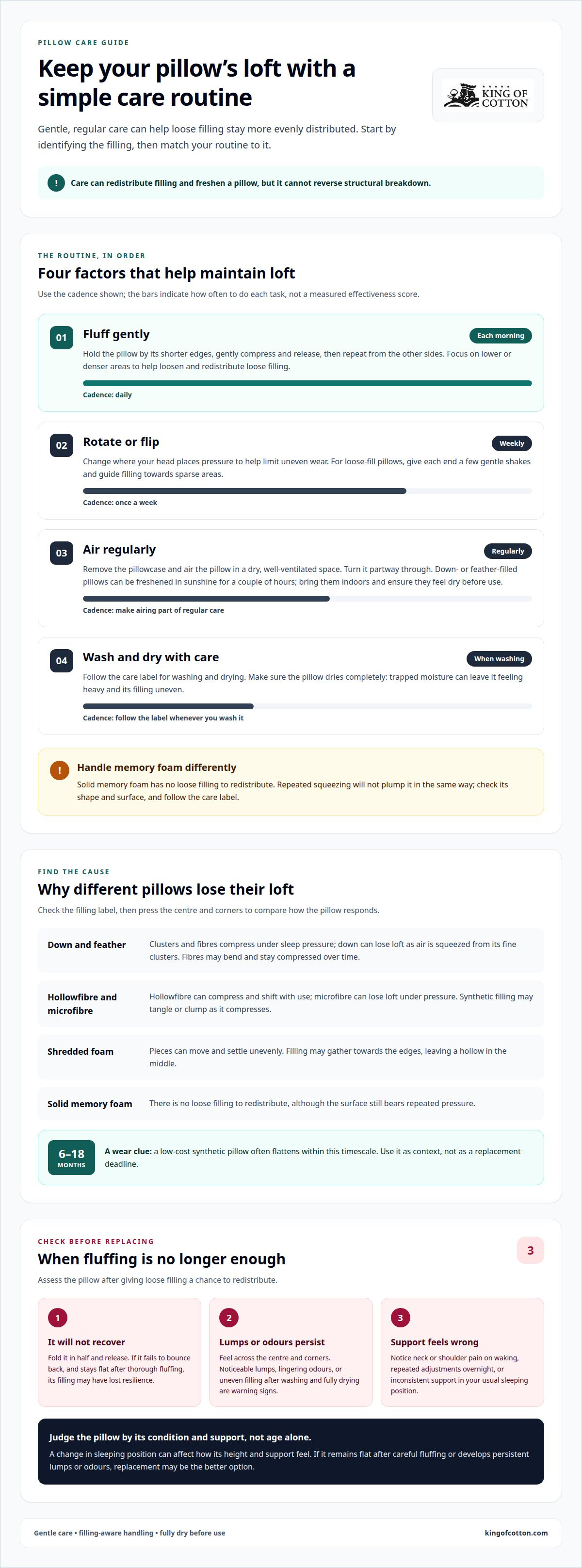
The simplest way to learn how to stop pillows going flat is to fluff them each morning, rotate them weekly and air them regularly. Follow the care label when washing, and make sure each pillow dries completely. If it stays flat after thorough fluffing or develops persistent lumps or odours, it may be time to replace it.
A pillow that loses its loft can make a comfortable bed feel less inviting, but flattening doesn’t always mean it’s beyond help. To stop pillows going flat, first work out whether the filling needs redistributing or has lost its ability to spring back. This guide explains why different fillings flatten, how to care for them safely and when replacement may be the better option. Match your care routine to the filling, and consider the support you need in your usual sleeping position.
Key Takeaways
- Different fillings lose loft in different ways, so identify what your pillow contains before choosing how to care for it.
- Use the care label to guide washing and drying; trapped moisture can leave a pillow feeling heavy and its filling uneven.
- Noticeable lumps, lingering odours or a pillow that won’t recover its shape can signal that it’s time for a replacement.
- A cotton pillow protector can help shield the filling from oils and sweat, while a roomy pillowcase helps avoid squashing it.
- Store spare pillows clean, dry and uncompressed to help them keep their shape between uses.
What causes your pillows to go flat?
Start by identifying the filling, because down, synthetic fibres and foam lose loft in different ways. Then compare the pillow’s shape before bed with how it feels in the morning.
-
Causes of overnight flattening
Check the filling label and notice where your head rests. Pressure during sleep compresses down clusters, squeezing air from the fine filling in a 100% down pillow. Down and feather fibres can bend and stay compressed over time. This explains why a pillow may feel noticeably flatter by morning, even when its filling hasn’t moved to another part of the cover.
-
Common causes of flat pillows
Compare the filling type with how it responds when pressed. Hollowfibre can compress and shift with regular use, while microfibre can lose loft under pressure. Shredded foam pieces can move and settle unevenly inside the cover. Solid memory foam behaves differently: it has no loose filling to redistribute, although its surface still bears repeated pressure.
-
Causes of a flat middle
Feel across the centre and edges to locate where the filling has gathered. Shredded foam may settle away from the middle, leaving a hollow beneath your head and fuller edges. Loose fibres can also shift with repeated pressure, creating uneven support. If the centre feels flat but the sides remain raised, unevenly distributed filling is a likely cause.
- Check for compression, not just movement. Press the centre, then the corners, and compare how quickly each area regains its shape. Down and feather fibres naturally bend under pressure, while synthetic filling may tangle or clump as it compresses. A low-cost synthetic pillow often flattens within 6 to 18 months. That timescale can help distinguish early wear from a temporary change in loft.
- Consider the filling’s structure. Air pockets between fibres help distribute pressure rather than letting it concentrate in one area. Fine down loses some loft as air is squeezed from its clusters, while shredded foam can shift and settle into gaps. Some man-made gel or polyester pillows may flatten less than other types. Both the material and its construction affect how a pillow feels after a night’s use.
Fluffing, turning and shaking pillows
Build a brief pillow-care routine around gentle fluffing, regular rotation and fresh air. For many loose-fill pillows, these steps are a practical way to help stop pillows going flat, though they won’t reverse structural breakdown.
-
Fluff pillows daily
Each morning, hold a pillow by its shorter edges, gently compress it, then release it to loosen and redistribute the filling. Repeat from the other sides, focusing on areas that feel denser or lower. Daily fluffing can help down clusters separate after overnight compression and restore a more even feel.
Keep the movement controlled rather than striking or twisting the pillow. Solid memory foam has no loose filling to redistribute, so repeated squeezing won’t plump it in the same way. Check its shape and surface instead, and follow the care label for material-specific handling.
-
Turn and shake pillows
Rotate or flip each pillow weekly to change where your head places pressure. This helps limit uneven wear, especially if you tend to sleep in the same position each night. For pillows with loose filling, hold both ends and give the pillow a few gentle shakes, then feel across the surface for areas that remain thin.
Use your hands to guide filling towards sparse areas rather than forcing it into one corner. If the filling settles unevenly again soon after shaking, note where the hollow forms. A repeated flat patch may indicate wear, not simply a need for more vigorous handling.
-
Fluff and air pillows
After fluffing, air pillows regularly in a dry, well-ventilated space. Remove the pillowcase first so air can reach the cover, and turn the pillow partway through. For down- or feather-filled pillows, a couple of hours in sunshine can freshen them. Bring them indoors afterwards and make sure they feel dry before use.
Airing complements fluffing, but it won’t restore filling that has permanently compressed. Avoid leaving pillows outdoors in damp conditions. If you’re considering how to stop pillows going flat for longer, combine regular airing with gentle handling and appropriate care. For bedroom essentials, explore bedroom products.
Feather and down filling compresses naturally and often needs regular plumping. Fluffing a flat pillow can redistribute the filling temporarily, but it won’t reverse structural breakdown.
Signs a pillow needs replacing
Judge a pillow by its support and condition, not its age alone. Check its shape and filling, and consider how your neck feels after sleep.
- Fold it and watch how it responds. Fold the pillow in half, then release it. If it fails to bounce back, its filling may have lost resilience. Try the test after fluffing, so loose filling has a chance to redistribute first. If it remains flat after thorough fluffing, replacement may be more useful than further plumping.
- Feel for lumps and inspect the cover. Run your hand over the whole pillow, including its centre and corners. Noticeable lumps can mean polyester filling has tangled or clumped together. Check for persistent odours, too. If washing and fully drying the pillow doesn’t remove the smell, or the filling remains uneven afterwards, consider whether it still provides comfortable, consistent support.
- Pay attention to your position on waking. Notice whether you wake with neck or shoulder pain, or repeatedly adjust the pillow during the night. These signs may mean it no longer supports your head comfortably. A change in sleeping position can also affect how the pillow feels, so assess its height and support in your usual position before deciding that age alone is the problem.
- Compare its condition with its filling type. Polyester fibres can tangle and mat over time, while memory foam cells may soften and lose their rebound. Needing to fluff the pillow daily may also indicate that its internal structure is compromised. If it quickly collapses again after you restore its shape, the filling may no longer provide reliable support.
- Use age as a guide, not the only test. Pillows typically last around 18 months to 3 years, depending on care. The National Bed Federation’s benchmark for replacing pillows is two to three years, although lifespan varies by type. A well-kept pillow may remain comfortable longer, while persistent flatness, lumps or odours can make an earlier replacement sensible.
Replacement timelines can differ, so treat them as guidance alongside the pillow’s condition and how it feels. Tielle recommends replacing pillows after 1-2 years, depending on use. The page also includes a recommendation to replace a pillow every few months, illustrating how far suggested schedules can vary. For down pillows, fill power offers another point of comparison: down pillows with fill power below 600 typically last 1-2 years, while an 800 fill power down pillow can last 5+ years with regular care. These ranges help set expectations, but persistent discomfort or visible deterioration may still make replacement worth considering sooner.
Does a pillow protector really help a pillow keep its shape?
Yes, a protector can help shield the filling from oils, sweat and moisture. Pair it with a roomy pillowcase to help prevent the pillow from being squashed.
-
Use a pillow protector
Fit a clean pillow protector over the pillow before adding its pillowcase. A cotton protector can shield the filling from natural oils and sweat, helping it stay cleaner between washes. This protection can limit the build-up that contributes to a heavy, matted feel over time.
Choose a well-fitting cover that doesn’t pull tightly across the pillow. If you use a zippered cotton protector, make sure the zip closes fully and the fabric sits smoothly. A protector helps guard the pillow, but it won’t restore filling that has already compressed or become uneven.
After fitting the covers, press lightly across the surface. The pillow should still feel evenly cushioned, not tightly bound.
-
Limit moisture with protectors
Choose a protector that forms a barrier between the pillow and everyday moisture. Sweat can work into the filling over time, contributing to a heavier, matted pillow. A zippered cotton protector helps block moisture and dust mites, which can contribute to this build-up.
Keep the pillow dry as well as covered. If it feels damp, remove the pillowcase and protector, then air the pillow until it is completely dry. Putting the covers back on while the filling remains damp can trap moisture against the material.
A protector reduces exposure; it doesn’t replace appropriate cleaning. Follow the care label when washing the pillow and its covers, since different materials need different handling. Check the protector’s fit after washing, too, so it still sits smoothly without compressing the filling.
-
Choose roomy pillowcases
Choose a pillowcase that lets the pillow sit naturally, without forcing its corners into a tight fit. A roomy case helps prevent the filling from being squashed and losing its shape. For example, if a pillow bulges at the seams, try a better-fitting case rather than pressing it flat to close the opening.
After putting the case on, spread the filling towards each corner and smooth the fabric. Check that the pillow lies flat on the bed, without tight seams pulling its edges inward. The case should protect the pillow while allowing the filling to retain its natural loft.
Pair a suitable pillowcase with a protector, then reassess the pillow’s shape after use. Bed linen includes the bedding that completes this protective layer.
How should pillows be stored to prevent them losing their shape?
Prepare each pillow before putting it away, then choose a clean, dry place where it can rest without pressure. The storage method should protect its loft, not compress the filling.
- Wash and dry the pillow according to its care label. Before storing it, check the label for cleaning instructions suited to its filling. Dry the pillow completely, including the centre, so dampness isn’t trapped inside. If it feels cool or heavy in the middle, leave it to dry further before packing it away. A dry pillow is ready for storage; a damp one isn’t.
- Choose a clean, dry, ventilated cupboard. Set aside a shelf away from damp areas, direct spills and household clutter. A bedroom linen cupboard can work well if air can circulate around its contents. Don’t store pillows beside cleaning products, open liquids or anything that could leak onto the fabric.
- Store pillows without compressing them. Lay each pillow flat, or stand it loosely on its side if cupboard space is limited. Don’t fold it, roll it tightly or squeeze it into a small bag. These positions can push filling away from its usual arrangement. Keep heavy blankets and other objects off the pillow so they don’t press down on its loft.
- Use a breathable cover for spare pillows. A clean cotton pillowcase or fabric storage bag can protect a spare pillow from dust while allowing air to circulate. Avoid sealing it tightly in a plastic bag for long-term storage, especially if any moisture remains. Keep the cover loose enough that it doesn’t flatten the filling or pull the corners out of shape.
- Refresh the pillow before bringing it back into use. Remove its storage cover and check for dampness, an unusual smell or uneven filling. If it feels dry and clean, give it a gentle shake and let it air before putting on a fresh pillowcase. For memory foam, follow the care label rather than squeezing or folding it to restore its shape.
Give spare pillows room to rest between uses, then check their shape before making the bed. Explore the bedroom collection to find bedroom essentials for a considered, comfortable space.
King of Cotton: Bed Linen
King of Cotton is a natural next step if you’re replacing a pillow or refreshing your bedroom essentials. Explore its Duvets & Pillows when you’re ready to choose a new pillow, and consider how bed linen can complete a comfortable, considered sleep space.
If your current pillow still feels supportive, continue caring for it with gentle fluffing, suitable storage and a well-fitting protector. If it remains flat, lumpy or uncomfortable, replacement can be a practical opportunity to refresh your bedding, too. King of Cotton offers bedroom and bedding options for individual homes and hospitality settings.
Visit kingofcotton.com to explore the range, or contact King of Cotton with your enquiry.
Make your next pillow choice with confidence
Let comfort guide your next step. Learning how to stop pillows going flat starts with understanding what suits your sleep habits, but a pillow should also feel supportive in your usual sleeping position. If your current one no longer feels right, consider what you’d like to change before choosing a replacement, such as its feel, loft or how it sits beneath your head.
A refreshed bedroom can make that choice part of a broader comfort update. King of Cotton offers Bed Linen, alongside Towels and Bathrobes & Gowns for considered touches across the bedroom and bathroom. If you’re considering a new pillow, get in touch to discuss your options.
Contact King of Cotton about pillow choices, and take your next step towards a more comfortable night’s rest.
Frequently Asked Questions
How do you know when a pillow needs replacing?
Replace a pillow when it no longer supports you comfortably, even after care. Assess it in your usual sleeping position rather than judging it by appearance alone. If your head sinks too far, you keep adjusting it, or it feels uneven beneath your neck, its support may have changed. Compare how it feels with a pillow that still suits you, and note whether the difference persists.
Does the type of pillow filling make a difference?
Yes, filling affects how a pillow responds to pressure and care. Down and feather pillows compress, while loose synthetic fibres or shredded foam can shift inside the cover. Solid memory foam has a single shaped core, so shaking won’t redistribute its material. Buckwheat hulls can settle and shift again rather than permanently compressing. Identify the filling before choosing a washing, drying or reshaping method.
How should I wash a down pillow to protect its loft?
Wash a down pillow only if its care label allows it. Use the recommended cycle and detergent, and avoid crowding the machine, which can prevent thorough rinsing. After washing, dry it completely so moisture doesn’t remain within the clusters. If the label permits tumble drying, clean dryer balls can help separate clumps as the pillow dries. Check the centre carefully before putting it back on the bed.
What about putting a pillow in the tumble dryer?
Use a tumble dryer only when the pillow’s care label permits it. Heat and tumbling can damage some fillings, so don’t assume every pillow is suitable. For a synthetic-filled pillow, a short 10-15-minute dryer cycle can help restore loft; let it cool before use. Check the pillow’s temperature and feel for damp or compacted areas before returning it to your bed.
How often should you fluff pillows to stop them going flat?
Fluff pillows each morning as part of making the bed. This gives loose filling a chance to settle more evenly after a night of pressure. With down, gentle daily handling can help separate gathered clusters. Focus on any area that feels thinner, then check the pillow again before sleeping. If it needs increasingly forceful fluffing, handling alone may not restore its original support.
How do you fluff and reshape a flat pillow?
Remove the pillowcase, then hold the pillow by opposite edges and gently squeeze and release it. Turn it and repeat, working around the cover to guide loose filling towards thin areas. Finish by laying it flat and smoothing the surface with your hands. This can temporarily improve distribution in down or shredded-fill pillows, but it won’t rebuild filling that has permanently lost resilience.
Can you put pillows in a tumble dryer to restore their loft?
Some pillows can go in the dryer, but follow the care label. For a washable pillow approved for tumble drying, dryer balls can help break up clumps and lift loose filling. The page says a washable gel memory foam pillow can fluff up in a dryer when dried with dryer balls. Don’t apply this method automatically to solid memory foam. Once dry, let the pillow cool and check its shape before use.
What pillow filling and firmness are best for preventing flattening?
Buckwheat hulls retain their shape well, while some man-made gel or polyester pillows may flatten less than other types. Feather-rich pillows are firmer and are described as less likely to go flat.