

Percale Bedding: The Expert Guide to Crisp, Hotel-Quality Linen
That heavy, silky sheen of sateen might look inviting on a boutique display, but it's often the secret culprit behind those restless, stifling nights. Whilst many believe a higher thread count equates to superior quality, the truth is that a dense weave often traps heat and loses its shape. This is where the structural integrity of percale becomes essential for those who value breathability and that distinct, matte finish. It remains a favourite amongst global hoteliers for a reason. You likely crave the "crunchy" freshness of a five-star suite, yet you're often left with bedding that feels limp after just a few washes.
We understand that a truly restorative sleep depends on materials that remain cool and crisp throughout the night. This expert guide will reveal why this specific weave is the preferred choice for the world’s finest hotels and how you can select the perfect set for your own home. We'll explore the technical mastery behind the one-over-one structure, debunk the thread count myth, and show you how to identify investment-grade linens. From understanding textile certifications to finding the optimal thread count for summer, you'll learn how to achieve a bed that feels fresh every single night.
Key Takeaways
- Understand why the unique one-over-one-under structure of percale creates a durable, matte finish that actually improves with every wash.
- Discover the science behind air circulation and heat release to ensure you remain cool and comfortable throughout the night.
- Identify whether your personal sleep style is better suited to the architectural crispness of a plain weave or the silky warmth of sateen.
- Learn professional laundering and drying techniques to maintain that signature 5-star hotel "crunch" and preserve the fabric's structural integrity.
- Explore why leading global hoteliers prioritise long-staple cotton fibres for their superior durability and refined, professional texture.
What is Percale? Understanding the Classic Hotel Weave
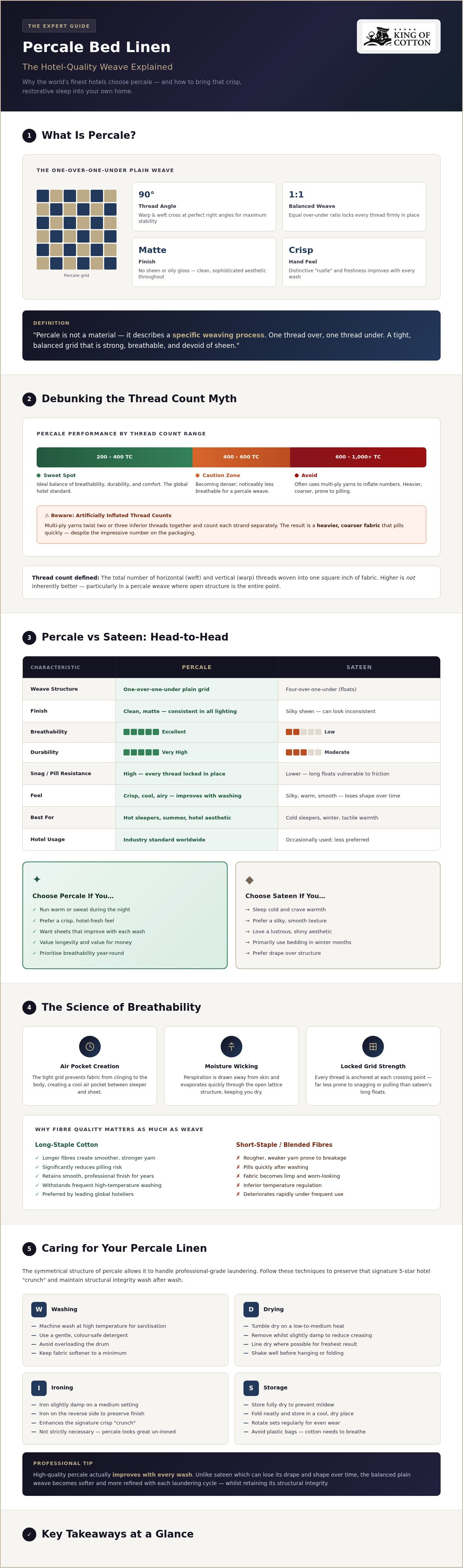
Many homeowners find themselves asking What is Percale? whilst searching for that elusive 5-star hotel feeling. It's a common misconception that the term refers to the material or the thread count. In reality, percale describes a specific weaving process. This method employs a "one-over-one-under" plain weave, where the warp and weft threads cross at ninety-degree angles in a tight, balanced grid. The result is a fabric that's remarkably strong, breathable, and entirely devoid of the oily sheen often found in other luxury linens.
This architectural simplicity is precisely why this weave remains the gold standard for high-end hospitality. Luxury hotels require linen that feels substantial yet remains airy throughout the night. They need a fabric that can withstand the rigours of professional laundering whilst maintaining a pristine, matte appearance. Unlike sateen, which can look inconsistent under bright bedroom lighting, this plain weave provides a clean, sophisticated aesthetic that signals understated elegance and refined taste.
Is Percale Always 100% Cotton?
Whilst 100% cotton is the undisputed luxury standard, you'll occasionally encounter blends. However, for those seeking a truly restorative sleep, pure cotton is superior for natural temperature regulation. The quality of the fibre used in the weave is paramount. We always recommend choosing long-staple cotton for your bed linen. These longer fibres create a smoother, stronger yarn that significantly reduces the risk of pilling. This ensures your sheets retain their smooth, professional finish for years, even with frequent washing at high temperatures.
The Sensory Experience: Why "Crisp" Matters
The sensory profile of this weave is its most celebrated feature. It's often described as "crisp" because the tight structure prevents the fabric from clinging to the body. This creates a pocket of air between the sleeper and the sheet, making it the perfect choice for those who find themselves overheating during summer. There's also a distinct auditory element to high-quality sets; they produce a gentle, satisfying "rustle" when you move. Visually, a bed dressed in these linens looks sharp and tailored. It stands in direct contrast to the heavy, liquid drape of sateen, holding its shape and providing that inviting, freshly-made look every time you enter the room.
The Science of the Weave: Breathability and Durability
The mechanical excellence of this weave lies in its structural balance. By crossing one thread over and one thread under in a consistent pattern, the loom creates a stable, grid-like lattice. This lattice remains remarkably strong whilst allowing air to circulate through the microscopic gaps in the weave. Every thread is locked into place, which is why percale is far less prone to snagging or pulling than sateen. Sateen relies on "floats", which are longer threads that skip over several others. Whilst these create a smooth surface, they leave the fabric vulnerable to friction and wear over time.
For those who suffer from night sweats or general overheating, this breathability is transformative. The fabric's moisture-wicking properties ensure that perspiration is drawn away from the skin and allowed to evaporate quickly. It's a functional benefit that ensures a dry, temperate sleeping environment even during the height of summer. This architectural approach to comfort is why professional hoteliers rarely settle for anything else.
Thread Count Myths: Is Higher Always Better?
Many consumers fall into the trap of believing that a 1,000 thread count sheet is inherently superior. In a plain weave, the "sweet spot" for performance and comfort typically sits between 200 and 400. Once you exceed a 400 thread count, the fabric becomes significantly denser and less breathable, which defeats the primary purpose of choosing this specific weave. You should be wary of multi-ply yarns used to artificially inflate these numbers. These often involve twisting two or three inferior, thinner threads together, resulting in a heavier, coarser fabric that's prone to pilling. Thread count is simply the total number of horizontal and vertical threads woven into one square inch of fabric.
Longevity in the Laundry
The symmetrical nature of the weave allows it to handle the high temperatures often required for sanitisation in professional environments. Whilst other fabrics might lose their structure or begin to look "limp" after several cycles, high-quality King of Cotton Bed Linen actually improves with age. This is known as the "softening" phenomenon. The cotton fibres relax and open up over time, meaning your sheets will likely feel better after ten washes than they did on the day you bought them. This durability makes it a wise investment for those who value long-term quality. If you're looking for a bed that feels fresh every night, choosing a weave that thrives under frequent laundering is essential.
Percale vs Sateen: Which Luxury Weave Suits Your Sleep Style?
Choosing between these two premium weaves is the most significant decision you'll make when curating your sleep environment. Whilst both represent the pinnacle of high-end bedding, they offer diametrically opposed sensory and thermal experiences. To the untrained eye, they may look similar in the packaging, but the moment they touch your skin, the difference is unmistakable. One is architectural and cool; the other is indulgent and warm. Understanding your own "sleep personality" is the key to making an investment that guarantees a restorative night.
The aesthetic contrast is equally pronounced. A bed dressed in percale looks sharp, tailored, and structured, mirroring the crisp precision of a traditional 5-star hotel suite. Sateen, by contrast, offers a softer, more lustrous appearance with a subtle glow. It drapes over the mattress like liquid silk, providing a look that's inherently more romantic and relaxed. Your choice ultimately depends on whether you prefer the matte, "crunchy" freshness of a professional hospitality setting or the heavy, luminous embrace of a boutique residence.
The Sateen Difference: A Four-Over-One Weave
Sateen achieves its signature silkiness through a more complex weaving pattern. Instead of the simple grid used in a plain weave, sateen uses a "four-over-one-under" structure. This means more thread surface is exposed on the face of the fabric, creating those long "floats" that produce a subtle, sophisticated sheen. Because there's more yarn packed into the same space, sateen is naturally heavier and denser. It holds heat effectively, making it a favourite for those who live in colder climates or individuals who struggle to stay warm at night. Additionally, the exceptionally smooth surface is often gentler on those with dry or sensitive skin, as it creates less friction during movement.
Making Your Decision: A Quick Comparison
To find your perfect match, consider these three essential factors before you buy:
- Temperature: If you're a "hot sleeper" who frequently wakes up feeling stifled, the breathability of a plain weave is essential. If you prefer a cosy, cocoon-like warmth, sateen is superior.
- Skin Sensitivity: Those who enjoy a textured, "fresh" feel will gravitate towards the crispness of hotel-style linens. If you prefer a buttery-smooth sensation, sateen is the better choice.
- Maintenance: Percale is the undisputed favourite for those who want a bed that looks pristine with minimal effort, as it's more durable and resistant to pilling over time.
If you're still uncertain about which material will best suit your bedroom's aesthetic and your personal comfort needs, we recommend consulting The Ultimate Guide to Buying Luxury Bed Linen. This resource provides a deeper dive into fibre origins and thread count specifics to help you finalise your selection with confidence.
How to Care for and Style Your Percale Bed Linen
High-quality percale is an investment in long-term comfort, but it requires a specific approach to maintenance to retain its signature structural integrity. Unlike sateen, which feels soft immediately, premium plain-weave linens often undergo a "break-in" period. During the first few cycles, the fibres may feel slightly stiff. This is actually a hallmark of authentic, long-staple cotton; as the fibres relax with use, they achieve a unique balance of softness and crispness that cheaper alternatives cannot replicate. Understanding the correct bedding wash temperature is the first step in managing this transition and ensuring your linens last for decades.
Washing and Drying Like a Professional
To preserve the breathable lattice of the weave, you must avoid liquid fabric softeners. These products work by coating the cotton fibres in a waxy film, which eventually clogs the weave and reduces the fabric's ability to wick moisture. Instead, rely on the natural softening power of the water and mild detergents. Professional housekeepers often utilise the "damp iron" technique: removing the sheets from the tumble dryer whilst they still retain a hint of moisture. This makes smoothing out the natural wrinkles of the plain weave significantly easier. To maintain the integrity of the percale weave, always wash at 40-60 degrees and tumble dry on a medium setting.
Styling the "5-Star Hotel" Bed
Achieving the architectural precision of a luxury suite requires more than just quality fabric; it requires technique. Start with a flat sheet and master the "hospital corner" to create a taut, smooth surface that resists bunching. This structured foundation is what gives the bed its inviting, professional appearance. To prevent the bed from looking too clinical, you can layer different textures across the surface. Using bed runners is an excellent way to add a sophisticated pop of colour or a tactile contrast to pristine white linens without compromising the cool feel of the sheets.
Complete the look by focusing on the pillows. High-quality, well-filled pillows provide the necessary height and volume to support the duvet, creating that "puffed" aesthetic found in the world's finest boutique hotels. By combining these styling methods with disciplined laundering, you ensure your bedroom remains a sanctuary of refined elegance. If you're ready to upgrade your sleep environment, explore our full range of professional-grade Bed Linen to find your perfect match.
Why King of Cotton is the Choice for Premium Percale
King of Cotton has spent over 30 years perfecting the art of sleep. As established hotel linen suppliers to the "Finest Homes & Hotels in the World", our reputation is built on a foundation of uncompromising quality. We don't just sell bedding; we provide the same professional-grade materials that prestigious establishments rely on to maintain their international standards of excellence. Our percale is crafted from meticulously sourced long-staple cotton fibres, ensuring a fabric that isn't just luxurious on the first night but remains resilient through hundreds of laundry cycles.
This commitment to durability is what sets our collection apart. Whilst high-street alternatives might lose their structure or begin to pill, our linens are designed to withstand the rigours of 5-star service. This means you can enjoy that specific, "crunchy" hotel feel in your own home, knowing your investment is built to last. We invite you to explore our full Bedroom collection to discover how easy it is to elevate your daily routine into a refined, hospitality-grade experience.
From the World’s Finest Hotels to Your Bedroom
Our commercial heritage ensures that every product we offer for the home has been tested in the most demanding environments. We understand that luxury isn't just about the feel of the fabric; it's about the perfect fit and accessibility. We provide a comprehensive range of sizes to suit every requirement, including detailed guidance on UK king size bed dimensions to ensure your new linens drape exactly as they should. By buying direct from a professional supplier, you're accessing a level of craftsmanship usually reserved for elite commercial sectors. It's an accessible upgrade to a more sophisticated lifestyle.
Commitment to Quality and Service
We believe the journey to a better night's sleep should be as seamless as the linens themselves. Our transparent delivery policies ensure your items arrive promptly and in pristine condition. For those who prefer a more tactile shopping experience, we welcome you to visit our physical stores. Here, you can feel the superior weight and texture of our percale weave in person and speak with our knowledgeable staff about your specific needs. Our passion for our craft is matched only by our dedication to customer satisfaction. Invest in the sleep you deserve with King of Cotton percale.
Elevate Your Bedroom with Professional Mastery
Elevating your bedroom into a sanctuary of refined comfort begins with selecting the correct weave. You've discovered how the architectural precision of the one-over-one structure ensures unparalleled breathability whilst maintaining that signature "crunchy" freshness. By choosing materials crafted from premium long-staple cotton, you're investing in a sleep environment that actually improves with every wash. King of Cotton remains a trusted provider to the finest hotels globally, bringing professional-grade percale directly to your residence.
It's time to move beyond limp, overheated sheets and embrace the crisp, matte elegance of 5-star hospitality. Whether you're a hot sleeper seeking temperature regulation or a design enthusiast craving a tailored look, the right linens make all the difference. Shop the King of Cotton Percale Bed Linen Collection today and experience the transformative power of a truly restorative night. You deserve a bed that feels fresh, cool, and inviting every single time you retire for the evening.
Frequently Asked Questions
Is percale better than Egyptian cotton?
This weave and Egyptian cotton aren't competing categories; they actually describe different aspects of the fabric's construction. The term refers to the weaving method, whilst Egyptian cotton is the specific long-staple fibre used to create the yarn. For the ultimate luxury experience, you should look for linens that utilise both. This combination ensures the crisp, matte finish of the plain weave is supported by the superior strength and smoothness of genuine Egyptian cotton.
Do percale sheets wrinkle easily?
Because of its tight, structural weave and lack of synthetic chemical finishes, 100% cotton percale is naturally more prone to wrinkling than sateen or polycotton blends. However, this is easily managed by removing the linens from the tumble dryer whilst they still retain a hint of moisture. Professional hoteliers use this specific "damp iron" technique to achieve a perfectly smooth, crisp surface. Over time, as the fibres relax, the fabric becomes more resilient to deep creasing.
What is the best thread count for percale bedding?
The ideal thread count for this specific weave typically falls between 200 and 400. Within this range, the fabric maintains its signature breathability and structural integrity. You don't need counts exceeding 500 in a plain weave, as these often use multi-ply yarns that trap heat and feel unnecessarily heavy. A 300 to 400 thread count is widely considered the "sweet spot" for achieving that authentic, 5-star hotel crispness without sacrificing essential airflow.
Is percale bedding suitable for winter?
Whilst it's celebrated for its cooling properties, this weave is perfectly suitable for winter when paired with the correct layers. If you're a "hot sleeper" who finds heavy duvets stifling, the breathability of these sheets prevents overheating during the night. For extra warmth, simply layer your bed with a high-GSM bed runner or a quilted throw. This allows you to maintain a temperate sleeping environment whilst enjoying the crisp, fresh sensation of a luxury suite year-round.
Does percale bedding get softer after washing?
Yes, high-quality percale is designed to improve with age and frequent laundering. Unlike cheaper fabrics that deteriorate over time, premium long-staple cotton fibres relax and open up with regular use. This unique "softening" phenomenon means your bedding will feel significantly more comfortable after ten washes than it did on the first day. It's a hallmark of professional-grade linen that it achieves a perfect balance of softness and crispness through the rigours of washing.
Can I wash percale sheets at high temperatures?
You can certainly wash these linens at temperatures between 40 and 60 degrees. This range is ideal for removing allergens and maintaining the hygienic standards required in professional hospitality environments. The symmetrical "one-over-one" weave is incredibly durable and handles the rigours of laundering far better than more delicate structures. Always ensure you don't use harsh bleach or liquid fabric softeners, as these can damage the natural cotton fibres and reduce the fabric's essential breathability.
What is the difference between percale and cotton?
The primary difference is that cotton is the raw material, whilst this specific name describes the weaving technique used to create the fabric. You can have cotton sheets that aren't plain weave, such as sateen or jersey. However, for those seeking the traditional hotel feel, a 100% cotton plain weave is the gold standard. It provides a matte finish and a structured hand-feel that's fundamentally different from the silky drape found in other common cotton weaves.
Why do hotels prefer percale over sateen?
Hotels prioritise this weave because of its exceptional durability and professional aesthetic. The tight, balanced structure withstands frequent industrial laundering whilst maintaining its crisp, tailored appearance. Additionally, it offers superior breathability, which caters to a wider range of guest preferences by preventing overheating during the night. This reliability ensures it's always pristine for every new arrival, making it the most cost-effective and luxurious choice for the global hospitality industry.