

ROI of Investing in Luxury Hotel Linen: The 2026 Financial Guide for Hoteliers
What if the very sheets your guests sleep on were actually hard financial assets rather than just recurring operational expenses? You're likely familiar with the relentless cycle of replacing budget textiles that thin after minimal use or facing the sting of negative reviews regarding sleep quality. It's frustrating to watch rising laundry costs, which now reach up to $1.10 per pound in major markets, eat into your margins while fragile linens fail to withstand the pressure of commercial cycles. Understanding the roi of investing in luxury hotel linen is essential for any hotelier looking to stabilize their balance sheet in 2026.
Discover how high-quality linens transform from a simple expense into a high-yield asset that drives guest loyalty and slashes long-term costs. We'll provide a clear financial framework to justify premium procurement. We show you how a single star increase in online ratings can boost your revenue by up to 9% according to recent industry data. This guide explores how investing in superior craftsmanship reduces operational overhead and improves your Average Daily Rate through the power of an exceptional guest experience.
Key Takeaways
- Learn why shifting your focus from initial purchase price to Total Cost of Ownership (TCO) is the cornerstone of modern hospitality procurement.
- Understand the technical superiority of long-staple Egyptian cotton and how its exceptional tensile strength ensures your bed linen remains pristine after hundreds of wash cycles.
- Calculate the long-term roi of investing in luxury hotel linen by evaluating how premium textiles reduce drying times and withstand aggressive whitening agents.
- Learn to leverage the 'First Touch' moment to enhance guest perception and drive tangible revenue growth through improved online ratings and repeat bookings.
- Develop a strategic approach to textile procurement that transforms essential amenities like bathrobes and pillows into high-yield assets for your property.
Redefining Value: Total Cost of Ownership vs. Initial Purchase Price
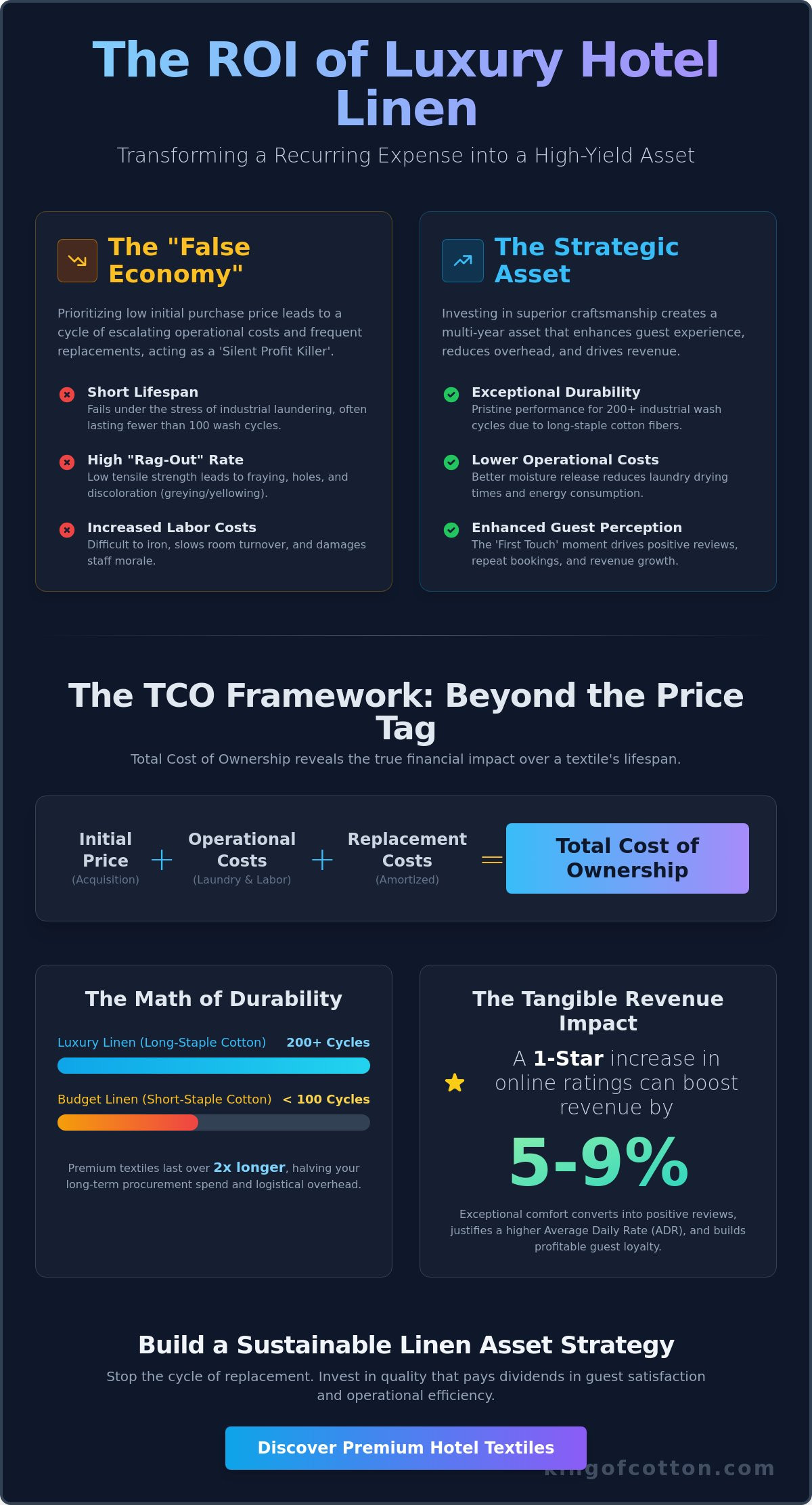
Selecting the right textiles for a premium property requires a shift in perspective. Many procurement managers fall into the trap of the 'false economy,' where a lower initial price tag masks a series of escalating operational drains. When you prioritize the bottom line of a single invoice, you overlook the inevitable cycle of thinning fabric and premature replacement. The true roi of investing in luxury hotel linen isn't found in the purchase price; it's realized through the longevity and performance of the asset over hundreds of industrial wash cycles.
Luxury textiles function as a multi-year asset rather than a single-season consumable. High-quality bed linen retains its structural integrity and aesthetic appeal far longer than budget alternatives. This durability prevents the 'Silent Profit Killer'—the constant drain on management time and logistics required to source, order, and track frequent replacement shipments. A property that invests in excellence spends less time in the procurement cycle and more time focused on the guest experience.
To better understand how the financial landscape of the hotel business is evolving, watch this helpful video:
The Hidden Costs of 'Budget' Procurement
Budget linens often fail under the extreme stress of industrial laundering. Low-grade cotton lacks the tensile strength to withstand high temperatures, leading to high 'rag-out' rates where items must be discarded due to fraying or holes. You'll also notice an inconsistency in white-levels; after just 50 washes, inferior textiles often take on a grey or yellow hue that no amount of chemicals can fix. This creates a secondary problem for housekeeping. Fragile, difficult-to-iron sheets damage staff morale and slow down room turnover speeds, directly increasing your labor costs.
The TCO Framework for 2026
Total Cost of Ownership in the hospitality sector is the comprehensive sum of the initial acquisition price, the recurring utility and labor costs of laundering, and the amortized expense of premature replacement over the textile's functional lifespan. In 2026, with laundry costs reaching up to $1.10 per pound in major cities, efficiency is paramount. Luxury fibres are often engineered for better moisture release, which can significantly reduce drying times and energy consumption.
- The 3-Year Comparison: A premium sheet may cost more upfront but lasts 200+ cycles, while a budget sheet often fails before 100 cycles, doubling your long-term procurement spend.
- The Brand Tax: Research shows that a 1-star increase in online ratings can boost revenue by 5-9%. Conversely, the 'Brand Tax' of a negative review citing scratchy or thin sheets can cost your property thousands in lost bookings.
- Material Integrity: Understanding Linen textile properties and high-quality cotton weaves allows hoteliers to choose materials that maintain their hand-feel and luster, protecting the property's reputation for years.
By adopting a TCO mindset, you ensure that every piece of linen on your property is working to improve your margins rather than eroding them through constant attrition.
The Math of Durability: Why Premium Cotton Outlasts Budget Alternatives
The durability of a textile isn't a matter of chance; it's a result of molecular structure and mechanical engineering. When hoteliers evaluate the roi of investing in luxury hotel linen, they must look beyond the initial softness to the fibre's ability to withstand the rigours of a commercial laundry. Budget linens often rely on short-staple generic cotton. These shorter fibres require more joins to create a single thread, creating weak points that fray and snap under the high-pressure environment of industrial rollers and high-heat drying. Over time, these micro-breaks lead to thinning fabric that loses its opacity and comfort.
Staple Length and Fibre Integrity
Premium textiles utilize long-staple Egyptian cotton, where individual fibres are significantly longer and smoother. This length allows for a tighter, more uniform spin with fewer exposed ends. During production, the combing process further refines the material by removing short, weak fibres and impurities. The result is a thread with superior tensile strength that resists pilling and thinning over months of heavy use. While a high thread count of 300 to 600 is often marketed for its silk-like feel, its true value lies in structural density. A denser weave prevents the fabric from becoming translucent or "blown out" after repeated laundering. To see these principles in action, you should explore our durable hotel-grade bed linen designed for long-term performance.
Industrial Wash Cycle Comparisons
The financial peak of a textile asset occurs after it has survived the first 100 washes. Budget linens frequently hit their "rag-out" limit at approximately 80 washes, meaning the property never recovers the initial investment before the item must be discarded. In contrast, luxury linens are engineered to cross a much higher threshold, often reaching 400 or more washes while maintaining their hand-feel. This longevity is supported by academic research into Life Cycle Costing for Textiles, which highlights how initial quality dictates the total economic value over years of service. For items like bathrobes and spa towels, premium dyeing processes ensure colour retention remains vibrant even when exposed to aggressive whitening agents and high-temperature cycles.
This technical superiority extends to your bathroom amenities as well. High-GSM towels, typically 600 grams per square meter or higher, maintain their absorbency and plush texture up to three times longer than standard options. While a cheaper towel becomes scratchy and flat, a luxury alternative continues to provide that sought-after "halo effect" for your guests. If you're looking to upgrade your guest experience while stabilizing your replacement budget, consider browsing our collection of premium hotel towels and robes.
Operational ROI: How High-Quality Textiles Reduce Laundry and Labor Overhead
The true roi of investing in luxury hotel linen manifests in the quiet efficiency of your daily operations. While the durability of long-staple cotton protects your capital investment, its performance in the laundry room protects your daily margins. High-quality cotton fibres are naturally more efficient at releasing moisture during the extraction and drying phases. This technical advantage translates directly into shorter cycles for industrial dryers, reducing utility consumption and wear on the machinery itself. Investing in these operational efficiencies is the most direct way to secure a long-term roi of investing in luxury hotel linen.
Premium textiles also demonstrate superior resistance to the aggressive whitening agents required to maintain that signature hotel-white aesthetic. Where budget fibres degrade and become brittle under chemical stress, luxury threads maintain their flexibility and strength. This chemical resilience ensures that your bed linen retains its refined hand-feel long after inferior products have turned scratchy and thin. Choosing materials that withstand these rigours allows your property to maintain a standard of excellence without constant attrition.
Energy and Water Savings
There is a direct correlation between fibre quality and energy reduction. Premium cotton and high-quality sateen weaves are engineered to release water more effectively than low-grade, densely packed short-staple alternatives. This efficiency means your laundry team can process more loads per shift with less energy per pound. Additionally, high-quality towels and bathrobes feature advanced stain-release properties; this significantly reduces the need for costly 're-washes' and intensive spot treatments. By extending the functional life of every item and optimizing wash cycles, high-quality linen reduces the carbon footprint per guest stay while stabilizing your utility budget.
Labour Costs and Room Turnover
Labour typically accounts for 35% to 55% of in-house laundry expenses, so any reduction in handling time offers a massive operational win. Luxury sateen weaves provide an 'easy-care' ROI because they respond better to industrial pressing and ironing. These 'well-behaved' linens stay crisp and aligned, allowing housekeeping staff to dress a bed with precision and speed. A Cornell University study on guest satisfaction highlights that room presentation and cleanliness are the primary drivers of hotel reputation. When your staff isn't struggling with wrinkled or stubborn fabric, they can focus on the fine details that define a five-star experience. You can view our professional corporate supplies to find textiles designed specifically to streamline these high-pressure turnover windows. Working with premium materials also provides a psychological boost for your team, as it's far more rewarding to present a room that reflects the property's high standards of excellence.
Intangible ROI: Converting Guest Comfort into Tangible Revenue Growth
The moment a guest enters their room, they perform a silent sensory audit. While the decor provides the visual backdrop, the tactile experience provides the emotional proof of value. This 'First Touch' moment, whether it is the weight of a plush towel or the cool glide of sateen sheets, immediately validates the guest's choice to book your property. When the physical environment meets or exceeds their expectations, the perception of value for money shifts. This is where the roi of investing in luxury hotel linen moves from the balance sheet to the guest's heart, creating a foundation for premium pricing and brand advocacy.
Luxury textiles serve as a non-verbal cue for five-star status. A guest may not know the technical specifications of a weave, but they recognize the difference in hand-feel and breathability. By prioritizing these high-end amenities, you justify your Average Daily Rate (ADR) through tangible quality rather than marketing claims alone. This tactile branding ensures that every interaction with your room's essentials reinforces your property's commitment to excellence.
The Psychology of Sleep and Loyalty
Sleep quality is the most significant factor in guest satisfaction, yet it is often the most overlooked financial lever. Guests are increasingly willing to pay a premium for a guaranteed restorative experience. A property that consistently delivers the 'Home-from-Home' comfort factor through superior duvets and pillows secures a competitive advantage that budget competitors cannot replicate. This reliability drives repeat bookings, which are significantly more profitable than new customer acquisitions. To understand the nuances of these material choices, read our guide on what to look for in 5-star hotel bedding.
Leveraging Luxury for Marketing
Maximizing the roi of investing in luxury hotel linen requires recognizing that high-quality textiles are a powerful marketing tool. Using technical terms like 'Long-Staple Egyptian Cotton' or '600-GSM' in your digital marketing provides concrete proof of your standards. Furthermore, the visual appeal of a perfectly dressed bed is essential for Instagram-driven bookings. A Cornell University School of Hotel Administration study found that hotels investing in premium bedding saw a Revenue Per Available Room (RevPAR) increase of 7% to 11% within the first year. Additionally, a one-star increase in online ratings, often driven by 'best night's sleep' mentions, can boost overall revenue by 5% to 9%. Luxury linen acts as a silent brand ambassador, communicating your commitment to excellence long after the guest has checked out.
If you are ready to elevate your guest experience and capture these financial gains, explore our premium bedroom collection to discover the difference that heritage craftsmanship makes.
Strategic Procurement: Building a Sustainable Linen Asset Strategy with King of Cotton
True financial mastery in the hospitality sector requires moving beyond transactional purchasing toward a strategic partnership. When you view your textile provider as a consultant rather than a mere vendor, you unlock a sophisticated approach to asset management. At King of Cotton, we provide the expertise necessary to align your procurement with long-term financial goals. Whether you manage a boutique independent property or a global chain, the roi of investing in luxury hotel linen is maximized through consistency, scalability, and a deep understanding of material performance. We ensure that every item, from plush bathrobes to high-thread-count sheets, functions as a high-yield asset on your balance sheet.
Our bespoke approach allows hoteliers to move away from the reactive cycle of emergency re-ordering. By analyzing your specific occupancy rates and laundering protocols, we help you build a linen par level that absorbs the stresses of high-season demand without premature attrition. This foresight stabilizes your operational overhead and ensures that the guest experience remains flawless, regardless of the volume of guests passing through your doors.
ESG and Corporate Bookings
In 2026, sustainability is no longer a peripheral concern; it is a hard requirement for securing lucrative corporate contracts. Modern travel buyers prioritize hotels that demonstrate a commitment to ethically sourced supply chains and reduced environmental impact. By choosing long-lasting, high-quality cotton, you meet these ESG goals through the simple math of longevity. Every year added to a textile's lifespan represents a significant reduction in waste and carbon footprint. This durability is a powerful selling point during contract negotiations with eco-conscious firms. To see the quality of our sustainable materials firsthand, you can visit our stores for a tactile consultation and discuss how our heritage fabrics support your property's green initiatives.
The King of Cotton Commitment
Our brand carries the prestige of a seasoned expert, established through years of service to the world's most prestigious residential and commercial sectors. This heritage provides our partners with an air of authority and reliability that budget suppliers simply cannot match. We understand that consistency is vital for the roi of investing in luxury hotel linen; a guest should experience the same level of indulgence in London as they do in Dubai. Our bulk-buy options and international supply chains ensure that your procurement costs remain stable even as global markets fluctuate.
We invite you to experience the serene confidence that comes from working with a master of the craft. If you are ready to transform your operational expenses into a strategic advantage, request a bespoke quote for your hotel linen needs today. Let us help you curate an environment of understated elegance that resonates with the discerning modern traveler.
Elevating Your Property’s Financial Future
The transition from treating textiles as a recurring expense to managing them as a high-yield asset is a hallmark of successful hospitality leadership in 2026. By prioritizing superior material integrity and long-staple cotton, you secure a property that isn't just beautiful, but operationally lean. You've seen how the roi of investing in luxury hotel linen extends far beyond the bedroom. It touches everything from reduced energy consumption in the laundry room to the intangible power of a guest's five-star review.
As a trusted provider to the world's finest hotels, King of Cotton brings expert consultancy and specialized hotel-grade durability to every partnership. We've been perfecting our craft since 1995, ensuring that your investment in bed linen and towels translates into measurable revenue growth. It's time to refine your procurement strategy and embrace the serene confidence that comes with heritage craftsmanship. Your property deserves the enduring quality that only a seasoned expert can provide.
Request a Bespoke Corporate Quote from King of Cotton and begin your journey toward a more profitable, luxurious guest experience today.
Frequently Asked Questions
What is the typical ROI period for upgrading to luxury hotel linen?
The typical period to realize a full roi of investing in luxury hotel linen is between 12 and 18 months. This timeline accounts for the significant reduction in replacement frequency and the measurable uplift in guest satisfaction ratings. While the initial capital outlay is higher, the extended lifespan of the textiles ensures that the cost-per-use drops below budget alternatives within the second year of service. It's a calculated move that stabilizes long-term procurement budgets.
How many wash cycles should high-quality hotel sheets last?
High-quality 100% cotton sheets should reliably last between 150 and 200 wash cycles in a professional industrial environment. Specifically, percale weaves often exceed 200 cycles due to their tight, over-under structure; luxury sateen typically maintains its refined luster for 100 to 150 cycles. These benchmarks represent a significant improvement over budget blends, which often show signs of thinning, grey-out, or pilling before reaching their 80th wash.
Does luxury linen actually reduce laundry costs?
Luxury textiles reduce laundry costs by optimizing drying times and resisting chemical degradation. High-grade long-staple cotton is engineered to release moisture more efficiently during the extraction phase, which shortens industrial drying cycles. This efficiency directly lowers energy consumption. Additionally, premium fibres require fewer re-washes because they release stains more effectively, preserving the textile's integrity and reducing the total volume of laundry processed daily.
What is the difference between residential and hotel-grade luxury linen?
The primary difference lies in tensile strength and the ability to withstand high-heat industrial laundering. Residential luxury linens are designed for gentle domestic machines and lower temperatures. In contrast, hotel-grade luxury linen is reinforced to endure the intense mechanical stress of industrial rollers and aggressive whitening agents. While both offer a refined hand-feel, professional-grade textiles maintain their structural density and white-levels far longer under heavy commercial use.
How does thread count affect the durability of hotel bedding?
Thread count affects durability by providing structural density rather than just softness. A thread count between 300 and 600 ensures the fabric remains opaque and resistant to thinning after repeated pressing. While extremely high counts can sometimes become brittle, a balanced, high-quality weave prevents the individual threads from shifting. This stability is essential for maintaining a crisp, professional appearance throughout the textile's multi-year lifespan.
Can luxury linens help a hotel increase its Average Daily Rate (ADR)?
Investing in premium linens is a proven strategy to increase your Average Daily Rate. Research from the Cornell University School of Hotel Administration indicates that hotels upgrading their bedding experience an average RevPAR increase of 7% to 11%. Superior tactile quality leads to better sleep mentions in online reviews, which justifies premium room tiering. Guests are consistently willing to pay more for the assurance of a restorative, high-end sleep experience.
Is Egyptian cotton worth the extra investment for a busy hotel?
Egyptian cotton is a vital investment for busy properties because its long-staple fibres offer unmatched durability. These longer fibres create a smoother thread with fewer weak points, which means the fabric is less likely to fray or pill under the pressure of high occupancy. For a high-turnover hotel, the roi of investing in luxury hotel linen made from Egyptian cotton is found in the drastically lower rag-out rate and consistent aesthetic appeal over hundreds of guests.
How do I calculate the 'Cost Per Use' for my current linen stock?
You calculate Cost Per Use by dividing the sum of the initial purchase price and total maintenance costs by the number of successful wash cycles. For example, if a premium sheet lasts 200 cycles, its cost-per-use is often significantly lower than a budget sheet that fails at 80 cycles. This framework allows hoteliers to see the false economy of cheap textiles and make procurement decisions based on actual asset performance rather than just the price tag.