

Reducing Laundry Costs in a Hotel Through Outsourcing and Linen Care
Outsourcing laundry can lower a hotel’s costs by removing the need to run and maintain on-site washing equipment, while reducing the space, labour and utilities devoted to laundry. It is not automatically the least expensive option: reducing laundry costs in a hotel means comparing the full cost of in-house operations with the cost of an external service.
Energy, water, repairs and staffing all affect the calculation, as do linen replacement and the amount of laundry generated by occupancy. A busy period can change the picture, so a useful comparison looks beyond the cost of washing each item.
This guide explains how external laundries can affect operating costs, how careful linen care can extend the life of sheets and towels, and where labour savings may come from. It also sets out the costs to include in a full calculation, helping you assess which arrangement suits your hotel while protecting the comfort guests expect.
Key Takeaways
- Compare an external laundry service with the full cost of running an on-site operation, including equipment, utilities, repairs and space.
- Use suitable wash settings and avoid overloading machines to help protect linen and reduce unnecessary wear.
- Assess whether outsourcing could ease staffing demands and make laundry costs more predictable.
- Calculate laundry spending across a full month, then compare the cost per occupied room at different occupancy levels.
- Track linen loss and replacement over time to spot where better stock management could improve cost control.
1. How do External Laundries Reduce Hotel Laundry Costs?
External laundries can reduce a hotel’s costs by shifting washing, drying and equipment upkeep off-site. Their commercial machines may use energy-efficient processes, while water-recovery systems at large plants can reuse thousands of gallons. For a hotel, the key comparison is the provider’s charge against the full cost of operating its own laundry.
That full cost includes electricity, water and gas, as well as laundry equipment, maintenance and repairs. Outsourcing also removes the need to reserve hotel space for washing machines and dryers. This can matter when an on-site laundry occupies space that could serve another operational purpose. The saving comes from costs removed or reduced, not simply from using fewer wash cycles.
Machine replacement is another part of the calculation. A commercial washing machine generally lasts up to 12 years, whilst a well-maintained commercial dryer can last up to 15 years. Hotels should account for purchase, servicing, repairs and eventual replacement across the equipment’s working life. Regular servicing helps identify faults early, extend machine life and reduce downtime. If repairs happen more than once a quarter, reassess the laundry setup and compare repair spending with outsourcing.
Energy-efficient washing and drying equipment may lower utility use, but results depend on how machines are operated. Match load size and detergent to the equipment, and avoid unnecessary cycles that consume water and energy. Clean the dryer’s lint filter regularly to maintain airflow, shorten drying time and reduce energy use. These practices also support safe operation.
What are the UK hygiene and infection-control rules for hotel laundry? Keep soiled and clean linen separate during collection, washing and storage, and use clear handling procedures. Staff handling industrial chemicals must follow COSHH health and safety rules.
How much can hotels save by optimising laundry loads, wash temperatures and detergent use? Savings come from reducing water, energy and chemical waste, and avoiding repeat washes. Track utility and detergent use alongside load sizes and rewash rates to identify which practices reduce operating costs.
Are there UK grants or energy-efficiency schemes for hotel laundry equipment? UK support for equipment upgrades depends on the programme, its eligibility criteria and the proposed investment. Include any eligible funding in the capital-cost comparison, alongside projected energy and maintenance savings.
For hotels weighing an upgrade against outsourcing, compare equipment purchase and replacement costs with the ongoing external service charge. Include utility use, repairs, servicing and space in the same calculation. This shows whether newer machines or an external laundry better suits the property’s volume and operating needs.
2. Commercial laundry practices that extend linen lifespan
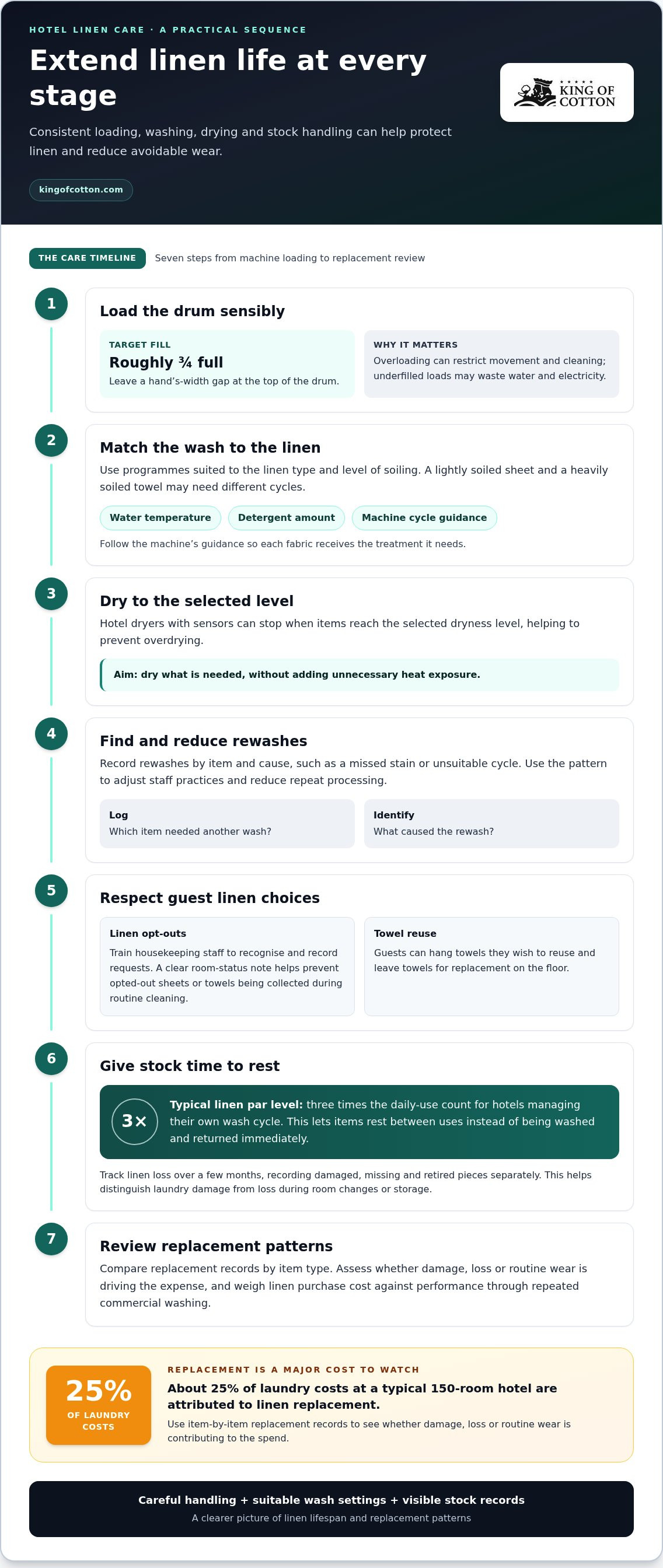
Linen lasts longer when washing, drying and handling follow consistent practices. For an in-house wash, leave a hand’s-width gap at the top of the drum, roughly three-quarters full. Overloading can restrict movement and cleaning, while an underfilled load may waste water and electricity. Follow the machine’s guidance on water temperature, detergent amount and cycle so the fabric receives the treatment it needs.
Commercial laundry teams can use wash programmes suited to different linen types and levels of soiling. Avoid treating every load alike: a lightly soiled sheet and a heavily soiled towel may need different cycles. Hotel dryers with sensors can stop when items reach the selected dryness level, helping prevent overdrying. Track rewashes by item and cause, such as a missed stain or unsuitable cycle, then adjust staff practices to reduce repeat processing.
Guest linen opt-out requests can also reduce unnecessary washing. Train new and existing housekeeping staff to recognise each request, record it clearly and leave the correct items in place. A simple room-status note can help prevent an opted-out sheet or towel being collected during a routine clean. Pair this with a towel-reuse policy: guests can hang towels they wish to reuse and leave those for replacement on the floor.
Stock levels affect wear and replacement. Hotels managing their own wash cycle are advised to hold a linen par level typically three times the daily-use count. This lets items rest between uses rather than being washed and returned immediately. Track linen loss over a few months, recording damaged, missing and retired pieces separately. The results help distinguish laundry damage from loss during room changes or storage.
Replacement deserves close attention: about 25% of laundry costs at a typical 150-room hotel are attributed to linen replacement. Compare replacement records by item type and assess whether damage, loss or routine wear drives the expense. When evaluating linen quality, weigh its purchase cost against how it performs through repeated commercial washing and how often it needs replacing. Consistent specifications also make stock control and replenishment easier.
For a practical review, compare a sample of current hotel bed linen against replacement records and laundry handling. This helps connect product selection with the lifespan and presentation guests experience, without overlooking the role of correct washing and careful handling.
3. Reducing hotel laundry labour costs through outsourcing
Outsourcing can reduce the hours hotel teams spend sorting, washing, drying and folding linen. A commercial laundry takes on those processing tasks, so managers can compare the provider’s charge with wages, supervision and cover for an in-house team. The change affects more than headcount: staff time can be redirected to room preparation, guest requests and other hospitality duties.
Compare like with like before deciding. These figures use different units, so convert the hotel’s measured laundry volume into a comparable cost. Include labour and related running expenses alongside the external charge.
Build the in-house comparison from actual operating records. Include time spent collecting soiled items, separating loads, operating machines, finishing linen and returning it to storage. Add staff supervision and the cover needed when laundry demand overlaps with room cleaning. For outsourcing, compare the service charge and collection arrangements with those same tasks. A single bill covering pickup and delivery can make charges easier to track, but should still be assessed against the full internal cost.
Outsourcing does not mean every item must leave the property. A hotel may send most linen to a commercial provider while washing selected items, such as towels, in a small in-house laundry. This hybrid arrangement can suit properties that want to reduce routine processing hours but retain control over particular loads. Compare the labour and equipment needed for those retained tasks with the work removed.
Plan the transition around linen movement, not just staffing. Map where used linen is collected, how it is sorted and where clean items return. Then align pickup and delivery frequency with occupancy and storage capacity. Some professional hotel laundry services provide three deliveries per week, so a hotel must plan stock to avoid shortages between collections. Make responsibilities clear to housekeeping and reception teams before the first collection.
Review the change once the new process settles. Compare staff hours, laundry volumes, service bills and linen availability with the previous in-house records. Check whether collection timing or delayed returns affect room cleaning. This operational review helps identify whether outsourcing has genuinely reduced workload or whether the hotel needs to adjust schedules, stock levels or the division of work.
Space can also influence the decision. Moving laundry operations off-site may free hotel space for another use, such as a spa, retail area or coffee shop. Include any realistic value of that space in the comparison, alongside labour and processing costs. Outsourcing is most useful when the resulting workflow still supports reliable linen availability and smooth room preparation.
4. Calculating the full cost of an on-property laundry operation
A useful first step in reducing laundry costs in a hotel is to calculate the cost per item alongside the complete operating expense. Typical hotel laundry industry costs in the UK are around 35-40p per sheet. That figure alone won’t show whether on-property washing is economical. Include every expense involved in processing, maintaining and replacing linen, then compare the result with external providers’ charges.
Build a complete cost record covering water, gas, electricity, labour, laundry chemicals, equipment maintenance, repairs and depreciation. Add the cost of laundry space and linen replacement. Hotels spend between 10% and 15% of total room revenue on laundry and linen management, so separating each component helps show where the budget goes. Avoid counting only utility bills or wages.
Volume provides the basis for useful unit costs. A hotel with 100 rooms processes 180,000kg of laundry every year. Record the property’s actual kilograms or item counts, then calculate monthly and annual spending per kilogram, per item and per occupied room. These measures help distinguish a high bill caused by more occupied rooms from one caused by inefficient operations.
Start the calculation with a full month of records, including labour, utilities, repairs and linen purchases. Then compare laundry cost per occupied room at different occupancy levels over the past year. Low occupancy can leave equipment and staffing underused, while higher occupancy may increase washing demand and overtime. Reviewing several occupancy periods gives a clearer picture than relying on one unusually quiet or busy month.
Breakdowns can add direct costs and disrupt turnaround. A technician visit to repair an industrial washer can cost hundreds of pounds before parts are ordered. If a machine is out of action, staff may need to reorganise loads and prioritise linen needed for room preparation. Domestic washing machines used commercially may also have warranties voided and break down more often, since frequent commercial use exceeds their intended duty.
Finally, model how demand changes. Laundry volume can double overnight during a local festival or large wedding, creating a sudden need for more processing capacity. Compare that peak with normal demand and the cost of keeping spare equipment or capacity available. Compare external providers’ charges against the same expected volume, including collection schedules and required turnaround.
Use a simple spreadsheet to bring the figures together. Enter monthly volume, labour hours, utility bills, chemicals, repairs, depreciation, space and linen purchases. Divide total spending by laundry volume and occupied rooms, then repeat the calculation for peak and quieter periods. This like-for-like comparison helps hotels identify the operating choices that matter most when reducing laundry costs in a hotel.
5. Factors affecting hotel laundry costs
Occupancy changes the volume of linen moving through a hotel, but costs don’t always rise evenly. A property at 60% occupancy may find laundry manageable, whilst 85% occupancy can strain its budget as more rooms turn over. Compare laundry spending with occupied rooms, not just total monthly bills. That reveals whether higher costs reflect demand or inefficient processing.
Room turnover and service frequency also shape the bill. More frequent changes mean more washing and handling. Set a clear linen-change policy and communicate it consistently to guests and housekeeping teams.
For sheets, hotels can tell guests they’ll be laundered every 2-3 days unless daily service is requested, and between guest stays. Train staff to follow guest preferences accurately, so opted-out linen isn’t washed unnecessarily. A towel-reuse policy can ask guests to hang towels they’ll use again and leave towels for replacement on the floor.
Demand patterns affect which collection schedule makes sense. High-occupancy hotels often benefit from daily linen service, whilst smaller or lower-occupancy properties may suit a few pickups per week. At 20% occupancy, an outsourced bill may be lower because charges can fall with occupancy. Match collection frequency to actual linen use and storage capacity, rather than choosing a schedule based only on peak demand.
In-house running costs can vary with energy use and machine condition. Track dryer hours alongside load volumes, then identify avoidable running time. Correct loading, suitable detergent amounts and prompt lint-filter cleaning help machines operate efficiently.
Guest behaviour, linen specifications and service choices interact. Heavier or more specialised linen may change washing and drying requirements, while daily changes increase processing volume. Review the effect of each policy against occupied rooms, laundry volume and replacement records. This helps separate costs driven by guest standards from those caused by unnecessary washing or poor operating routines.
Use a simple comparison across quiet, typical and busy periods. Record occupancy, room changeovers, towel and sheet volumes, collection frequency, dryer hours and laundry spending. Then identify which factor moves the bill most. A change to collection frequency may suit a low-occupancy property, while a high-turnover hotel may gain more from controlling changeovers and machine running time.
Guest comfort still depends on fresh, well-presented towels. Explore towels for hotel bathrooms when reviewing the linen choices that shape guests’ experience and ongoing replacement needs.
King of Cotton: Bed Linen
King of Cotton supplies hospitality businesses with bed linen and other essentials for a considered guest experience. If your linen review points to worn or frequently replaced items, explore bed linen suited to hotel use and assess it alongside your washing practices and replacement records.
Towels, bathrobes and gowns, duvets and pillows all contribute to room comfort. Reviewing these categories together can help align the guest experience with your linen choices while keeping care requirements and replacement planning in view.
For a closer look at the options, visit kingofcotton.com or contact King of Cotton.
Set a linen standard that supports your hotel
A practical next step is to define what good linen performance means for your property. Consider how each item feels to guests, how it looks after laundering and whether its care requirements suit your routine. A consistent standard gives your team a clearer basis for future purchasing and replacement decisions. It also keeps guest comfort in view as you work on reducing laundry costs in a hotel.
Review bed linen, towels and bathrobes as part of that standard, rather than treating each purchase in isolation. The right choices should reflect your rooms, service style and approach to linen care. King of Cotton offers these hospitality essentials for hotels seeking quality cotton products for their guests.
Contact King of Cotton to discuss linen for your hotel, and take a considered next step towards a refined guest experience.
Frequently Asked Questions
How do External Laundries Reduce Hotel Laundry Costs?
External laundries can lower a hotel’s operating burden by processing linen at commercial scale and taking on the work of running a laundry plant. The hotel avoids tying up staff and space in daily washing, while its own costs become more closely linked to the linen it sends for processing. The value depends on service frequency, volume, linen mix and the internal costs the hotel can genuinely remove.
What should hotels evaluate?
Hotels should assess cost, capacity and guest-service impact together. Compare laundry spending with room occupancy, then examine whether turnaround aligns with housekeeping schedules and storage space. Check how seasonal peaks, special events and changes in guest preferences affect linen demand. Also consider whether existing staff and space have valuable alternative uses. A sound decision reflects the property’s operating pattern, not just its current monthly bill.
Is outsourcing hotel laundry cheaper than using an on-site laundry in the UK?
It can be cheaper, but the result depends on the hotel’s volume and avoidable in-house costs. A property with low or uneven demand may struggle to justify equipment and dedicated staff, while steady high volume can support on-site processing. Compare total costs over the same period and include labour, utilities, repairs, linen handling and the external service charge. Assess peak periods as well as quieter weeks.
How can hotels reduce laundry loads through towel and linen reuse programmes?
Hotels can reduce unnecessary loads by making reuse choices clear and easy for guests. Explain how guests can signal that they wish to reuse a hanging towel, and ensure housekeeping follows that signal during room servicing. For bed linen, communicate the hotel’s change routine and make daily changes available on request. Use room-management notes to record preferences, then review missed requests and guest feedback with housekeeping teams.
What commercial washing machines and dryers are most energy and water efficient for hotels?
The best choice depends on the hotel’s linen volume, fabric mix and operating pattern, rather than a single machine model. Compare the manufacturer’s energy and water consumption data for equivalent load capacities, and consider machines with accurate load controls and dryer moisture sensors. Check that equipment suits commercial use and the expected duty cycle. Match capacity to regular demand while planning how peak loads will be handled.
What are the risks of reducing hotel laundry frequency or linen changes?
Reducing changes without clear guest communication can affect perceived cleanliness, comfort and service satisfaction. It can also create inconsistent housekeeping routines if staff are unsure which rooms need fresh linen. Set out the change policy before a stay, honour requests, and monitor complaints, room inspections and linen condition. Reuse should never mean leaving visibly soiled or damaged items in a room; staff need a clear replacement process.
How can hotels compare laundry suppliers, contracts and service-level agreements?
Compare each agreement with the hotel’s actual linen mix and expected collection pattern. Check how charges are calculated, what collection and return arrangements apply, and how delays, missing items or damaged linen are recorded. Review volume changes, invoicing detail, contract duration and exit provisions. A clear service-level agreement should define responsibilities and set out a process for reporting problems, so managers can assess service performance alongside cost.