

How to Style a Super King Bed: A Step-by-Step Guide
A super king bed can look more polished with fewer, better-proportioned layers. Its generous width can be difficult to dress: standard bedding may look undersized, while too many cushions can quickly become clutter. Learning how to style a super king bed means balancing its scale with thoughtful layers and a few well-chosen details.
The right arrangement can make the bed feel welcoming and beautifully finished without making it impractical to sleep in each night. Start with the correct bedding proportions: a standard UK super king mattress measures 180cm by 200cm, so bedding designed for that size helps create a smooth, balanced foundation.
This step-by-step guide shows you how to build that foundation with sheets and a duvet, add depth through texture and colour, and arrange pillows and finishing touches in proportion. Whether you prefer crisp Percale, smooth Sateen or a pared-back look, use these practical ideas to create a restful bed that feels considered, comfortable and easy to use.
Key Takeaways
- Use the mattress, bed frame and surrounding floor space to guide how much visual weight your bedding needs.
- Build a composed foundation with well-fitted bed linen, then choose duvet and bedspread layers for comfort and finish.
- Discover how to style a super king bed with pillow arrangements that feel balanced, from matching pairs to varied sizes.
- Follow a simple styling sequence to smooth, fold and arrange each layer, then edit accents to keep the bed practical.
- Explore how Egyptian cotton, Percale and Sateen can bring different textures to a bedroom centrepiece that reflects your taste.
Start with the proportions of your super king bed
A generous bed can feel inviting and beautifully composed without an elaborate display. Notice its scale in relation to the room, then choose bedding and details that suit both the space and the way you use it.
In the UK, a standard super king mattress measures 180cm wide by 200cm long. The frame adds to that footprint: depending on its design and materials, it may extend 5cm to 12cm beyond the mattress on each side. This affects how much floor remains visible and how prominent the bed feels. For UK sizing context, explore this guide to super king bed linen dimensions, which also shows how bed sizes vary between regions.
For a visual overview of ways to create a more luxurious-looking bed, watch this styling guide:
Read the room before choosing a look
Look at the bed in place, rather than planning the bedding in isolation. Note the headboard’s height and shape, the position of bedside tables and lamps, and the clear walking space around the frame. These details indicate how much visual weight the bed can carry without making the room feel crowded.
If the room already feels full, a smooth duvet and restrained accents give the eye space to rest. In a more open room, a softer fold or an extra layer can help the bed feel connected to its surroundings. Whether coordinating complementary bedroom pieces from Living Chic or styling around an existing frame, let your furniture and personal taste guide the balance; there is no single arrangement for every bedroom.
Get the bedding fit right
Check the mattress width, length and depth before choosing a fitted sheet. A correctly sized sheet sits smoothly across the surface and stays tucked around the corners, creating a neat foundation. Compare the stated dimensions with your mattress instead of assuming every item labelled super king will fit identically.
Check duvet and cover dimensions separately, too. The mattress size tells you the bed’s footprint, while the duvet’s proportions determine how it falls over the sides. A balanced drop can soften the frame without taking up too much of the floor space. If your mattress or frame has a distinctive profile, measure it before selecting covers.
Use this quick room check before settling on a look:
- Check the footprint: Include the frame, not just the mattress, when judging the bed’s width.
- Look at the clearance: Keep the bedding’s drape in proportion to the walking space beside the bed.
- Consider the headboard: A tall or detailed design may already provide a strong focal point, so the bedding can stay simpler.
Build a comfortable foundation with bed linen and duvet layers
Once you have considered the room’s proportions, build the bed from the layers you will use every day. The fitted sheet covers the mattress, the duvet provides the main layer of warmth and comfort, and a bedspread is an optional finishing layer. Keeping these roles distinct helps you create a polished look without making the bed cumbersome.
Start with smooth, well-fitted linen. It gives the bed a composed surface and helps the duvet sit neatly above it. Percale has a crisp feel, while Sateen feels smoother and has a gentle lustre. Choose the texture you enjoy against your skin, then let it guide the rest of the scheme. King of Cotton’s bed linen range includes these different weaves, as well as Egyptian cotton options.
Choose a calm base, then introduce contrast
Take your principal colour from something already in the bedroom, such as the headboard, curtains or a favourite wall shade. A close tonal contrast, perhaps a softer or deeper version of that colour, defines the layers while keeping the overall effect restful. One restrained accent in a cushion or folded cover can add interest without competing with the room.
Keep the relationship between colours consistent. If your base is warm and muted, choose accents that sit comfortably alongside it rather than introducing several unrelated shades. This makes the bedding feel intentional, even when the layers have different textures. Explore bed linen in different weaves to find a tactile starting point for your scheme.
Layer for comfort as well as appearance
Think of the duvet as the bed’s central comfort layer, not just a way to add volume. Choose one that suits how you like to sleep, then smooth its cover so it falls evenly across the mattress. The styling should support a bed that is pleasant to use, not just attractive to look at.
A bedspread is optional. Add one if you want another layer of colour or texture, or a more finished appearance during the day. Fold it neatly across the foot or lay it over the duvet for broader coverage. Leave it off if you prefer fewer layers or want a simpler routine at bedtime.
Texture can bring quiet depth without a busy print. Pair smooth cotton with a subtly textured bedspread, or keep the colours close and let the difference in weave do the work. Add one layer at a time and pause to assess the whole bed. That is the practical heart of how to style a super king bed: each piece should earn its place through comfort, colour or texture.
Arrange pillows and cushions to suit a super king bed
A wide bed gives you room to create a generous pillow display, but more is not automatically better. Start with the pillows you actually sleep on, then decide whether the room and your routine call for a simple pair, a symmetrical arrangement or an extra decorative layer. This keeps the styling personal and the bed comfortable to use.
Choose a pillow arrangement that feels balanced
Place your sleeping pillows first. On a super king bed, larger pillows can help the arrangement feel in proportion; four super king pillows are one common option, not a rule. Matching pairs create an orderly silhouette, while different sizes add depth. Consider the headboard, too: a tall design can support a fuller arrangement, while a low or visually detailed one may look best with fewer layers.
For a more layered look, try two or three European square pillows, commonly 65 × 65cm, behind your sleeping pillows. They create a soft backdrop and can be removed at bedtime. Keep the arrangement centred on the mattress, adjusting the gaps so it feels composed rather than spread thinly across the bed.
Add cushions without overcrowding the bed
Decorative cushions are the finishing touch, not a substitute for sleeping pillows. Choose one or two with a contrasting shape, colour or texture, and place them in front of the main arrangement. A long lumbar cushion, for instance, can break up a row of square pillows without adding another bulky layer.
Leave some of the duvet visible around the cushions. If the bed starts to look busy, remove one accent and reassess. The best arrangement is easy to lift away at night and restore without turning bedtime into a chore.
Use these options as starting points, then adapt them to your taste and routine:
| Arrangement | A good fit for | How to style it |
|---|---|---|
| Minimal | Everyday simplicity | Keep the sleeping pillows and add no decorative cushions, or just one. |
| Symmetrical | A neat, balanced finish | Use matching pairs and position them evenly against the headboard. |
| Layered | More height and texture | Set larger squares behind sleeping pillows, then finish with one or two accents. |
For practical results, view the arrangement from the doorway as well as beside the bed. If the pillows dominate the headboard or obscure too much of the bedding, remove a layer. If the display looks sparse, try changing the pillow sizes before adding more cushions. A considered mix of scale and spacing gives the bed a welcoming finish without making it feel cluttered.
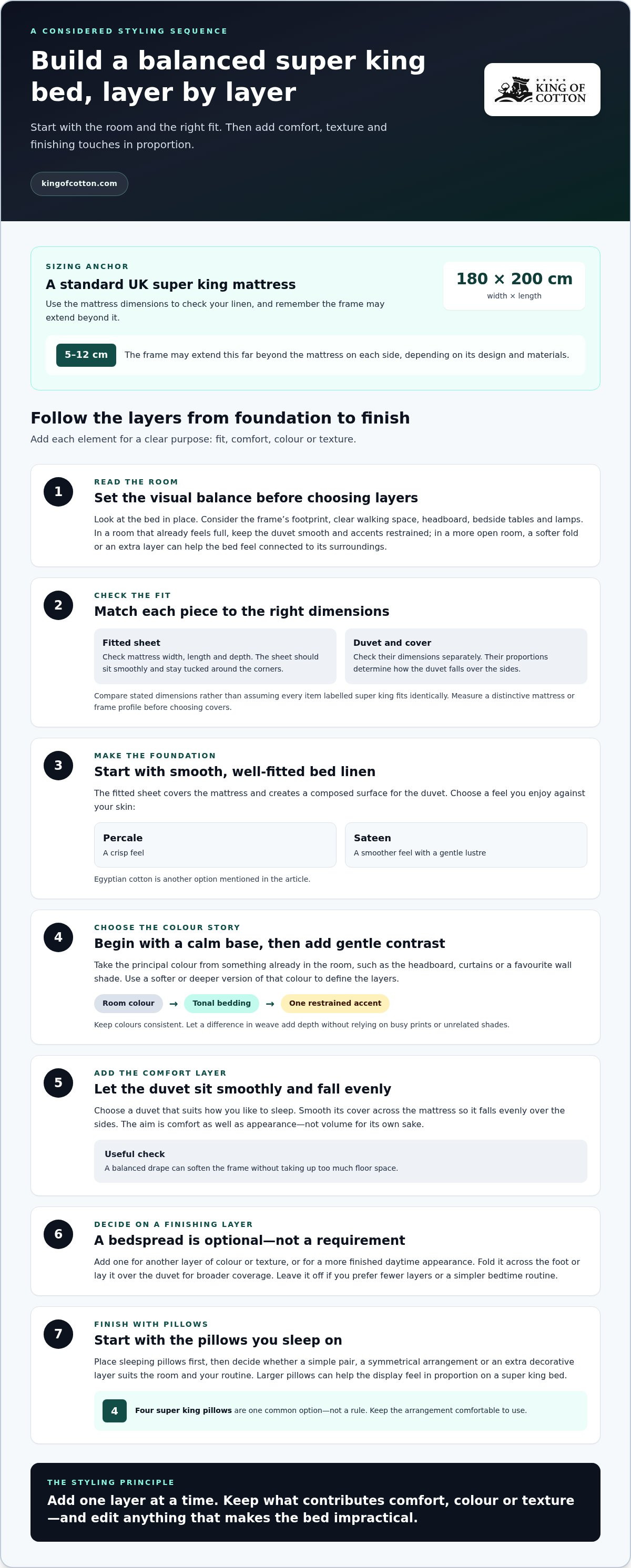
Follow a simple styling sequence for a polished finish
A calm routine makes it easier to create a finished-looking bed without turning everyday bed-making into a project. Work from practical bedding to decorative details, smoothing and adjusting as you go. This order keeps each layer in place and makes it simple to stop once the bed feels balanced.
Use a repeatable five-step routine
Follow the same sequence each time, adapting the optional layers to suit your taste. Starting with the sheet and duvet gives the bed a neat foundation. Add pillows and accents last, so you can judge whether they improve the arrangement before committing to them.
- Fit the sheet. Pull it evenly over the mattress and smooth the surface, checking that the corners sit securely.
- Position the duvet. Centre it from side to side, then straighten the top edge and smooth out visible creases.
- Add optional layers. Fold a bedspread neatly across the foot or lay it evenly over the duvet. Skip it if the bed already feels complete.
- Arrange the pillows. Place the everyday sleeping pillows first, then add any larger or decorative pillows behind or in front.
- Edit the accents. Step back, remove or reposition anything that interrupts the overall balance, and make one final adjustment to the folds.
A bed runner can be a finishing detail, folded across the foot for a narrow accent. It is optional, though, and not essential to a polished result. For a deeper look at how to use one, see the separate guide to styling a bed runner.
Make the arrangement easy to live with
Keep the pillows you sleep on within easy reach and make decorative pieces simple to lift away at bedtime. The routine should suit your household, not ask you to rebuild the bed from scratch each morning. If a layer takes too much effort to manage, leave it off.
Adjust the number of layers to the season and your comfort preferences. You might prefer a lighter, simpler arrangement at one time of year, then add a bedspread when you want another layer. Elaborate hotel styling is not a requirement: a smooth duvet, well-placed pillows and a considered fold can be enough.
Once the layers are in place, view the bed from the doorway to check its overall shape and from beside it to inspect the details. Look for an even duvet, pillows that do not obscure the headboard, and accents that leave enough bedding visible. If something catches your eye for the wrong reason, remove it or shift it slightly. The best approach is the one that looks composed and remains easy to use.
For a polished foundation, explore quality bed linen and bedding to bring comfort and considered texture to your everyday routine.
Make your super king bed feel like a refined bedroom centrepiece
A beautifully dressed bed brings together three things: a comfortable feel, visual balance and details that reflect your taste. The aim is not to recreate a hotel room exactly. It is to make your bedroom feel considered, with bedding you enjoy using and a finish that sits naturally alongside the rest of the space.
Consistency helps the generous surface of a super king bed feel composed. Let the main bedding colour set the tone, then use layers and pillows to add interest without obscuring the linen. A soft contrast can define the bed; a quieter, tonal scheme can make the whole arrangement feel restful. Keep the display flexible enough to smooth, fold or simplify as your everyday needs change.
Choose textiles for the feel and finish you prefer
Textile choice shapes both the look and the experience of the bed. Percale and Sateen are different cotton weaves with distinct tactile character: Percale feels crisp, while Sateen feels smoother. Egyptian cotton is another bed linen option to consider. Think about how each choice will work with your preferred colour palette and layers, rather than choosing texture in isolation.
For example, a simple scheme can gain depth from the contrast between smooth bedding and a more textured optional cover. If you prefer a clean, even finish, let the feel of the linen take centre stage with fewer decorative pieces. The right combination is the one that feels pleasant at bedtime and suits your bedroom’s existing colours and furnishings.
Keep the final look personal and practical
Pause before calling the bed finished. Stand back and consider whether the layers feel balanced, whether the sleeping pillows are easy to reach and whether each accent adds something worthwhile. Remove a cushion or fold back an optional layer if the arrangement feels crowded. A refined centrepiece does not need to be elaborate; comfort and ease of care matter as much as appearance.
King of Cotton has supplied fine cotton textiles to homes and hotels for 25+ years. Its range includes bed linen, duvets and pillows for residential and hospitality settings. Let your own preferences guide the final choice: choose the textures you enjoy, keep the layers manageable and let the room’s character show through.
If you are ready to explore bedding for your scheme, browse King of Cotton bed linen. Free Mainland Delivery on Orders Over £100*. UK mainland deliveries cost £3.95 at minimum.
Make your bed a pleasure to return to
Let the finished bed reflect how you want your bedroom to feel: restful at the end of a busy day, welcoming in the morning and comfortable to use every night. Small changes to colour, texture or the number of decorative pieces can refresh the look without requiring a complete restyle. Choose what feels right to you, then enjoy the calm it brings to the room.
Quality textiles can make that everyday experience feel more considered. King of Cotton is rated Excellent on Trustpilot, giving you an added point of reference as you explore bed linen for your home.
Ready to find a tactile foundation for your own scheme? Explore King of Cotton bed linen and choose pieces that help make your super king bed a comfortable, personal centrepiece.
Frequently Asked Questions
How many pillows should I put on a super king bed?
Use the number that suits your sleeping needs and the look you want, rather than following a fixed rule. Two sleeping pillows create a pared-back finish; four can make a broad bed feel more balanced. If you share the bed, begin with the pillows each person uses, then add a pair of larger pillows behind them if you want more height. Keep decorative cushions easy to remove at night.
What size duvet do I need for a super king bed?
A super king duvet is the usual starting point for a UK super king mattress, but check the duvet and cover measurements before buying. The size label alone does not tell you exactly how much fabric will fall over the sides, and dimensions can differ between products. Think about the drape you prefer: a fuller drop can look generous, while a more tailored fall keeps the edges visually neat.
Can I use a king size duvet on a super king bed?
You can, but a king size duvet may look narrower on a super king mattress and provide less coverage at the sides. This can be noticeable if you share the bed or like to tuck the duvet in. Compare the actual duvet dimensions with your mattress and consider how you sleep before deciding. If you already own one, try it on the bed before buying a new cover.
How do I make a super king bed look less empty?
Give the bed a clear focal point rather than filling every open area. A pair of larger pillows behind the sleeping pillows adds height, while a folded coverlet at the foot draws the eye across the mattress. If the room feels spacious, a subtle change in texture can add interest without introducing another colour. View the bed from the doorway and adjust the placement before adding more accessories.
How can I style a super king bed without using lots of cushions?
Let the bedding itself create the visual interest. A contrasting duvet cover and sheet, a neatly folded bedspread or a considered colour combination can make the surface feel complete without a row of cushions. Keep the sleeping pillows visible and finish with just one accent, if you like. This approach is practical if you want to make the bed quickly or prefer clear space for sleeping.
Should bed linen match the bedroom décor?
No, it does not need to match exactly. Choose a shade that relates to one or two existing features, such as curtains, a headboard or a rug, then use a complementary tone for contrast. If you plan to introduce artwork to tie the space together, options to buy canvas prints uk can help you pull out subtle secondary tones for cushions or throws. For example, bedding in a warm neutral can sit comfortably with darker wooden furniture without copying its colour. If you enjoy bolder schemes, let the linen provide the main colour and keep nearby accents simpler.
How do I make a super king bed look like a hotel bed?
Focus on a crisp, composed finish rather than copying every hotel detail. Smooth the duvet cover, align the top edge and arrange pillows neatly against the headboard. Choose bedding with a feel you enjoy, then keep the palette calm and the accessories restrained. A well-fitted base and tidy folds make a visible difference; elaborate layers are not necessary for a polished result.