

Egyptian Cotton vs Turkish Cotton Towels: The Ultimate Comparison for 2026
The thickest, most absorbent towel in the showroom might actually be the wrong choice for your home. While it's tempting to equate weight with quality, that extra density often leads to damp, musty fabrics in bathrooms without perfect ventilation. We all desire the serene indulgence of a five-star hotel, yet many homeowners find their premium linens becoming scratchy or losing their lustre after only a few washes.
This guide to egyptian cotton vs turkish cotton towels provides a masterclass in textile selection for 2026. You'll discover the definitive differences between these two world-class materials, from the DNA-verified authenticity of Egyptian fibres to the quick-drying excellence of Turkish weaves. We understand that a true luxury investment should remain soft whilst enduring the rigours of frequent laundering. By exploring technical specifications like GSM and staple length, we'll help you curate a bathroom experience that balances opulence with practical performance. Whether you seek the maximum absorbency of the Nile Delta or the refined drying speed of the Aegean, the perfect choice depends entirely on your specific lifestyle and environment.
Key Takeaways
- Master the science of staple length to understand why longer fibres produce the exceptionally soft, pilling-resistant towels found in prestigious residences.
- Compare egyptian cotton vs turkish cotton towels to find the ideal balance between maximum absorbency and the efficient drying speeds required for modern bathrooms.
- Decode GSM ratings to ensure your chosen linens provide a substantial, spa-like feel without compromising on durability or freshness.
- Gain professional insight into the textile preferences of five-star hotels to replicate their signature atmosphere of refined comfort within your own home.
- Learn the "tug" and "sheen" tests to verify craftsmanship and authenticity, ensuring your investment remains a favourite for years to come.
Understanding the Luxury Dilemma: Egyptian vs Turkish Cotton
Selecting the perfect towel transcends simple utility; it is an investment in your daily wellbeing. In the world of high-end textiles, Egypt and Turkey stand as undisputed titans, each possessing a heritage of craftsmanship that dates back centuries. For the discerning homeowner or hotelier, the choice between these two origins is the ultimate luxury dilemma. It isn't merely a matter of prestige, but a decision based on how a fabric interacts with skin, water, and air.
Authentic luxury in towels is defined by performance and longevity. It's about how the fibres behave after fifty launderings and how they feel against the skin on a cold winter morning. Geography plays a silent but vital role here. The specific environmental conditions of the Nile Delta and the Aegean coast create cotton bolls with unique physical properties that cannot be replicated elsewhere. This is why the question of egyptian cotton vs turkish cotton towels remains the most frequent enquiry from our professional hospitality clients.
To better understand this concept and see these materials in action, watch this helpful comparison:
What is Egyptian Cotton?
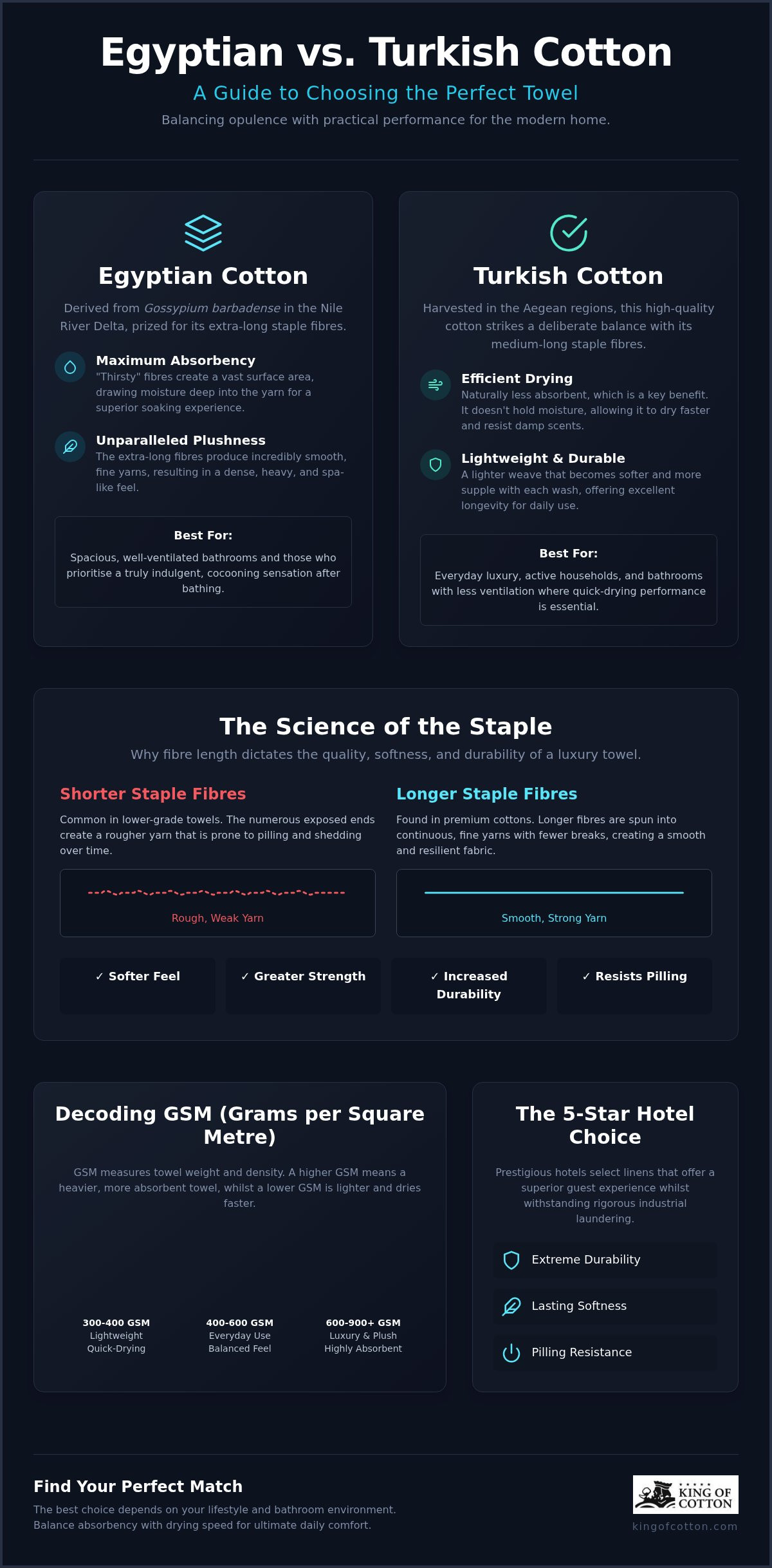
Egyptian cotton is derived from the Gossypium barbadense species, renowned for producing extra-long staple (ELS) fibres. The Nile River Delta provides a stable climate and nutrient-dense soil, allowing the cotton to grow slowly and develop incredible strength. In the textile industry, understanding why fibre length matters is essential because it allows for the spinning of much finer, smoother yarns. The sensory profile of an Egyptian towel is one of unparalleled plushness. These "thirsty" fibres are designed for maximum absorbency, creating a dense, heavy pile that offers a truly indulgent, spa-like cocoon for the user.
What is Turkish Cotton?
Turkish cotton is harvested from the Aegean regions, benefiting from a Mediterranean climate that produces a high-quality, medium-long staple. Unlike its Egyptian counterpart, Turkish cotton strikes a deliberate balance between softness and drying efficiency. These fibres are naturally less absorbent in a way that is actually beneficial; they don't hold onto moisture for as long. This unique trait makes them a favourite for sophisticated bathrooms with less ventilation, as they resist the damp scents often associated with heavier fabrics. The result is a lightweight, durable towel that actually improves its performance over time, becoming softer and more supple with every trip through the laundry.
The Science of the Staple: Why Fibre Length Matters
The secret to a towel that remains plush after years of use lies in its DNA. In the textile industry, 'staple' refers to the length of the individual cotton fibres. When we compare egyptian cotton vs turkish cotton towels, the science of this staple length dictates everything from tactile softness to structural integrity. Longer fibres allow for the spinning of continuous, fine yarns with fewer exposed ends. This creates a smoother surface that resists pilling and maintains its elegant sheen even after industrial-grade laundering.
King of Cotton curates specific staple lengths to meet the rigorous demands of the world's most prestigious hotels. By selecting longer fibres, we ensure our towels provide a superior 'fluffiness' without the shedding common in lower-grade alternatives. This material specificity is what separates a standard household item from a piece of professional-grade linen. It's a commitment to quality that ensures your investment remains an accessible upgrade to your daily routine.
Egyptian Cotton: The King of Absorbency
The extra-long staple (ELS) fibres of Egyptian cotton are nature's most effective sponges. These elongated fibres create a vast surface area that draws moisture deep into the core of the yarn. This results in a truly 'soaking' experience; the towel feels significantly heavier once wet because it has successfully trapped a higher volume of water. These towels are the definitive choice for spacious master bathrooms equipped with luxury towel rails, where the fabric has ample time and heat to release its heavy moisture load between uses.
Turkish Cotton: The Master of Drying Speed
Turkish cotton utilises a medium-long staple that offers a different physical advantage. These fibres are naturally smoother and flatter, allowing them to release moisture into the air far more efficiently than their Egyptian counterparts. This rapid evaporation is a natural anti-mildew defence; the towels stay fresher for longer in humid environments or bathrooms with limited ventilation. This makes them the ideal companion for guest suites, gym bags, or homes in coastal climates where air circulation is a challenge. They provide a crisp, refreshing dry that never feels damp or heavy.
Performance Comparison: GSM, Softness, and Durability
Grams per Square Metre, or GSM, serves as the industry benchmark for textile weight and density. A higher GSM typically indicates a thicker, more absorbent fabric, yet the comparison of egyptian cotton vs turkish cotton towels proves that weight alone doesn't define the experience. When you compare a 600 GSM Egyptian towel to a 600 GSM Turkish counterpart, the physical presence is strikingly different. The Egyptian variety feels notably substantial and dense, whilst the Turkish towel offers a more refined, less bulky profile despite sharing the same technical weight.
Longevity is a hallmark of both materials, particularly when they must endure the rigours of professional hospitality. In a setting where linens face 100 or more industrial wash cycles, these premium cottons age with grace. Turkish cotton is especially celebrated for its "break-in" period. Unlike most fabrics that degrade over time, Turkish fibres famously become softer and more supple after every wash. This unique characteristic allows the loops to open up and improve their tactile quality, whereas Egyptian cotton provides its peak, indulgent softness from the very first use.
The Feel Factor: Plush vs. Smooth
Egyptian cotton is the definitive choice for a "cloud-like" density. Its extra-long fibres create a deep, plush pile that offers a spa-like immersion, making it the favourite for those who want to be cocooned in warmth. In contrast, Turkish cotton delivers a "crisp and clean" luxury often found in elite Mediterranean resorts. It provides an invigorating sensation that is perfect for a vigorous dry. For individuals with sensitive skin, the gentle, velvet-like surface of Egyptian cotton is often the superior choice, whilst those who prefer a lightweight, refreshing feel will gravitate toward the Aegean variety.
Maintenance and Longevity
Preserving the integrity of these fine textiles requires a nuanced approach to laundering. To maintain the "thirsty" nature of Egyptian cotton, it's vital to avoid overusing fabric softeners, which can coat the long fibres and diminish their natural absorbency. Turkish cotton offers a practical advantage in the home; it's remarkably resistant to "souring." Because the fibres are less dense, they don't trap moisture as aggressively, meaning they stay fresher for longer if they aren't dried immediately. To maintain that signature five-star finish, many homeowners ask, how do hotels keep towels so soft? The answer lies in using moderate temperatures and ensuring the fibres are thoroughly tumbled to restore their natural loft.
The Professional Choice: Which One Do 5-Star Hotels Use?
Professional hoteliers view linen as a strategic asset rather than a simple amenity. The decision between egyptian cotton vs turkish cotton towels in a five-star establishment is rarely accidental; it's a calculated choice based on the room's purpose and the hotel's laundry infrastructure. At King of Cotton, we help global hospitality brands navigate these nuances to ensure their guests experience the pinnacle of comfort whilst maintaining operational efficiency.
In flagship luxury suites, Egyptian cotton is the definitive preference. These rooms are designed for slow, indulgent stays where the guest expects a heavy, plush towel that feels like a warm embrace. However, in high-turnover boutique hotels or resorts with limited laundry space, Turkish cotton is often the pragmatic favourite. Its ability to dry quickly reduces the energy required for commercial laundering and allows housekeeping teams to refresh rooms faster. This "efficiency preference" ensures that towels remain fresh and ready for the next guest without the risk of the damp scents that can plague heavier fabrics in humid climates.
The Aesthetic of Luxury
Visual presentation is paramount in professional hospitality. Egyptian cotton towels possess a substantial drape that looks magnificent when folded on a marble vanity or draped over a freestanding tub. Turkish cotton, conversely, often features a subtle, elegant sheen that catches the light beautifully, lending a more modern, refined aesthetic to the bathroom. Both materials absorb dyes exceptionally well, ensuring that deep charcoals or classic whites remain vibrant through hundreds of washes. To find the right visual match for your space, View our complete Bathroom Collection.
Cost vs. Value in the Long Term
While the initial investment in Egyptian cotton may be higher due to the rarity of extra-long staple fibres, its longevity in a luxury setting is unmatched. For commercial operations, Turkish cotton offers a lower "cost per dry" because it releases moisture so efficiently during the tumble-drying process. This balance of performance and economy is why selecting a trusted hotel linen supplier is critical for any establishment. We provide the expertise to help you choose a material that survives industrial laundering whilst maintaining the soft, inviting texture that defines a premium stay.
Upgrade your home or hotel with the same professional-grade textiles used by the world's finest establishments. Explore our full range of premium towels today.
Conclusion: Finding Your Perfect Match amongst the Finest Cottons
The comparison of egyptian cotton vs turkish cotton towels ultimately reveals two distinct paths to bathroom luxury. Neither is objectively superior; rather, each serves a specific purpose in your daily routine. Egyptian cotton remains the undisputed choice for those seeking the ultimate absorbent indulgence. Its dense, heavy pile provides a spa-like immersion that transforms a routine shower into a moment of rejuvenation. Conversely, Turkish cotton offers a more practical, soft efficiency. It provides a crisp, refreshing dry and remains remarkably fresh in humid environments, making it a versatile favourite for modern lifestyles.
To verify the craftsmanship of your linens at home, you can perform the "tug" and "sheen" tests. Gently pull a single loop of the fabric; a high-quality weave will resist movement, indicating a tight, durable construction that won't pull or snag easily. Next, examine the surface under natural light. Genuine premium cotton possesses a subtle, elegant lustre rather than a flat, dull appearance. At King of Cotton, we meticulously oversee quality control for every origin. We ensure that whether you choose the Nile Delta or the Aegean coast, you receive a product that meets the international standards of excellence expected by the world's finest hotels.
Your Quick Selection Checklist
- Choose Egyptian if: You desire a substantial, heavy towel and utilise a tumble dryer to maintain its natural loft and plushness.
- Choose Turkish if: You prefer a towel that dries rapidly on the rail, stays fresh in humid air, and travels well for spa or gym visits.
- Plan your upgrade: Check our delivery options for your next order to see how quickly you can transform your bathroom experience.
Final Expert Advice
Consider mixing both varieties to create a curated linen cupboard that adapts to your needs. Use plush Egyptian towels for long, relaxing weekend baths and keep Turkish varieties for the busy morning rush. To maintain their performance, it is vital to avoid fabric softeners. These chemicals coat the fibres and reduce their natural ability to absorb water. It's better to invest in quality that lasts years, not months. By selecting materials with a proven heritage, you ensure your home remains a sanctuary of refined comfort and understated elegance. Don't settle for fleeting trends when you can enjoy the enduring luxury of the world's finest cottons.
Elevate Your Daily Ritual with Expertly Crafted Linens
Choosing between egyptian cotton vs turkish cotton towels is a decision that defines the atmosphere of your sanctuary. For those who crave the ultimate absorbent indulgence after a long soak, the plush density of Egyptian fibres remains the gold standard. If your lifestyle demands a crisp, refreshing dry and towels that stay fresh in humid air, the Aegean heritage of Turkish cotton provides the perfect solution. Both materials represent a significant upgrade to a more refined lifestyle, ensuring your bathroom mirrors the comfort of high-end professional hospitality.
As suppliers to the world's most prestigious hotels, King of Cotton provides expertly crafted linens with high-GSM specifications designed for longevity. Trusted by thousands of discerning homeowners across the UK, our collection ensures that your investment remains soft and luxurious through years of frequent laundering. Don't settle for standard textiles when you can enjoy the serene confidence of professional-grade quality in your own home.
Explore our curated collection of Luxury Bath Towels and discover the perfect match for your personal preferences today.
Frequently Asked Questions
Is Egyptian cotton better than Turkish cotton for towels?
Neither material is objectively superior; the choice depends on your specific needs for absorbency versus drying speed. Egyptian cotton is the definitive choice for those who desire a heavy, plush feel. Conversely, Turkish cotton is favoured for its lightweight elegance and ability to dry quickly. Balancing these traits ensures your bathroom remains a sanctuary of comfort tailored to your environment and personal preferences.
Do Turkish towels actually dry you properly?
Turkish towels are exceptionally effective at drying the skin despite their lighter profile. The medium-long staple fibres wick moisture away efficiently without the fabric becoming waterlogged or heavy. This makes them a favourite in Mediterranean resorts where a crisp, refreshing dry is preferred. They provide a vigorous, invigorating experience that leaves you feeling clean and dry without the bulk of heavier, more absorbent alternatives.
Why are Egyptian cotton towels so expensive?
The higher cost reflects the rarity and superior physical properties of extra-long staple fibres grown specifically in the Nile Delta. These fibres are often hand-picked to preserve their integrity, ensuring a stronger yarn that resists pilling. Investing in this material means you're paying for a product that maintains its luxurious texture through years of use, offering a better long-term value than cheaper, short-staple alternatives.
How can I tell if my towel is real Egyptian cotton?
Authenticity is best verified by checking for the official Gold Seal of the Cotton Egypt Association. This accreditation ensures the cotton was grown in Egypt and meets the strict DNA-testing standards for 2026. Genuine Egyptian cotton feels exceptionally smooth and possesses a subtle natural sheen. If a towel feels scratchy or looks dull after only a few washes, it likely lacks the extra-long staple fibres of the real variety.
Which towel material is best for sensitive skin?
Egyptian cotton is generally considered the superior choice for sensitive skin due to its incredibly soft, velvet-like pile. The long fibres create a smoother surface with fewer joins, which significantly reduces friction against the skin. This plush texture provides a gentle, soothing experience that is perfect for those prone to irritation. It offers a spa-like cocoon that feels indulgent and protective after every bath or shower.
How long should a luxury cotton towel last?
A high-quality luxury towel should last between five and ten years when laundered correctly. Professional hospitality grade linens are designed to withstand hundreds of industrial wash cycles whilst retaining their structural integrity. By choosing premium materials, you're making a sustainable investment in your home. These towels won't thin or fray like budget options, ensuring your linen cupboard remains stocked with soft, reliable essentials for many years.
Do Turkish towels get softer after washing?
Turkish cotton uniquely improves with age, becoming softer and more supple after every trip through the laundry. The fibres possess a natural ability to "break in," allowing the loops to open up and develop a more inviting texture over time. This characteristic ensures that your towels feel even more luxurious after months of use than they did on the day you purchased them, provided you avoid using harsh chemical softeners.
Can I use a tumble dryer for both Egyptian and Turkish towels?
You can certainly use a tumble dryer for both varieties, provided you use a moderate temperature setting. In the debate of egyptian cotton vs turkish cotton towels, drying methods play a key role in texture. Egyptian towels actually benefit from the tumbling action to restore their signature loft and plushness. Turkish towels dry much faster, so they require less time in the machine to achieve a crisp, fresh finish.