

Percale vs Sateen: The Expert Guide to Choosing Luxury Bed Linen
High thread count is frequently championed as the sole benchmark of quality, yet the true secret to a restorative night's sleep lies in the structural mechanics of the weave. You've likely felt the disappointment of purchasing premium sheets only to find they're uncomfortably heavy or lose their refined texture after just a few cycles in the wash. Understanding these nuances is essential for any discerning sleeper, particularly when trying to define what is sateen bedding and why it feels so distinct from its crisp percale counterpart.
We recognise that choosing the right bed linen is an investment in your daily wellbeing. This expert guide provides a definitive look at the technical differences between percale and sateen weaves, helping you find the perfect match for your body temperature and aesthetic preferences. We'll examine how these fabrics perform under the rigours of high-frequency laundering and why specific weave patterns are favoured by the world's most prestigious hotels. By the end, you'll have the confidence to select linen that maintains its indulgent, five-star feel for years to come.
Key Takeaways
- Understand the structural mechanics behind each weave, including a clear definition of what is sateen bedding compared to the traditional one-over, one-under percale pattern.
- Identify your ideal sleep environment by choosing percale for its cool, crisp breathability or sateen for its insulating warmth and silky drape.
- Gain insight into how professional-grade linens are constructed to withstand frequent laundering whilst retaining their signature hotel-quality texture.
- Learn how to evaluate thread count in the context of weave density to ensure you invest in bedding that offers genuine longevity and comfort.
- Discover the benefits of using premium Egyptian cotton as the base material for achieving the most refined finish in both matte and lustrous styles.
Understanding Percale and Sateen Weaves: The Fundamentals
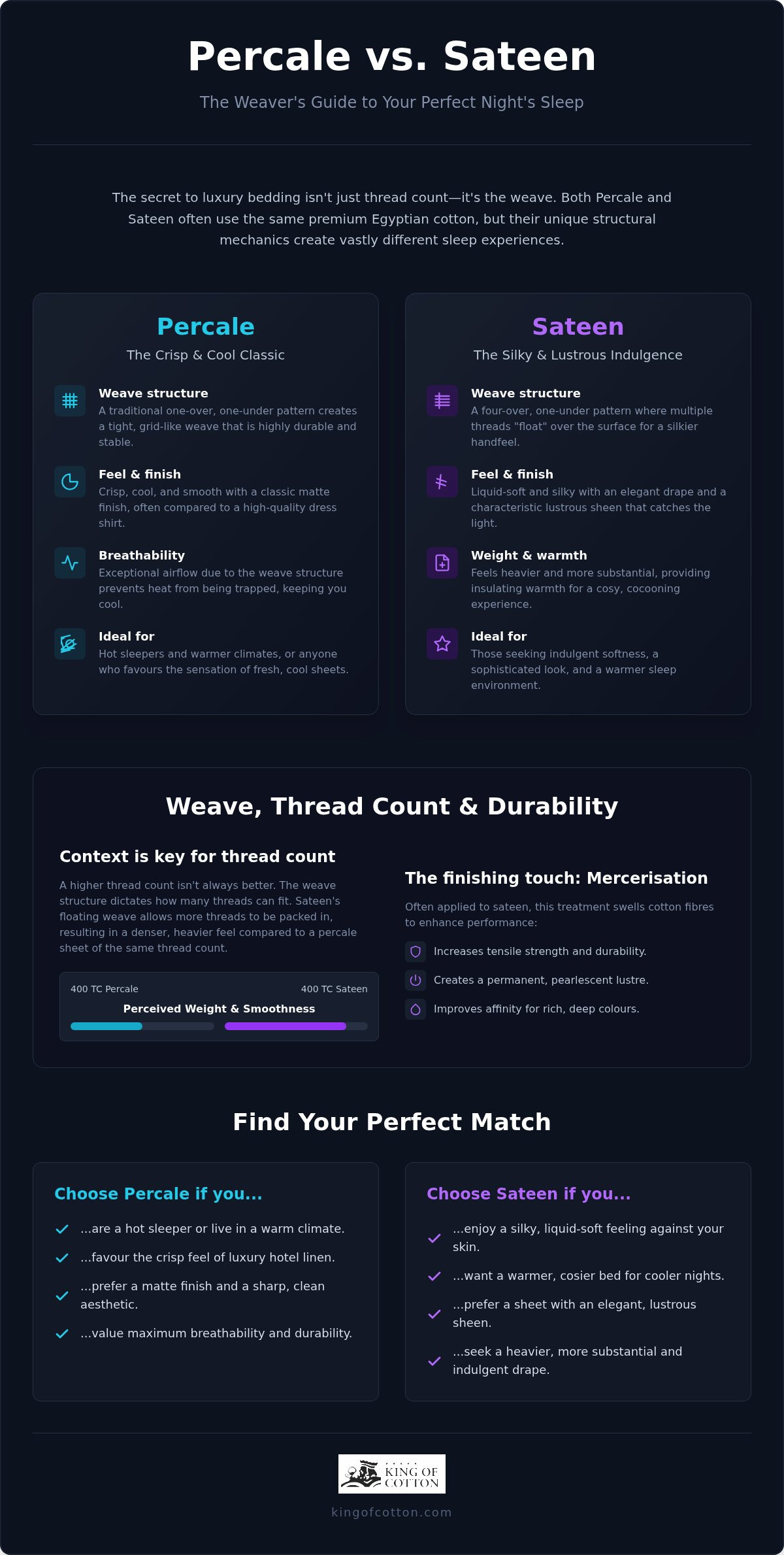
The distinction between percale and sateen is frequently misunderstood as a difference in raw material. In reality, both are common weaves used to make bed sheets, often utilising the same 100% long-staple Egyptian cotton fibres. The divergence lies entirely in the mechanical structure of the loom. Percale follows a traditional "one-under, one-over" pattern, creating a symmetrical grid that's exceptionally stable and durable. Conversely, to understand what is sateen bedding, one must look at the "four-under, one-over" structure. This specific technique allows several threads to "float" over the surface before being tucked under, resulting in a textile that behaves very differently against the skin and light.
Whilst both weaves provide a premium experience, the choice between them determines the tactile and visual character of your sanctuary. It's not a matter of one being superior to the other, but rather which sensation you prefer when you retire for the evening. By manipulating the way warp and weft threads intersect, manufacturers can create vastly different results from the same cotton harvest, catering to varied climates and personal sleep styles.
The Percale Profile: Crisp and Cool
Percale is the quintessential choice for those who favour a matte finish and the sensation of freshly laundered sheets every night. It's often compared to the texture of a high-quality men's dress shirt: structured, breathable, and reliably smooth. Because the threads are tightly interlaced in a simple plain weave, the fabric doesn't trap heat, making it an ideal companion for warmer nights or "hot sleepers". A signature trait of premium, high-thread-count percale is its distinctive "rustle" sound, a subtle auditory cue of its density and quality. It's a classic bed linen style that remains a staple in luxury hotels globally because it stays cool to the touch whilst offering a sharp, clean aesthetic.
The Sateen Profile: Silky and Lustrous
If percale is a crisp shirt, sateen is a liquid silk gown. When asking what is sateen bedding, the answer lies in its elegant drape and characteristic subtle sheen. The four-over-one weave exposes more of the yarn's surface to the light, creating a lustrous finish that looks as indulgent as it feels. This construction also makes the fabric naturally softer to the touch, as fewer interlaced points mean less friction against the body. Sateen typically feels heavier and more substantial than percale. This increased density provides a sense of luxury and substance, making it the preferred option for those who enjoy a cosy, cocooning sleep experience. It's an accessible upgrade for any bedroom, providing a sophisticated glow that catches the light beautifully.
The Science of the Weave: Construction and Thread Count
The structural integrity of your bed linen is governed by more than just raw material; it's a matter of precise textile engineering. While we've established the visual differences, the science of the weave dictates how the fabric performs over years of use and how it interacts with your body temperature. The density and weight of a finished sheet are direct results of the over-under pattern chosen at the loom.
When considering what is sateen bedding, it's vital to understand why these sheets often boast a higher thread count than their percale counterparts. Because the sateen weave uses multi-yarn floats, threads that skip over several others before being tucked under, weavers can pack more threads into a single square inch. This increased density isn't a mere marketing metric; it's the physical requirement for creating that substantial, cocooning weight that defines high-end hotel linen. Thread count should always be viewed in the context of the weave type, as a 400-thread-count sateen will feel significantly heavier and smoother than a 400-thread-count percale.
Mercerisation plays a pivotal role in the refinement of sateen. This treatment involves a precise chemical process that swells the cotton fibres, increasing their surface area and smoothing the yarn. This doesn't just enhance the fabric's affinity for rich dyes and create a permanent, pearlescent lustre; it also significantly improves the tensile strength. This added durability is crucial for sateen, as it ensures the exposed floating threads remain resilient against the friction of movement during sleep.
How the Weaving Process Dictates Breathability
The tight, uniform grid of a percale weave naturally leaves minute, consistent gaps between the threads, which facilitates superior airflow. This makes it an exceptional choice for maintaining a cool microclimate, preventing the build-up of heat. In contrast, the denser sateen structure overlaps threads more significantly, which traps air and acts as a natural insulator. Breathability in bedding is the measure of how effectively air and moisture vapour can pass through the fabric pores to regulate body temperature. If you find yourself reaching for an extra blanket in autumn, sateen's ability to retain warmth makes it the superior seasonal choice.
The Importance of Cotton Quality Amongst Weaves
Regardless of the weave pattern, the foundation of luxury must be long-staple Egyptian cotton. These longer fibres are essential for spinning smooth, strong yarns that resist pilling and fraying. In sateen, this inherent strength is what prevents the floating threads from snagging over time. In percale, it's what maintains that crisp, sharp finish that won't go limp after repeated industrial-standard laundering. For a deeper look at material selection, you may find our guide on Egyptian Cotton Bedding: Is It Worth The Investment? particularly useful. You can explore our full range of professional-grade luxury bed linen to experience these technical benefits firsthand.
Percale vs Sateen: A Comparative Performance Analysis
Professional laundering is the ultimate test of textile endurance. Whilst both weaves are crafted from premium cotton, they respond differently to the rigours of high-temperature cycles. Percale is renowned for its resilience; its tight interlacing ensures the fabric remains stable even after hundreds of washes. This is why it remains a staple in high-turnover hospitality environments. Understanding what is sateen bedding involves recognising its specific performance under heat; it requires a slightly gentler touch to preserve the delicate lustre of its surface over years of use.
When exploring what is sateen bedding, one of the most practical advantages is its natural resistance to wrinkling. The way the threads lie flatter across the surface allows the fabric to drape smoothly over the mattress with minimal creasing. Percale, by contrast, is prone to a more structured, wrinkled appearance if not handled correctly. This creates a clear aesthetic choice: the crisp, matte, and architectural look of percale versus the fluid, glowing, and draped finish of sateen. Over time, sateen maintains its signature silkiness, whereas percale undergoes a charming evolution, becoming softer and more supple with every laundering.
Temperature Regulation and Sleep Quality
Sleep quality is inextricably linked to thermoregulation, the body's ability to maintain a steady internal temperature. For hot sleepers, percale is the undisputed favourite. Its superior breathability allows heat to dissipate rapidly, preventing the discomfort of night sweats. Conversely, sateen provides a warmer entry temperature, making it ideal for those who feel the chill or for use during the colder UK months. It creates a cosy, insulating layer that retains just enough body heat to ensure a tranquil night's rest without overheating.
Longevity and Maintenance in the Hospitality Sector
Hotels frequently prioritise percale because it conveys a sense of clinical cleanliness and provides a "cool-side-of-the-pillow" feel that guests adore. However, sateen is increasingly popular in boutique suites where a more indulgent atmosphere is required. To maintain the lustre of sateen, avoid over-drying, which can dull the fibres. For percale, the best results are achieved by ironing whilst the fabric is still slightly damp; this allows the heat to flatten the tight weave effortlessly, restoring that signature sharp, hotel-standard finish.
Decision Framework: Which Weave Suits Your Lifestyle?
Selecting between these two premium weaves requires an honest assessment of your personal habits and the specific climate of your home. Whilst we've explored the technical mechanics, the right choice ultimately depends on how you wish to feel the moment you climb into bed. Use this checklist to identify your primary sleep requirements:
- Do you wake up feeling overheated? Choose percale for its superior breathability and cooling properties.
- Do you prefer a silky, frictionless touch? Sateen is the ideal choice for its smooth, indulgent hand-feel.
- Is a wrinkle-free bed a priority? Sateen's natural drape resists creasing, offering a polished look with minimal effort.
- Do you enjoy a "weighty" feel to your covers? The higher density of sateen provides a comforting sense of substance.
The UK climate is notoriously temperamental, which often makes a seasonal rotation the most practical strategy. Many of our clients prefer the crisp, lightweight nature of percale during the summer months, switching to the insulating warmth of sateen as the autumn chill sets in. If you're undecided, consider a "mix and match" approach. Using a percale duvet cover provides that architectural, clean look for the room, whilst sateen pillowcases offer a gentle surface for your hair and skin. When determining what is sateen bedding right for your specific needs, remember that it's the weave that dictates the daily maintenance; sateen is remarkably low-maintenance for those who wish to avoid the iron.
Choosing for Your Bedroom Aesthetic
Your choice of weave significantly influences the visual narrative of your sanctuary. High-thread-count percale collections are the foundation of that classic, five-star hotel bed look: sharp, matte, and impeccably tidy. In contrast, sateen creates a more relaxed and opulent atmosphere. Its subtle glow catches the ambient light, making the bed look inviting and fluid. For more inspiration on styling these textures, consult The Ultimate Guide to Buying Luxury Bed Linen.
The Business Perspective: Choosing for Your Guests
For boutique hotels and property managers, the decision involves balancing guest satisfaction with operational efficiency. Percale is a workhorse in the hospitality sector due to its incredible durability under industrial laundering. However, sateen is often the preferred choice for executive suites or winter season bookings where an extra layer of perceived luxury is required. It provides an immediate "wow" factor through its lustre and softness. Professionals can find deeper insights in our Hotel Linen Suppliers Guide. Whether you're furnishing a guest house or your own master bedroom, you can shop our full range of luxury bed linen to find your perfect weave.
Selecting Hotel-Standard Bed Linen with King of Cotton
King of Cotton has established a peerless reputation for excellence by supplying the world's most prestigious residential and commercial sectors. Our approach is definitive; we apply the same exacting hospitality standards to every product we offer. Whether you're an individual seeking a more refined lifestyle or a corporate client outfitting a boutique property, our linens provide a tangible sense of rejuvenation. We remain deeply committed to the heritage of our materials, ensuring every thread of Egyptian cotton is ethically sourced and crafted with superior material specificity. This dedication to craftsmanship ensures that our linens don't just look elegant on day one; they maintain their integrity through years of use. Understanding what is sateen bedding starts with the quality of the raw cotton; we select only the finest long-staple Egyptian fibres to ensure our sateen remains lustrous after every wash. Our logistics are designed for simplicity, providing reliable delivery across the UK to ensure your investment in quality arrives without delay.
Our Signature Egyptian Cotton Collections
Our curated ranges allow you to tailor your sleep experience with precision. For those who desire the architectural crispness of a traditional hotel suite, our percale collection offers a cool, breathable finish that remains sharp and structured. If you prefer a more indulgent, cocooning sensation, our sateen options provide a fluid drape and a pearlescent sheen that transforms your bedroom into a sanctuary. When you consider what is sateen bedding within our range, you're looking at a textile designed for a five-star home experience. We use long-staple fibres to ensure that the floats in our sateen weave are as resilient as they are soft. We invite you to browse our full bed linen collection to find the weave that matches your personal aesthetic and sleep style.
The King of Cotton Quality Guarantee
With over 30 years of industry tenure, we've refined our techniques to meet the highest international standards of excellence. Our products are engineered to withstand the rigours of high-frequency industrial laundering whilst retaining their signature softness and lustre. This durability is why we're trusted as Suppliers to the Finest Homes & Hotels in the World. We believe that luxury should be a lasting investment, not a fleeting trend. If you'd like to experience the difference between our weaves firsthand, we welcome you to visit our London stores. Feeling the weight and texture of our Egyptian cotton in person provides a level of confidence that digital descriptions cannot match. Ordering is seamless, with efficient delivery options designed to meet the needs of both our residential and professional partners globally. Our team is always available to provide expert guidance on thread count and weave choice, ensuring your selection provides years of restorative sleep.
Elevate Your Sleep Experience
Choosing between percale and sateen is a personal investment in your nightly restoration. You now understand the technical mechanics behind each weave, from the breathable symmetry of percale to the indulgent, lustrous finish that defines what is sateen bedding. Whether you prioritise the architectural crispness of a boutique hotel suite or the cocooning warmth of a private sanctuary, your choice should reflect your unique sleep profile and the changing UK seasons.
At King of Cotton, we've spent over 30 years perfecting the art of luxury textiles. As trusted suppliers to the world’s most prestigious hotels, we ensure our residential collections meet the same rigorous 5-star standards found in global establishments. Every sheet is designed to withstand the rigours of professional laundering whilst maintaining its exquisite hand-feel. It's time to bring that world-class comfort into your own home.
Shop our professional-grade bed linen collections and discover the transformative power of genuine Egyptian cotton. We look forward to helping you create the perfect sleep environment for years to come.
Frequently Asked Questions
Is percale or sateen better for hot sleepers?
Percale is the superior choice for hot sleepers due to its breathable one-under, one-over weave. This construction allows air to circulate freely through the fabric, preventing heat from becoming trapped against your skin. Whilst sateen is exceptionally soft, its denser structure acts as an insulator. If you frequently wake up feeling overheated, a high-quality percale sheet provides the cooling, crisp sensation necessary for a more restorative and temperate night's sleep.
Does sateen bedding pill more than percale?
Pilling is primarily a result of short-staple fibres rather than the weave itself. However, because sateen features longer floats of yarn on the surface, it can be more susceptible to snagging if you don't handle it with care. To ensure your bedding remains smooth, always opt for long-staple Egyptian cotton. This premium material provides the tensile strength required to keep the sateen surface intact and free from the friction-based bobbling found in lower-grade alternatives.
Why do hotels usually use percale sheets instead of sateen?
Hotels frequently favour percale for its exceptional durability and the classic crisp feel that guests associate with professional hospitality. The tight interlacing of the threads allows the fabric to withstand high-temperature industrial laundering without losing its structural integrity. Additionally, percale stays cool to the touch, which is a universally preferred sensation for travellers. It provides a sharp, clean aesthetic that remains consistent even after hundreds of commercial wash cycles in a busy hotel environment.
Is sateen bedding made from real cotton or polyester?
When asking what is sateen bedding, it's important to distinguish between the weave and the material. Sateen is a weave pattern that is almost exclusively crafted from 100% cotton to achieve its signature lustre. Whilst some budget manufacturers use polyester blends, true luxury sateen relies on the natural properties of cotton fibres. At King of Cotton, we use premium long-staple cotton to ensure the fabric remains breathable, soft, and durable for years of use.
Does sateen bed linen get softer after washing?
Yes, high-quality sateen bed linen will continue to soften with every wash. As the cotton fibres are laundered, they become more supple and relaxed, enhancing the fabric's natural drape. Whilst sateen is notably soft from the first use, its tactile appeal evolves over time. To preserve this silkiness, we recommend using a gentle detergent and avoiding excessive heat during the drying process, which helps the cotton maintain its inherent oils and smooth, luxurious surface.
Which weave is easier to iron, percale or sateen?
Sateen is significantly easier to iron due to its heavier weight and natural wrinkle resistance. The way the threads are layered in a four-over-one pattern allows the fabric to lay flatter, meaning it requires less effort to achieve a polished finish. Percale, being lighter and more structured, tends to crease more easily. For the best results with percale, it's often necessary to iron the sheets whilst they are still slightly damp to remove stubborn folds.
Can I mix percale and sateen bedding in the same set?
Mixing weaves is an excellent way to customise your sleep environment. Many sleepers prefer a sateen fitted sheet for its smoothness against the skin, paired with a percale duvet cover to maintain a crisp, breathable top layer. This combination allows you to enjoy the tactile luxury of sateen whilst benefiting from the temperature regulation of percale. It also adds visual depth to your bedroom aesthetic by contrasting the matte finish of one with the subtle sheen of the other.
Is 1000 thread count sateen better than 400 thread count percale?
A higher thread count doesn't necessarily mean a superior product; it simply indicates a different density. A 1000 thread count sateen will feel much heavier, warmer, and more substantial, whereas a 400 thread count percale is designed to be lightweight, airy, and crisp. Your choice should depend on your personal preference for weight and temperature. Both options represent the pinnacle of luxury if they are crafted from genuine, long-staple Egyptian cotton by a trusted specialist.