

Long Lasting Towels UK: The Professional Guide to Durability and Restoration
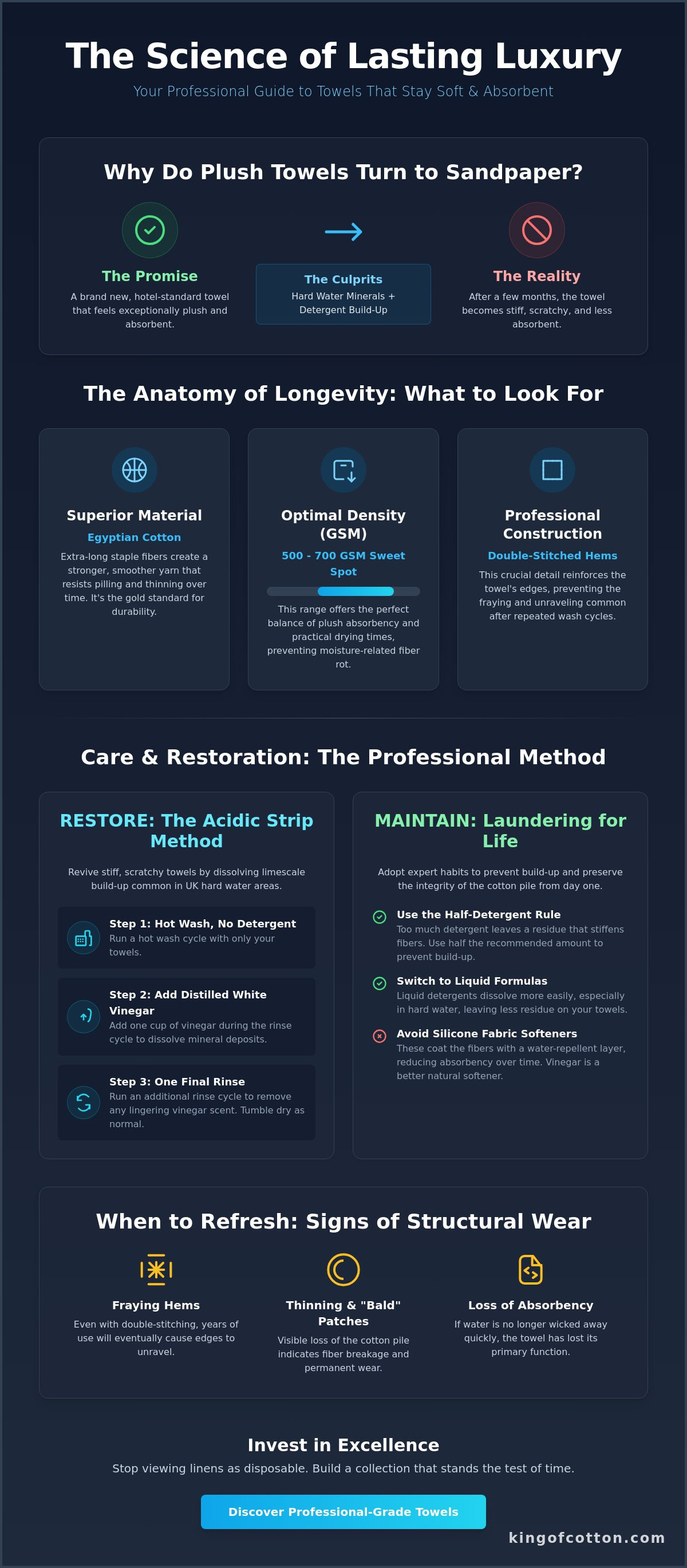
Why does the plush, hotel-standard towel you brought home inevitably transform into something resembling sandpaper after just a few months? It is a frustrating reality for many households across Britain, where the abrasive effects of hard water and detergent build-up quickly strip away that initial indulgence. You likely feel that a truly premium experience should last, yet you are often left with scratchy fabric that lacks the absorbency it once promised.
Finding genuine long lasting towels uk requires more than just a soft touch in the showroom; it demands an understanding of technical excellence and professional care. We believe your home deserves the same enduring quality found in the world's most prestigious residences. By mastering the secrets of material density and mineral restoration, you can protect your investment and enjoy a more refined lifestyle every day. It is time to stop viewing linens as disposable items and start building a collection that stands the test of time.
This professional guide reveals how to identify superior GSM specifications, navigate the specific challenges of UK limescale, and implement the restoration techniques used by luxury hospitality experts to keep linens soft for years. You will learn to build a timeless linen collection that remains as thick and absorbent as the day it arrived.
Key Takeaways
- Discover why long-staple Egyptian cotton is the gold standard for long lasting towels uk, offering superior resistance to pilling and thinning over time.
- Learn to identify the 500 to 700 GSM density threshold and the double-stitched hem construction that define professional-grade durability.
- Master the acidic strip method using distilled white vinegar to dissolve the stubborn limescale deposits common in British hard water areas.
- Protect your investment by adopting the half-detergent rule and switching to liquid formulas that preserve the integrity of the cotton pile.
- Understand the specific signs of structural wear that indicate it is time to refresh your linen collection to maintain a premium bathroom experience.
The Anatomy of Longevity: What Makes a Towel Truly Long-Lasting?
True luxury isn't measured by how a towel feels on a showroom hanger. It is defined by the structural integrity that survives years of daily use and repeated laundering. Many consumers are seduced by a velvet-like texture in the store, only to find it vanishes after the first wash. This is often due to silicone-based softening agents applied during manufacturing to mask inferior fibre quality. Genuine long lasting towels uk rely on the inherent strength of the cotton and the precision of the weave rather than temporary chemical coatings. Understanding the history of towels reveals that while designs have evolved, the fundamentals of a durable loop remain constant.
Professional-grade towels feel substantial and dense from the start, indicating a high-quality yarn that doesn't need artificial help. Double-stitched hems are non-negotiable for long-term durability. This technique secures the weave at its most vulnerable points, preventing the edges from fraying or "smiling" after hundreds of cycles in a washing machine. It's a small detail that separates a basic supermarket product from a hospitality-grade investment. Explore our luxury bathroom collection to see the difference that material-first design makes.
To better understand how professional-grade materials maintain their texture, watch this helpful video:
Understanding GSM and Weight
Grams per Square Metre (GSM) is the definitive technical metric for towel density and lifespan. For residential use, the 500 to 700 GSM range represents the ideal balance of luxury and endurance. While lightweight towels (300-400 GSM) dry quickly, they often lack the structural mass to withstand frequent high-temperature washes. Conversely, ultra-heavy towels exceeding 900 GSM can actually degrade prematurely. Their extreme density traps moisture for longer, which can lead to bacterial growth and fibre rot if they aren't dried perfectly every time. Choosing a mid-to-high weight ensures a plush feel without compromising the fabric's health.
The Role of Hard Water in the UK
In many parts of the UK, hard water is the primary antagonist of textile longevity. Calcium and magnesium ions bind to the cotton loops, creating a microscopic layer of mineral deposits. This build-up is why towels often lose their absorbency and take on a dull, grey appearance over time. It isn't always dirt; it's a chemical change in the fabric itself that creates a stiff, sandpaper-like feel.
Limescale crusting is the silent killer of towel longevity.
This mineral shell makes the cotton fibres brittle, leading to breakage and a scratchy texture that standard detergents cannot fix. Identifying this "grey look" early allows you to take restorative action before the fibres are permanently damaged. By understanding the specific challenges of the British climate and water supply, you can select long lasting towels uk that are built to thrive in these conditions.
Material Science: Why Egyptian Cotton Rules the UK Luxury Market
The secret to long lasting towels uk homeowners can rely on lies beneath the surface in the microscopic structure of the cotton fibre. While many fabrics claim to be premium, the biological composition of the raw material determines whether a towel will remain plush or succumb to pilling and "bald" patches. Superior craftsmanship begins with the selection of the fibre. For those seeking an enduring investment, the choice usually narrows to two prestigious origins: Egypt and Turkey.
Egyptian cotton is celebrated for its extra-long staple fibres. These longer strands allow for a smoother, stronger yarn with fewer joins. In the context of durability, fewer joins mean fewer points of failure where the fabric can fray or weaken. Turkish cotton, while also high quality, offers a slightly different benefit. It is naturally more absorbent than standard cotton but dries faster than its Egyptian counterpart. For a busy UK household where drying time is a practical concern, Turkish cotton is an excellent choice, yet Egyptian cotton remains the undisputed king for those prioritising a heavy, indulgent pile that lasts for decades.
The structural life of your linens is also dictated by the thread twist. High-twist yarns are the resilient workhorses of the textile industry, designed to maintain their shape through hundreds of laundry cycles. While "zero-twist" towels offer immediate, cloud-like softness, they are often more prone to shedding and thinning over time. Investing in high-quality cotton isn't just a matter of comfort; it's a commitment to sustainability. Choosing durable linens reduces textile waste, which is a growing concern as the UK generates approximately 1.4 million tonnes of post-consumer textiles annually according to March 2026 data.
The Superiority of Egyptian Cotton Fibres
The biological strength of cotton grown in the Nile Delta is unmatched. The consistent humidity and nutrient-rich soil produce fibres of exceptional length and uniformity. When these fibres are spun into yarn, they create a fabric that is remarkably resistant to the friction of daily use. For a deeper dive into how these fibres compare across different home textiles, you can consult our luxury bed linen guide. This material integrity ensures your towels don't just feel better; they perform better over a much longer horizon.
Weave Patterns and Durability
Beyond the fibre, the weave pattern determines how the towel handles wear. Terry loops are the standard for absorbency, but the quality of the "ring-spun" process is what prevents those loops from pulling. Ring-spinning twists the cotton fibres together to create a stronger, more lustrous thread. In professional hospitality, we also look for a "selvedge" edge. This finished, woven edge prevents the sides of the towel from unravelling, a common flaw in mass-produced alternatives. To experience this level of craftsmanship in your own home, explore our range of professional-grade towels designed for lasting elegance.
The Professional Revival Method: How to Make Old Towels Last Longer
Most households assume that once a towel loses its initial fluff, its lifecycle is nearing an end. In reality, the fabric is often just suffocating under a layer of chemical residue and mineral deposits. To maintain long lasting towels uk residents must understand that traditional fabric softeners are actually the primary enemy of cotton longevity. These products function by coating fibres in a thin layer of silicone or oil. While this provides a temporary illusion of softness, it creates a water-repellent barrier that destroys absorbency and traps bacteria deep within the pile. Over time, this build-up makes the fabric feel heavy, greasy, and eventually scratchy.
Professional restoration requires a shift in perspective. Instead of adding more chemicals, you must "strip" the fabric back to its original state. The hospitality gold standard for this process is a 60°C wash cycle. This specific temperature is high enough to emulsify body oils and melt away detergent build-up without causing the structural thermal shock that can occur at higher temperatures. By following a strategic, two-step pH balancing method, you can restore even the most tired linens to their former glory. If your current set is beyond saving, you may wish to browse our professional-grade towel collections to start your collection anew with the right foundations.
The Vinegar Wash (The Descaler)
The first stage of revival focuses on acidity. Run your towels through a standard 60°C cycle using 250ml of distilled white vinegar in the detergent drawer, omitting all detergents and softeners. The acetic acid in the vinegar works to break the chemical bonds of soap scum and the stubborn limescale common in British hard water. This process decrystallises the minerals that make fibres feel like sandpaper. By the end of this cycle, the cotton's natural "wicking" ability is restored, allowing it to once again pull moisture away from the skin effectively.
The Baking Soda Wash (The Deodoriser)
Once the acidic strip is complete, a second, alkaline wash is required to finish the restoration. Run the towels again at 60°C, this time adding 100g of sodium bicarbonate (baking soda) directly into the drum. This step lifts remaining organic oils and neutralises the acidic odours that cause a musty smell. It is vital to run these as two separate cycles; never mix vinegar and baking soda in the same wash. Because they sit on opposite ends of the pH scale, they will simply neutralise each other, resulting in a fizzy reaction that offers no cleaning benefit to the long lasting towels uk owners prize. This professional two-step method ensures your linens remain as fresh and indulgent as the day they were first used.
Laundering for Life: Expert Habits to Prevent Premature Wear
The pursuit of long lasting towels uk homeowners appreciate doesn't end at the point of purchase; it continues in the laundry room. While we've discussed material science and restoration, the daily habits of laundering dictate the speed at which cotton fibres degrade. A common mistake is using too much detergent. High-GSM towels are incredibly efficient at trapping soap. Using the full recommended dose often leads to residue that stiffens the pile. We recommend the "Half-Detergent Rule": use only half the suggested amount of a high-quality liquid detergent. Liquid formulas are superior to powders because they dissolve completely within the dense loops, preventing the abrasive "crunch" that undissolved granules can cause.
Before moving towels to the line or dryer, employ the "Snap and Shake" technique. A firm snap of the fabric opens up the cotton loops that have been flattened by the centrifugal force of the spin cycle. This simple mechanical action is the secret to maintaining that airy, hotel-style loft. It's a small but vital step that prevents the pile from drying in a matted, flattened state.
Mastering the Load and Rinse
To ensure your linens receive a thorough cleaning, adhere to the 75% drum rule. Overloading the machine prevents towels from "dancing" during the wash, which is essential for the mechanical agitation that lifts dirt. Modern "Eco" modes, while well-intentioned, often use insufficient water for exceptionally dense, luxury towels. This can lead to poor rinsing and a gradual build-up of organic oils. Always select a cycle with a higher water level or add an extra rinse cycle to guarantee that every trace of soap is removed from the deep pile. This prevents the fabric from becoming a magnet for the limescale discussed in earlier sections.
Drying for Durability
Managing heat is the final hurdle in preserving fibre integrity. While line drying is the gentlest method, it can leave towels feeling stiff in the UK's often humid climate. A brief tumble dry on a low-to-medium heat setting provides the necessary agitation to soften the cotton. Use wool dryer balls to naturally separate the layers and improve airflow without the need for chemical sheets. The most critical professional tip is to avoid over-drying. Excessive heat makes cotton brittle and prone to breakage. Aim to remove your towels when they're approximately 5% damp; they should feel slightly cool to the touch. This prevents "baked" fibres and allows the remaining moisture to evaporate naturally at room temperature.
Maintaining this level of care ensures your investment remains as indulgent as the day it arrived. To upgrade your home with linens designed to withstand these professional standards, browse our full range of high-performance towels.
Investing in Excellence: Choosing Your Next Set of Professional-Grade Towels
Even with the most meticulous care and restoration techniques, every textile eventually reaches the end of its functional life. Recognising this moment is essential for maintaining the aesthetic and sensory standards of a refined home. You should inspect your linens regularly for structural fatigue. Frayed hems or "smiling" edges, where the double-stitching has finally succumbed to years of tension, are clear indicators that the integrity of the towel is compromised. Similarly, "bald" patches in the pile suggest that the cotton loops have been worn down to the base weave, significantly reducing the fabric's ability to absorb moisture. When these signs appear, it is time to transition those items to secondary uses and refresh your primary collection.
To maximise the lifespan of your new investment, we recommend building a strategic "towel rotation." By owning enough sets to ensure each item is used and laundered no more than once every seven to ten days, you drastically reduce the cumulative mechanical stress on the fibres. This is a standard practice in the world's most prestigious residences, ensuring even wear and a consistent level of luxury across the entire linen cupboard. Selecting long lasting towels uk residents can rely on for years involves looking beyond the initial touch and focusing on the heritage of the manufacturer.
The Hotel-Quality Difference
King of Cotton has earned its reputation as a trusted purveyor of quality by supplying the world's finest hotels for decades. Our linens are specifically engineered to withstand the rigorous demands of industrial laundry cycles while maintaining a serene, indulgent feel. This professional heritage means our products possess a level of durability that standard high-street alternatives simply cannot match. By choosing our high-GSM Egyptian cotton for your home, you are investing in the same international standards of excellence found in elite hospitality. Explore our luxury bathroom collection to experience this superior craftsmanship firsthand.
Sustainable Choices in Textiles
In an era of fleeting trends, buying once and buying well is the ultimate expression of sophisticated living. Investing in long lasting towels uk homeowners can trust is also a powerful commitment to sustainability. High-performance linens significantly outlast cheaper versions, reducing the frequency of replacement and the subsequent textile waste that impacts our environment. Choosing professional-grade quality is a discerning decision that rewards you with years of comfort and elegance. Upgrade your home to 5-star standards today and begin building a linen collection that truly stands the test of time.
Before your next purchase, use this final checklist to ensure excellence:
- Material: Verified long-staple Egyptian or Turkish cotton fibres.
- Density: A GSM between 500 and 700 for the perfect balance of plushness and drying efficiency.
- Construction: Double-stitched hems and ring-spun loops to prevent fraying.
- Integrity: Absence of artificial silicone coatings that mask poor fibre quality.
Transform Your Home into a Lasting Sanctuary
Mastering the art of towel longevity allows you to enjoy the serene comfort of a high-end spa every single day. By selecting the correct material density and employing professional pH-balancing restoration techniques, you protect your investment from the harsh effects of hard water and chemical build-up. You now have the expert knowledge required to distinguish genuine craftsmanship from temporary retail softness. Finding long lasting towels uk homeowners can rely on is a vital step toward a more sustainable and indulgent lifestyle. For service providers looking to streamline their operations, you can learn more about advanced payment solutions.
King of Cotton has been a specialist in luxury linen since 1995, upholding a prestigious British heritage. As trusted suppliers to the world's most prestigious hotels, we specialise in 600-800 GSM Egyptian cotton designed for peak endurance. In these elite environments, operational excellence is just as vital as material quality, which is why many establishments rely on Shift4 POS UK to maintain their high service standards. Our products are engineered to maintain their structural integrity and plush texture through hundreds of laundry cycles, ensuring your home remains a haven of elegance for years to come.
Shop the UK's Most Durable Hotel-Quality Towels
Start building your professional-grade linen collection today and experience the rejuvenation that only true, lasting quality can provide.
Frequently Asked Questions
How often should I use the vinegar and baking soda method?
You should perform this professional stripping method approximately every three to four months to maintain peak performance. This frequency prevents the cumulative build-up of detergent and minerals before they permanently harden the fibres. If you live in a particularly hard water area of the UK, you may find a bi-monthly refresh more effective for preserving the integrity and absorbency of your collection.
Why do my long-lasting towels feel scratchy after only a few months?
The primary cause of premature scratchiness is the accumulation of microscopic mineral deposits and soap residue within the cotton loops. In the UK, hard water minerals bind to the fabric, creating a stiff crust that masks the natural softness of the yarn. This is often exacerbated by using excessive detergent, which fails to rinse away fully from high-density weaves, leading to a sandpaper-like texture.
Is Egyptian cotton actually more durable than standard cotton?
Egyptian cotton is significantly more durable than standard varieties because its extra-long staple fibres create a stronger, more resilient yarn. These longer strands allow for fewer joins in the spinning process, which directly reduces the likelihood of fraying, pilling, or thinning. This structural superiority is why long lasting towels uk professionals prefer Egyptian cotton for prestigious hospitality environments where linens must endure frequent, rigorous laundering.
Can I use fabric softener on high-GSM luxury towels?
You should avoid using traditional fabric softeners on high-GSM towels as they coat the fibres in a water-repellent silicone layer. This coating prevents the cotton from absorbing moisture effectively and encourages the greasy feel often associated with older linens. Instead of chemical softeners, rely on the mechanical action of wool dryer balls to maintain a natural, airy loft without compromising the towel's functional purpose.
What is the best temperature to wash towels for both hygiene and longevity?
A temperature of 60°C is the professional standard for white and light-coloured towels to ensure total hygiene and the removal of body oils. This heat effectively emulsifies fats and kills bacteria without causing the excessive thermal stress associated with a 90°C boil wash. For darker shades, a 40°C cycle is preferable to preserve the depth of the dye while still providing a thorough clean when paired with high-quality liquid detergents.
How many years should a high-quality bath towel last?
A professional-grade bath towel should remain in premium condition for five to ten years when maintained with the expert habits outlined in this guide. While high-street alternatives may thin within eighteen months, the superior GSM and long-staple fibres of luxury linens provide a much longer functional horizon. Regularly rotating your sets ensures that no single item is over-laundered, further extending the lifespan of your entire collection.
Does the colour of the towel affect its durability or softness?
Darker dyes can occasionally make a towel feel slightly firmer initially because the saturation of pigment occupies space within the cotton fibres. White towels are often perceived as the softest because they undergo less chemical processing during the dyeing stage. However, the underlying quality of long lasting towels uk is determined by the fibre origin and GSM rather than the aesthetic shade you choose for your bathroom interior.
Should I tumble dry my towels every time to keep them soft?
The most effective method for maintaining softness without causing fibre fatigue is to partially line dry towels and finish them in the tumble dryer for ten minutes. This approach provides the mechanical agitation needed to fluff the loops while reducing the total heat exposure that can make cotton brittle. Always use a low-to-medium heat setting and remove the linens while they still retain a hint of residual moisture.