

Best Tablecloth Material for Restaurants: A Professional Buyer’s Guide
Your choice of table linen speaks louder than your head chef's signature dish. You've likely felt the frustration of watching a significant investment lose its lustre, with linens turning a dull grey or fraying at the edges after just 15 industrial washes. It's a common struggle to find the best tablecloth material for restaurants that offers a luxurious touch without the "cheap" feel of low-grade synthetics. We agree that your brand's 5-star identity shouldn't be compromised by fabrics that fail to stand the test of time.
With over 25 years of experience supplying the world's finest hotels, we've identified the exact specifications that balance opulence with commercial durability. This guide promises to show you how to select fabrics that retain their crisp white finish and structural integrity, even in high-turnover environments. You'll discover the specific cotton blends and weaves that elevate your dining room atmosphere while reducing your annual replacement costs by up to 25%. We will compare the tactile benefits of Egyptian cotton against the resilience of modern blends to help you make an informed investment.
Key Takeaways
- Understand how premium linens act as a canvas for your culinary presentation, signalling impeccable hygiene and a refined attention to detail to every guest.
- Navigate the essential trade-offs between natural luxury and synthetic durability to identify the best tablecloth material for restaurants and your specific service style.
- Master technical performance factors, including the "hand" of the fabric and commercial stain-release properties, to maintain a soft feel and a pristine aesthetic.
- Learn how to calculate the perfect "drop" for various dining occasions to ensure your table settings reflect a sophisticated, five-star atmosphere.
- Discover the long-term financial benefits of investing in professional-grade hospitality linens that are engineered to outlast domestic retail alternatives.
Beyond Aesthetics: Why Tablecloth Material Defines Your Restaurant’s Identity
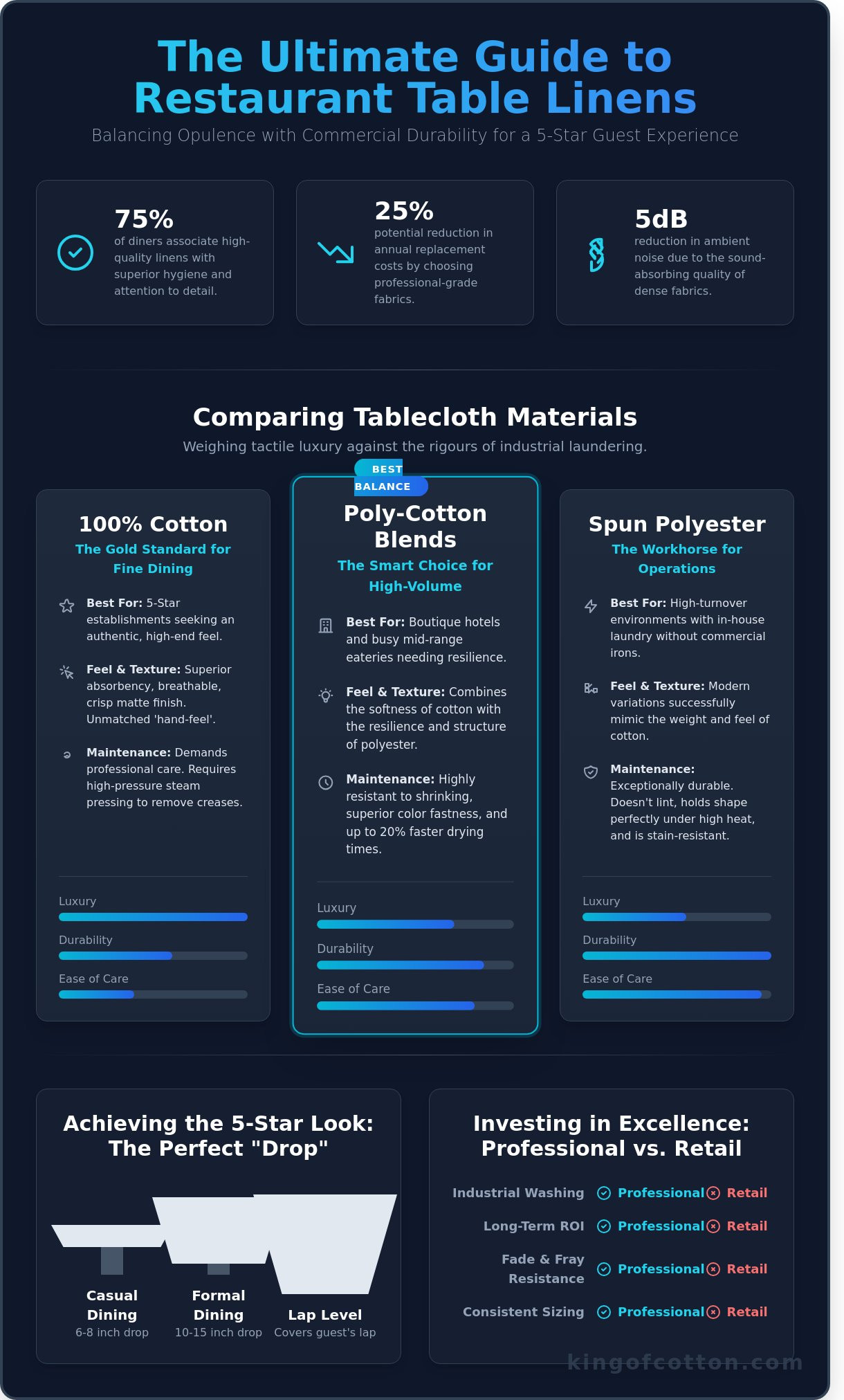
Your choice of table linen serves as the foundational canvas for every dish that leaves the pass. While the menu defines the flavour, the fabric defines the atmosphere. Data from hospitality surveys suggests that 75% of diners associate crisp, high-quality linens with superior kitchen hygiene and a meticulous attention to detail. Selecting the best tablecloth material for restaurants sets an expectation of excellence before a single plate is served.
The 'First Touch' principle is a critical factor in guest satisfaction. First impressions are tactile. Long before the first course arrives, a guest interacts with the tablecloth. They feel the texture under their forearms and the weight of the fabric as they settle in. Choosing the best tablecloth material for restaurants isn't just a procurement decision; it's a branding exercise. A heavy cotton drape signals a fine-dining experience, whereas a lighter polyester blend might suit a high-volume bistro. Your material choice must align with your price point to avoid a sensory mismatch that confuses the guest's perception of value. King of Cotton has spent 25 years perfecting these tactile details for the world's most prestigious dining rooms.
The Sensory Impact of Table Linens
Fabric weight, measured in Grams per Square Metre (GSM), acts as a silent indicator of luxury. A premium 100% Egyptian cotton cloth with a high GSM provides a substantial, comforting presence. This density also serves a vital acoustic purpose; quality linens absorb vibrations, reducing ambient noise levels by up to 5 decibels. This allows for intimate conversation and a more relaxed dining pace. Premium materials naturally enhance the 'hand-feel' for the diner, encouraging them to linger.
Functional Benefits for the Hospitality Environment
Beyond the sensory experience, linens provide essential protection for your physical assets. High-quality fabrics shield expensive hardwood or marble tables from thermal shock, moisture rings, and abrasive scratches. They also eliminate the jarring clatter of cutlery against hard surfaces. High-quality linens featuring advanced weave structures and consistent dimensions reduce table turnover friction by ensuring a perfect fit and rapid placement during busy service windows.
Comparing the Best Tablecloth Materials: Cotton, Polyester, and Blends
Selecting the best tablecloth material for restaurants involves weighing tactile luxury against the rigours of industrial laundering. Your choice dictates the guest's first physical interaction with your brand. It also directly influences your long-term linen replacement costs and daily labour requirements. Approximately 85% of Michelin-starred venues still prioritise natural fibres, but modern synthetic innovations are closing the gap for high-traffic bistros.
100% Cotton: The Gold Standard for Fine Dining
Cotton remains the undisputed choice for 5-star establishments seeking an authentic, high-end feel. Its natural fibres offer superior absorbency and a breathable quality that synthetic alternatives cannot replicate. Egyptian cotton is the global benchmark. It features extra-long staple fibres that create a smoother, stronger yarn. While it provides a crisp, matte finish, it demands professional care. You'll need high-pressure steam pressing to remove stubborn creases. For venues aiming for a prestigious atmosphere, the investment in 100% cotton is a non-negotiable standard that signals quality to every diner.
Synthetic and Poly-Cotton Blends: Balancing Durability with Luxury
Boutique hotels and busy mid-range eateries often find their "sweet spot" with a 50/50 or 70/30 poly-cotton blend. These fabrics combine the softness of cotton with the resilience of polyester. They're highly resistant to shrinking and reduce drying times by up to 20% compared to pure cotton. If your restaurant features vibrant themes, synthetics offer superior colour fastness. This ensures deep navy or forest greens don't fade after 50 industrial washes.
Modern hospitality has also embraced "Spun Polyester" as a heavy-duty alternative. This material mimics the feel of cotton but offers the durability of a synthetic. It doesn't lint and holds its shape exceptionally well under high heat. When deciding on the best tablecloth material for restaurants, you must align the fabric with your laundry capabilities. If you manage laundry in-house without a commercial rotary iron, a high-quality blend is the smarter operational choice. You can view our full range of professional table linens to see how different textures suit various dining environments.
- 100% Cotton: Best for luxury, requires professional pressing, high absorbency.
- Poly-Cotton Blends: Best for high-turnover venues, crease-resistant, faster drying.
- Spun Polyester: Exceptional durability, mimics cotton feel, excellent stain release.
Assessing Performance: Durability, Absorbency, and the Hand of the Fabric
The "hand" of a fabric describes its tactile personality. It’s the way the material feels when a guest grazes the surface or how it drapes over the edge of a table. For luxury establishments, a firm, crisp hand is non-negotiable. Selecting the best tablecloth material for restaurants requires balancing this sensory experience with mechanical endurance. A 100% cotton cloth with a 250-thread-count provides a substantial, premium weight that signals quality the moment a diner is seated. Higher thread counts don't just feel better; they offer a tighter weave that prevents the fabric from becoming "see-through" after 80 or 90 industrial wash cycles.
Commercial environments demand exceptional stain release properties. While synthetic fibres often trap oil-based stains due to their lipophilic nature, high-quality natural fibres release organic matter more easily during the wash. To maintain hygiene standards in the UK, linens must withstand industrial temperatures of 60°C or higher. At these heat levels, inferior materials often suffer from "puckering" or structural breakdown. Professional-grade cotton and robust poly-cottons are engineered to remain dimensionally stable, ensuring the cloth doesn't shrink or lose its rectangular precision after the 100th wash.
Understanding Absorbency for Spill Management
Cotton is the industry benchmark for spill management because it’s naturally hydrophilic. When a glass of Pinot Noir tips, cotton fibres pull the liquid into the core of the fabric. This prevents the liquid from running off the table and onto a guest’s lap. Many cheap synthetics cause a "beading" effect where liquid sits on the surface, creating a moving puddle that’s difficult for staff to contain. The weave density directly dictates how fast a liquid penetrates the surface; a dense damask weave provides a critical 3-second window for a server to intervene with a napkin before the spill reaches the table’s substrate.
Colour Fastness and Resistance to Frequent Laundering
Frequent laundering is the primary killer of restaurant linens. In the UK, commercial detergents often contain high concentrations of sodium hypochlorite or peroxide-based bleaches. White remains the most practical choice for high-volume venues because it can be aggressively bleached to a "hospital-clean" standard without the risk of fading. If you opt for colours, vat-dyed synthetic fibres generally hold their pigment longer than natural dyes. However, even premium coloured linens typically show noticeable shade loss after 50 wash cycles, whereas white linens from the King of Cotton professional range maintain their brilliance for significantly longer, provided the correct chemical balance is used in the laundry room.
Selecting the Perfect Fabric for Your Specific Service Style
Choosing the best tablecloth material for restaurants depends entirely on your service's pace and price point. A formal evening service requires a different tactile experience than a 45-minute lunch rush. You must match the fabric's weight and texture to the expectations of your guests. The "drop" or the amount of fabric hanging over the table edge is a vital part of this visual framework. For casual settings, a 20cm to 30cm overhang is standard. In contrast, formal venues often opt for a 40cm drop or even a full-length 76cm drape to the floor. This creates a sense of architectural weight and luxury.
The environment also dictates your choice. Outdoor terraces in the UK require fabrics with a minimum 190gsm weight to resist wind, while indoor settings focus on the 210gsm to 240gsm range for a superior drape. To truly elevate the experience, always use a table protector or "moulton" under the main cloth. It softens the clatter of cutlery and adds a cushioned feel that guests immediately associate with high-end hospitality. It also protects your furniture from heat damage and liquid spills.
High-Turnover Brasseries and Casual Dining
Efficiency is the priority here. Durable poly-cotton blends or heavy-weight 100% polyester are the most cost-effective choices for busy venues. These fabrics withstand 60-degree industrial wash cycles without losing their shape or colour. They allow for rapid table resets, which is vital when you're aiming for three turns per evening. You can explore the full range of King of Cotton products for versatile options that balance aesthetics with industrial resilience.
Michelin-Starred and Formal Establishments
Premium dining demands high-thread-count cotton to provide the best tablecloth material for restaurants in the luxury sector. A 300-thread-count sateen or a crisp 200-thread-count percale provides the sensory feedback discerning guests expect. Our expertise in luxury bed linen translates directly to table textiles; the same principles of long-staple fibres and meticulous weaving apply. Layering is essential. Start with a thick table protector, then add a heavy cotton cloth to build a plush, silent surface that signifies quality.
Browse our professional restaurant linen collection to find your venue's perfect match.
Investing in Excellence: Why Professional Grade Linens Outperform Retail
Retail linens often fail under the intense pressure of a commercial dining environment. While a domestic tablecloth might look acceptable on a home dining table, it won't survive the 90°C thermal disinfection cycles required in professional kitchens. Choosing the best tablecloth material for restaurants means prioritising fabrics engineered with high-density weaves and superior tensile strength. These professional-grade textiles resist the thinning and "grey out" common in cheaper alternatives.
The financial logic is clear. A standard retail cloth typically begins to show signs of fraying or permanent staining after just 40 washes. In contrast, professional linens are designed to withstand 250 to 300 industrial laundry cycles. This extended lifespan provides a significantly higher return on investment, often costing 60% less per cover over the product's life. Beyond durability, professional sourcing ensures every cloth is cut to precise dimensions with mitred corners. This consistency prevents the uneven "puddling" on floors that destroys a room's aesthetic symmetry.
The Longevity of King of Cotton Professional Linens
Our fabrics are built on a foundation of 25 years of expertise serving global 5-star institutions. We subject our textiles to rigorous pilling and shrinkage tests that exceed standard UK hospitality requirements. As established hotel linen suppliers, we ensure our cotton and poly-cotton blends maintain their lustre even after heavy bleaching. Reliable logistics are equally vital; our delivery standards ensure bulk business orders arrive on schedule to meet restaurant launch or refurbishment deadlines.
Sourcing Bulk Supplies for Hospitality Businesses
Successful restaurant managers avoid shortages by maintaining a strict "par level" of 4:1. This means you have one cloth on the table, one in the pantry, one at the laundry, and one in transit. Buying in bulk to reach these levels unlocks wholesale pricing, which can reduce your initial setup costs by 20% or more. When you invest in the best tablecloth material for restaurants, you're buying peace of mind and long-term brand protection.
Our corporate specialists are ready to help you calculate your specific requirements and provide bespoke fabric samples for your venue. Contact our corporate team today for a tailored quote and expert consultation on your restaurant's linen needs.
Set a New Standard for Your Dining Room
Choosing the best tablecloth material for restaurants means looking beyond the initial purchase to the fabric's performance after its fiftieth commercial wash. While retail options often thin or pill, professional-grade Egyptian cotton and high-density blends provide the absorbency and "hand" necessary for a premium guest experience. Your table setting is the first physical touchpoint a customer encounters; it's vital that the material reflects your establishment's standards. We've refined our collections over 25 years of supplying the world’s finest hotels, focusing on durability that doesn't compromise on elegance.
Our status as specialists in high-performance Egyptian cotton is backed by an Excellent rating on Trustpilot, giving you confidence in every thread. You'll find that investing in professional linens reduces replacement costs and maintains your restaurant's visual identity far longer than standard alternatives. It's an investment in your brand's future that pays dividends in guest satisfaction and operational efficiency.
View our professional range of restaurant linens
We look forward to helping you create an unforgettable atmosphere for your guests.
Frequently Asked Questions
What is the most durable tablecloth material for a busy restaurant?
100% spun polyester is the most durable material for a high-traffic restaurant environment. It withstands over 300 industrial wash cycles without losing its shape or vibrant colour. While cotton offers a premium feel, polyester's resistance to wrinkles and shrinking makes it the practical choice for venues serving 50 or more covers daily.
Is cotton or polyester better for restaurant napkins and tablecloths?
Polyester is better for longevity, but 100% Egyptian cotton is the best tablecloth material for restaurants aiming for a luxury aesthetic. Cotton provides a soft, heavy drape that synthetic fibres can't replicate. If your venue hosts 500 guests a week, a poly-cotton blend offers a compromise between the elegance of natural fibres and the durability of synthetics.
How do I choose the right size tablecloth for my restaurant tables?
You choose the right size by adding a 25cm to 30cm drop to each side of your table measurements. For a standard 75cm high dining table, this creates a lap-level overhang that looks professional. If you're measuring a 90cm square table, you'll need a cloth at least 140cm square to ensure the fabric hangs evenly on all sides.
What is the best material for outdoor restaurant dining?
Acrylic-coated cotton or high-denier polyester are the superior choices for outdoor restaurant dining. These materials are treated to resist UV rays for up to 1,000 hours of direct exposure, preventing the bleached look common in garden seating. They also feature water-repellent coatings that allow staff to wipe away spills in seconds, which is vital for quick terrace turnarounds.
How often should restaurant tablecloths be replaced?
Most professional restaurants should replace their tablecloths every 12 to 24 months. Linens typically reach their performance limit after 150 to 200 industrial launderings. Once you notice thinning in the fabric or persistent shadows from old stains, it's time to invest in new stock. Maintaining fresh linens is a key part of our commitment as suppliers to the finest homes and hotels.
Does thread count matter for restaurant tablecloths?
Thread count is a vital indicator of the fabric's density and tactile quality. A 200-thread count is the baseline for commercial durability, while a 300-thread count sateen provides the luxurious, smooth finish expected in Michelin-starred venues. Higher thread counts aren't just about softness; they ensure the cloth remains opaque and crisp under bright dining room lights.
What colour tablecloth is best for a professional restaurant look?
Brilliant white remains the most professional colour choice for a high-end restaurant look. Roughly 90% of luxury hotels choose white because it provides a neutral, clean backdrop that makes the colours of the food pop. If you're running a bistro or a high-volume steakhouse, deep navy or charcoal can be more practical for hiding minor spills during a busy service.
Can I use domestic tablecloths in a commercial restaurant setting?
You shouldn't use domestic tablecloths in a commercial setting because they aren't built for industrial heat. Commercial linens are designed to withstand 70°C wash temperatures and high-pressure rollers without fraying. Domestic fabrics often shrink by 15% or lose their structural integrity after just 20 professional washes, making them an expensive and short-lived choice for a business.