

How to Soften Linen Bedding: A Gentle Care Guide for 2026
The fastest way to soften linen bedding isn’t a harsh treatment; it’s gentle, consistent care. New or freshly washed sheets can feel crisp and a little rough at first. Linen often takes time to relax, and its texture may become softer with use and careful washing.
Learning how to soften linen bedding starts with protecting the fibres, not forcing an instant change. The right routine can make your bed feel more inviting while helping your linen stay in good condition. This guide explains why linen may feel stiff, how to choose a suitable detergent and wash temperature, and when low-heat tumble-drying is appropriate. You’ll also learn which habits, including harsh treatments and unnecessary fabric conditioner, are best avoided. Follow the care label, then give considered care and patience time to bring out linen’s lived-in comfort.
Key Takeaways
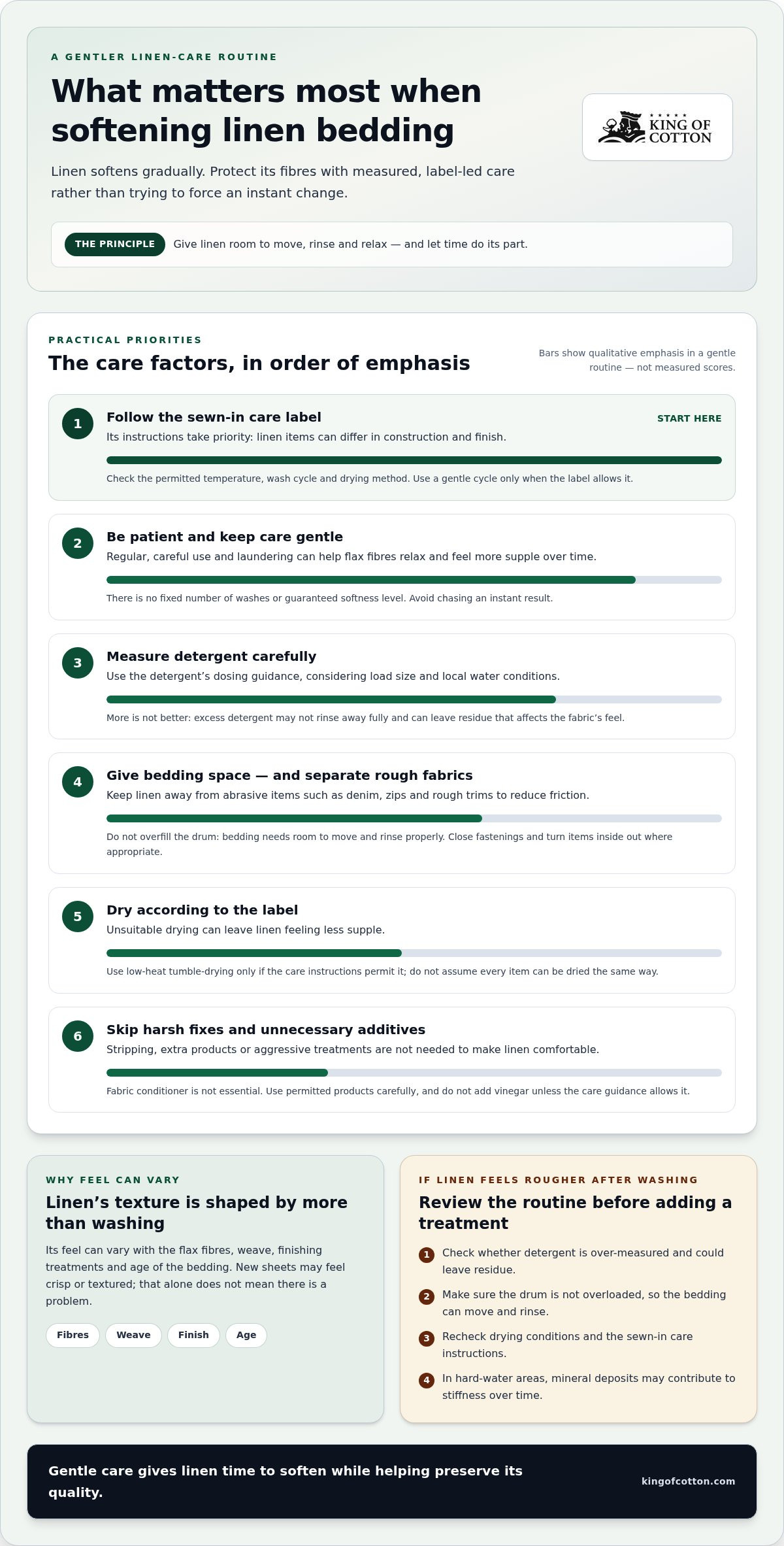
- Linen’s feel varies with its fibres, weave, finish and age, and it often relaxes with gentle use and laundering.
- To soften linen bedding safely, start with the care label and choose a suitable wash routine rather than relying on harsh fixes.
- Wash linen separately from rough fabrics to reduce friction, and use a gentle cycle only when the care instructions allow it.
- Dry bedding according to its care label; repeat, patient care is kinder to the fibres than trying to soften linen in one wash.
- Measured detergent, appropriate drying and avoiding unnecessary washes can help maintain a comfortable feel over time.
Why does linen bedding feel stiff, and will it soften?
Linen often relaxes with regular, gentle use and laundering. New sheets can feel crisp or textured, but their hand-feel may become more supple over time. The best way to soften linen bedding is to be patient and care for it gently, rather than trying to force an instant change.
Linen is made from flax fibres, whose natural characteristics give the fabric its distinctive texture and strength. The weave, finishing treatments and age of the bedding also affect how it feels. For an overview of the properties of linen, including its flax origins, see Wikipedia. Explore the bed linen collection for quality bedding suited to a comfortable, considered bedroom.
This video offers a visual look at linen-softening tips:
Is stiff linen bedding normal when it is new?
Often, yes. New linen’s texture varies with its construction and finish, so a crisp feel doesn’t automatically mean there’s a problem. With careful use and laundering, the fibres can gradually settle and feel more supple. There’s no fixed number of washes or guaranteed softness level: results depend on the bedding and how it’s cared for.
Linen softens gradually as its flax fibres relax through gentle use and laundering, not through harsh treatment.
What can make washed linen feel rough or rigid?
If bedding feels noticeably rougher after washing, consider the laundry routine as well as the fabric. Too much detergent can leave residue, while an overloaded drum may limit movement and rinsing. Unsuitable drying can also leave linen feeling less supple. In hard-water areas, mineral deposits may contribute to stiffness over time.
Natural texture is part of linen’s character; stiffness that appears or worsens after washing may point to residue, a crowded load or drying conditions. Check the sewn-in care label before changing your routine, as instructions vary by item. Hotter water or stronger treatments aren’t necessarily the answer. Gentle, label-led care gives linen time to soften while helping preserve its quality.
How to prepare linen bedding for a gentler wash
A little preparation helps linen move freely through the wash without unnecessary rubbing or detergent build-up. Start with the sewn-in care label: its instructions for temperature, cycle and drying take priority because linen bedding varies in construction and finish. Don’t assume every item should be washed the same way.
Before loading the machine, close fastenings and turn items inside out where appropriate. Separate pale and dark bedding to help prevent colour transfer, and wash linen apart from abrasive garments such as denim or items with zips and rough trims. These can create extra friction. Avoid overfilling the drum so the bedding has room to move and rinse properly.
What should you check before washing linen sheets?
Check the label for the permitted wash temperature, cycle and drying method. Use a gentle cycle only if the instructions allow it; don’t choose a setting simply because it’s generally considered suitable for linen. Sort by colour, check pockets and fastenings, and keep rough fabrics out of the load. These steps help protect the fabric’s finish.
How much detergent and laundry conditioner should you use?
Measure detergent according to its dosing guidance, taking load size and local water conditions into account. More isn’t better: excess detergent may not rinse away fully and can leave residue that affects the fabric’s feel. If bedding still seems soapy after washing, review the dose and load size before adding another product.
Laundry conditioner isn’t essential for softening linen and shouldn’t override the care label. Some people use white vinegar in laundry; Reader’s Digest discusses its use to soften towels and sheets. Treat this as general laundry advice, not a linen-specific instruction, and don’t add vinegar unless the bedding’s care guidance permits it.
Thoughtful fabric choice and careful care work together to create a more comfortable bed. Explore the bed linen collection to see options for the bedroom.
Linen softening methods compared: gentle care versus harsh fixes
There’s no need to strip, coat or aggressively treat linen to make it comfortable. A measured routine gives the fibres room to relax without unnecessary stress. Follow the care label rather than relying on a universal wash temperature, as different linen items and finishes may have different requirements.
Gentle, label-led care is the safer default: it supports a softer feel without exposing linen to unnecessary heat, friction or additives.
| Approach | What to expect | Guidance |
|---|---|---|
| Mild detergent, correctly measured | Cleans without unnecessary product build-up. | Follow the detergent’s dosing guidance for the load and water conditions. |
| Care-label-approved wash setting | Allows cleaning whilst respecting the item’s care needs. | Use the temperature and cycle stated on the sewn-in label. |
| Patient repeat care | May let the fabric become more supple gradually. | Keep to a consistent, gentle routine rather than seeking an instant result. |
| Harsh treatments or extra additives | May affect a finish or leave unwanted residue. | Don’t use them unless the care instructions permit it. |
Does fabric conditioner make linen bedding softer?
Not necessarily. Conditioner isn’t required for every linen item or wash routine, and using more doesn’t guarantee a softer result. Depending on the product and how it’s used, residue may affect the fabric’s feel. Check the care label and measure any permitted laundry products carefully. If the linen feels coated or less fresh, simplify the routine instead of automatically adding another product.
Should you use vinegar, baking soda or other home remedies?
Household remedies aren’t universally suitable or proven treatments for every linen fabric. An additive may interact with a fabric finish or conflict with the care instructions, so don’t assume a familiar laundry tip is right for your bedding. Avoid combining remedies or using them as a shortcut to force softness.
If stiffness persists, return to the basics: check the label, use an appropriate amount of detergent, and choose only the wash and drying settings it allows. This helps you assess whether the issue lies in your routine or is simply part of linen’s natural texture. For anyone researching how to soften linen bedding, the most reliable approach is steady, considered care, not a succession of stronger fixes.
How to wash and dry linen bedding to soften it safely
A calm, consistent wash-and-dry routine can help linen become more supple without putting its fibres under unnecessary strain. Use the bedding’s care label throughout: the right settings depend on the individual item, so there’s no single temperature or drying method for every set.
- 1. Check the label. Confirm the permitted wash temperature, cycle and drying instructions before you begin.
- 2. Prepare the bedding. Fasten closures where appropriate, turn items inside out if the care instructions allow, and wash linen separately from rough fabrics.
- 3. Measure detergent. Use the amount recommended for the load and your water conditions. Don’t add extra in the hope of getting a deeper clean.
- 4. Choose the permitted cycle. Select a gentle cycle only if the label allows it. Don’t choose a hotter setting on the assumption that all linen needs the same treatment.
- 5. Dry with care. Line drying may suit the item if its care label permits it. If tumble-drying is allowed, use low heat and avoid leaving the bedding in the drum longer than needed.
- 6. Finish thoughtfully. Where suitable, remove the bedding while it’s slightly damp, smooth out creases and let it finish drying before making the bed.
Which wash cycle and temperature should you choose?
The care label is the authority for temperature and cycle selection. A gentle cycle may reduce unnecessary agitation when permitted, but don’t assume it’s right for every linen item. Follow the stated instructions rather than applying a universal setting. If the label gives specific guidance, use that instead of general linen-care advice.
Can tumble-drying help soften linen bedding?
Tumble-drying can be an option if the care label allows it. Choose low heat and, if the item’s instructions permit, remove the bedding while slightly damp and let it finish drying. This avoids prolonged exposure to heat. Excessive heat or extended drying may place extra stress on the fibres, so don’t use a hot setting to force a softer feel.
When considering how to soften linen bedding, choose a routine that respects the fabric at every stage. Careful washing, suitable drying and patience support lasting comfort better than aggressive settings. If you’re considering new bedding, explore the luxury bed linen collection.
How to keep linen bedding soft between washes
Maintain softness with a steady routine, not frequent washing or extra treatments. Follow the care label each time, measure detergent for the load and water conditions, and dry bedding as instructed. Wash linen separately from rough items that may cause friction, and leave room in the machine for it to move and rinse freely.
Washing frequency depends on how the bed is used, personal preference and household circumstances, so there’s no single schedule for everyone. Unnecessary washing can add wear over time. Between washes, air the bedding if appropriate and keep it clean and dry. Before storing linen, make sure it’s fully dry to help prevent mustiness.
How often should you wash linen bedding?
Let your needs guide the routine rather than following a rigid rule. How often the bed is used and your comfort preferences can affect when bedding needs laundering. Check the care label for suitable washing and drying guidance, and dry linen thoroughly before folding it away. A considered schedule balances freshness with care for the fabric.
When should you adjust your linen-care routine?
If the fabric feels coated or unusually rigid after washing, review the detergent dose first. Residue may affect the feel, particularly if too much product is used or the load is too full to rinse well. If stiffness keeps returning, consider whether the drum is overloaded, rough items are rubbing against the linen, or the drying method follows the care label.
Texture alone doesn’t always signal a problem. Linen may naturally feel crisp or textured, while a persistent change after washing is a reason to revisit the item-specific instructions and your routine. Make one adjustment at a time, such as measuring detergent more carefully or giving the bedding more room in the wash, so you can see what helps.
For a simple guide to how to soften linen bedding, keep the essentials in mind: respect the label, measure detergent, avoid rough mixed loads and dry the fabric appropriately. Gentle habits support a comfortable bed while helping preserve your linen. If you’re considering a fresh set, explore the bed linen collection for refined bedding suited to relaxed, hotel-inspired comfort.
Let gentle care bring out linen’s comfort
Linen’s distinctive texture can feel crisp at first, then become more supple with regular, gentle use and laundering. The best way to soften linen bedding is to follow the care label, measure detergent and avoid harsh treatments that may affect the fabric. Choose wash and drying settings for the individual item, and give the fibres time to settle.
Between washes, avoid unnecessary laundering and rough mixed loads to help preserve the bedding’s feel. If linen becomes unusually rigid, review the detergent dose, machine load and drying routine before trying a stronger treatment.
Quality bed linen brings comfort to bedrooms at home and in hospitality settings. King of Cotton specialises in premium cotton linens for the bedroom. Explore the bed linen collection and find considered bedding for a more inviting sleep space.
Frequently Asked Questions
Will linen bedding soften after washing?
Linen bedding may become more supple through regular use and suitable washing, although the result depends on its weave, finish and care. To soften linen bedding, follow the item’s care label instead of using harsh treatments or washing repeatedly for instant softness. If it feels unusually rigid after laundering, review the detergent amount, load size and drying conditions.
How many washes does it take to soften linen bedding?
There’s no reliable number of washes that applies to every linen sheet or duvet cover. The starting finish, fabric construction and care routine all influence how the material feels over time. Follow the care instructions consistently and let the bedding soften gradually with use. Avoid washing it more often just to speed up the process, as unnecessary laundering can add wear.
Can you use fabric conditioner on linen sheets?
Fabric conditioner isn’t essential for softening linen, and whether it’s suitable depends on the item’s care instructions. Using more product than recommended may leave residue that changes the fabric’s feel. Use a detergent suitable for the bedding and measure the recommended dose. If the sheets already feel comfortable, there’s no need to add conditioner automatically.
What wash temperature is best for linen bedding?
Check the bedding’s care label, as the suitable temperature can vary by item and finish. There isn’t one setting that’s right for all linen. Choose a permitted cycle and avoid unnecessary agitation. If stiffness appears after washing, check the detergent dose and whether the machine was overloaded before changing the temperature. Follow the item-specific instructions.
Can you tumble-dry linen bedding to make it softer?
Only tumble-dry linen bedding if its care label permits it. Where allowed, use a lower-heat setting and monitor the bedding to avoid excessive heat exposure. Remove it promptly and follow any further drying instructions on the item. If tumble-drying isn’t permitted, use the recommended alternative. Don’t use a dryer to force a softer feel.
What should you do if linen bedding feels stiff after washing?
Check that you measured detergent according to the product instructions and that the machine wasn’t overcrowded. Then review the care label and make sure the bedding dried as directed. Avoid untested household remedies or repeated washes. If stiffness continues, simplify the routine and change one factor at a time, such as detergent dose or load size, to identify what may be affecting the fabric.