

Best UK Pillows for Back Sleepers: 2026 Guide
The firmest pillow isn’t automatically the best choice for sleeping on your back. The best pillows for back sleepers uk are the ones that support your head and neck at a comfortable height, without tipping your chin towards your chest.
If you’re deciding between a low or high pillow, or comparing different fillings and shapes, start with how your current pillow feels. Your build, mattress and preferred feel all affect what’s comfortable, so sleeping position alone won’t determine the right choice.
This 2026 guide explains what to look for, from pillow loft and firmness to filling, shape and care instructions. You’ll find practical ways to compare options, assess them alongside your mattress and bedding, and recognise when a pillow’s height or feel may not suit you. The aim is to help you make a considered choice for your own bedroom.
Key Takeaways
- Learn why comfortable head and neck alignment matters, and why no single pillow height or firmness suits every back sleeper.
- Understand how loft, firmness and filling can shape the feel of the best pillows for back sleepers uk.
- Compare pillows using their stated specifications and care information, rather than relying on rankings alone.
- Use a practical checklist to narrow your options based on your usual sleeping position, current pillow and mattress.
- Explore King of Cotton’s pillows and other bedroom products, backed by more than 25 years of supplying homes and hospitality businesses.
What makes a pillow one of the best pillows for back sleepers?
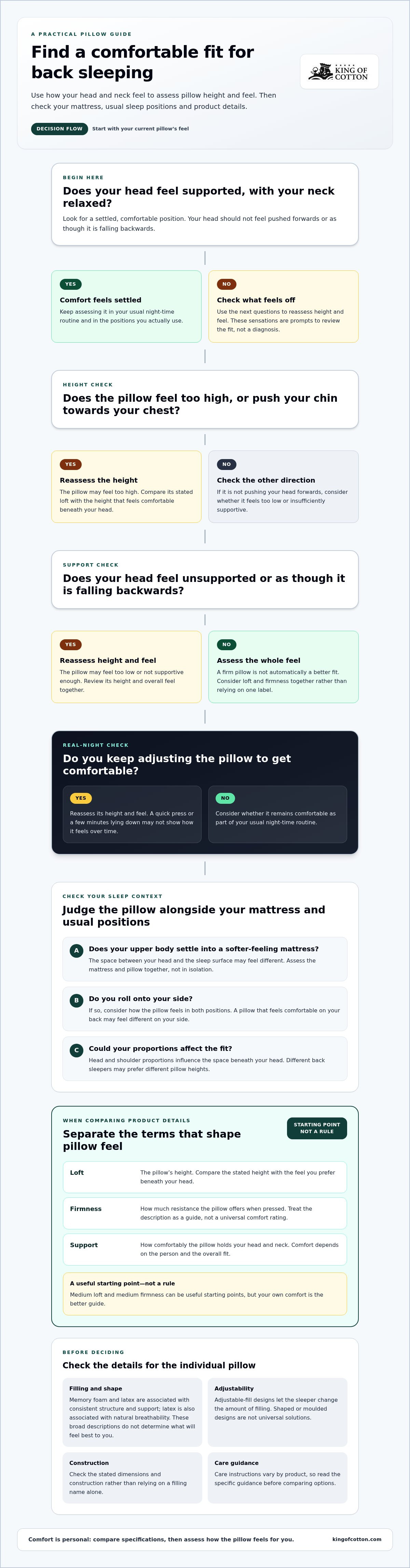
A suitable back-sleeper pillow lets your head rest comfortably, with your neck in a relaxed position. It shouldn’t push your head forwards or let it sink so far back that it feels unsupported. Focus on a balanced, comfortable feel rather than a particular label or a promise of clinical results.
There’s no single height or firmness that suits every back sleeper. Head and shoulder proportions, mattress feel and personal preference all influence what feels right. Medium loft and medium firmness can be useful starting points, but assess the pillow for yourself rather than treating those terms as rules. The general Pillow overview describes the variety of pillow forms and materials available; your own comfort is the more useful guide when choosing one.
For a visual overview of pillow choices, watch this video from Sleep Doctor:
How should a pillow feel when you sleep on your back?
Your head should feel comfortably supported, with your neck in a relaxed line rather than noticeably bent forwards or backwards. The pillow shouldn’t push your chin towards your chest or leave your head feeling as though it’s falling backwards into the mattress. Look for a settled, supported feel, not one that holds your head rigidly in place.
If the pillow feels too high or low, or you keep adjusting it to get comfortable, reassess its height and feel. A quick press in a shop or a few minutes lying down may not tell you how it will feel over time. Think about your usual night-time routine and the position you naturally return to.
Why the same pillow can feel different from one person to another
Head and shoulder proportions affect the space between your head and mattress. As a result, two people who sleep on their backs may prefer different pillow heights. A broader shoulder line, for example, can change how much space feels comfortable beneath the head. These differences are personal, not a measure of whether a pillow is objectively right or wrong.
Your mattress matters too. If your shoulders and upper body settle more deeply into a softer-feeling mattress, the space between your head and the sleep surface may feel different than it does on a firmer one. Consider the mattress and pillow together instead of judging either in isolation.
Back sleeping may not describe your whole night. If you roll onto your side, you’re a combination sleeper, and a pillow that feels comfortable on your back may feel different in that position. Consider how it feels across the positions you actually use, not just the one you start in. That personal assessment is more useful than choosing the firmest pillow on display or relying on a ranking of the best pillows for back sleepers uk.
Pillow loft, firmness and filling: what matters for back sleepers?
Loft means a pillow’s height, while firmness describes how much resistance it offers when pressed. They both affect feel, but they aren’t interchangeable and neither tells you on its own whether a pillow will suit your sleep position. A tall pillow may compress easily, while a lower one may feel comparatively firm.
Loft is the pillow’s height, firmness is how much it yields, and support is how comfortably it holds your head and neck. This distinction helps when reading product descriptions. “Soft” or “firm” gives you an indication of feel, not a guarantee that everyone will experience the pillow in the same way.
How to think about pillow height and firmness
For back sleeping, pillow height affects how your head rests in relation to your neck. If a pillow feels too high, your head may seem pushed forwards; if it feels too low, it may not feel supportive enough. Use either sensation as a reason to reassess the fit, not as a diagnosis.
A very firm pillow isn’t automatically the better choice. It may resist pressure more strongly, but that doesn’t mean its height or overall feel will suit you. Consider loft and firmness together. Then ask yourself whether you can settle comfortably without repeatedly shifting the pillow or changing your head position.
How pillow fillings and shapes differ
Filling and construction affect how a pillow feels, but broad categories are only a starting point. Memory foam and latex are often highlighted for their consistent structure and support. Latex is also associated with natural breathability. These general characteristics don’t establish which pillow will feel best to you, and they don’t describe every product within a category.
Adjustable-fill designs let the sleeper change the amount of filling, providing another way to personalise height. Shaped or moulded pillows are also available, but their contours aren’t universal solutions. A particular shape may suit someone’s preferred position and feel, while another sleeper may prefer a traditional form.
Care instructions, materials and adjustability vary by product, so read each description rather than relying on the filling name alone. Check the stated dimensions and construction, as well as the care guidance, before comparing options. This helps you separate documented product details from matters of personal preference.
- Loft: compare the stated height with the feel you prefer beneath your head.
- Firmness: treat the description as a guide to resistance, not a universal comfort rating.
- Filling and shape: consider the construction, then check the individual product details for care and adjustability.
Use these distinctions to compare the best pillows for back sleepers uk without assuming that the tallest, firmest or most sculpted option is automatically right. To consider your pillow alongside the rest of your bedroom, browse the bedroom collection.
How to compare pillows for back sleepers without relying on rankings
A ranked list can help you discover options, but it can’t tell you how a pillow will feel with your mattress and preferred sleeping position. Use recommendations to build a shortlist, then compare the product information that matters to you. This keeps your decision grounded in stated details rather than a headline such as “best overall”.
Compare the stated loft, firmness, filling or shape, care instructions and product specifications, then weigh them against your preferences. Separate product facts from general guidance: a listed measurement or material is a specification, while a suggestion about what might feel comfortable is not a tested result or a promise of fit.
What to compare on a pillow product page
Read the full description and note the exact dimensions, construction, materials and care instructions. Make sure the details relate to the pillow you’re considering, rather than a similar item or a general category description. If a feature isn’t stated, don’t assume it’s included: a filling type alone doesn’t establish that a pillow is adjustable or has a washable cover.
A simple comparison table can help you organise your shortlist. Leave a field blank if the product information doesn’t give the detail instead of filling the gap with an assumption.
| What to compare | What to record | How it helps |
|---|---|---|
| Loft | Stated height or dimensions | Lets you compare the pillow’s listed size with the height you prefer. |
| Firmness feel | The wording used in the description | Offers a point of comparison, not a universal measure. |
| Fill or shape | Named materials and construction | Shows how the pillow is made without assuming how it will feel. |
| Care | Published washing and maintenance guidance | Helps you understand the care the specific pillow requires. |
| Other details | Any further stated specifications | Keeps your comparison accurate and product-specific. |
When a shaped pillow or a conventional design may appeal
A shaped design may appeal if you prefer a defined contour beneath your head or neck. A conventional design offers a familiar alternative for someone who prefers a traditional pillow shape. Neither format is inherently more comfortable or valuable for every back sleeper, and shape alone can’t tell you how a pillow will feel through the night.
Compare both types using the same criteria. Check the stated dimensions, materials and care details, then consider whether the construction matches your preferences. Rankings can make the best pillows for back sleepers uk easier to find, but they don’t account for your mattress, preferred pillow feel or sleeping habits.
For a considered bedroom set-up, browse the bedroom collection alongside your pillow research. Use the product details to build a shortlist, then let your comfort preferences guide the final comparison.
A practical UK checklist for choosing your back-sleeper pillow
A clear shortlist makes pillow shopping more considered. Start with your sleep routine and bedroom set-up, then compare details that are actually stated for each product. The aim isn’t to find a universal winner, but to identify options that are worth considering for your preferences.
A simple pillow-fit check for back sleepers
When lying on your back, notice whether your head feels level and comfortably supported. Consider your mattress too: does it feel soft, medium or firm to you, and how much do your shoulders settle into it? As you compare pillows, change one characteristic at a time. This makes it easier to notice whether a difference in height, fill or firmness description affects your comfort.
- Note your usual position. Do you sleep mostly on your back, or regularly turn onto your side? Keep your real night-time habits in mind when assessing options.
- Describe your current pillow. Record whether it feels high or low, soft or firm, and whether you tend to adjust or reshape it. This gives you a useful point of comparison.
- Consider your mattress feel. Write down whether it feels soft, medium or firm to you. Your head and shoulders settle in relation to the mattress, so the same pillow may feel different on another sleep surface.
- Shortlist by stated details. Compare each pillow’s dimensions, filling or shape, firmness description and care information. Note details that aren’t provided rather than assuming a feature from its category.
- Assess comfort over normal nights. Notice how a pillow feels during your usual sleep routine rather than relying on a quick test. Your observations can help you decide whether it suits your preferences.
How pillow choice fits the rest of your bedding
A pillow is part of a considered bedroom set-up, not an isolated purchase. Check that your pillowcase is intended for the pillow’s stated dimensions. A case that bunches excessively may change how the pillow sits beneath your head, while a close fit helps keep the bed looking neat. Compare the measurements of your existing bedding with the product details before choosing.
Keep your comparison straightforward. If you’re assessing two pillows, use the same mattress, pillowcase and sleeping position, then focus on one difference at a time. This can’t guarantee a particular result, but it can help you make a more informed judgement about what feels comfortable to you.
Use your checklist to explore the bedroom collection and compare pillows as part of the wider room. This practical approach can help you narrow down the best pillows for back sleepers uk for your preferences, without relying on rankings to make the decision for you.
Choosing pillows with King of Cotton: comfort, care and next steps
A considered pillow choice begins with your own fit, not a universal recommendation. King of Cotton supplies bedroom products to homes and hospitality businesses and has been a trusted brand for 25+ years. Its range includes pillows and duvets alongside bed linen, giving you the option to consider your pillow as part of a coordinated bedroom set-up. No single pillow suits every back sleeper, so use your own comfort preferences to guide your choice.
Use the criteria in this guide to narrow your options: consider your usual sleep position, the pillow’s stated dimensions and materials, its firmness description and the care information. Then weigh those details against how your current pillow and mattress feel. This practical approach can help you assess the best pillows for back sleepers uk for your preferences, rather than choosing by name or ranking alone.
What to check before ordering a pillow
Before choosing, read the individual product description carefully. Check the materials, dimensions and care details for the specific pillow, and use only the features stated there. A category or filling name on its own doesn’t confirm details such as adjustability or washing instructions.
Review delivery information as part of your buying decision. UK mainland deliveries have a minimum delivery charge of £3.95. The stated offer is Free Mainland Delivery on Orders Over £100*. Check the delivery details to understand the available options and charges before placing an order.
Create a more considered bedroom for restful nights
Comfort comes from the way your choices work together. A pillow that feels promising on its own still needs to suit your preferred position, mattress and bedding. Compare the listed details, then consider how the pillow feels during your normal sleep routine. Choosing carefully keeps the decision personal and practical: a particular construction or firmness won’t deliver the same experience for everyone.
King of Cotton supplies bedroom products to private customers and hospitality businesses. Explore the bedroom products and use the fit criteria above to guide your selection. Choose a pillow that feels inviting and comfortable in your own bedroom.
Make your next bedroom choice with confidence
Your ideal pillow is the one that feels right for your sleep routine and bedroom, not simply the one with the strongest recommendation. Use product details to guide your comparison, then pay attention to what feels comfortable during your usual night. A thoughtful choice can make the bed feel more inviting while keeping the decision personal and practical.
King of Cotton is Rated Excellent on Trustpilot. Browse its bedroom range and focus on the fit details that matter to you.
Explore bedroom comfort with King of Cotton and find the best pillows for back sleepers uk for your preferences.
Frequently Asked Questions
What is the best type of pillow for back sleepers?
There isn’t one pillow type that’s best for every back sleeper. The best pillows for back sleepers uk are the ones whose height, feel and construction suit the person using them. Rather than choosing by filling alone, think about what you prefer beneath your head and how much structure feels comfortable. Use material descriptions to narrow the options, then compare the individual product details before deciding.
Should back sleepers use a soft or firm pillow?
Either can feel comfortable, depending on the person and the pillow’s construction. “Soft” and “firm” describe how a pillow feels under pressure, while support refers to how it holds your head in a comfortable position. A firm label doesn’t automatically mean a better fit. When choosing between descriptions, consider how your current pillow feels and whether you prefer a more yielding or resistant surface.
How high should a pillow be for back sleeping?
Choose a height that feels comfortable with your head and neck in a relaxed position, rather than aiming for a universal measurement. Product dimensions help you compare options, but they can’t show exactly how a pillow will feel when you’re lying on it. Consider how your mattress feels beneath your shoulders too. If your head seems tipped forwards or lacks comfortable support, reassess the height.
Can the wrong pillow feel uncomfortable for back sleepers?
A pillow that doesn’t suit your preferences may feel awkward or make it harder to settle, but discomfort alone can’t identify the cause. Notice whether the feeling changes with your pillow, your position or another part of your sleep set-up. You could reassess the pillow’s height and feel, one factor at a time. If discomfort persists or concerns you, seek advice from a qualified health professional.
Do back sleepers need a special shaped pillow?
No. A shaped pillow is an option, not a requirement for sleeping on your back. Its contour may appeal if you like a more defined shape, while a conventional design may feel more familiar. Consider whether the form feels natural beneath your head and whether its dimensions work with your pillowcase. Don’t assume a particular shape is more comfortable for everyone simply because it’s designed for a specific position.
Is memory foam suitable for back sleepers?
Memory foam can be a suitable option for some back sleepers, as it’s often noted for providing consistent structure. Its feel can still vary between products, so the material name alone won’t tell you whether you’ll like a particular pillow. Look at the stated construction, dimensions and care instructions, then consider your own comfort preferences. It isn’t a universal choice or a promise of a particular outcome.
How do I choose a pillow if I switch between my back and side?
If you regularly move between your back and side, consider both positions rather than choosing only for the position you fall asleep in. Notice how your head and shoulder area feel in each posture, and whether you can settle comfortably without constantly adjusting the pillow. Your usual sleep pattern is a helpful guide. Compare product details carefully, then weigh the overall feel across the positions you actually use.