

Why Does Thread Count Matter? The Expert Guide to Bed Linen Quality in 2026
That "luxury 1,000 thread count" sheet set you spotted for £180 might actually be less breathable than a premium 300 thread count alternative. Most of us have been led to believe that a higher number always equals better quality, only to end up with heavy, scratchy sheets that pill within six months. It's frustrating to pay a premium for bed linen that feels more like sandpaper than silk after just a few washes.
This guide explains exactly why does thread count matter and how to spot the marketing tricks like multi-ply yarns that artificially inflate these figures. You'll discover how to find genuine luxury that balances softness with durability, ensuring your investment remains a staple of your bedroom for years. We'll explore the ideal "sweet spot" for thread counts, the importance of long-staple Egyptian cotton, and the specific weave types used by the world's finest hotels to ensure you wake up feeling refreshed every morning.
Key Takeaways
- Understand precisely why does thread count matter and how to distinguish between genuine thread density and misleading marketing shorthand.
- Learn to identify the "multi-ply" trick used to artificially inflate numbers, ensuring you invest in true luxury rather than a low-quality gimmick.
- Discover why the calibre of the fibre—such as long-staple Egyptian cotton—is a more reliable indicator of comfort and durability than the label alone.
- Find your ideal balance between the crisp breathability of Percale and the silky indulgence of Sateen to suit your personal sleep style.
- Uncover the professional secrets behind hotel-grade linen that maintains its five-star softness and structure through years of regular laundering.
Understanding Thread Count: What the Numbers Really Represent
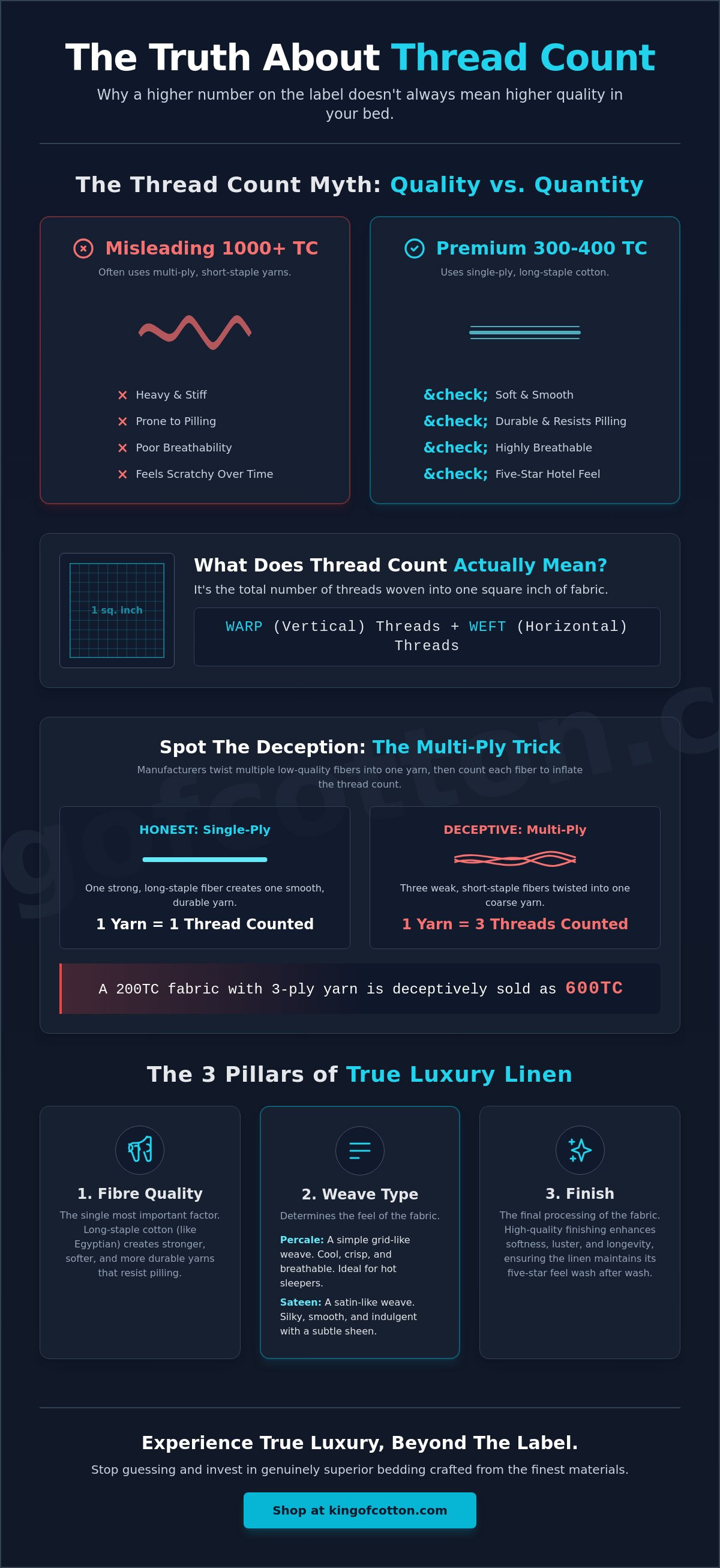
Thread count is the total number of horizontal weft and vertical warp threads woven into a single square inch of fabric. While it became the ultimate shorthand for luxury in the late 1990s, the technical reality is far more nuanced than a simple digit on a packet. To understand What the Numbers Really Represent, you have to look at the physical space available on a professional loom. A standard square inch of high-quality cotton can typically accommodate between 300 and 400 individual threads before the fabric becomes too dense to breathe properly.
To better understand this concept, watch this helpful video:
In the late 20th century, the textile industry adopted thread count as a primary marketing tool to simplify the shopping experience. However, density isn't the same as weight. While thread count measures the number of yarns per inch, Grams per Square Metre (GSM) measures the actual weight of the fabric. Most premium bed linen in the UK market ranges from 120 to 180 GSM. This provides that crisp, breathable feel synonymous with five-star hotels, regardless of whether the count is 200 or 800. Understanding why does thread count matter requires looking past the number and focusing on the quality of the yarn used in the weave.
The Basics of the Weave
The foundation of any sheet is the intersection of the warp, which runs vertically, and the weft, which runs horizontally. The quality of these individual yarns is far more critical than the sheer volume of them. A fine, long-staple cotton yarn allows for a breathable, durable weave, whereas thick, low-grade yarns create a bulky product that pilled easily. Thread count is a measure of density, not a guarantee of softness.
The Evolution of Thread Count Marketing
The "Thread Count War" of the early 2000s saw manufacturers inflating figures by using multi-ply yarns. By twisting three thin, inferior threads together and counting them as three separate units, a standard 300TC sheet was suddenly marketed as 900TC. This explains why a genuine 200TC percale sheet from twenty years ago often feels superior to a modern, mass-produced 1000TC alternative found in discount shops. Today, there is a significant shift toward consumer education. Discerning sleepers now prioritise transparency and yarn origin over inflated marketing claims. When asking why does thread count matter, the answer in 2026 is that it only matters when the base material is of an exceptional standard.
The Thread Count Myth: Why a Higher Number Isn't Always Better
For decades, the bedding industry has conditioned shoppers to believe that a higher number automatically equates to superior luxury. This marketing tactic has led to a "numbers race" where 1,000 or even 1,200 thread counts dominate the shelves. However, these figures are often a deceptive distraction from the actual fabric quality. Understanding why does thread count matter requires looking past the total sum and examining how those threads are constructed. Many manufacturers use a "multi-ply" trick to artificially inflate their numbers. They take three thin, low-grade threads and twist them together to create one single yarn. They then count each individual strand in that yarn as three separate threads. A sheet marketed as 600TC might actually be a 200TC weave using three-ply yarn. This practice doesn't improve the feel; it usually results in a heavier, coarser fabric that lacks the refined finish of high-end hotel bedding.Single-Ply vs. Multi-Ply Yarns
The integrity of a sheet depends on the length of the cotton fibres used. Single-ply yarns require long-staple cotton, such as genuine Egyptian cotton, because the fibres must be strong enough to stand alone. These long fibres create a smooth, durable surface that resists pilling. In contrast, multi-ply yarns often use shorter, weaker fibres that are prone to fraying and "fuzzing" after just a few washes. To spot this deception, look closely at the product description. If a brand boasts a thread count over 600 but doesn't mention "single-ply" or "long-staple cotton," it's likely using multi-ply shortcuts. Genuine luxury relies on the calibre of the raw material, not the creative arithmetic of the manufacturer.The Breathability Factor
Airflow is essential for a restorative night's sleep. When thread counts exceed 800, the weave becomes so dense that air circulation is almost entirely blocked. These "heavy" sheets are frequently mistaken for high quality, but they often lead to night sweats because they trap heat against the body. A fabric needs "pore space" between the threads to allow your skin to breathe and regulate temperature. Extremely high thread counts also result in a stiff, cardboard-like texture that takes dozens of washes to soften. By choosing a lower, honest thread count, you ensure the fabric remains supple and airy. For those seeking the perfect balance of softness and durability, exploring a collection of luxurious bed linen crafted from single-ply yarns is the most reliable path to comfort. Expert tests consistently show that a genuine 300TC single-ply sheet outperforms a 1,000TC multi-ply alternative in every category. It's more breathable, it lasts longer, and it maintains that crisp, five-star hotel feel for years. In the world of fine linens, transparency and fibre length are far more important than a four-digit number on a label. Understanding why does thread count matterThe Three Pillars of Luxury Linen: Fibre, Weave, and Finish
Thread count is frequently used as a shorthand for quality, but it's only one part of a more complex equation. To understand why does thread count matter, you have to look at the three pillars that define a truly premium sheet: the fibre origin, the weave structure, and the technical finishing process. Without high-quality raw materials and expert craftsmanship, a high thread count can actually result in a heavy, non-breathable fabric that lacks the longevity of professional-grade linen.
King of Cotton brings over 25 years of expertise to this selection process. We focus exclusively on luxury bed linen sourced from premium cotton origins, ensuring that every thread contributes to a superior sleep experience rather than just inflating a marketing statistic.
Why Fibre Origin Matters Most
The foundation of any great fabric is the raw fibre. Egyptian cotton remains the gold standard because the unique climate of the Nile Delta produces extra-long-staple (ELS) fibres. These fibres often exceed 37mm in length, which is significantly longer than standard upland cotton. Longer fibres allow for the spinning of much finer, stronger yarns with fewer exposed ends. This reduces pilling and creates a remarkably smooth surface.
Giza cotton, a specific grade of Egyptian cotton, represents the pinnacle of this quality. It's harvested by hand to preserve the integrity of the fibres. When these fine yarns are woven together, they create a high-density fabric that remains lightweight and soft. For a deeper look at this material, see our guide on Egyptian Cotton Bedding to understand how these fibres justify the investment through decades of use.
Percale vs. Sateen: Choosing Your Feel
The way those fibres are interlaced determines the tactile experience of the bed. This is where the question of why does thread count matter becomes specific to your personal preference. The two most prominent weaves in the luxury sector are Percale and Sateen.
- Percale: This uses a "one over, one under" structure. It's a plain weave that results in a matte, crisp finish. It's highly breathable and mimics the feel of a high-end hotel suite. Percale is best suited for thread counts between 200 and 400.
- Sateen: This employs a "four over, one under" weave. Because more yarn surface is exposed, it creates a lustrous sheen and a silky, heavier drape. Sateen is the ideal choice for those who want a warmer feel and works exceptionally well with thread counts from 300 up to 1,000.
The final step in the journey is the finishing process. We use singeing to burn off microscopic fuzz from the yarn surface, preventing pilling before it starts. Mercerisation follows, where the fabric is treated to increase its strength and its ability to hold rich, deep colours. This technical precision ensures that the linen you buy today feels just as indulgent after 50 washes as it did on the first night.
Finding Your Ideal Thread Count: A Practical Guide for Every Sleeper
Choosing the right fabric density is a personal decision that dictates your sleep quality for years. Understanding why does thread count matter helps you tailor your bedroom environment to your specific needs; it isn't just about chasing the highest number possible. Most sleepers find their perfect match within the 200 to 400 range. This is the breathable luxury sweet spot. These sheets offer a crisp, lightweight feel that mimics the experience of a high-end boutique hotel. They allow for maximum airflow, which is vital for maintaining a steady body temperature throughout the night.
Heavier options in the 600 to 800 range provide a more substantial, cocoon-like sensation. While 800 can feel incredibly opulent, 600 is often the peak of genuine single-ply luxury in the UK market. Beyond this point, the fabric can become too dense, losing its ability to regulate temperature effectively. You should consider the practicalities of these higher counts. They are more tightly woven, which often makes them harder to iron and slower to dry after a wash. If you value ease of maintenance as much as comfort, a 400TC Sateen often provides the best balance of lustre and durability.
- Summer Bedding: Stick to 200-300 TC Percale for a cool, crisp touch.
- Winter Bedding: Opt for 400-600 TC Sateen for a heavier, warmer drape.
- Year-Round Choice: A high-quality 300 TC Egyptian cotton offers versatility for all seasons.
The Best Thread Count for Hot Sleepers
If you tend to overheat, a 200 to 300 thread count in a Percale weave is your best option. Percale's one-over-one-under structure allows for superior breathability. Cotton's natural moisture-wicking properties ensure you stay dry and comfortable. You can pair these light sheets with luxury duvets to maintain a balanced temperature during colder months without sacrificing that airy, fresh feel against your skin.
The Best Thread Count for a Luxury Feel
To achieve that thick, hotel-quality sensation, aim for 400 to 600. This range typically uses a Sateen weave, which creates a silky finish and a beautiful drape. To keep these sheets looking pristine, always wash them on a gentle cycle and avoid excessive heat. This prevents the delicate long-staple fibres from breaking, ensuring the fabric retains its signature sheen and softness for years. It's the definitive choice for those who want to recreate a five-star experience at home.
Ready to upgrade your sleep experience with professional-grade materials? Explore our full collection of hotel-quality bed linen and find your perfect match today.
Why Five-Star Hotels Trust King of Cotton: Quality Beyond the Label
Five-star hotels don't choose their bed linen based on marketing trends or inflated numbers. They demand a level of performance that most retail brands simply can't match. For over 25 years, King of Cotton has operated as a leading hotel linen supply specialist, perfecting the balance between indulgent softness and industrial-grade durability. When professional buyers ask why does thread count matter, they're looking for fabric that maintains its integrity after hundreds of high-temperature washes. Our "Total Quality" check ensures every item meets these exacting standards, from the ethical sourcing of long-staple fibres to the precision of the final stitch.
We've spent decades supplying the world's most prestigious hospitality brands, and we apply that same mastery to our home collections. Choosing King of Cotton means you're not just buying sheets; you're investing in the same refined comfort enjoyed by guests in the finest suites in London, Paris, and Dubai. It's an invitation to bring that serene, five-star experience into your own home every single night.
Supplying the World’s Finest Hotels
Hospitality-grade linen must withstand rigorous laundering processes that would shred standard high-street sheets. This is why many luxury hotels actually prefer a 200 to 400 thread count Percale. This specific range offers the perfect density for breathability and exceptional longevity. It provides that crisp, cool-to-the-touch feeling that guests love, while ensuring the fabric remains robust enough for daily industrial cleaning. Professionals interested in these high-performance materials can explore our full range of Corporate & Hotel Supplies to see the standards we set for the industry.
Investing in Longevity
When you consider the cost-per-sleep, high-quality cotton is always the better long-term investment. Cheaper, low-grade sheets often pill or thin out within a year, whereas our premium Egyptian and Giza cottons actually improve with age, becoming softer with every wash. You can begin building your own bedroom sanctuary by selecting a foundation of high-quality sheets that won't need replacing for years to come. Understanding why does thread count matter in the context of durability helps you make a smarter purchase for your home. To feel the quality for yourself, visit our stores or browse our complete collection online to find the perfect match for your lifestyle.
Invest in Superior Sleep for 2026
Understanding why does thread count matter is the first step toward transforming your bedroom into a sanctuary of five-star luxury. While a high number might look impressive on the shelf, the true secret to 2026 bedding quality lies in the harmony of long-staple fibres and expert finishing techniques. We've spent more than 25 years as specialists in fine Egyptian Cotton, supplying the world's most prestigious hotels with linens that balance breathability with lasting durability. You don't need to settle for inflated numbers when you can choose the same materials trusted by global hospitality leaders for over two decades. With an Excellent rating on Trustpilot, our commitment to craftsmanship ensures your investment stands the test of time. It's time to look beyond the label and prioritise the tactile comfort of premium weaves that actually improve your rest. Your journey to a more refined night's sleep starts with choosing quality over marketing myths. Explore our collection of hotel-quality bed linen and find your perfect thread count. Experience the comfort you deserve tonight.
Frequently Asked Questions
Is 1000 thread count better than 400?
Higher numbers don't always mean better quality; a 400 thread count sheet made from single-ply long-staple cotton is superior to a 1000 thread count sheet using multi-ply yarns. Multi-ply threads often use shorter, weaker fibres twisted together, which makes the fabric feel heavier and less breathable. We've found over 25 years that a genuine 400TC sateen offers the perfect balance of silkiness and durability for most UK homes.
What is the best thread count for sheets to stay cool?
A thread count between 200 and 400 is the most effective range for temperature regulation and airflow. Lower thread counts allow air to circulate freely through the weave, which prevents heat from being trapped against your body. Many sleepers prefer a 200TC percale weave for its crisp, matte finish. It's specifically designed to feel cool and fresh, even during the humid summer months in the UK.
Does thread count matter for 100% Egyptian cotton?
Thread count is secondary to the quality of the fibre when you're buying authentic Egyptian cotton. When people ask why does thread count matter, they often overlook that the staple length of the cotton is what creates the luxury feel. A 300TC authentic Giza cotton sheet will feel smoother and last longer than a 600TC standard cotton sheet. The long fibres allow for a finer, stronger yarn that doesn't need to be inflated by high counts.
Why do my high thread count sheets feel scratchy?
Scratchiness usually happens because manufacturers use low-grade cotton fibres that have been twisted into multi-ply yarns to inflate the thread count. If a sheet is advertised as 800TC but uses 4-ply yarn, it's actually a 200TC base that feels coarse and heavy. These cheaper fibres have "ends" that stick out of the weave, causing that irritating scratchy sensation. High-quality linens should feel smooth from the first night.
What thread count do 5-star hotels use?
The majority of 5-star hotels use a thread count between 300 and 400 because it's the industry standard for luxury and longevity. As specialists who have supplied the world's finest hotels for over 25 years, we know that these counts withstand daily industrial laundering while maintaining their soft handle. A 300TC percale is often the preferred choice for that signature crisp, clean hotel bed feel that guests love.
Does thread count affect how long sheets last?
Yes, thread count affects durability, but only if the weave is dense and uses high-quality single-ply threads. A genuine 400TC to 600TC sheet can easily last for 50 or more washes without showing signs of wear or thinning. In contrast, inflated 1000TC sheets often pill or fray after just 12 months. This happens because the thin, multi-ply threads are fragile and break easily under the tension of a washing machine.
How can I tell if a thread count is "fake" or inflated?
You can identify inflated thread counts by looking at the price and the country of origin. If a set of 1000TC sheets costs less than £80, it's almost certainly using multi-ply yarns to trick the consumer. Authentic high-thread-count linens require expensive, premium cotton and expert weaving techniques. If the fabric feels unusually thick or heavy like canvas, it's likely an inflated count rather than a high-quality tight weave.
Is thread count relevant for linen or silk sheets?
Thread count is not a relevant metric for linen or silk, as these materials are measured by weight instead. When investigating why does thread count matter, it's important to remember it only applies to cotton. Quality linen is measured in GSM, with 160 GSM being the standard for premium bedding. Silk uses "momme" weight, where a 19 to 25 momme count indicates a high-quality, durable fabric suitable for sleeping.