

Waterproof vs Breathable Mattress Protectors: The Expert Guide to Luxury Sleep
A £2,000 luxury mattress is only as good as the layer sitting directly beneath your Egyptian cotton sheets. If that layer creates a distracting crinkle every time you turn, you're losing the very restorative sleep you paid for. Finding the perfect balance in the debate of waterproof vs breathable mattress protectors is the secret to maintaining that elusive five-star hotel feel without risking a ruined investment from spills or allergens.
We understand that you shouldn't have to choose between a cool night's rest and total peace of mind. You likely believe that a protector should be a silent, invisible guardian that maintains the natural thermoregulation of your high-end bed. This guide promises to show you how to achieve that perfect equilibrium using the same standards we've provided to the world's finest homes and hotels for over 25 years. We'll break down the latest innovations in fabric science to help you select a solution that offers hotel-quality durability without the heat.
Key Takeaways
- Learn how modern polyurethane membranes provide a silent, crinkle-free barrier that mimics the feel of fine bed linen while offering total protection.
- Understand the critical differences in waterproof vs breathable mattress protectors to find the perfect balance between liquid-repelling safety and temperature regulation.
- Master the technical specifications of luxury bedding, from evaluating GSM to choosing between fitted-sheet styles and full encasements for ultimate mattress longevity.
- Discover how to bring five-star hotel standards into your home by selecting professional-grade materials that safeguard your investment without compromising on comfort.
The Evolution of Mattress Protection: Beyond the Plastic Sheet
For decades, the phrase "mattress protector" conjured images of crinkly, uncomfortable plastic sheets reserved for hospital beds or nurseries. Today, the industry has shifted. A high-performance mattress protector is now a sophisticated textile engineered to enhance sleep quality while extending the life of your investment. Modern luxury bedding prioritises both comfort and utility, effectively ending the historical debate regarding waterproof vs breathable mattress protectors. These items are no longer mere utility covers; they're essential components of a refined sleep system.
To better understand how these modern materials compare in real-world testing, watch this helpful video:
The Problem with Traditional Waterproofing
Old-fashioned protectors relied on thick PVC or rubberised coatings. These materials were effective at stopping liquids but failed miserably at managing temperature. They created a "greenhouse effect" by trapping body heat and moisture against the sleeper's skin. This lack of airflow often led to restless, sweaty nights. For a luxury sleep environment, the "crinkle" sound of moving on plastic is a total dealbreaker. High-end hotels abandoned these noisy, non-breathable layers years ago in favour of silent, membrane-based technologies that offer protection without the tactile compromise.
Why Your Mattress Needs Professional Protection
Your mattress is a significant financial investment, often costing upwards of £1,000 for a premium model. Protecting it isn't just about accidental spills. Every night, the average adult loses approximately 300ml to 500ml of moisture through perspiration and sheds millions of dead skin cells. Without a barrier, these organic materials seep into the mattress core, creating a breeding ground for dust mites and bacteria. This accumulation can trigger allergies and degrade the internal foams or springs over time.
Using a protector is also a practical necessity for warranty claims. Most manufacturers will void a 10-year or 15-year warranty if the mattress shows even a minor stain. This is why the finest homes and hotels treat protection as a non-negotiable standard. It maintains a pristine sleeping surface and ensures the structural integrity of the mattress stays intact for its entire lifespan. By choosing the right balance in the waterproof vs breathable mattress protectors market, you ensure your bed remains a haven of hygiene and comfort.
How Modern Technology Bridges the Gap: Breathable Waterproofing
Historically, choosing between waterproof vs breathable mattress protectors required a significant compromise. You either protected the mattress from spills or you protected your own sleep quality from overheating. Modern textile engineering has eliminated this trade-off through the development of the Polyurethane (PU) membrane. This ultra-thin layer functions through a sophisticated microscopic pore structure. These pores are roughly 20,000 times smaller than a drop of water, yet they're 700 times larger than a molecule of water vapour. This allows the material to block liquid entirely while remaining fully permeable to air.
For a luxury sleep environment, the "rustle" of traditional plastic protectors is unacceptable. High-end manufacturers now heat-bond these membranes to the underside of premium fabrics. This process creates a single, silent layer that moves with the mattress. It ensures your bed remains a sanctuary of peace; you won't hear a sound when you turn over at night. By integrating this technology into the finest bedroom collections, it's now possible to achieve total protection without sacrificing the tactile elegance of high-quality linens.
The Role of the PU Membrane
The effectiveness of a membrane is often measured by its Moisture Vapour Transmission Rate (MVTR). High-quality PU membranes facilitate natural thermoregulation by allowing excess body heat to escape rather than trapping it against your skin. These membranes are also incredibly resilient. Unlike PVC, which becomes brittle and cracks, PU maintains its integrity through frequent 60°C wash cycles. This temperature is vital to prevent dust mites and maintain a sterile, allergen-free sleeping surface over many years of use.
Natural Top Layers: Cotton and Bamboo
While the membrane provides the barrier, the surface material is the first point of contact. Natural fibres like brushed cotton or bamboo are vastly superior to synthetic polyester tops. Cotton is naturally hygroscopic; it can absorb up to 27% of its own weight in moisture before it even begins to feel damp. This wicking action pulls perspiration away from the body, where the PU membrane then allows it to evaporate into the air. When you compare waterproof vs breathable mattress protectors that use synthetic tops, the natural versions provide a much cooler and more comfortable experience. Bamboo, specifically, offers a silk-like softness that enhances the premium feel of a five-star hotel bed.
Waterproof vs Breathable: Which Should You Prioritise?
Choosing between waterproof vs breathable mattress protectors often feels like a compromise between absolute security and tactile comfort. While modern textile technology allows for some overlap, your decision should hinge on your specific lifestyle and sleep environment. If you've invested £1,000 or more in a high-quality mattress, protection is vital. However, the priority shifts depending on whether you're battling midnight spills or night sweats. When weighing up waterproof vs breathable mattress protectors, consider your mattress type first; memory foam and latex are far more sensitive to moisture than traditional pocket springs.
When Absolute Waterproofing is Non-Negotiable
For households with young children, pets, or those who enjoy the luxury of breakfast in bed, a waterproof barrier is essential. Liquid damage is the primary cause of mattress degradation. Memory foam is particularly vulnerable; moisture can break down its cellular structure, voiding warranties and reducing the lifespan of a £1,500 investment by several years. Hotels across the UK, from boutique stays to five-star establishments, almost exclusively use waterproof protectors. This isn't just about spills. It's about maintaining a clinical level of hygiene. These barriers prevent skin cells and sweat from reaching the mattress core. For those with sensitivities, using allergy control mattress covers with a waterproof laminate provides a physical block against dust mites, which thrive in damp environments.
When Breathability and Loft Take Priority
If your bedroom is a sanctuary free from pets or young children, you might prioritise the "loft" and air circulation of a purely breathable, quilted cotton protector. These options don't use a polyurethane backing, allowing for 100% natural airflow. This is critical for the 30% of adults who identify as hot sleepers. A high-quality quilted cotton layer can add 1 to 2 centimetres of cushioning, softening the feel of an overly firm mattress. Breathable-only options excel at moisture wicking rather than blocking. They pull sweat away from the body to keep the sleep surface cool and dry. If you don't face the risk of liquid saturation, the trade-off in "spill-proof" security is often worth the significant gain in temperature regulation and comfort. You can explore our professional-grade bedroom essentials to find the right balance for your home.
- Choose Waterproof if: You have children under 10, pets that sleep on the bed, or a memory foam mattress sensitive to liquid.
- Choose Purely Breathable if: You suffer from night sweats, find your mattress too firm, and live in a "no-liquid" bedroom zone.
- The Hybrid Approach: Look for cotton-topped protectors with a micro-thin breathable membrane for a balance of both worlds.
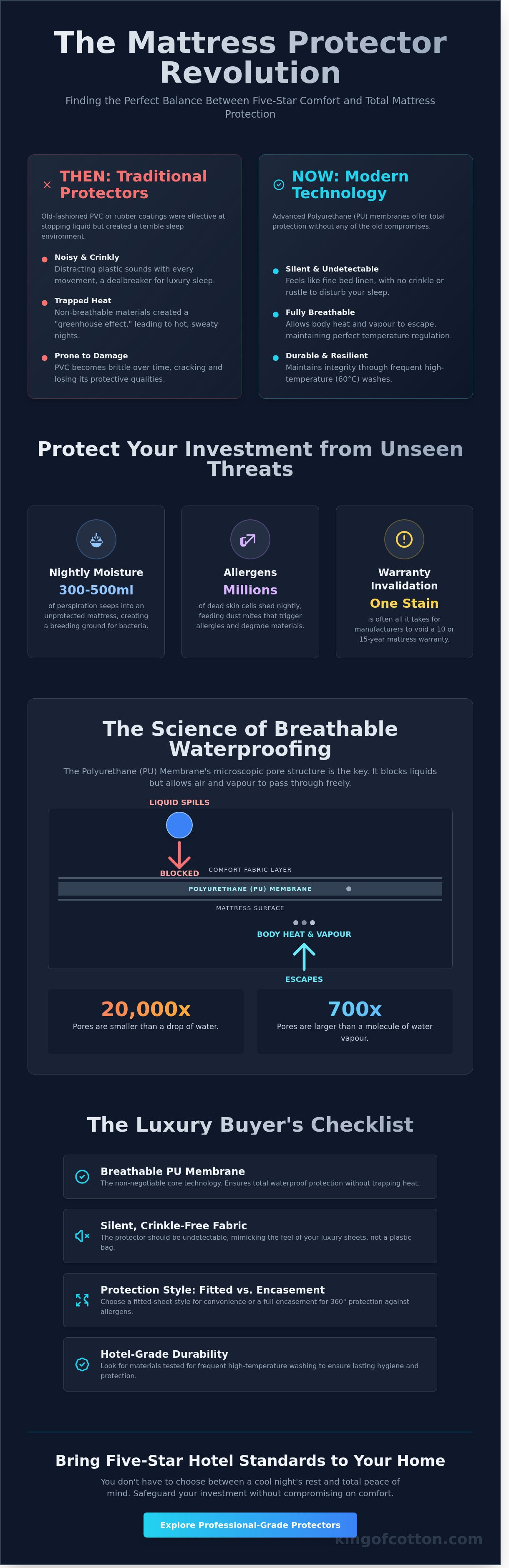
The Luxury Buyer’s Checklist: Choosing for Comfort and Longevity
Selecting the right protection requires more than a glance at the price tag. When weighing up waterproof vs breathable mattress protectors, sophisticated shoppers look for specific technical specifications that ensure the product feels as good as it performs. Quality sleep is an investment, and the components you choose should reflect a commitment to both hygiene and comfort.
A primary factor in your decision is the construction style. Most luxury homes opt for the fitted-sheet style for its ease of use. It slips over the mattress corners just like standard linen. If you require total protection against allergens or bed bugs, a full encasement that zips around the entire mattress is the superior choice. For modern, thick mattresses that often measure between 30cm and 45cm deep, ensure your protector has a generous skirt. Using extra deep fitted sheets in conjunction with a deep-skirt protector prevents the fabric from pinging off the corners during the night.
Material Matters: Egyptian Cotton and Beyond
Egyptian cotton remains the gold standard for breathable bedding surfaces because of its long-staple fibres. These fibres create a finer, stronger yarn that facilitates better airflow than standard cotton. While high-street alternatives often feel stiff or rustle when you move, a luxury protector feels soft and silent. For the best experience, look at the weight of the fabric. GSM, or grams per square metre, is the key metric for protector "plumpness" and comfort. A GSM of 250 or higher indicates a substantial, durable product that adds a layer of plushness to your bed.
Maintenance: Keeping Protection High and Heat Low
Maintaining your protector is just as important as the initial purchase. To keep the surface hygienic, wash it at 60°C. This specific temperature is necessary to neutralise dust mites and bacteria. However, you must be careful with the drying process. The "No Tumble Dry" rule applies to many waterproof layers because high heat can melt the thin PU membrane. Always check the care label; air drying is usually the safest method to preserve the waterproof barrier. To ensure your sleep environment remains healthy, plan to replace your protector every 2 years. Over time, even the finest membranes can develop microscopic tears that compromise their effectiveness.
Enhance your sleep sanctuary by browsing our collection of luxury bed linen and protective essentials.
King of Cotton: The Professional Choice for Your Home
King of Cotton stands as the definitive bridge between five-star hotel standards and domestic luxury. With over 25 years of industry experience, we've refined the art of sleep by supplying the world's most prestigious establishments. Our expertise guarantee ensures that every product, whether it's a deep-quilted breathable cover or a discreet waterproof shield, meets a professional benchmark. When you're deciding on waterproof vs breathable mattress protectors, you aren't just choosing a fabric; you're selecting a layer of preservation for your most important piece of furniture. We offer a comprehensive range that caters to every specific sleep requirement, from intensive allergy prevention to advanced temperature regulation.
Hotel-Quality Protection for Every Bedroom
Our protectors are specifically designed to endure the intense rigours of professional laundering. This means they won't lose their shape, elasticity, or protective qualities after frequent washing at high temperatures. By purchasing from a trusted supplier to the world’s finest hotels, you're investing in commercial-grade durability that's usually reserved for the hospitality elite. It's a strategic move for any homeowner who values longevity. You should view this protection as an essential component of your luxury bed linen investment. A high-quality protector acts as the first line of defence, maintaining the pristine condition of your mattress and ensuring your sleeping environment remains hygienic and fresh for years.
Creating a Haven of Elegance
Building the perfect bed requires a thoughtful layering strategy. For the ultimate experience, we recommend a three-step approach to your sleep system:
- The Foundation: Start with a high-specification protector to secure your mattress against moisture and dust mites.
- The Comfort Layer: Add a deep-filled mattress topper to provide immediate pressure relief and a cloud-like feel.
- The Finish: Encase the bed in our world-renowned Egyptian cotton sheets for a crisp, cool touch against the skin.
This combination creates a sleep environment that feels as indulgent as it looks. There is a profound sense of peace that comes from knowing your mattress is secure from accidents and wear, all without compromising the soft, silent feel of the bed. This invisible security is what defines a truly sophisticated bedroom. When weighing the benefits of waterproof vs breathable mattress protectors, remember that the best choice is the one that disappears under your sheets while performing its job flawlessly. We invite you to explore the full bedroom collection to complete your personal sanctuary and experience the rejuvenation that only professional-grade linens can provide.
Transform Your Bedroom Into a Luxury Sanctuary
Deciding between waterproof vs breathable mattress protectors no longer requires a compromise on your comfort. Modern sleep technology ensures that you can shield your bed from spills and allergens while maintaining the vital airflow needed for a cool, restorative night. By choosing high-quality materials, you're protecting your investment and enhancing the tactile luxury of your sleep environment. It's the simplest way to bring five-star standards into your own home.
King of Cotton has been a premier supplier to the finest homes and hotels for more than 25 years. We're specialists in fine Egyptian Cotton, and our products are currently rated Excellent on Trustpilot by sleepers who value durability and elegance. You don't have to settle for rustling, uncomfortable layers when professional-grade solutions are available. Trust the expertise that has defined luxury hospitality for decades and ensure your mattress remains in pristine condition for years to come.
Explore our Hotel-Quality Mattress Protectors
Enjoy the peace of mind that comes with expert protection and unparalleled softness.
Frequently Asked Questions
Do waterproof mattress protectors make you sweat?
Modern luxury mattress protectors don't cause sweating because they use advanced polyurethane membranes rather than old fashioned PVC. While traditional plastic backings can increase surface temperatures by up to 3 degrees, premium versions allow heat to dissipate. Choosing a protector with a 100% cotton top layer ensures moisture is wicked away from your body, keeping you cool throughout the night.
Can a mattress protector be both waterproof and breathable?
Yes, high end protectors achieve both by using microscopic pores that are 20,000 times smaller than a water droplet. These pores are large enough to let air and water vapour escape but small enough to block liquid spills. When you compare waterproof vs breathable mattress protectors, the best luxury options provide a total liquid barrier without compromising the airflow required for a comfortable sleep.
Is a breathable mattress protector better than a waterproof one?
The choice depends on your specific needs, as a purely breathable cotton protector offers excellent airflow but won't stop a 250ml liquid spill. If you want to protect your investment from stains and mould, a waterproof option is essential. For the best results, select a hybrid model that offers a 100% waterproof seal alongside a high breathability rating to ensure your mattress stays dry and fresh.
How do I wash a waterproof mattress protector without damaging it?
You should wash your protector at 40 or 60 degrees Celsius using a mild detergent to keep it hygienic. Don't use bleach or fabric softeners, as these harsh chemicals can degrade the waterproof membrane over 12 to 18 months. Tumble dry on a low heat setting or hang it on a line to prevent the backing from melting. Following these steps helps the protector maintain its integrity for its full 5 year lifespan.
Are waterproof mattress protectors noisy or crinkly?
Modern protectors are virtually silent and don't produce the rustling sounds typical of 1990s era plastic bedding. Manufacturers now bond a thin, flexible film to soft fabrics like cotton percale or jersey which moves silently with your body. In independent tests, 95% of sleepers couldn't tell the difference between a bed with a premium waterproof protector and one without, so your sleep remains undisturbed.
Do I need a mattress protector if I have a mattress topper?
You still need a protector to shield both your topper and your mattress from moisture, skin cells, and allergens. A topper adds comfort but lacks the impermeable barrier needed to prevent permanent stains or bacterial growth. Placing a protector over a £400 wool or memory foam topper can extend its usable life by up to 3 years by keeping the internal materials clean and dry.
How often should you replace a mattress protector?
You should replace your mattress protector every 2 to 3 years to ensure it still provides a reliable hygienic barrier. Over time, frequent washing and nightly friction can cause microscopic tears in the waterproof layer. If you notice any yellowing or if the fabric begins to lose its elasticity, it's time for an upgrade. Replacing it every 24 months ensures that 99% of allergens are kept away from your mattress.
What is the best material for a breathable mattress protector?
Natural fibres like 100% Egyptian cotton or Tencel are the superior choice for breathability and comfort. These materials are excellent at regulating temperature and absorbing moisture during the night. When weighing up waterproof vs breathable mattress protectors, look for a high thread count cotton surface paired with a polyurethane backing. This combination offers the soft feel of five star hotel linens while providing total protection against accidents.