

The Ultimate Guide to Cotton Bedding: Choosing Hotel-Quality Luxury for Your Home
Why does a luxury bed set from a high-street retailer often feel like sandpaper after just three washes? It’s a common frustration for many in the UK who find that their expensive cotton bedding labels are often nothing more than clever marketing tricks. You likely feel the disappointment of investing in linen that pills or traps heat, especially when you were promised the crisp elegance of a five-star hotel suite.
We believe your home should be a haven of rejuvenation, not a place of scratchy discomfort. Drawing on over 25 years of experience as specialists in fine linens for the world's most prestigious hotels, we’re here to help you spot genuine quality. You will learn exactly how to identify the right cotton varieties and weaves to secure a bed set that remains soft and durable for years.
This guide provides a detailed look at the heritage of Giza cotton, the tactile differences between percale and sateen, and the truth about thread count. You’ll gain the expert insight needed to curate a bedroom that feels like a permanent holiday in a luxury sanctuary.
Key Takeaways
- Learn why staple length is the true indicator of quality and how to distinguish between premium varieties like Egyptian and Giza cotton.
- Master the difference between crisp percale and silky sateen to select the perfect texture for your personal sleep sanctuary.
- Discover the inherent benefits of high-quality cotton bedding, from superior breathability to its natural hypoallergenic properties.
- Access a professional buyer’s checklist to ensure your new linens match standard UK bed dimensions for a flawless, hotel-style fit.
- Uncover the professional laundry secrets used by five-star hotels to keep your linens feeling exceptionally soft and crisp for years to come.
What is Cotton Bedding and Why is it the Gold Standard?
Cotton bedding is a textile crafted from the natural, cellulosic fibres of the cotton plant. It remains the gold standard for bedding because it prioritises comfort without compromising on health or longevity. Unlike synthetic alternatives that rely on petroleum-based polymers, cotton is a renewable resource that feels inherently better against the skin. It's the foundation of a healthy sleep environment, offering a soft touch that synthetics simply can't replicate.
To better understand how different materials compare and why cotton remains a top choice, watch this helpful video:
Choosing premium cotton bedding signifies an investment in sleep hygiene. Synthetics like polyester often trap heat, leading to a restless night and skin irritation. In contrast, cotton is naturally hypoallergenic and moisture-wicking, drawing perspiration away from the body. According to a 2021 study on sleep textiles, natural fibres can improve sleep efficiency by up to 10% compared to non-breathable synthetics. For those seeking "Hotel Quality," the goal is to replicate the crisp, cool feel found in five-star establishments. This standard is achieved through high thread counts and superior long-staple fibres. It's why King of Cotton has spent more than 25 years as a trusted supplier to the finest homes and hotels globally.
The Science of Breathability
Cotton's porous structure acts as a natural ventilation system. These microscopic gaps allow air to circulate freely, which prevents the build-up of humidity that causes night sweats. This thermal regulation ensures you stay cool during a 30°C UK summer heatwave and warm during a freezing January night. Breathability is the capacity of a fabric to allow moisture vapour to pass through its porous structure to the outside air.
Durability and the Investment Value
High-quality cotton doesn't just last; it improves. While cheap blends pill and thin after ten washes, luxury bed linen actually softens over time. When you calculate the cost-per-sleep, a £150 set that lasts 15 years is significantly better value than a £30 synthetic set replaced annually. With over 25 years of experience supplying the world's finest hotels, we've seen how premium cotton withstands industrial laundering while maintaining its structural integrity and elegant drape.
Understanding Cotton Varieties: From Egyptian to Giza
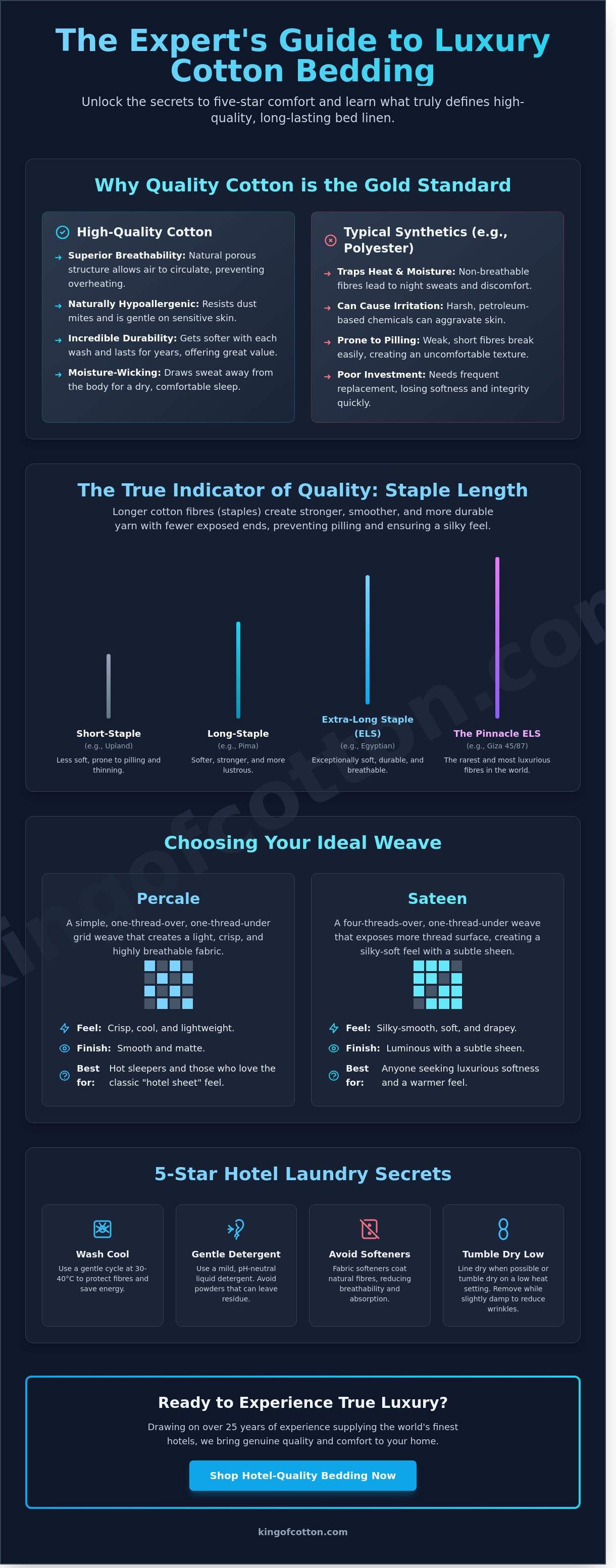
Most shoppers assume all cotton bedding offers the same level of comfort. That’s a mistake. The quality of your sheets depends heavily on the botanical species and the geography where the crop grew. At King of Cotton, we’ve spent more than 25 years sourcing the world’s finest materials to ensure our customers experience true hotel-standard luxury at home. The most critical factor in this selection process is staple length. This refers to the individual length of the cotton fibres. While standard Pima cotton has longer fibers than basic Upland varieties, the truly elite options reach even greater lengths. Longer fibres create stronger, finer yarns with fewer loose ends; this prevents pilling and ensures a silkier feel against the skin.
The Prestige of Egyptian Cotton
Genuine Egyptian cotton comes from the Gossypium barbadense species. The unique climate of the Nile Delta, with its nutrient-rich soil and consistent humidity, allows these plants to produce Extra-Long Staple (ELS) fibres. These fibres are significantly more durable and softer than standard varieties. You should be cautious of "Egyptian-style" marketing. Authentic Egyptian cotton requires specific certification to prove its origin. Without it, you might be buying a blend that lacks the breathability and longevity of the real thing. You can find more detail on why this matters in our guide: Egyptian Cotton Bedding: Is It Worth The Investment?
Giza Cotton: The Rare Jewel
If Egyptian cotton is the gold standard, Giza varieties represent the pinnacle of luxury. Giza 45 and Giza 87 are the highest grades available, grown in a small area of the Nile Delta. Farmers harvest these crops by hand to ensure the delicate fibres aren't damaged by heavy machinery. This meticulous process preserves the natural oils and integrity of the cotton. The result is a fabric with an extraordinary silky lustre and a softness that actually improves with every wash. It’s the closest sensation to sleeping on silk while retaining the crispness and breathability of premium cotton bedding.
You can explore our full range of luxury bed linen to find the perfect variety for your bedroom.
Percale vs. Sateen: Choosing Your Ideal Weave
While the quality of the raw fiber is vital, the weave dictates your daily tactile experience. The term weave refers to the specific way horizontal and vertical threads interlace during production. You can take the exact same long-staple Egyptian cotton and produce two entirely different fabrics. One will feel crisp and light, while the other feels heavy and buttery. Understanding these differences helps you select the perfect cotton bedding for your specific sleep preferences.
Don't be misled by astronomical thread counts, as a high number doesn't always equal luxury. Many manufacturers use multi-ply yarns, twisting three thin threads together to artificially inflate a 300-thread count to 900. This often results in a heavier, less breathable fabric that lacks durability. A genuine single-ply weave with a thread count between 200 and 600 typically offers superior longevity and a more refined feel. You can explore various examples of these premium weaves in our Bedroom collections to see which aesthetic suits your home.
Percale: The Crisp, Matte Classic
Percale follows a traditional one-over, one-under pattern. This creates a tight, flat structure that is remarkably breathable and strong. It's the ultimate choice for hot sleepers who need air to circulate throughout the night. If you love the sensation of a freshly laundered, high-end hotel shirt, percale is your ideal match. It has a matte finish and a distinctive snap that stays cool to the touch, making it a staple for those who prefer a clean, structured look.
Sateen: The Silky, Lustrous Alternative
Sateen uses a four-over, one-under weave that exposes more of the thread surface. This technique produces a fabric with a signature natural sheen and a silky feel that mimics the drape of silk. Because it's a denser weave, sateen has a heavier weight and retains more heat than percale. It's perfect for those who prioritize softness and a touch of warmth during the colder months. This weave adds a layer of opulence to your cotton bedding and naturally resists wrinkles better than its crisp counterpart.
- Percale: Best for breathability, hot sleepers, and a matte finish.
- Sateen: Best for silkiness, warmth, and a lustrous drape.
- Single-ply: The industry standard for high-quality, durable linens.
A Professional Buyer’s Checklist for Cotton Bedding
Selecting the right cotton bedding requires more than just picking a colour that matches your bedroom decor. It's a technical investment in your sleep health and long-term comfort. Start by verifying your mattress dimensions against The Definitive UK Bed Size Guide to ensure a crisp, hotel-standard fit. A common mistake is failing to account for mattress depth, which can lead to fitted sheets pinging off the corners during the night. For a truly tailored aesthetic, pay attention to the finishing. Housewife pillowcases provide a neat, tucked-in look that fits the pillow snugly. In contrast, Oxford styles feature a decorative wide border beyond the seam, adding a sense of grandeur to the bed. While online specifications provide the data, visiting physical stores allows you to experience the handle and weight of the fabric firsthand before you commit.
Matching Bedding to Your Sleep Style
Your internal thermostat should dictate your choice of weave. If you're a hot sleeper, choose a low thread count (200 to 400) Percale. It's a plain-weave fabric that's exceptionally breathable and stays cool against the skin. Cold sleepers benefit from high thread count Sateen or Brushed Cotton, which have a heavier drape that traps warmth. You also need to choose the perfect duvet to work in tandem with your sheets for a balanced microclimate. Don't overlook the role of a mattress protector. It acts as a vital barrier against moisture and allergens, preserving the integrity of your luxury linen for years. It's the foundation of a hygienic sleep environment.
The Importance of Finishing and Purity
Always insist on 100% cotton rather than "cotton-rich" blends. Blends often incorporate polyester, which can irritate sensitive skin and cause night sweats by trapping heat. Look for Oeko-Tex Standard 100 certification to ensure the fabric was tested for over 1,000 harmful substances. You'll often see the term "mercerised" in premium product descriptions. Mercerisation is a process that increases lustre and dye uptake, resulting in a deeper, more vibrant colour and a silkier feel. This treatment also strengthens the cotton fibres, meaning your sheets won't lose their shape after repeated laundering. Investing in these technical details ensures your bed remains a haven of elegance for the long term.
How to Care for Cotton Bedding Like a 5-Star Hotel
Investing in high-quality cotton bedding is only the first step toward a perfect night's sleep. The enduring crispness found in luxury suites isn't accidental; it's the result of a specific maintenance regime designed to protect the integrity of the fabric. High heat and aggressive bleaches are the primary enemies of fine cotton. These harsh treatments break down the natural staple, causing premature thinning and a loss of that signature softness. Professional hospitality providers follow a strict washing schedule, typically laundering linens every seven days to prevent body oils and perspiration from deeply penetrating the weave.
The Golden Rules of Washing and Drying
Temperature control is the most critical factor in longevity. While it's tempting to use hot cycles for hygiene, 40°C remains the optimal setting for luxury linens. This temperature effectively removes bacteria and oils without compromising the tensile strength of the fibers. You should also skip the fabric softener. These products contain silicone-based agents that coat the cotton bedding in a waxy layer. This coating reduces the fabric's natural breathability and makes it less effective at regulating your body temperature during the night. For drying, line-drying in the fresh air is the gold standard for a crisp finish. If you use a tumble dryer, keep it on a low-heat, delicate setting to prevent the fibers from becoming brittle and shrinking.
Ironing for that Pristine Finish
Achieving a mirror-smooth surface requires a professional secret known as damp-ironing. Don't wait for your sheets to dry completely. Instead, remove them from the line or dryer while they're still approximately 15% moist. The steam generated by the iron against the damp fabric makes it far easier to eliminate stubborn creases. When it's time for storage, your linen cupboard should be cool, dry, and well-ventilated. Avoid storing cotton in plastic bins, as trapped moisture can lead to mildew or yellowing. If you encounter a stain, treat it immediately with a gentle oxygen-based cleaner. Avoid chlorine bleach, which weakens the fibers and can cause white cotton to take on a grey or yellowish tint over time.
If your current collection has reached the end of its lifespan, upgrading to professional-grade materials can transform your bedroom into a sanctuary. You can review our various delivery options to see how easily you can refresh your entire linen cupboard with hotel-standard quality.
Transform Your Bedroom Into a Five-Star Sanctuary
Investing in high-quality cotton bedding is the most direct path to improving your nightly rest. You've now learned how to distinguish between the crisp breathability of percale and the silky drape of sateen, alongside the unmatched durability of authentic Giza and Egyptian varieties. These technical details make the definitive difference between a standard bedroom and a world-class retreat.
King of Cotton has operated as a specialist supplier to the world’s finest hotels for over 25 years. We're experts in authentic Egyptian and Giza cotton, bringing professional-grade luxury directly to your home. Our commitment to excellence is backed by an Excellent rating on Trustpilot, ensuring you receive the same standards found in the most prestigious suites across the United Kingdom. It's time to stop settling for average linens and start experiencing the rejuvenation that comes with true textile craftsmanship.
Explore the full King of Cotton Bed Linen Collection to find the perfect match for your sleep style. You deserve a haven of elegance that remains soft and inviting for years to come.
Frequently Asked Questions
Is 1000 thread count cotton bedding better than 400?
A higher thread count doesn't always guarantee superior quality because anything above 400 often requires multi-ply yarns or thinner, weaker threads. While a 1000 thread count sheet offers a dense, heavy feel, a 400 thread count single-ply percale provides better breathability and durability for daily use. Most five-star hotels prefer 300 to 600 thread count cotton bedding for its balance of luxury and longevity.
What is the difference between Egyptian cotton and regular cotton bedding?
Egyptian cotton is distinguished by its extra-long staple fibers, which produce finer, more durable yarns than standard Upland cotton. These 3cm to 5cm fibers result in a smoother finish that resists pilling and becomes softer with every wash. Regular cotton typically has shorter fibers, making the fabric more prone to fraying and feeling less refined against your skin over time.
How often should I wash my luxury cotton sheets?
You should wash your luxury sheets once every 7 days to remove skin cells, oils, and dust mites. For those with allergies, the Sleep Council recommends a weekly 60°C wash to effectively kill allergens and bacteria. Regular laundering prevents the buildup of body oils that can weaken the natural fibers and dull the fabric's elegant appearance.
Does 100% cotton bedding shrink after the first wash?
Natural 100% cotton bedding will typically shrink by 3% to 5% during its first trip through the washing machine. Premium manufacturers account for this by cutting the fabric slightly larger than the standard UK mattress dimensions. To ensure your duvet covers and sheets maintain a perfect fit after washing, you can consult the size guide from Linen and Co. To minimize this effect, always wash your linens at 40°C and avoid high-heat tumble drying, which can cause more aggressive fiber contraction.
Why do my cotton sheets feel scratchy after washing?
Scratchiness often results from using too much detergent or the presence of calcium and magnesium in hard water areas, which affects 60% of UK households. These minerals and soap residues cling to the fibers, making them stiff. Reducing your detergent dose by 25% and adding half a cup of white vinegar to the rinse cycle will help dissolve these deposits and restore softness.
Can I use bleach on white cotton bedding to keep it bright?
You should avoid chlorine bleach because it chemically weakens the cotton fibers and can cause white fabric to turn yellow over time. Instead, use an oxygen-based whitener or a traditional laundry blueing agent to maintain that crisp, hotel-white look. These alternatives are gentler on the 100% cotton material, ensuring your linens last for years rather than months.
What is the best cotton bedding for someone who gets hot at night?
A crisp cotton percale weave is the most effective choice for hot sleepers due to its breathable, one-over-one-under construction. This structure allows maximum airflow, helping to regulate your body temperature throughout the night. Unlike denser sateen weaves, percale feels cool to the touch and helps prevent the 20% of adults who suffer from night sweats from overheating.
How do I know if the Egyptian cotton I am buying is genuine?
Genuine Egyptian cotton is identified by the official Gold Seal from the Cotton Egypt Association, which guarantees the DNA-tested origin of the fibers. You should also check the price point; if a full set is priced under £40, it's unlikely to be authentic long-staple Egyptian cotton. Reputable UK suppliers will always provide specific details about the cotton's provenance and staple length.