

The Ultimate Guide to Choosing the Perfect Luxury Tablecloth
A tablecloth can bring the composed elegance of a five-star dining room to your home, but the right choice depends on more than appearance. Fabric, accurate sizing and construction all affect how it looks on the table and how it holds up to regular use.
It’s frustrating to invest in a beautiful cloth only to find it has shrunk, lost its colour or drapes awkwardly. Terms such as “drop” can also make choosing the right size feel less straightforward than it should be. With a few measurements and a clear idea of how you’ll use it, you can find a tablecloth that fits well and suits the way you dine.
This guide explains how to measure your table, choose a drop length and compare cotton, linen and polyester blends. You’ll also learn what to look for in a durable weave and how to style your table with runners and protectors, so you can make a considered choice for everyday meals and special occasions.
Key Takeaways
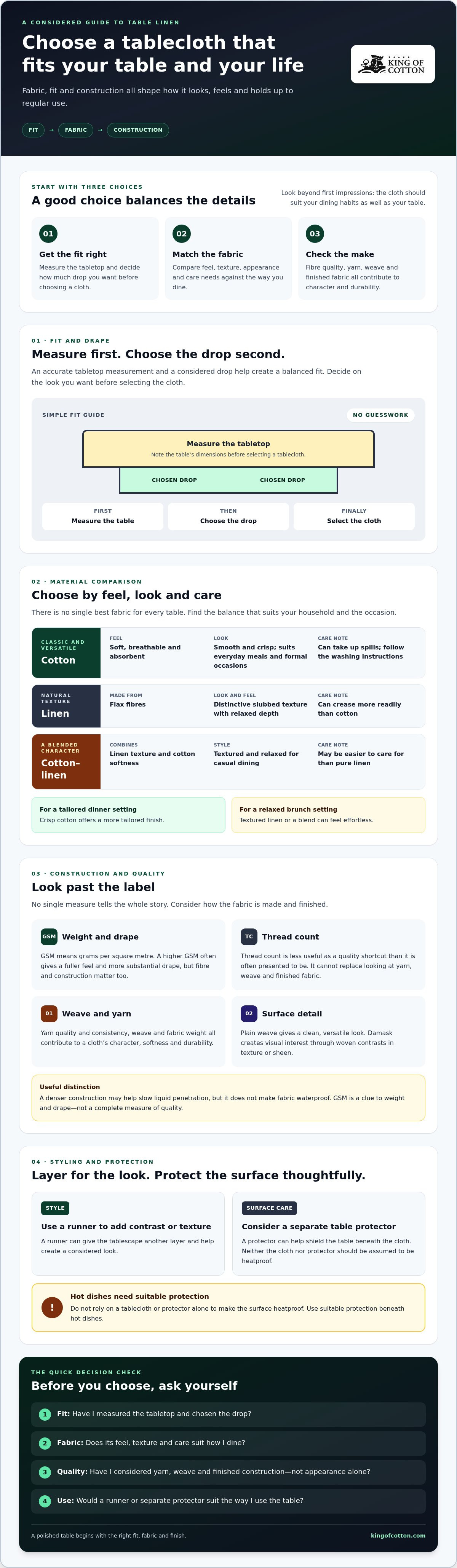
- Compare cotton, linen and blends by feel, texture and care needs to find a fabric suited to your dining habits.
- Measure your tabletop and choose the desired drop before selecting a tablecloth, helping you achieve a balanced fit.
- Use a runner to introduce contrast or texture, and consider a table protector to help shield the surface beneath.
- Look beyond first impressions: fabric quality and construction can affect how well table linen holds up over time.
- Hospitality-inspired details, such as crisp fabric and a carefully chosen drop, can give a dining table a more polished feel.
The Foundation of Fine Dining: Why the Right Tablecloth Matters
A well-chosen tablecloth is more than a finishing touch. It sets the visual tone, softens the sound of cutlery against the table and gives place settings a unified backdrop. A substantial fabric can feel reassuring beneath the hand, while a crisp white cotton cloth gives the table a fresh, considered look without competing with the meal.
A cloth can also help guard a table surface against minor spills and everyday scuffs. For a more dependable barrier between the cloth and the furniture, use a separate protector. Neither fabric nor protector should be assumed to make a surface heatproof: use suitable protection beneath hot dishes. For an overview of how tablecloths are designed and used, including their materials and history, see Wikipedia’s tablecloth entry.
For a visual guide to choosing the right size, watch this video:
Setting the Scene for Hospitality at Home
Texture and weight help set the mood. A smooth, crisp cotton finish suits a formal dinner, whilst a more textured weave creates a relaxed, tactile setting. Cotton and linen have distinctive feels and absorbency; the right choice depends on the balance of appearance and care that works for your household. In hospitality settings, the details contribute to a composed guest experience, and quality linen is part of that atmosphere.
Durability vs Aesthetics: Finding the Perfect Balance
A beautiful cloth should be able to handle real dining, not just look impressive on special occasions. Frequent washing can affect colour, shape and surface quality, so check the care label and choose construction suited to your laundering routine. When comparing options, consider appearance, feel and how straightforward the care instructions are, rather than choosing on looks alone. King of Cotton supplies cotton linens to homes and hospitality businesses, offering a useful perspective on how linen can combine comfort with practical use.
Choose a fabric that feels inviting, complements your room and can keep pace with the way you use your dining table.
Material Excellence: Comparing Cotton, Linen, and Luxury Blends
Fabric determines how a tablecloth feels, falls and performs through regular use. Look beyond appearance: fibre quality, weave and fabric weight all contribute to its character. GSM, or grams per square metre, measures fabric weight. A higher GSM often creates a fuller feel and more substantial drape, although fibre and construction matter too.
The Timeless Appeal of 100% Pure Cotton
Quality cotton is soft, breathable and absorbent, with a smooth finish that suits everyday meals and formal occasions. Its natural fibres can take up spills, so cotton shouldn’t be considered stain-proof. Prompt care and following the washing instructions are important. A well-made cotton cloth brings a classic look to banquets and wedding receptions, while Egyptian cotton is prized for its fine fibres and the subtle lustre they can lend to finished fabric.
Mercerised cotton is cotton treated to increase its lustre and strength.
Crisp Linen and Sophisticated Blends
Linen, made from flax fibres, has a distinctive slubbed texture that gives a setting relaxed depth and understated refinement. It can crease more readily than cotton, a characteristic that forms part of its natural charm. Cotton-linen blends bring together the texture of linen and the softness of cotton, and may be easier to care for than pure linen. For a casual brunch, textured linen or a blend feels effortless; for an evening dinner party, crisp cotton offers a more tailored finish.
Understanding Thread Count and Weave
Thread count is less useful as a quality shortcut for table linen than it is often presented to be. The quality and consistency of the yarn, the weave and the finished fabric all influence softness and durability. GSM offers a clue to weight and drape, but it isn’t a complete measure of quality on its own.
A plain weave has a clean, versatile appearance, whilst damask patterns create visual interest through woven contrasts in texture or sheen. The history and craft of linen damask show how weaving can give fabric rich detail without relying on a printed design. A denser construction may help slow liquid penetration, but it doesn’t make fabric waterproof. Use a protector beneath the cloth when safeguarding the table surface matters.
To choose between fabrics, consider the feel you prefer, how often the cloth will be used and the care it requires. Compare the product details and care instructions rather than relying on a single measure such as GSM or thread count.
Measuring for Perfection: Tablecloth Sizes and Drops
A polished fit starts with two measurements: your tabletop and the amount of fabric you want hanging over each edge. This overhang is the drop. Measure carefully before choosing a cloth, as seating capacity alone won’t tell you the dimensions you need. Tables for the same number of diners can differ in length and width.
Measure the Table and Choose Your Drop
- Rectangular or square: Measure the tabletop length and width. Add twice your chosen drop to each measurement. For example, a 150 × 90cm table with a 25cm drop needs a cloth measuring 200 × 140cm.
- Round: Measure across the centre of the tabletop, then add twice the drop to the diameter. A 100cm round table with a 25cm drop needs a 150cm diameter cloth.
- Oval: Measure the longest length and widest width, then add twice the drop to both. This gives a useful starting size, though the cloth’s shape and cut also affect how it hangs.
For an extendable table, measure it both closed and fully extended. Choose a size for the setting you use most, or check whether the cloth will still provide your preferred drop when the extension leaves are in place.
Choose a Drop for the Occasion
For everyday family meals, a casual drop of around 20–30cm gives comfortable coverage without reaching too close to diners’ laps. A more formal drop of roughly 38–75cm creates a generous drape for special dinners. For buffet or cake tables, a floor-length cloth can conceal the legs and create a seamless presentation. Check the finished length against the table height, especially where guests will walk or sit.
Use Seating Capacity as a Guide, Not a Measurement
Four-, six-, eight- and twelve-seater labels suggest how many people a table may accommodate, not its exact dimensions. Measure the surface rather than relying on a generic size label. This is especially useful for large family gatherings, where an oversized table may need a less common cloth dimension. Compare your calculated measurements with the product details before deciding.
Take measurements in centimetres, note your preferred drop and keep both figures together. That simple check helps you select a tablecloth that sits evenly, suits the occasion and gives the table a considered finish.
Styling Your Tablescape: From Minimalist Runners to Grand Banquets
A considered tablescape balances texture, colour and function. A runner adds a defined line through the centre of the table, bringing contrast without concealing the cloth beneath. Choose a tone that complements the base linen, then repeat it in smaller details, such as napkins or a floral accent, for a cohesive finish.
Layering with Table Runners and Protectors
Start with a protector beneath the linen. A felt-backed option can add a softer, more substantial feel and help protect the table’s finish from everyday knocks and minor spills. Check that the protector suits the table’s shape and size, and remember that fabric layers alone shouldn’t be relied on to shield wood from hot dishes.
Place a runner along the centre to give floral arrangements and candles a natural focal point. It can also group decorative elements, keeping them visually together rather than scattered across the surface. Layering a smooth base cloth with a runner in a contrasting weave creates depth and a quietly luxurious effect. Keep the arrangement low enough for comfortable conversation, and leave diners ample space for plates and glasses.
Choosing Colours and Textures for Every Season
White and ivory are versatile foundations: they suit year-round dining and let tableware, flowers and seasonal details take the lead. In summer, bring in brighter accents through napkins or a lightweight runner. As autumn arrives, richer shades such as navy, forest green or warm earthy tones can create a more intimate atmosphere. Bold patterns work well as a focal point, but balance them with plain linen so the overall setting feels composed.
For a professional finish, coordinate napkins with one element of the table setting. They might echo the runner’s colour, pick up a detail in the crockery or provide a restrained contrast against a white cloth. Exact matching isn’t essential; repeating a colour or texture is often enough to make the arrangement feel intentional.
Adjust the layers to suit the occasion. A simple runner and neatly folded napkins keep a weekday meal relaxed, whilst a fuller arrangement of linen, flowers and candlelight lends ceremony to a banquet. For further ideas on combining table linens, read our guide to tablecloths and runners for fine dining.
Explore the King of Cotton product range for more inspiration on refined linen choices.
The King of Cotton Difference: Hospitality-Grade Linens for Your Home
Hospitality-grade linen brings a professional perspective to home dining: comfort matters, but so does maintaining its appearance through regular use and laundering. King of Cotton supplies cotton linens to individual customers and hospitality businesses, with products for the bedroom, bathroom and dining room. That focus on quality linens can offer inspiration when choosing pieces for a residential table, where appearance and everyday practicality both matter.
Why Global Hotels Trust Our Table Linens
Hotels use textiles repeatedly, so durability and consistent performance are important considerations. Look for clear care instructions and product information about the fabric and weave. If colour retention or shrinkage is a particular concern, check whether the supplier provides specific information about how the linen is expected to perform. Don’t assume a hospitality association means a particular test or certification has been carried out.
Fibre quality and construction are useful factors when considering a tablecloth for regular use. Ethical sourcing is another important consideration, but it should be supported by transparent, verifiable information. If this matters to you, check what the supplier says about fibre sourcing rather than relying on broad claims.
Easy Care and Maintenance for Lasting Elegance
Good care begins with the label: follow its washing and ironing instructions, and avoid assuming every cotton weave can be treated in the same way. For red wine or grease, act promptly. Blot rather than rub, remove excess residue gently and follow the recommended stain-care guidance before washing. Rubbing can spread a mark or disturb the fibres.
To preserve a crisp finish, smooth the cloth carefully and use an iron setting suited to the fabric. If you prefer a stiffer, more formal look, use starch only if the care instructions allow it. Cotton linens should be ironed whilst slightly damp for the best results.
A lasting linen cupboard is built around versatile pieces you’ll use often, stored clean and completely dry to help prevent mustiness. Keep cloths folded neatly, and rotate them so wear is shared rather than concentrated on a single favourite. Matching runners and table protectors can extend your styling options and help shield the table beneath, whilst maintaining a coherent look for everyday meals and special occasions.
Bring Five-Star Elegance to Your Dining Table
A beautifully dressed table begins with thoughtful choices. Select a fabric for the way you dine, measure carefully to achieve the drop you want, then layer runners and protectors to add texture and practical care. Together, these details make a tablecloth feel considered rather than purely decorative.
For lasting quality, look beyond appearance to the fabric’s weight, weave and care guidance. King of Cotton supplies quality cotton linens to homes and hospitality businesses, with products for the bedroom, bathroom and dining room. Explore the range to find considered linens for your home.
Ready to explore quality linens for your home? Explore King of Cotton’s product range and take the next step towards a home that feels welcoming, elegant and distinctly yours.
Frequently Asked Questions
What is the best material for a tablecloth that does not need ironing?
Polyester and polyester-rich blends are usually the most wrinkle-resistant options, so they often need little or no ironing after washing. Cotton-polyester blends offer a compromise, combining some of cotton’s soft feel with easier-care qualities. Results vary by fabric construction and drying method, so check the care label before buying. Remove the cloth promptly from the washing machine and smooth it out to help minimise creases.
How much should a tablecloth hang over the edge of the table?
A casual drop is commonly around 6–12 inches (15–30cm), whilst a lap-length dining drop is about 15 inches (38cm). For a formal, floor-length effect, allow around 30 inches (76cm), checking the measurement against your table height. To find the cloth size, add twice your chosen drop to the table’s length and width. A shorter overhang can be more practical for everyday meals or small children.
Can I wash my luxury cotton tablecloth in a standard washing machine?
Usually, yes, provided the care label confirms machine washing and your machine can accommodate the cloth without overloading. Separate whites from colours, use the recommended cycle and detergent, and follow the stated temperature rather than assuming a hotter wash is suitable. A crowded drum can prevent thorough rinsing and put extra strain on the fabric. Treat marks promptly, then dry and iron as directed to help preserve the finish.
What is the difference between a table runner and a tablecloth?
A tablecloth covers most or all of the tabletop and hangs over its edges, creating a complete base for the setting. A runner is a narrower strip, usually placed lengthways down the centre or across the width. It adds colour or texture whilst leaving more of the table visible. You can use a runner alone for a relaxed look or layer one over a cloth for added depth.
How do I choose a tablecloth for a round table?
Measure the tabletop across its centre to find its diameter, then decide how far you want the cloth to hang on each side. Add twice that drop to the table’s diameter to calculate the finished cloth diameter. For instance, a 100cm table with a 25cm drop needs a 150cm round cloth. Check the product dimensions carefully, and measure an extendable table both closed and extended.
What is a table protector and is it necessary under a tablecloth?
A table protector is a layer placed between the tabletop and the cloth to help cushion the surface and guard against everyday knocks, spills and scratches. It isn’t essential for every table, but it can be useful on delicate or frequently used surfaces. Choose one that fits neatly beneath the cloth. Don’t rely on a fabric protector to make the table heatproof; use suitable protection under hot dishes.
How do I remove stubborn stains from a white cotton tablecloth?
Start by checking the care label and treating the stain as soon as possible. Blot liquid marks with a clean cloth rather than rubbing; gently lift excess grease before laundering. Use a stain treatment that’s suitable for cotton and follow its directions, testing it discreetly if advised. Avoid heat from a tumble dryer or iron until the mark has gone, as heat may make some stains harder to remove.
Are linen-blend tablecloths more durable than 100% cotton?
Not automatically. Durability depends on the fibre blend, yarn quality, weave, construction and care, so the label alone can’t settle the comparison. A cotton-linen blend can offer linen’s distinctive texture alongside cotton’s soft feel, and may be easier to care for than pure linen. For regular use, compare the care instructions and fabric details, then choose the cloth that best suits your household and preferred finish.